Cocoa Shell
CN → US| HS编码 | 关税税率 | 原产国 | 目的国 | 文档 |
|---|---|---|---|---|
| 1802000000 | 17.5% | CN | US | 官方文档 |
商品图片
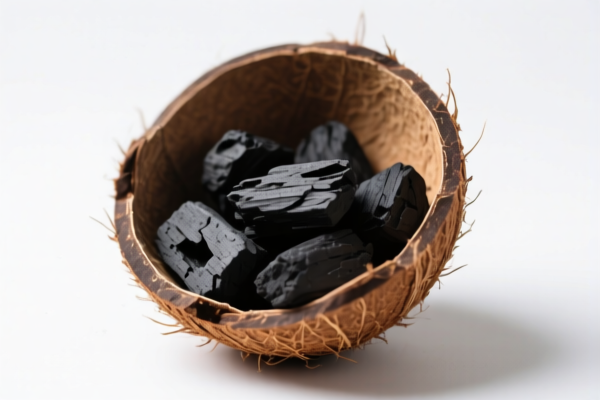
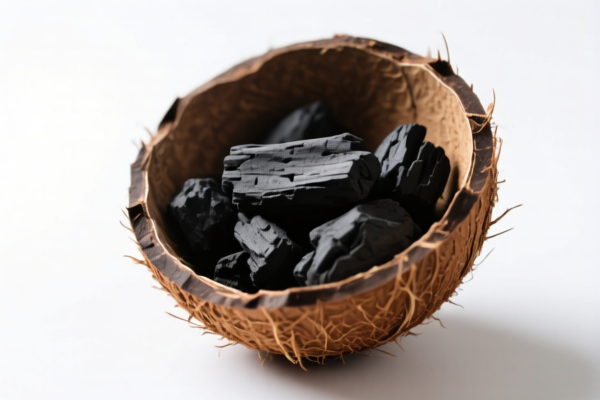
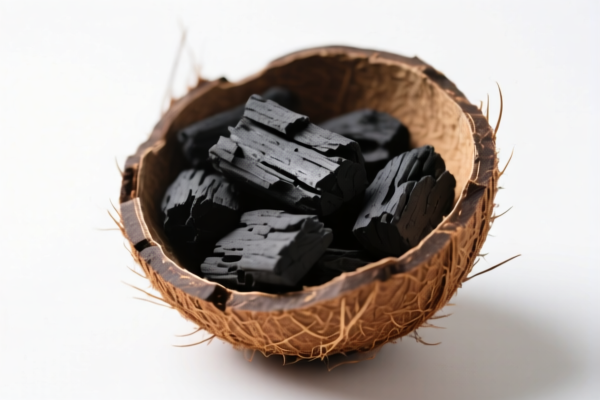
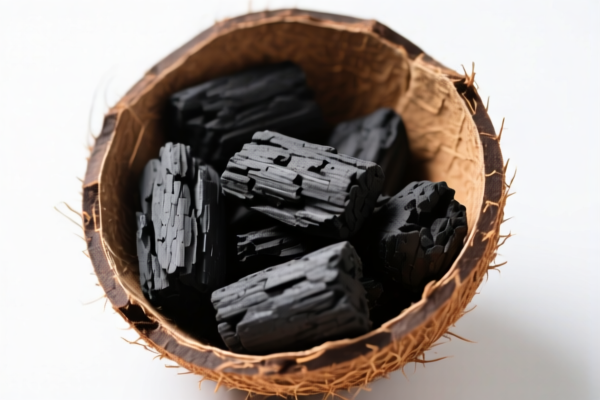
AI分析
🌿 Cocoa Shells (Cocoa Waste Products)
🌐 HS Code Reference & Clearance Guide | 2026 Latest Tariff Analysis | Professional Customs Strategy
📌 I. Product Definition & Classification: What Are "Cocoa Shells"?
Cocoa shells, also known as cocoa husks, skins, and other cocoa waste, are the by-products generated during the processing of cocoa beans into cocoa mass, powder, butter, or chocolate. These include the hard, brittle outer layers removed from the beans during winnowing.
In international trade, these materials are classified strictly as waste products or by-products of cocoa processing, distinct from edible cocoa beans or processed cocoa preparations.
⚠️ Key Distinction:
- If the material consists primarily of the outer shell/husk removed from cocoa beans → Classified under 1802.00.00.00
- If it is edible cocoa powder/mass → Classified under 1801/1803
- If it is mixed with other non-cocoa waste → May require re-evaluation, but pure cocoa waste falls here.
📦 II. HS Code Classification Details (2026 Latest Tariff Authority)
| HS Code | Product Description | Application Scenario | Includes Edible Parts? |
|---|---|---|---|
1802.00.00.00 |
Cocoa shells, husks, skins and other cocoa waste | Cocoa processing by-products, animal feed raw material, composting, natural fertilizer production | ❌ No (Non-edible waste) |
🔍 Key Reminder:
- The HS Code 1802.00.00.00 specifically covers all forms of cocoa waste, including shells, husks, and skins.
- This classification applies to pure cocoa waste regardless of whether it is whole, ground, or powdered, as long as it is not further processed into edible preparations.
- Do not confuse with 1801 (Cocoa Beans) or 1803 (Cocoa Paste/Powder).
💰 III. 2026 Latest Tariff Rate Details (Including Surcharges & Policy Add-ons)
✅ Applicable Country: United States (US)
✅ Origin: China (CN)
✅ Effective Date: 2025 onwards (including subsequent imports)
🎯 1. 1802.00.00.00 —— Cocoa Shells, Husks, Skins, and Other Cocoa Waste
| Item | Content |
|---|---|
| Base Tariff Rate | 0.0% (ad valorem) |
| Additional Tariff (Section 301 / IEEPA) | +7.5% |
| Total Tariff Rate | 7.5% |
| Tax Calculation | CIF Value × 7.5% |
| De Minimis Exemption | ❌ Not Applicable (This is a bulk industrial/agricultural waste product, typically subject to standard customs procedures) |
| Legal Basis Path | HTSUS:1802.00.00.00 → Section 301: 7.5% surcharge for CN origin |
📌 Explanation:
- The base tariff (0%) reflects the general treatment for cocoa waste products.
- The +7.5% additional tariff is applied due to U.S. trade policies targeting Chinese-origin goods (Section 301 / IEEPA).
- Total Rate: 7.5%. While lower than many manufactured goods, this cost must be factored into supply chain pricing.
🛠️ IV. Customs Clearance Practical Advice (Battle-Tested Pitfall Avoidance)
✅ 1. Document Checklist (Essential)
| Document | Required | Description |
|---|---|---|
| ✅ Commercial Invoice | ✔️ | Must clearly state "Cocoa Shells, Husks, Skins and Other Cocoa Waste" – avoid vague terms like "Organic Matter" |
| ✅ Packing List | ✔️ | Detail weight, volume, and packaging type (bags, bulk, palletized) |
| ✅ Certificate of Origin (CO) | ✔️ | To prove Chinese origin for accurate tariff application |
| ✅ Phytosanitary Certificate | ✔️ | Often required for agricultural by-products to confirm no pests/diseases |
| ✅ Product Specification Sheet | ✔️ | Confirm moisture content, particle size, and purity (must be >95% cocoa waste) |
| ✅ Bill of Lading / Air Waybill | ✔️ | Standard shipping documentation |
✅ 2. Declaration Tips (Key Mnemonic)
🔥 "Clear Name, Clean Product, No Edible Parts, 7.5% Rate!"
| Scenario | Correct Declaration | Wrong Practice |
|---|---|---|
| Pure cocoa shells | 1802.00.00.00 |
Misdeclared as "Cocoa Powder" (1805) → Higher tariff + FDA scrutiny |
| Mixed waste (cocoa + other) | Requires re-classification | Mixed declaration → Customs hold + penalties |
| Edible cocoa products | 1801-1806 |
Declared as waste → Smuggling suspicion |
✅ 3. Special Handling
| Situation | Recommendation |
|---|---|
| Moisture Content | Ensure moisture is below 12% to prevent mold during transit; provide lab report if requested |
| Pest Control | Provide fumigation certificate if required by USDA APHIS |
| Bulk vs. Bagged | Bulk shipments may require additional cleanliness declarations |
| Destination Use | Specify end-use (e.g., "for animal feed" or "for composting") to avoid unnecessary FDA food safety checks |
🌍 V. Global Market Comparison (2026 Latest)
| Country/Region | Recommended HS Code | Tariff (CN Origin) | Certification | Notes |
|---|---|---|---|---|
| 🇺🇸 United States | 1802.00.00.00 |
7.5% | Phytosanitary | 7.5% includes Section 301 surcharge |
| 🇨🇳 China | 1802.00.00.00 |
0% | N/A | No additional tariffs for imports |
| 🇪🇺 European Union | 1802.00.00.00 |
0% | Phytosanitary | No additional tariffs |
| 🇬🇧 United Kingdom | 1802.00.00.00 |
0% | Phytosanitary | Post-Brexit rules apply |
| 🇦🇺 Australia | 1802.00.00.00 |
0% | Biosecurity | Strict biosecurity checks |
📌 Conclusion:
- The U.S. imposes a 7.5% tariff on Chinese-origin cocoa waste due to trade policies.
- Other major markets (EU, UK, China, Australia) typically apply 0% tariffs but enforce strict phytosanitary and biosecurity regulations.
📌 VI. Common Errors & Pitfall Avoidance (Lessons Learned)
❌ Error 1: Declaring cocoa shells as "Cocoa Powder" (1805.00.00.00)
👉 Consequence: Incorrect classification → Higher tariffs + FDA food safety review → Delays
✅ Fix: Use precise description: "Cocoa Shells, Husks, Skins and Other Cocoa Waste"
❌ Error 2: Omitting Phytosanitary Certificate
👉 Consequence: Customs hold → Rejection or destruction by USDA
✅ Fix: Always include Phytosanitary Certificate for agricultural by-products
❌ Error 3: Vague Product Name ("Organic Waste")
👉 Consequence: Customs inability to classify → 10+ day delay + fines
✅ Fix: Use exact HS Code description: "Cocoa shells, husks, skins and other cocoa waste"
🎯 VII. Conclusion: Precise Classification, Smooth Clearance!
🎯 Remember the Mnemonic:
🔹 "Shells are waste, HS 1802 is best, 7.5% is the rate, don't be late!"
🔹 "Clear name, clean product, avoid FDA, save time!"
📌 Pro Tip:
If your cocoa shells are destined for animal feed, consider declaring them as "Animal Feed Raw Material" to streamline USDA clearance.
For composting/fertilizer use, ensure moisture content is declared to prevent mold-related rejections.
📣 Immediate Action:
📞 Contact a licensed customs broker
📦 Prepare Phytosanitary Certificate
🚀 Ensure clear, accurate product description to avoid 7.5% surprises!
✨ Professional clearance starts with accurate classification!
💼 Your cost efficiency depends on precise HS Code declaration!
用户评价
关于 HS 编码归类
协调制度(HS)是由世界海关组织(WCO)制定的国际贸易商品分类标准。全球 200 多个国家采用 HS 系统作为海关关税、贸易统计和进出口监管的基础。
每个 HS 编码遵循以下层级结构:
- 章(2 位)——商品大类(例如:第 84 章:机器和机械设备)
- 品目(4 位)——章内的更具体分类
- 子目(6 位)——国际通用细分,所有 WCO 成员国统一使用
- 本国细分(8-10 位)——各国自行扩展的细分编码,如美国 HTSUS 10 位编码
正确的 HS 编码归类对于顺利通关、准确缴纳关税和遵守贸易法规至关重要。错误归类可能导致海关延误、多缴关税或罚款。
从CN进口到US时,适用的关税税率可能包括:
- 最惠国(MFN)税率——适用于 WTO 成员国的标准关税税率
- 普通税率——适用于无贸易协定国家
- 贸易救济关税——附加关税,如 301 条款(反倾销)、232 条款(国家安全)或反补贴税
本页内容仅供参考。如需正式归类,请咨询当地海关或持牌报关代理。