Cocoa Shell
CN → US| HS Code | Tariff Rate | Origin | Destination | Doc |
|---|---|---|---|---|
| 1802000000 | 17.5% | CN | US | Official Doc |
Product Images
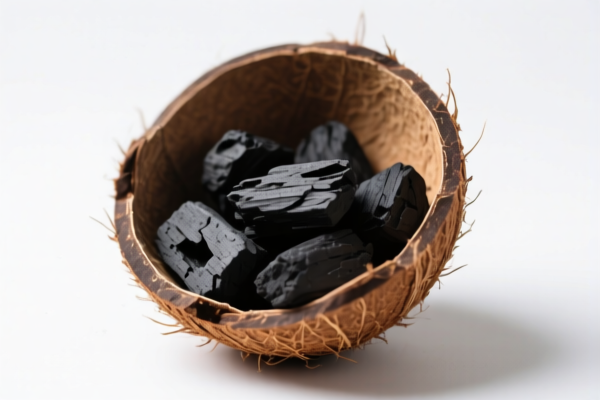
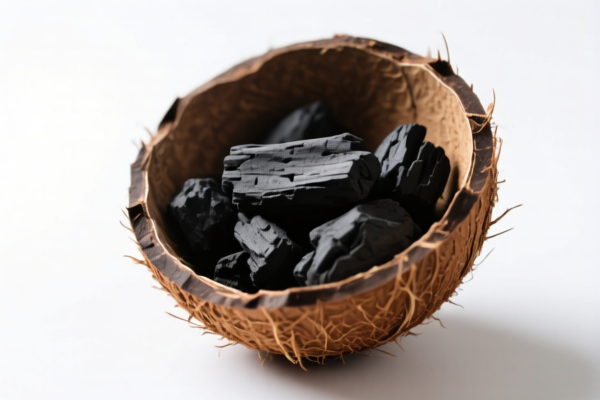
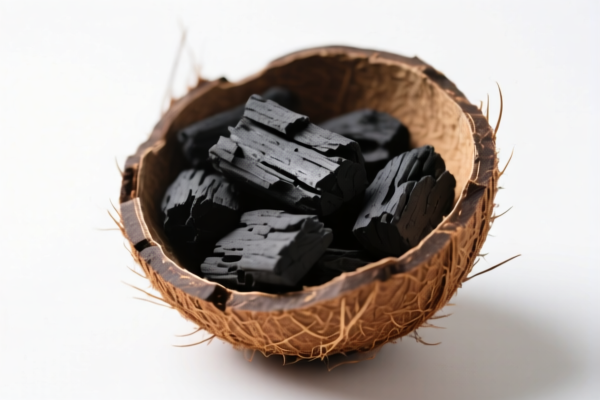
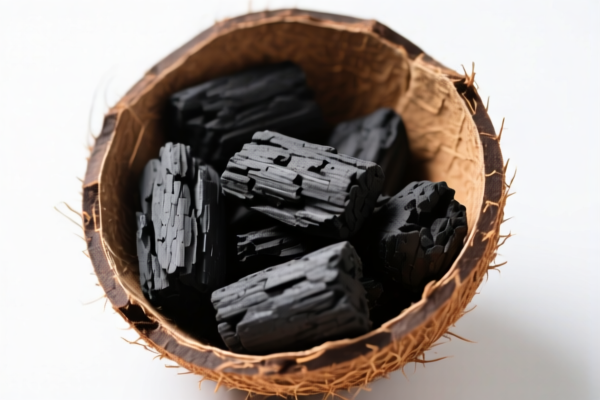
AI Analysis
🌿 Cocoa Shells (Cocoa Waste Products)
🌐 HS Code Reference & Clearance Guide | 2026 Latest Tariff Analysis | Professional Customs Strategy
📌 I. Product Definition & Classification: What Are "Cocoa Shells"?
Cocoa shells, also known as cocoa husks, skins, and other cocoa waste, are the by-products generated during the processing of cocoa beans into cocoa mass, powder, butter, or chocolate. These include the hard, brittle outer layers removed from the beans during winnowing.
In international trade, these materials are classified strictly as waste products or by-products of cocoa processing, distinct from edible cocoa beans or processed cocoa preparations.
⚠️ Key Distinction:
- If the material consists primarily of the outer shell/husk removed from cocoa beans → Classified under 1802.00.00.00
- If it is edible cocoa powder/mass → Classified under 1801/1803
- If it is mixed with other non-cocoa waste → May require re-evaluation, but pure cocoa waste falls here.
📦 II. HS Code Classification Details (2026 Latest Tariff Authority)
| HS Code | Product Description | Application Scenario | Includes Edible Parts? |
|---|---|---|---|
1802.00.00.00 |
Cocoa shells, husks, skins and other cocoa waste | Cocoa processing by-products, animal feed raw material, composting, natural fertilizer production | ❌ No (Non-edible waste) |
🔍 Key Reminder:
- The HS Code 1802.00.00.00 specifically covers all forms of cocoa waste, including shells, husks, and skins.
- This classification applies to pure cocoa waste regardless of whether it is whole, ground, or powdered, as long as it is not further processed into edible preparations.
- Do not confuse with 1801 (Cocoa Beans) or 1803 (Cocoa Paste/Powder).
💰 III. 2026 Latest Tariff Rate Details (Including Surcharges & Policy Add-ons)
✅ Applicable Country: United States (US)
✅ Origin: China (CN)
✅ Effective Date: 2025 onwards (including subsequent imports)
🎯 1. 1802.00.00.00 —— Cocoa Shells, Husks, Skins, and Other Cocoa Waste
| Item | Content |
|---|---|
| Base Tariff Rate | 0.0% (ad valorem) |
| Additional Tariff (Section 301 / IEEPA) | +7.5% |
| Total Tariff Rate | 7.5% |
| Tax Calculation | CIF Value × 7.5% |
| De Minimis Exemption | ❌ Not Applicable (This is a bulk industrial/agricultural waste product, typically subject to standard customs procedures) |
| Legal Basis Path | HTSUS:1802.00.00.00 → Section 301: 7.5% surcharge for CN origin |
📌 Explanation:
- The base tariff (0%) reflects the general treatment for cocoa waste products.
- The +7.5% additional tariff is applied due to U.S. trade policies targeting Chinese-origin goods (Section 301 / IEEPA).
- Total Rate: 7.5%. While lower than many manufactured goods, this cost must be factored into supply chain pricing.
🛠️ IV. Customs Clearance Practical Advice (Battle-Tested Pitfall Avoidance)
✅ 1. Document Checklist (Essential)
| Document | Required | Description |
|---|---|---|
| ✅ Commercial Invoice | ✔️ | Must clearly state "Cocoa Shells, Husks, Skins and Other Cocoa Waste" – avoid vague terms like "Organic Matter" |
| ✅ Packing List | ✔️ | Detail weight, volume, and packaging type (bags, bulk, palletized) |
| ✅ Certificate of Origin (CO) | ✔️ | To prove Chinese origin for accurate tariff application |
| ✅ Phytosanitary Certificate | ✔️ | Often required for agricultural by-products to confirm no pests/diseases |
| ✅ Product Specification Sheet | ✔️ | Confirm moisture content, particle size, and purity (must be >95% cocoa waste) |
| ✅ Bill of Lading / Air Waybill | ✔️ | Standard shipping documentation |
✅ 2. Declaration Tips (Key Mnemonic)
🔥 "Clear Name, Clean Product, No Edible Parts, 7.5% Rate!"
| Scenario | Correct Declaration | Wrong Practice |
|---|---|---|
| Pure cocoa shells | 1802.00.00.00 |
Misdeclared as "Cocoa Powder" (1805) → Higher tariff + FDA scrutiny |
| Mixed waste (cocoa + other) | Requires re-classification | Mixed declaration → Customs hold + penalties |
| Edible cocoa products | 1801-1806 |
Declared as waste → Smuggling suspicion |
✅ 3. Special Handling
| Situation | Recommendation |
|---|---|
| Moisture Content | Ensure moisture is below 12% to prevent mold during transit; provide lab report if requested |
| Pest Control | Provide fumigation certificate if required by USDA APHIS |
| Bulk vs. Bagged | Bulk shipments may require additional cleanliness declarations |
| Destination Use | Specify end-use (e.g., "for animal feed" or "for composting") to avoid unnecessary FDA food safety checks |
🌍 V. Global Market Comparison (2026 Latest)
| Country/Region | Recommended HS Code | Tariff (CN Origin) | Certification | Notes |
|---|---|---|---|---|
| 🇺🇸 United States | 1802.00.00.00 |
7.5% | Phytosanitary | 7.5% includes Section 301 surcharge |
| 🇨🇳 China | 1802.00.00.00 |
0% | N/A | No additional tariffs for imports |
| 🇪🇺 European Union | 1802.00.00.00 |
0% | Phytosanitary | No additional tariffs |
| 🇬🇧 United Kingdom | 1802.00.00.00 |
0% | Phytosanitary | Post-Brexit rules apply |
| 🇦🇺 Australia | 1802.00.00.00 |
0% | Biosecurity | Strict biosecurity checks |
📌 Conclusion:
- The U.S. imposes a 7.5% tariff on Chinese-origin cocoa waste due to trade policies.
- Other major markets (EU, UK, China, Australia) typically apply 0% tariffs but enforce strict phytosanitary and biosecurity regulations.
📌 VI. Common Errors & Pitfall Avoidance (Lessons Learned)
❌ Error 1: Declaring cocoa shells as "Cocoa Powder" (1805.00.00.00)
👉 Consequence: Incorrect classification → Higher tariffs + FDA food safety review → Delays
✅ Fix: Use precise description: "Cocoa Shells, Husks, Skins and Other Cocoa Waste"
❌ Error 2: Omitting Phytosanitary Certificate
👉 Consequence: Customs hold → Rejection or destruction by USDA
✅ Fix: Always include Phytosanitary Certificate for agricultural by-products
❌ Error 3: Vague Product Name ("Organic Waste")
👉 Consequence: Customs inability to classify → 10+ day delay + fines
✅ Fix: Use exact HS Code description: "Cocoa shells, husks, skins and other cocoa waste"
🎯 VII. Conclusion: Precise Classification, Smooth Clearance!
🎯 Remember the Mnemonic:
🔹 "Shells are waste, HS 1802 is best, 7.5% is the rate, don't be late!"
🔹 "Clear name, clean product, avoid FDA, save time!"
📌 Pro Tip:
If your cocoa shells are destined for animal feed, consider declaring them as "Animal Feed Raw Material" to streamline USDA clearance.
For composting/fertilizer use, ensure moisture content is declared to prevent mold-related rejections.
📣 Immediate Action:
📞 Contact a licensed customs broker
📦 Prepare Phytosanitary Certificate
🚀 Ensure clear, accurate product description to avoid 7.5% surprises!
✨ Professional clearance starts with accurate classification!
💼 Your cost efficiency depends on precise HS Code declaration!
Customer Reviews
About HS Code Classification
The Harmonized System (HS) is an internationally standardized nomenclature developed by the World Customs Organization (WCO) to classify traded products. Over 200 countries use the HS system as the basis for customs tariffs, trade statistics, and import/export regulations.
Each HS code follows a hierarchical structure:
- Chapter (2 digits) — Broad category of goods (e.g., Chapter 84: Machinery and Mechanical Appliances)
- Heading (4 digits) — More specific grouping within the chapter
- Subheading (6 digits) — Internationally standardized breakdown, used by all WCO member countries
- National subdivisions (8-10 digits) — Country-specific extensions for further classification, such as US HTSUS 10-digit codes
Correct HS code classification is essential for smooth customs clearance, accurate duty payment, and compliance with trade regulations. Misclassification can lead to customs delays, overpayment of duties, or penalties.
When importing from CN to US, the applicable tariff rates may include:
- Most-Favored-Nation (MFN) rate — The standard duty rate applied to WTO members
- General rate — Applied to countries without trade agreements
- Trade remedy duties — Additional tariffs such as Section 301 (anti-dumping), Section 232 (national security), or countervailing duties
The information provided on this page is for reference purposes only. For official classification, please consult with your local customs authority or a licensed customs broker.