Coconut Palm Fiber Stick
CN → US| HS编码 | 关税税率 | 原产国 | 目的国 | 文档 |
|---|---|---|---|---|
| 9603100500 | 18.0% | CN | US | 官方文档 |
| 9603101500 | 0.0% | CN | US | 官方文档 |
| 4602191600 | 40.0% | CN | US | 官方文档 |
| 4602191400 | 35.0% | CN | US | 官方文档 |
| 1404904000 | 37.3% | CN | US | 官方文档 |
| 1404909090 | 35.0% | CN | US | 官方文档 |
商品图片
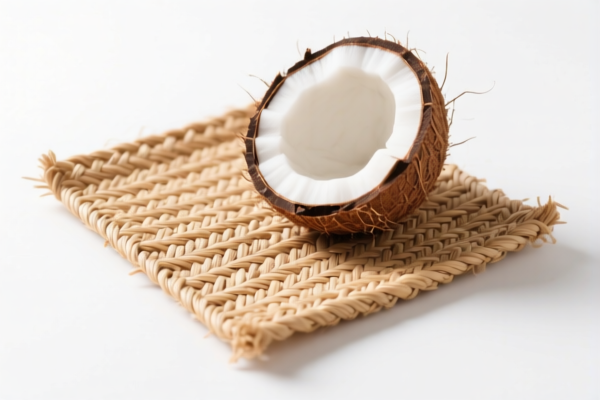
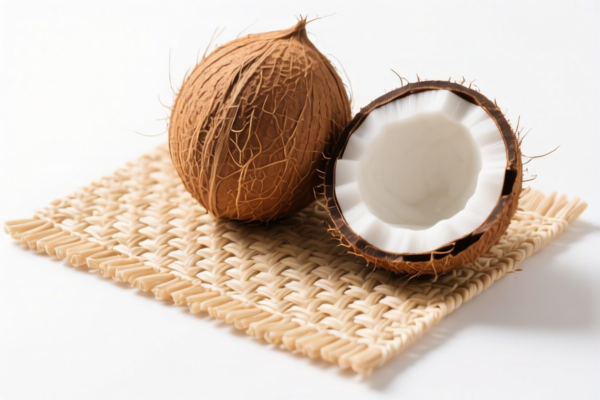
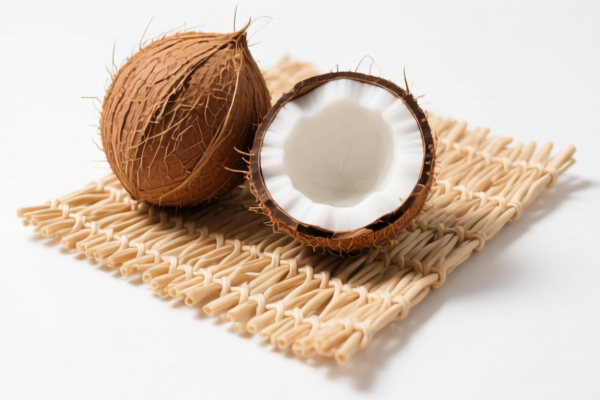
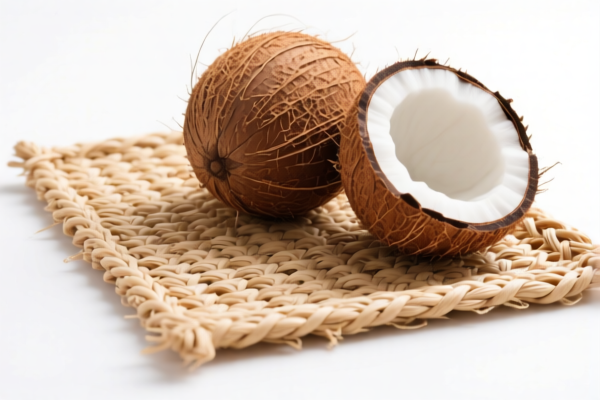
AI分析
🌴 Coconut Palm Fiber Stick (Vegetable Materials & Broom Products)
🌐 HS Code Reference & Customs Clearance Guide | 2026 Latest Tariff Analysis | Professional Entry Strategy
📌 Part 1: Product Definition & Classification – Are You Clear on "Coconut Palm Fiber Stick"?
Coconut Palm Fiber Sticks are versatile agricultural by-products, primarily used in broom/brush manufacturing or wickerwork/basketry. In international trade, the classification depends entirely on the state of processing and final intended use:
- Raw/Processed Vegetable Material: If the sticks are merely cleaned, stripped, or bundled for use as raw material (specifically for making brooms or brushes), they fall under Chapter 14 (Vegetable Plaiting Materials).
- Finished Wickerwork/Basketwork: If the sticks are woven or shaped directly into baskets, bags, or decorative items, they fall under Chapter 46 (Articles of Wickerwork).
- Finished Brooms: If the sticks are bound together with a handle or into a whiskbroom, they fall under Chapter 96 (Brooms, Brushes).
⚠️ Key Distinction Point:
- If it is raw/plaiting material used for brooms/brushes → Chapter 14
- If it is woven into a basket/bag (especially palm leaf) → Chapter 46
- If it is a finished whiskbroom (broom corn/palm fiber bound) → Chapter 96
📦 Part 2: HS Code Classification Details (2026 Latest Tariff Authority Match)
Based on your provided <DATA>, here are the exact classifications for coconut palm fiber sticks depending on their form:
| HS Code | Product Description | Application Scenario | Processing State |
|---|---|---|---|
1404.90.40.00 |
Vegetable materials of a kind used primarily in brooms or in brushes (e.g., broom corn, piassava, istle), whether or not in hanks or bundles; Other | Raw coconut fibers/sticks bundled for brush manufacturing; unprocessed plaiting material | ✅ Raw/Bundle (Chapter 14) |
1404.90.90.90 |
Vegetable products not elsewhere specified or included: Other; Other Other | Other unspecified vegetable materials not primarily for brooms/brushes | ✅ Raw/Unspecified (Chapter 14) |
4602.19.16.00 |
Basketwork of vegetable materials: Of palm leaf: Other baskets and bags, whether or not lined: Other | Finished woven baskets/bags made from coconut palm leaves/sticks | ✅ Finished Woven (Chapter 46) |
4602.19.14.00 |
Basketwork of vegetable materials: Of palm leaf: Wickerwork | Wickerwork articles made from coconut palm fibers/leaves | ✅ Finished Wickerwork (Chapter 46) |
9603.10.05.00 |
Brooms/brushes of twigs/vegetable materials: Whiskbrooms of broom corn/palm: Valued ≤ 96¢ each (quota) | Finished whiskbrooms made from coconut palm fibers, under specific quota | ✅ Finished Broom (Chapter 96) |
9603.10.15.00 |
Brooms/brushes of twigs/vegetable materials: Whiskbrooms of broom corn/palm: Valued ≤ 96¢ each (Other) | Finished whiskbrooms made from coconut palm fibers, outside quota | ✅ Finished Broom (Chapter 96) |
🔍 Critical Reminder:
- If you are importing raw sticks to weave yourself, use 1404.90.40.00.
- If you are importing finished woven baskets made of palm, use 4602.19.16.00 or 4602.19.14.00.
- If you are importing finished whiskbrooms, use 9603.10.05.00 or 9603.10.15.00.
- Do not mix raw materials with finished goods in one declaration to avoid misclassification penalties.
💰 Part 3: 2026 Latest Tariff Rate Details (Including Surtaxes)
✅ Applicable Country: United States (US)
✅ Origin: China (CN) (Note: Rates assume US import from China based on surtax context in DATA)
✅ Effective Time: Current US Tariff Schedule
🎯 1. 1404.90.40.00 – Vegetable Materials for Brooms/Brushes (Raw)
| Item | Content |
|---|---|
| Base Duty Rate | 2.3% (Ad Valorem) |
| Section 301 Surtax | +25.0% (USITC Footnote 9903.88.01 type logic) |
| Total Duty Rate | 27.3% |
| Tax Calculation | CIF Value × 27.3% |
| De Minimis Eligibility | ❌ No (Value > $800 threshold usually triggers full duty; low value parcels may still be subject if deemed commercial) |
📌 Explanation:
- The 2.3% is the standard Most Favored Nation (MFN) rate for vegetable plaiting materials.
- The +25% is the Section 301 Additional Duty applied to goods originating from China.
- Total Cost Impact: You pay 27.3% on the customs value. This is a moderate-high duty for raw agricultural materials.
🎯 2. 1404.90.90.90 – Other Vegetable Products (Unspecified)
| Item | Content |
|---|---|
| Base Duty Rate | 0.0% |
| Section 301 Surtax | +25.0% |
| Total Duty Rate | 25.0% |
| Tax Calculation | CIF Value × 25.0% |
| De Minimis Eligibility | ❌ No |
📌 Explanation:
- Although the base rate is 0%, the Section 301 surtax of 25% still applies because the origin is China.
- Savings Alert: This code saves 2.3% compared to1404.90.40.00. However, you must ensure the goods truly qualify as "Other" and not "primarily for brooms/brushes." Misuse can lead to penalties.
🎯 3. 4602.19.16.00 – Wickerwork/Baskets of Palm Leaf (Other)
| Item | Content |
|---|---|
| Base Duty Rate | 0.0% |
| Section 301 Surtax | 0.0% |
| Total Duty Rate | 0.0% |
| Tax Calculation | $0.00 |
| De Minimis Eligibility | N/A (Usually for larger shipments, but duty-free) |
📌 Explanation:
- Major Advantage! Wickerwork and basketwork of vegetable materials often enjoy 0% base duty.
- Crucially, no 25% Section 301 surtax is listed in the provided data for this specific subheading. This is a significant cost-saving classification if the product can be legally defined as "wickerwork" or "basketwork" rather than raw material.
- Condition: Must be "made directly to shape from plaiting materials" or "made up from articles of heading 4601."
🎯 4. 4602.19.14.00 – Wickerwork of Palm Leaf
| Item | Content |
|---|---|
| Base Duty Rate | 0.0% |
| Section 301 Surtax | +25.0% |
| Total Duty Rate | 25.0% |
| Tax Calculation | CIF Value × 25.0% |
| De Minimis Eligibility | ❌ No |
📌 Explanation:
- While the base rate is 0%, this specific "Wickerwork" subheading is subject to the 25% surtax.
- Risk: If you classify as4602.19.14.00, you pay 25%. If you can classify as4602.19.16.00(Other baskets/bags), you pay 0%.
- Strategy: Ensure your product description aligns with "Other baskets and bags" rather than generic "Wickerwork" if possible, to leverage the 0% rate.
🎯 5. 9603.10.05.00 & 9603.10.15.00 – Whiskbrooms (Finished Brooms)
A. 9603.10.05.00 (Within Quota)
| Item | Content |
|---|---|
| Base Duty Rate | 8.0% |
| Section 301 Surtax | 0.0% |
| Total Duty Rate | 8.0% |
| Additional Condition | Quota Limit: 61,655 dozen whiskbrooms per calendar year |
| De Minimis Eligibility | ❌ No |
B. 9603.10.15.00 (Outside Quota)
| Item | Content |
|---|---|
| Base Duty Rate | 5¢ per piece (Specific Duty) |
| Section 301 Surtax | +7.5% (Ad Valorem) |
| Total Duty Rate | 5¢/piece + 7.5% |
| De Minimis Eligibility | ❌ No |
📌 Explanation:
- Whiskbrooms are treated differently.
- If you have quota allocation, the rate is a flat 8%.
- If you are outside the quota, the rate becomes 5 cents per piece PLUS 7.5%.
- Warning: For low-value whiskbrooms, the 5¢/piece specific duty can be extremely high relative to the value. Example: A $1 whiskbroom incurs $0.05 (5%) base + 7.5% = ~12.5% total. For a $0.50 item, it’s 10% + 7.5%.
- Check Quota Availability: Before importing finished brooms, verify if the 61,655 dozen quota is available for the year.
🛠️ Part 4: Customs Clearance Practical Advice (Battle-Tested Pitfall Avoidance)
✅ 1. Required Documentation Checklist
| Document | Mandatory | Explanation |
|---|---|---|
| ✅ Commercial Invoice | ✔️ | Must clearly state "Coconut Palm Fiber Stick" and intended use (e.g., "For Wickerwork" vs. "For Broom Making"). |
| ✅ Packing List | ✔️ | Detail if items are bundled, knotted, or woven. |
| ✅ Product Photos | ✔️ | Show raw state vs. finished state. If woven, show the weave pattern. |
| ✅ Certificate of Origin (CO) | ✔️ | Essential for proving origin to apply/avoid Section 301 taxes. |
| ✅ Fiber Analysis Report | ✔️ | If claiming 1404.90.40.00 vs 1404.90.90.90, a botanist or supplier letter confirming "primarily for broom/brush use" may be requested. |
✅ 2. Declaration Tips (Key Mnemonic)
🔥 "Raw Material = Ch14; Woven Basket = Ch46; Finished Broom = Ch96"
| Scenario | Correct HS Code | Wrong Code | Consequence |
|---|---|---|---|
| Raw sticks for weaving | 1404.90.40.00 |
4602.19.16.00 |
Underpayment of duty (27.3% vs 0%) → Penalty + Back Taxes |
| Finished woven basket | 4602.19.16.00 |
1404.90.40.00 |
Overpayment of duty (0% vs 27.3%) → Lost Profit |
| Finished Whiskbroom | 9603.10.05.00 (if quota) |
4602.19.14.00 |
Misclassification → 8% vs 25% discrepancy |
| Raw material "Other" | 1404.90.90.90 |
1404.90.40.00 |
Savings of 2.3% if truly not for brooms/brushes |
✅ 3. Special Case Handling
| Situation | Handling Advice |
|---|---|
| Mixed Shipment (Raw sticks + Woven Baskets) | Split Declarations! Do not mix Ch14 and Ch46. Customs will scrutinize the entire shipment. |
| Quota Exhaustion for Brooms | If the 61,655 dozen quota for 9603.10.05.00 is used up, all remaining whiskbrooms will fall under 9603.10.15.00 (5¢/pc + 7.5%). Plan shipments accordingly. |
| Product "On the Edge" | If your "stick" is cut to size and bundled specifically for broom handles, use 1404.90.40.00. If it's just raw coconut husk fiber, use 1404.90.90.90 (if applicable) to save 2.3%. |
| Wickerwork Definition | To qualify for 4602.19.16.00 (0% tax), the item must be "made directly to shape" or "made up from heading 4601 articles." Simple weaving of raw sticks into a basket fits this. |
🌍 Part 5: Global Market Comparison (2026 Latest)
| Country/Region | Recommended HS Code | Tariff (China Origin) | Notes |
|---|---|---|---|
| 🇺🇸 USA | 4602.19.16.00 |
0.0% | Best for Wickerwork. Avoid Ch14 if possible due to 25-27% tax. |
| 🇺🇸 USA | 1404.90.40.00 |
27.3% | High duty for raw material. |
| 🇨🇳 China | 1404.90.40.00 |
~2-3% | Low import duty, no Section 301. |
| 🇪🇺 EU | 1404.90 |
~3-5% | Standard MFN rates, no Section 301. |
| 🇬🇧 UK | 1404.90 |
~3-5% | Post-Brexit tariffs similar to EU. |
📌 Conclusion:
- The US market is the most tax-sensitive due to Section 301 surtaxes.
- Optimization Strategy: If your product can be classified as Wickerwork/Basketwork (4602.19.16.00), you pay 0%. This is a 27.3% saving compared to importing raw materials (1404.90.40.00).
- Action: If possible, ship partially finished or finished woven items rather than raw sticks to leverage the 0% duty rate, provided the product description strictly meets Chapter 46 requirements.
📌 Part 6: Common Errors & Pitfall Guide (Blood & Tears Lessons)
❌ Error 1: Classifying Raw Sticks as Finished Wickerwork
👉 Result: Customs may reject the claim if the item is not "made to shape" or "woven." If deemed raw, you owe 27.3% + penalties.
👉 Fix: Ensure the item is clearly woven or shaped before declaring under Ch46.
❌ Error 2: Ignoring the Quota for Whiskbrooms
👉 Result: If you declare under 9603.10.05.00 but the quota is exhausted, you will be reassigned to 9603.10.15.00 and billed the 5¢/piece + 7.5% rate retroactively.
👉 Fix: Check USITC quota utilization monthly.
❌ Error 3: Misclassifying Coconut Husk Fiber as Broom Material
👉 Result: Using 1404.90.90.90 (0% base) for items clearly used in brooms. Customs may demand 1404.90.40.00 (2.3% base) + 25% surtax.
👉 Fix: Provide end-use declarations to support "Other" classification if not primarily for brooms.
❌ Error 4: Assuming All Wickerwork is 0% Duty
👉 Result: 4602.19.14.00 has a 25% surtax. Only 4602.19.16.00 (Other baskets/bags) is 0%.
👉 Fix: Check the specific subheading description. "Other baskets and bags" is the key to 0% duty.
✅ Correct Practice:
"Woven Coconut Palm Leaf Basket, Handmade, for Decorative Storage, Origin China, HTS 4602.19.16.00"
🎯 Part 7: Conclusion – Professional Classification Saves Money!
🎯 Remember the Mantra:
🔹 "Raw Sticks: 27.3%; Finished Baskets: 0%; Whiskbrooms: 8% or 5¢+7.5%."
🔹 "Chapter 46 is King for Duty-Free Imports (if Woven)."
🔹 "Check the Quota for Brooms, or Pay the Penalty."
📌 Pro Tip:
If you are importing large volumes of coconut fiber sticks, consider contract manufacturing or partial assembly in a third country (if feasible) to avoid Section 301 taxes, OR ensure your product is declared as Wickerwork (4602.19.16.00) to achieve 0% duty.
📣 Immediate Action:
📞 Consult with a licensed customs broker to verify if your "stick" qualifies as "Wickerwork" under
4602.19.16.00.
🚀 Declare Accurately, Save 27%, and Clear Customs Smoothly!
✨ Professional Clearance Starts with Precise Classification!
💼 Every Percentage Point Counts!
用户评价
关于 HS 编码归类
协调制度(HS)是由世界海关组织(WCO)制定的国际贸易商品分类标准。全球 200 多个国家采用 HS 系统作为海关关税、贸易统计和进出口监管的基础。
每个 HS 编码遵循以下层级结构:
- 章(2 位)——商品大类(例如:第 84 章:机器和机械设备)
- 品目(4 位)——章内的更具体分类
- 子目(6 位)——国际通用细分,所有 WCO 成员国统一使用
- 本国细分(8-10 位)——各国自行扩展的细分编码,如美国 HTSUS 10 位编码
正确的 HS 编码归类对于顺利通关、准确缴纳关税和遵守贸易法规至关重要。错误归类可能导致海关延误、多缴关税或罚款。
从CN进口到US时,适用的关税税率可能包括:
- 最惠国(MFN)税率——适用于 WTO 成员国的标准关税税率
- 普通税率——适用于无贸易协定国家
- 贸易救济关税——附加关税,如 301 条款(反倾销)、232 条款(国家安全)或反补贴税
本页内容仅供参考。如需正式归类,请咨询当地海关或持牌报关代理。