Coconut Palm Fiber Stick
CN → US| HS Code | Tariff Rate | Origin | Destination | Doc |
|---|---|---|---|---|
| 9603100500 | 18.0% | CN | US | Official Doc |
| 9603101500 | 0.0% | CN | US | Official Doc |
| 4602191600 | 40.0% | CN | US | Official Doc |
| 4602191400 | 35.0% | CN | US | Official Doc |
| 1404904000 | 37.3% | CN | US | Official Doc |
| 1404909090 | 35.0% | CN | US | Official Doc |
Product Images
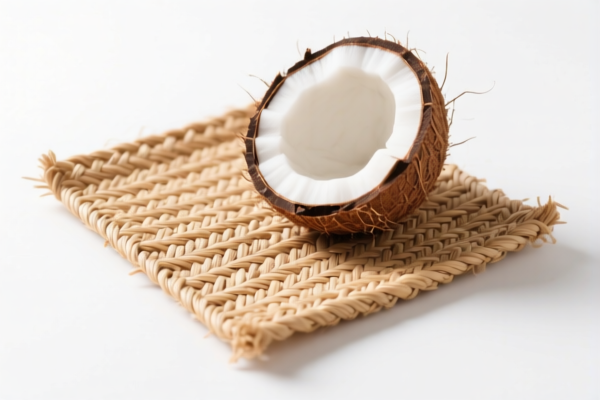
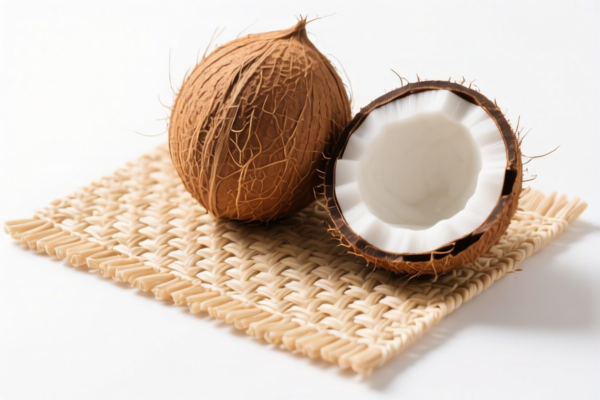
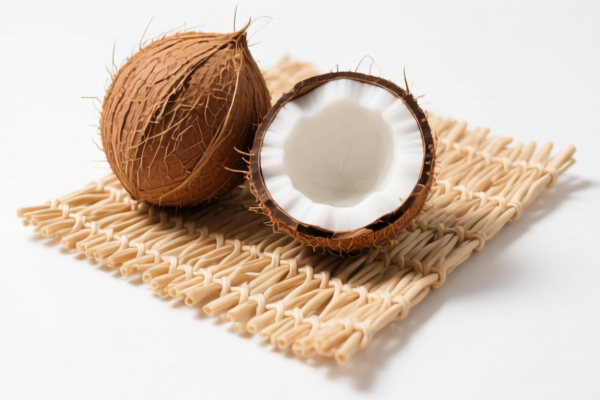
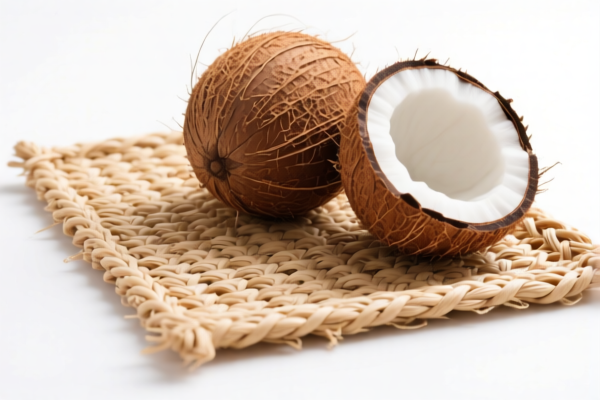
AI Analysis
🌴 Coconut Palm Fiber Stick (Vegetable Materials & Broom Products)
🌐 HS Code Reference & Customs Clearance Guide | 2026 Latest Tariff Analysis | Professional Entry Strategy
📌 Part 1: Product Definition & Classification – Are You Clear on "Coconut Palm Fiber Stick"?
Coconut Palm Fiber Sticks are versatile agricultural by-products, primarily used in broom/brush manufacturing or wickerwork/basketry. In international trade, the classification depends entirely on the state of processing and final intended use:
- Raw/Processed Vegetable Material: If the sticks are merely cleaned, stripped, or bundled for use as raw material (specifically for making brooms or brushes), they fall under Chapter 14 (Vegetable Plaiting Materials).
- Finished Wickerwork/Basketwork: If the sticks are woven or shaped directly into baskets, bags, or decorative items, they fall under Chapter 46 (Articles of Wickerwork).
- Finished Brooms: If the sticks are bound together with a handle or into a whiskbroom, they fall under Chapter 96 (Brooms, Brushes).
⚠️ Key Distinction Point:
- If it is raw/plaiting material used for brooms/brushes → Chapter 14
- If it is woven into a basket/bag (especially palm leaf) → Chapter 46
- If it is a finished whiskbroom (broom corn/palm fiber bound) → Chapter 96
📦 Part 2: HS Code Classification Details (2026 Latest Tariff Authority Match)
Based on your provided <DATA>, here are the exact classifications for coconut palm fiber sticks depending on their form:
| HS Code | Product Description | Application Scenario | Processing State |
|---|---|---|---|
1404.90.40.00 |
Vegetable materials of a kind used primarily in brooms or in brushes (e.g., broom corn, piassava, istle), whether or not in hanks or bundles; Other | Raw coconut fibers/sticks bundled for brush manufacturing; unprocessed plaiting material | ✅ Raw/Bundle (Chapter 14) |
1404.90.90.90 |
Vegetable products not elsewhere specified or included: Other; Other Other | Other unspecified vegetable materials not primarily for brooms/brushes | ✅ Raw/Unspecified (Chapter 14) |
4602.19.16.00 |
Basketwork of vegetable materials: Of palm leaf: Other baskets and bags, whether or not lined: Other | Finished woven baskets/bags made from coconut palm leaves/sticks | ✅ Finished Woven (Chapter 46) |
4602.19.14.00 |
Basketwork of vegetable materials: Of palm leaf: Wickerwork | Wickerwork articles made from coconut palm fibers/leaves | ✅ Finished Wickerwork (Chapter 46) |
9603.10.05.00 |
Brooms/brushes of twigs/vegetable materials: Whiskbrooms of broom corn/palm: Valued ≤ 96¢ each (quota) | Finished whiskbrooms made from coconut palm fibers, under specific quota | ✅ Finished Broom (Chapter 96) |
9603.10.15.00 |
Brooms/brushes of twigs/vegetable materials: Whiskbrooms of broom corn/palm: Valued ≤ 96¢ each (Other) | Finished whiskbrooms made from coconut palm fibers, outside quota | ✅ Finished Broom (Chapter 96) |
🔍 Critical Reminder:
- If you are importing raw sticks to weave yourself, use 1404.90.40.00.
- If you are importing finished woven baskets made of palm, use 4602.19.16.00 or 4602.19.14.00.
- If you are importing finished whiskbrooms, use 9603.10.05.00 or 9603.10.15.00.
- Do not mix raw materials with finished goods in one declaration to avoid misclassification penalties.
💰 Part 3: 2026 Latest Tariff Rate Details (Including Surtaxes)
✅ Applicable Country: United States (US)
✅ Origin: China (CN) (Note: Rates assume US import from China based on surtax context in DATA)
✅ Effective Time: Current US Tariff Schedule
🎯 1. 1404.90.40.00 – Vegetable Materials for Brooms/Brushes (Raw)
| Item | Content |
|---|---|
| Base Duty Rate | 2.3% (Ad Valorem) |
| Section 301 Surtax | +25.0% (USITC Footnote 9903.88.01 type logic) |
| Total Duty Rate | 27.3% |
| Tax Calculation | CIF Value × 27.3% |
| De Minimis Eligibility | ❌ No (Value > $800 threshold usually triggers full duty; low value parcels may still be subject if deemed commercial) |
📌 Explanation:
- The 2.3% is the standard Most Favored Nation (MFN) rate for vegetable plaiting materials.
- The +25% is the Section 301 Additional Duty applied to goods originating from China.
- Total Cost Impact: You pay 27.3% on the customs value. This is a moderate-high duty for raw agricultural materials.
🎯 2. 1404.90.90.90 – Other Vegetable Products (Unspecified)
| Item | Content |
|---|---|
| Base Duty Rate | 0.0% |
| Section 301 Surtax | +25.0% |
| Total Duty Rate | 25.0% |
| Tax Calculation | CIF Value × 25.0% |
| De Minimis Eligibility | ❌ No |
📌 Explanation:
- Although the base rate is 0%, the Section 301 surtax of 25% still applies because the origin is China.
- Savings Alert: This code saves 2.3% compared to1404.90.40.00. However, you must ensure the goods truly qualify as "Other" and not "primarily for brooms/brushes." Misuse can lead to penalties.
🎯 3. 4602.19.16.00 – Wickerwork/Baskets of Palm Leaf (Other)
| Item | Content |
|---|---|
| Base Duty Rate | 0.0% |
| Section 301 Surtax | 0.0% |
| Total Duty Rate | 0.0% |
| Tax Calculation | $0.00 |
| De Minimis Eligibility | N/A (Usually for larger shipments, but duty-free) |
📌 Explanation:
- Major Advantage! Wickerwork and basketwork of vegetable materials often enjoy 0% base duty.
- Crucially, no 25% Section 301 surtax is listed in the provided data for this specific subheading. This is a significant cost-saving classification if the product can be legally defined as "wickerwork" or "basketwork" rather than raw material.
- Condition: Must be "made directly to shape from plaiting materials" or "made up from articles of heading 4601."
🎯 4. 4602.19.14.00 – Wickerwork of Palm Leaf
| Item | Content |
|---|---|
| Base Duty Rate | 0.0% |
| Section 301 Surtax | +25.0% |
| Total Duty Rate | 25.0% |
| Tax Calculation | CIF Value × 25.0% |
| De Minimis Eligibility | ❌ No |
📌 Explanation:
- While the base rate is 0%, this specific "Wickerwork" subheading is subject to the 25% surtax.
- Risk: If you classify as4602.19.14.00, you pay 25%. If you can classify as4602.19.16.00(Other baskets/bags), you pay 0%.
- Strategy: Ensure your product description aligns with "Other baskets and bags" rather than generic "Wickerwork" if possible, to leverage the 0% rate.
🎯 5. 9603.10.05.00 & 9603.10.15.00 – Whiskbrooms (Finished Brooms)
A. 9603.10.05.00 (Within Quota)
| Item | Content |
|---|---|
| Base Duty Rate | 8.0% |
| Section 301 Surtax | 0.0% |
| Total Duty Rate | 8.0% |
| Additional Condition | Quota Limit: 61,655 dozen whiskbrooms per calendar year |
| De Minimis Eligibility | ❌ No |
B. 9603.10.15.00 (Outside Quota)
| Item | Content |
|---|---|
| Base Duty Rate | 5¢ per piece (Specific Duty) |
| Section 301 Surtax | +7.5% (Ad Valorem) |
| Total Duty Rate | 5¢/piece + 7.5% |
| De Minimis Eligibility | ❌ No |
📌 Explanation:
- Whiskbrooms are treated differently.
- If you have quota allocation, the rate is a flat 8%.
- If you are outside the quota, the rate becomes 5 cents per piece PLUS 7.5%.
- Warning: For low-value whiskbrooms, the 5¢/piece specific duty can be extremely high relative to the value. Example: A $1 whiskbroom incurs $0.05 (5%) base + 7.5% = ~12.5% total. For a $0.50 item, it’s 10% + 7.5%.
- Check Quota Availability: Before importing finished brooms, verify if the 61,655 dozen quota is available for the year.
🛠️ Part 4: Customs Clearance Practical Advice (Battle-Tested Pitfall Avoidance)
✅ 1. Required Documentation Checklist
| Document | Mandatory | Explanation |
|---|---|---|
| ✅ Commercial Invoice | ✔️ | Must clearly state "Coconut Palm Fiber Stick" and intended use (e.g., "For Wickerwork" vs. "For Broom Making"). |
| ✅ Packing List | ✔️ | Detail if items are bundled, knotted, or woven. |
| ✅ Product Photos | ✔️ | Show raw state vs. finished state. If woven, show the weave pattern. |
| ✅ Certificate of Origin (CO) | ✔️ | Essential for proving origin to apply/avoid Section 301 taxes. |
| ✅ Fiber Analysis Report | ✔️ | If claiming 1404.90.40.00 vs 1404.90.90.90, a botanist or supplier letter confirming "primarily for broom/brush use" may be requested. |
✅ 2. Declaration Tips (Key Mnemonic)
🔥 "Raw Material = Ch14; Woven Basket = Ch46; Finished Broom = Ch96"
| Scenario | Correct HS Code | Wrong Code | Consequence |
|---|---|---|---|
| Raw sticks for weaving | 1404.90.40.00 |
4602.19.16.00 |
Underpayment of duty (27.3% vs 0%) → Penalty + Back Taxes |
| Finished woven basket | 4602.19.16.00 |
1404.90.40.00 |
Overpayment of duty (0% vs 27.3%) → Lost Profit |
| Finished Whiskbroom | 9603.10.05.00 (if quota) |
4602.19.14.00 |
Misclassification → 8% vs 25% discrepancy |
| Raw material "Other" | 1404.90.90.90 |
1404.90.40.00 |
Savings of 2.3% if truly not for brooms/brushes |
✅ 3. Special Case Handling
| Situation | Handling Advice |
|---|---|
| Mixed Shipment (Raw sticks + Woven Baskets) | Split Declarations! Do not mix Ch14 and Ch46. Customs will scrutinize the entire shipment. |
| Quota Exhaustion for Brooms | If the 61,655 dozen quota for 9603.10.05.00 is used up, all remaining whiskbrooms will fall under 9603.10.15.00 (5¢/pc + 7.5%). Plan shipments accordingly. |
| Product "On the Edge" | If your "stick" is cut to size and bundled specifically for broom handles, use 1404.90.40.00. If it's just raw coconut husk fiber, use 1404.90.90.90 (if applicable) to save 2.3%. |
| Wickerwork Definition | To qualify for 4602.19.16.00 (0% tax), the item must be "made directly to shape" or "made up from heading 4601 articles." Simple weaving of raw sticks into a basket fits this. |
🌍 Part 5: Global Market Comparison (2026 Latest)
| Country/Region | Recommended HS Code | Tariff (China Origin) | Notes |
|---|---|---|---|
| 🇺🇸 USA | 4602.19.16.00 |
0.0% | Best for Wickerwork. Avoid Ch14 if possible due to 25-27% tax. |
| 🇺🇸 USA | 1404.90.40.00 |
27.3% | High duty for raw material. |
| 🇨🇳 China | 1404.90.40.00 |
~2-3% | Low import duty, no Section 301. |
| 🇪🇺 EU | 1404.90 |
~3-5% | Standard MFN rates, no Section 301. |
| 🇬🇧 UK | 1404.90 |
~3-5% | Post-Brexit tariffs similar to EU. |
📌 Conclusion:
- The US market is the most tax-sensitive due to Section 301 surtaxes.
- Optimization Strategy: If your product can be classified as Wickerwork/Basketwork (4602.19.16.00), you pay 0%. This is a 27.3% saving compared to importing raw materials (1404.90.40.00).
- Action: If possible, ship partially finished or finished woven items rather than raw sticks to leverage the 0% duty rate, provided the product description strictly meets Chapter 46 requirements.
📌 Part 6: Common Errors & Pitfall Guide (Blood & Tears Lessons)
❌ Error 1: Classifying Raw Sticks as Finished Wickerwork
👉 Result: Customs may reject the claim if the item is not "made to shape" or "woven." If deemed raw, you owe 27.3% + penalties.
👉 Fix: Ensure the item is clearly woven or shaped before declaring under Ch46.
❌ Error 2: Ignoring the Quota for Whiskbrooms
👉 Result: If you declare under 9603.10.05.00 but the quota is exhausted, you will be reassigned to 9603.10.15.00 and billed the 5¢/piece + 7.5% rate retroactively.
👉 Fix: Check USITC quota utilization monthly.
❌ Error 3: Misclassifying Coconut Husk Fiber as Broom Material
👉 Result: Using 1404.90.90.90 (0% base) for items clearly used in brooms. Customs may demand 1404.90.40.00 (2.3% base) + 25% surtax.
👉 Fix: Provide end-use declarations to support "Other" classification if not primarily for brooms.
❌ Error 4: Assuming All Wickerwork is 0% Duty
👉 Result: 4602.19.14.00 has a 25% surtax. Only 4602.19.16.00 (Other baskets/bags) is 0%.
👉 Fix: Check the specific subheading description. "Other baskets and bags" is the key to 0% duty.
✅ Correct Practice:
"Woven Coconut Palm Leaf Basket, Handmade, for Decorative Storage, Origin China, HTS 4602.19.16.00"
🎯 Part 7: Conclusion – Professional Classification Saves Money!
🎯 Remember the Mantra:
🔹 "Raw Sticks: 27.3%; Finished Baskets: 0%; Whiskbrooms: 8% or 5¢+7.5%."
🔹 "Chapter 46 is King for Duty-Free Imports (if Woven)."
🔹 "Check the Quota for Brooms, or Pay the Penalty."
📌 Pro Tip:
If you are importing large volumes of coconut fiber sticks, consider contract manufacturing or partial assembly in a third country (if feasible) to avoid Section 301 taxes, OR ensure your product is declared as Wickerwork (4602.19.16.00) to achieve 0% duty.
📣 Immediate Action:
📞 Consult with a licensed customs broker to verify if your "stick" qualifies as "Wickerwork" under
4602.19.16.00.
🚀 Declare Accurately, Save 27%, and Clear Customs Smoothly!
✨ Professional Clearance Starts with Precise Classification!
💼 Every Percentage Point Counts!
Customer Reviews
About HS Code Classification
The Harmonized System (HS) is an internationally standardized nomenclature developed by the World Customs Organization (WCO) to classify traded products. Over 200 countries use the HS system as the basis for customs tariffs, trade statistics, and import/export regulations.
Each HS code follows a hierarchical structure:
- Chapter (2 digits) — Broad category of goods (e.g., Chapter 84: Machinery and Mechanical Appliances)
- Heading (4 digits) — More specific grouping within the chapter
- Subheading (6 digits) — Internationally standardized breakdown, used by all WCO member countries
- National subdivisions (8-10 digits) — Country-specific extensions for further classification, such as US HTSUS 10-digit codes
Correct HS code classification is essential for smooth customs clearance, accurate duty payment, and compliance with trade regulations. Misclassification can lead to customs delays, overpayment of duties, or penalties.
When importing from CN to US, the applicable tariff rates may include:
- Most-Favored-Nation (MFN) rate — The standard duty rate applied to WTO members
- General rate — Applied to countries without trade agreements
- Trade remedy duties — Additional tariffs such as Section 301 (anti-dumping), Section 232 (national security), or countervailing duties
The information provided on this page is for reference purposes only. For official classification, please consult with your local customs authority or a licensed customs broker.