Coffee Cleaning Brush Set
CN → US| HS编码 | 关税税率 | 原产国 | 目的国 | 文档 |
|---|---|---|---|---|
| 3924104000 | 13.4% | CN | US | 官方文档 |
| 3402505100 | 10.0% | CN | US | 官方文档 |
| 3924905650 | 20.9% | CN | US | 官方文档 |
| 3402905030 | 38.7% | CN | US | 官方文档 |
| 9603109000 | 27.5% | CN | US | 官方文档 |
商品图片
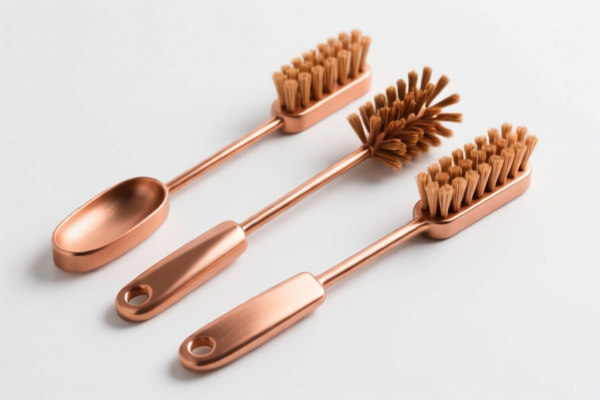
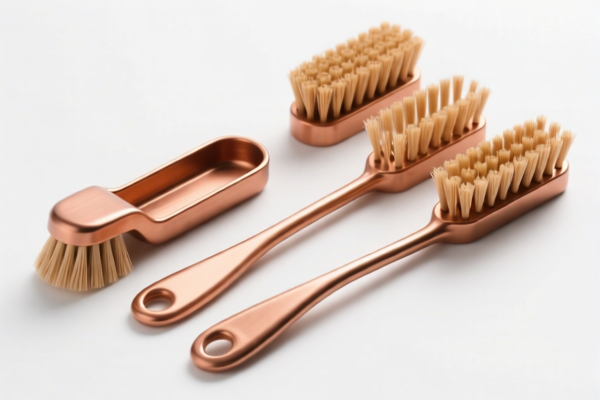
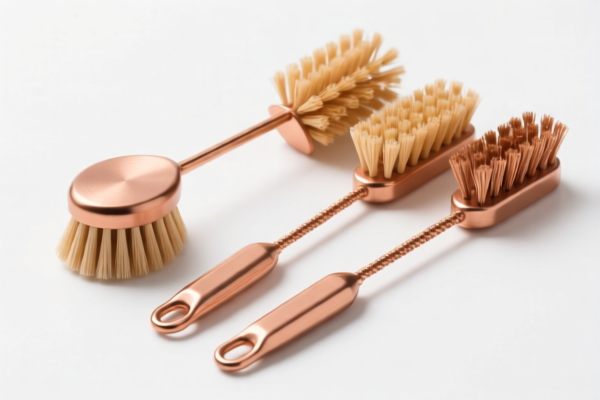
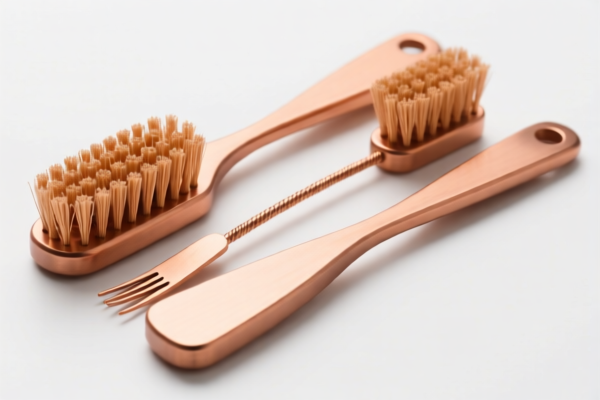
AI分析
🧼 Coffee Cleaning Brush Set (Coffee Machine Accessories)
🌐 HS Code Reference & Customs Clearance Guide | 2026 Latest Tariff Analysis | Professional Clearance Strategy
📌 I. Product Definition & Classification: What Exactly Is a "Coffee Cleaning Brush Set"?
A Coffee Cleaning Brush Set is typically a kit containing specialized brushes, tampers, or scrubbers designed for maintaining espresso machines, grinders, and portafilters. In international trade, its classification depends heavily on material composition and primary function.
Key Distinction: * Cleaning Agents (Liquids/Powders): If the set includes cleaning tablets or solutions, it may fall under Chemical/Cosmetic chapters. * Physical Tools (Brushes/Scrubbers): If the set consists of physical bristles, plastic handles, or silicone tools, it falls under Plastic articles or Brooms/Brushes chapters. * Mixed Kits: Often classified as "Plastic household items" or "Chemical preparations" depending on the dominant feature.
⚠️ Critical Classification Point:
- If the kit is primarily plastic bristles/tools → Chapter 39 (Plastics) or Chapter 96 (Brooms/Brushes).
- If the kit is primarily cleaning chemicals/solutions → Chapter 34 (Detergents/Cleaners).
- Mixed kits often trigger higher scrutiny due to varying tax rates across chapters.
📦 II. HS Code Classification Details (2026 Latest Tariff Reference)
Based on the provided data, here are the five most probable HS Codes for a "Coffee Cleaning Brush Set," along with their logical justifications and tax implications.
| HS Code | Product Description | Logical Justification from Data | Total Tax Rate | Tax Breakdown |
|---|---|---|---|---|
| 3924.10.40.00 | Plastic Sanitary/Closet Articles | "Based on the use of the cleaning kit, it is inferred that it contains cleaning supplies, falling within the category of plastic sanitary or toilet articles." | 13.4% | Base: 3.4% Section 301: 0.0% Section 122: 10% |
| 3402.50.51.00 | Surface Active Agents/Cleaning Prep | "By common sense, this cleaning kit belongs to the cleaning preparation category, matching the functional description of surfactants and cleaning preparations." | 10.0% | Base: 0.0% Section 301: 0.0% Section 122: 10% |
| 3924.90.56.50 | Other Plastic Household Items | "Inferred that cleaning kits often contain plastic brushes or bottles, fitting the fallback category for plastic household and sanitary items." | 20.9% | Base: 3.4% Section 301: 7.5% Section 122: 10% |
| 3402.90.50.30 | Other Surface Active Agents | "Product name and code match the usage of cleaning preparations completely; kits usually contain cleaners, and forms match cleaning uses." | 38.7% | Base: 3.7% Section 301: 25.0% Section 122: 10% |
| 9603.10.90.00 | Brooms, Brushes, etc. | "Product name matches classification usage (brushes), belonging to other fallback categories; reasonably inferred as brooms/brushes." | 27.5% | Base: 10.0% Section 301: 7.5% Section 122: 10% |
🔍 Key Insight:
- The tax rate varies drastically from 10.0% to 38.7% depending on whether Customs views the item as a Plastic Tool (Ch. 39/96) or a Chemical/Cleaning Prep (Ch. 34).
- Section 122 (10%) applies to all categories in the provided data, indicating a specific bilateral or trade agreement impact.
- Section 301 adds significant weight (up to 25%) for chemical-based classifications (3402.90.50.30).
💰 III. 2026 Latest Tariff Rate Details (Including Surcharges)
✅ Applicable Country: United States (US)
✅ Origin: China (CN)
✅ Effective Date: Current (2026)
🎯 1. 3924.10.40.00 —— Plastic Sanitary Articles (Lowest Risk/Rate)
| Item | Content |
|---|---|
| Base Duty | 3.4% (ad valorem) |
| Section 301 Surcharge | 0.0% |
| Section 122 Surcharge | +10.0% |
| Total Effective Rate | 13.4% |
| Tax Calculation | CIF Value × 13.4% |
| De Minimis Eligibility | ✅ Yes (If value < $800) |
| Legal Basis Path | USITC:3924.10.40.00 → FOOTNOTE:122 |
📌 Explanation:
- This classification assumes the kit is treated as plastic sanitary/household goods.
- No Section 301 tariffs apply, making this the most cost-effective classification if substantiated by product photos (showing plastic brushes, not just chemicals).
🎯 2. 3402.50.51.00 —— Surface Active Agents (Chemical Focus)
| Item | Content |
|---|---|
| Base Duty | 0.0% |
| Section 301 Surcharge | 0.0% |
| Section 122 Surcharge | +10.0% |
| Total Effective Rate | 10.0% |
| Tax Calculation | CIF Value × 10.0% |
| De Minimis Eligibility | ✅ Yes (If value < $800) |
| Legal Basis Path | USITC:3402.50.51.00 → FOOTNOTE:122 |
📌 Explanation:
- If the kit is dominated by cleaning tablets or liquid solutions, it may qualify for 0% base duty.
- However, proving "chemical dominance" over physical brushes can be difficult in mixed kits.
🎯 3. 3924.90.56.50 —— Other Plastic Household Items
| Item | Content |
|---|---|
| Base Duty | 3.4% |
| Section 301 Surcharge | +7.5% |
| Section 122 Surcharge | +10.0% |
| Total Effective Rate | 20.9% |
| Tax Calculation | CIF Value × 20.9% |
| De Minimis Eligibility | ✅ Yes (If value < $800) |
| Legal Basis Path | USITC:3924.90.56.50 → FOOTNOTE:122 → USITC:301.88 |
📌 Explanation:
- A "fallback" plastic category. Applies if the kit doesn't fit specific sanitary codes but is clearly plastic.
- Higher Section 301 impact (7.5%) compared to3924.10.40.00.
🎯 4. 3402.90.50.30 —— Other Chemical Preparations (Highest Risk)
| Item | Content |
|---|---|
| Base Duty | 3.7% |
| Section 301 Surcharge | +25.0% |
| Section 122 Surcharge | +10.0% |
| Total Effective Rate | 38.7% |
| Tax Calculation | CIF Value × 38.7% |
| De Minimis Eligibility | ❌ No (High risk of audit) |
| Legal Basis Path | USITC:3402.90.50.30 → USITC:301.88 → FOOTNOTE:122 |
📌 Explanation:
- Highest Tax Rate. Applies if Customs determines the kit is primarily a chemical cleaning agent.
- The 25% Section 301 tariff makes this classification very expensive. Avoid unless the product is 100% chemical with no physical brushes.
🎯 5. 9603.10.90.00 —— Brooms & Brushes
| Item | Content |
|---|---|
| Base Duty | 10.0% |
| Section 301 Surcharge | +7.5% |
| Section 122 Surcharge | +10.0% |
| Total Effective Rate | 27.5% |
| Tax Calculation | CIF Value × 27.5% |
| De Minimis Eligibility | ✅ Yes (If value < $800) |
| Legal Basis Path | USITC:9603.10.90.00 → FOOTNOTE:122 → USITC:301.88 |
📌 Explanation:
- Fits if the product is purely physical brushes (e.g., portafilter cleaning brushes, group head brushes).
- Higher base duty (10%) than plastic sanitary codes.
🛠️ IV. Customs Clearance Practical Advice (Real-World Pitfall Guide)
✅ 1. Documentation Checklist (Non-Negotiable)
| Document | Required | Explanation |
|---|---|---|
| ✅ Product Photos | ✔️ | Critical: Must show physical brushes (plastic/bristle) to support HS 39/96. If only chemicals are shown, HS 34 will be assigned. |
| ✅ Commercial Invoice | ✔️ | Clearly state: "Coffee Machine Cleaning Brush Set (Physical Tools)" |
| ✅ Packing List | ✔️ | List each brush individually (e.g., "1x Portafilter Brush, Plastic Bristles") |
| ✅ Product Description | ✔️ | Avoid words like "Chemical," "Solution," or "Tablet" unless physically present. |
| ✅ Material Declaration | ✔️ | Confirm materials: "100% Plastic Handle, Nylon Bristles" |
✅ 2. Classification Strategy (Key Mantra)
🔥 "Show the Plastic, Hide the Chemistry, Avoid the 38% Pit!"
| Scenario | Recommended HS Code | Tax Rate | Why? |
|---|---|---|---|
| Kit with only brushes (no chemicals) | 3924.10.40.00 or 9603.10.90.00 |
13.4% - 27.5% | Physically a tool/plastic item. |
| Kit with cleaning tablets + brushes | 3924.10.40.00 |
13.4% | Argue brushes are "dominant" or "primary use" is mechanical cleaning. |
| Kit with liquid solution + brushes | 3402.50.51.00 |
10.0% | Only if chemicals are the main value/use. Hard to prove for brush sets. |
| Kit with heavy chemical focus | 3402.90.50.30 |
38.7% | AVOID. High tax. Only if brushes are minor accessories. |
📌 Note:
- Section 301 (25%) is the biggest risk. Classifying as3402.90.50.30triggers this.
- Section 122 (10%) applies to all, so focus on minimizing Base + Section 301.
✅ 3. Special Cases
| Case | Handling Advice |
|---|---|
| OEM Custom Brushes | Provide design drawings to prove "plastic/broom" classification. |
| Brushes with Chemical Residue | Clearly label as "Physical Brush, Not a Chemical Product" on invoice. |
| Mixed Kit (Brush + Solution) | Declare separately if possible, or argue for the higher-value item (usually brushes) to avoid chemical classification. |
| Small Handheld Brushes | Use 3924.10.40.00 (Sanitary/Plastic) rather than 9603 (Brooms) for better rate stability. |
🌍 V. Global Customs Comparison (2026 Update)
| Country/Region | Recommended HS Code | Tax Rate (China Origin) | Certification | Note |
|---|---|---|---|---|
| 🇺🇸 USA | 3924.10.40.00 |
13.4% | None | Avoid 3402.90.50.30 (38.7%) |
| 🇨🇳 China | 3924.10.40.00 |
8.0% | None | Lower base duty, no Section 301 |
| 🇪🇺 EU | 9603.30.00 |
4.0% | CE (if applicable) | Different chapter structure |
| 🇬🇧 UK | 9603.30.00 |
4.0% | UKCA | Post-Brexit alignment |
| 🇯🇵 Japan | 9603.90.00 |
5.0% | None | General brush category |
📌 Conclusion:
- USA is the most complex market due to Section 301/122 tariffs.
- Plastic classification (3924) is the sweet spot for coffee brush sets in the US.
- Chemical classification (3402.90) is a tax trap due to 25% Section 301.
📌 VI. Common Errors & Pitfalls (Blood Lessons)
❌ Error 1: Declaring "Coffee Cleaning Kit" without specifying contents
👉 Consequence: Customs assigns 3402.90.50.30 by default → 38.7% Tax!
❌ Error 2: Including cleaning tablets in a "Brush Set" shipment without separate declaration
👉 Consequence: Entire kit reclassified as chemical → High Tax + Delay
❌ Error 3: Using "Brooms" (9603) for small plastic portafilter brushes
👉 Consequence: Possible reclassification to 3924 with higher scrutiny, though tax may be similar. Clarify material.
❌ Error 4: Ignoring Section 122 (10%)
👉 Consequence: Underpayment → Penalties + Interest
✅ Correct Declaration:
"Coffee Machine Cleaning Brush Set (Plastic Handles, Nylon Bristles). No Chemicals Included. Model XYZ. For Mechanical Cleaning of Espresso Machines."
🎯 VII. Conclusion: Precision Classification Saves Money!
🎯 Remember:
🔹 "Brushes are Plastic, Not Chemicals!"
🔹 "Avoid 3402.90, Stick to 3924.10!"
🔹 "13.4% vs 38.7% – The difference is $253 on $1000!"
📌 Pro Tip:
If your kit includes cleaning tablets, declare them separately as "Cleaning Tablets" (
3808.94) to avoid contaminating the brush classification.
Apply for a Binding Ruling if importing large volumes to lock in the 13.4% rate.
📣 Immediate Action:
📞 Contact your Customs Broker with clear photos of the physical brushes.
🚀 Declare as "Plastic Sanitary/Cleaning Tools" to secure the 13.4% rate.
✨ Professional Clearance Starts with Accurate Classification!
💼 Every Percent Saved is Pure Profit!
用户评价
关于 HS 编码归类
协调制度(HS)是由世界海关组织(WCO)制定的国际贸易商品分类标准。全球 200 多个国家采用 HS 系统作为海关关税、贸易统计和进出口监管的基础。
每个 HS 编码遵循以下层级结构:
- 章(2 位)——商品大类(例如:第 84 章:机器和机械设备)
- 品目(4 位)——章内的更具体分类
- 子目(6 位)——国际通用细分,所有 WCO 成员国统一使用
- 本国细分(8-10 位)——各国自行扩展的细分编码,如美国 HTSUS 10 位编码
正确的 HS 编码归类对于顺利通关、准确缴纳关税和遵守贸易法规至关重要。错误归类可能导致海关延误、多缴关税或罚款。
从CN进口到US时,适用的关税税率可能包括:
- 最惠国(MFN)税率——适用于 WTO 成员国的标准关税税率
- 普通税率——适用于无贸易协定国家
- 贸易救济关税——附加关税,如 301 条款(反倾销)、232 条款(国家安全)或反补贴税
本页内容仅供参考。如需正式归类,请咨询当地海关或持牌报关代理。