Color Scientific Film
CN → US| HS编码 | 关税税率 | 原产国 | 目的国 | 文档 |
|---|---|---|---|---|
| 3702100030 | 38.7% | CN | US | 官方文档 |
| 3702100060 | 38.7% | CN | US | 官方文档 |
| 3702310100 | 38.7% | CN | US | 官方文档 |
| 3702520130 | 38.7% | CN | US | 官方文档 |
| 3704000000 | 35.0% | CN | US | 官方文档 |
商品图片
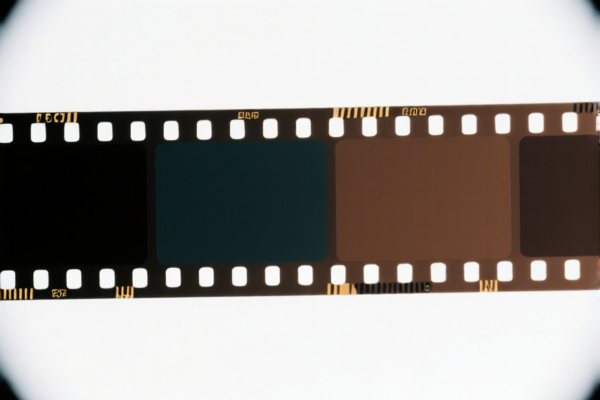
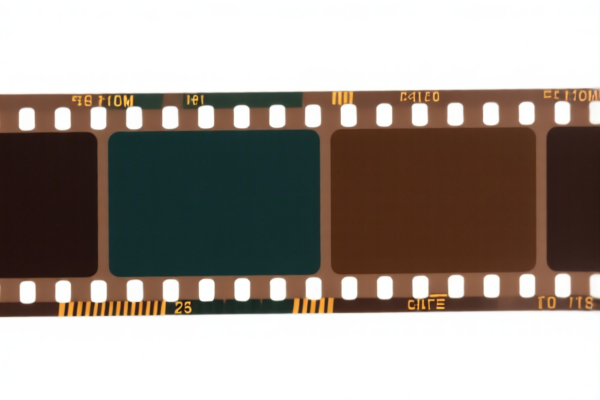
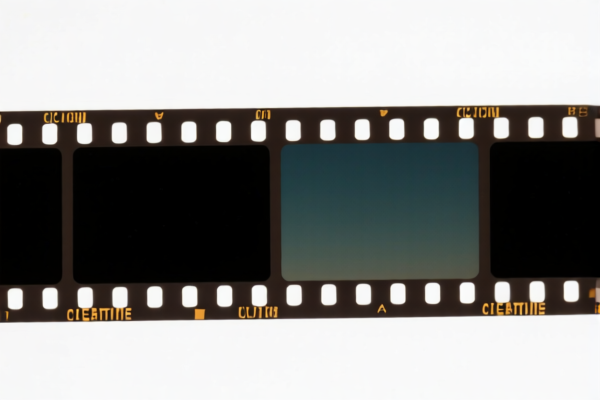

AI分析
🎞️ Color Scientific Film (X-Ray/Photographic Film)
🌐 HS Code Reference & Clearance Guide | 2026 Latest Tariff Analysis | Professional Customs Strategy
📌 I. Product Definition: What is "Color Scientific Film"?
Color Scientific Film generally refers to specialized photographic media used in industrial, medical, or scientific applications (such as X-ray imaging, non-destructive testing, or high-precision scientific recording). Unlike standard consumer film, these products are engineered for specific light spectra (like X-rays) and often require color processing or specific contrast characteristics.
⚠️ Key Distinction:
- Form: Must be unexposed, undeveloped film stock (sensitized material on a plastic base).
- Use: Specific scientific, medical, or industrial applications (e.g., X-ray radiography).
- Material: Non-paper, non-textile sensitized film.
📦 II. HS Code Classification Details (2026 Latest Tariff Authority Comparison)
Based on the provided data, the classification depends on the specific type (X-ray vs. Color) and form (Film/Sensitized Material) of the scientific film.
| HS Code | Product Description | Summary & Matching Logic | Total Tax Rate |
|---|---|---|---|
3702.10.00.30 |
X-Ray Film / Sensitized Material | Matches use (X-ray) and form (Film/Sensitized Material). Material inferred as non-paper, non-textile sensitized material. | 38.7% |
3702.10.00.60 |
Other Photographic Roll/Film | Matches use (For X-ray) and form (Film/Sensitized Material). Fits the description of "other" photographic rolls. | 38.7% |
3702.31.01.00 |
Color Sensitized Film | Matches characteristic (Color) and form (Sensitized Roll). Fits non-paper/cardboard sensitized media. | 38.7% |
3702.52.01.30 |
Color Reversal Film | Matches material (Color) and form (Film). Inferred as Color Reversal category (slides/positive film). | 38.7% |
3704.00.00.00 |
Exposed/Undeveloped Film | Matches material (Film) and form (Support for Photography). Fits classification for exposed/undeveloped film carriers. | 35.0% |
🔍 Critical Note:
- HS Codes3702.xxgenerally refer to unexposed sensitized films.
- HS Code3704.00.00refers to exposed but undeveloped film or film carriers.
- The majority of "new" scientific film stock falls under 3702, but specific characteristics (X-ray vs. Color) determine the exact subheading.
💰 III. 2026 Latest Tariff Rate Details (Including Surcharges & Policy Add-ons)
✅ Applicable Country: United States (US)
✅ Origin: China (CN)
✅ Effective Time: 2025/2026 (Current Trade Restrictions)
🎯 1. HS Codes: 3702.10.00.30, 3702.10.00.60, 3702.31.01.00, 3702.52.01.30
(Standard Unexposed Scientific/Color Films)
| Item | Detail |
|---|---|
| Base Tariff | 3.7% (Ad Valorem) |
| Section 301 Tariff | +25.0% (USITC Footnote for China-origin goods) |
| Section 122 Tariff | +10.0% (Specific surcharge for China) |
| Total Tax Rate | 38.7% |
| Calculation Method | CIF Value × 38.7% |
| De Minimis Exemption | ❌ Not Applicable (Denied) |
| Legal Basis Path | Base Rate → USITC:301Clause → IEEPA:Section122 → Target HS Code |
📌 Explanation:
- The 3.7% is the standard Most Favored Nation (MFN) rate for Chapter 37 products.
- The 25% is the standard Section 301 tariff applied to most Chinese industrial and consumer goods.
- The 10% is an additional surcharge under Section 122 of the Trade Act.
- Total Impact: A 38.7% tariff significantly increases the landed cost. This is not a low-tariff category.
🎯 2. HS Code: 3704.00.00.00
(Exposed/Undeveloped Film Carriers)
| Item | Detail |
|---|---|
| Base Tariff | 0.0% (Ad Valorem) |
| Section 301 Tariff | +25.0% |
| Section 122 Tariff | +10.0% |
| Total Tax Rate | 35.0% |
| Calculation Method | CIF Value × 35.0% |
| De Minimis Exemption | ❌ Not Applicable (Denied) |
| Legal Basis Path | Base Rate:0% → USITC:301Clause → IEEPA:Section122 → Target HS Code |
📌 Explanation:
- While the base rate is 0%, the surcharges bring it to 35.0%.
- This code is only applicable if the film is already exposed (e.g., X-ray films after scanning) but not yet developed, or if classified as a "carrier."
- Misclassification Risk: Declaring unexposed film as "exposed" to gain a lower rate is customs fraud and carries severe penalties.
🛠️ IV. Customs Clearance Practical Advice (Actionable Pitfall Guide)
✅ 1. Required Documentation Checklist
| Document | Required? | Description |
|---|---|---|
| Product Specification Sheet | ✅ | Must specify: Unexposed, Sensitized, Base Material (e.g., Polyester), Sensitivity (e.g., X-ray speed). |
| Commercial Invoice | ✅ | Clearly state: "Color Scientific Film, Unexposed, for Industrial/Medical Use." Avoid vague terms like "Photographic Paper." |
| Certificate of Origin | ✅ | Essential for determining Section 301/122 applicability. |
| Usage Declaration | ✅ | Confirm end-use: Scientific research, Medical diagnostics, or Industrial NDT (Non-Destructive Testing). |
| Composition Data | ✅ | Confirm non-paper, non-textile base to support HS Code 3702. |
✅ 2. Declaration Tips (Key Mnemonics)
🔥 "Be Specific: Color vs. X-Ray, Exposed vs. Unexposed!"
| Scenario | Correct Declaration | Error to Avoid |
|---|---|---|
| New X-Ray Film Stock | 3702.10.00.30 or 3702.10.00.60 |
Declaring as 3704 (Exposed) → Fraud Risk |
| Color Reversal Film (Slides) | 3702.52.01.30 |
Declaring as generic "Camera Film" → Valuation Risk |
| Exposed X-Ray Films (Medical) | 3704.00.00.00 |
Declaring as new film → Higher Duty (38.7% vs 35.0%) |
| Scientific Film on Paper Base | ⚠️ Check Classification | If paper-based, it may fall under Chapter 48, not 37. |
📌 Crucial Warning:
- Do NOT describe the product simply as "Film." Specify "Sensitized Photographic Film, Unexposed."
- If the film is Color, ensure it matches the 3702.31 or 3702.52 subheadings.
- If the film is for X-Ray, ensure it matches 3702.10.
✅ 3. Special Cases & Risk Management
| Situation | Recommendation |
|---|---|
| Mixed Shipments | Separate X-ray film from Color film in the invoice. Mixed classification can lead to audits. |
| High-Value Scientific Film | Consider Section 122 Exemptions if available (check current USITC lists for medical/scientific exemptions). |
| Non-US Origin | If manufactured in Vietnam, Malaysia, or Thailand, Section 301/122 may not apply → Tariff could be 0-5%. Provide full supply chain documentation. |
| Used/Developed Film | If fully developed, it may no longer be "sensitized" and could fall under Chapter 3704 or even Chapter 49 (if printed). Verify with customs broker. |
🌍 V. Global Market Comparison (2026)
| Country/Region | Recommended HS Code | Estimated Tariff (China Origin) | Notes |
|---|---|---|---|
| 🇺🇸 USA | 3702.10.00.30 / 3704.00.00.00 |
35.0% - 38.7% | High duties due to Section 301 & 122. |
| 🇨🇳 China | 3702.10.00.30 |
~5-10% | Lower duties, but import regulations for scientific materials apply. |
| 🇪🇺 EU | 3702.10.00 |
~6-9% | Standard WTO rates. No Section 301 equivalent. |
| 🇬🇧 UK | 3702.10.00 |
~6-9% | Post-Brexit tariff schedules similar to EU. |
📌 Conclusion:
- The US is the most expensive market for Chinese-sourced scientific film due to the 38.7% effective rate.
- Supply Chain Diversification: For US-bound goods, consider sourcing from non-China origins to avoid the 25%+301% and 10%+122% surcharges.
📌 VI. Common Mistakes & Pitfalls (Lessons Learned)
❌ Mistake 1: Declaring Unexposed Film as "Photographic Paper"
👉 Consequence: Wrong HS Code (Chapter 48). If caught, leads to penalties + back duties. Scientific film is rarely paper-based.
❌ Mistake 2: Ignoring Section 122 Tariff
👉 Consequence: Underpaying by 10%. US Customs and Border Protection (CBP) actively audits Chapter 37 products from China.
❌ Mistake 3: Mixing X-Ray and Color Film in One Line Item
👉 Consequence: Customs may select the highest duty rate for the entire shipment or initiate an inspection. Separate lines are mandatory.
❌ Mistake 4: Using "Scientific Material" as a Description
👉 Consequence: Vague descriptions lead to holds and inspections. Always use "Sensitized Photographic Film, Unexposed."
✅ Correct Practice:
"Unexposed Color Sensitized Photographic Film, Polyester Base, for Industrial X-Ray Imaging, Model XYZ, Origin: China"
🎯 VII. Conclusion: Precision Classification Saves Money!
🎯 Key Takeaway:
🔹 "X-Ray vs. Color vs. Exposed: Choose the Right 8-Digit Code."
🔹 "Total Duty: 38.7% for Unexposed, 35.0% for Exposed. Don't Misdeclare!"
📌 Pro Tip:
If your film is critical for medical or scientific research, check if it qualifies for Exempt List #3 or other Section 301 exclusions. Some medical imaging films have been excluded from certain surcharges.
Always apply for a CBP Binding Ruling before importing large volumes to ensure compliance.
📣 Immediate Action:
📞 Consult a Licensed Customs Broker to confirm the exact HS Code based on the film's base material and sensitivity.
🚀 Optimize Supply Chain: Consider sourcing from non-China countries for US-bound shipments to save ~30% in tariffs.
✨ Professional Clearance Starts with Accurate Classification!
💼 Every Percent of Tariff Counts!
用户评价
关于 HS 编码归类
协调制度(HS)是由世界海关组织(WCO)制定的国际贸易商品分类标准。全球 200 多个国家采用 HS 系统作为海关关税、贸易统计和进出口监管的基础。
每个 HS 编码遵循以下层级结构:
- 章(2 位)——商品大类(例如:第 84 章:机器和机械设备)
- 品目(4 位)——章内的更具体分类
- 子目(6 位)——国际通用细分,所有 WCO 成员国统一使用
- 本国细分(8-10 位)——各国自行扩展的细分编码,如美国 HTSUS 10 位编码
正确的 HS 编码归类对于顺利通关、准确缴纳关税和遵守贸易法规至关重要。错误归类可能导致海关延误、多缴关税或罚款。
从CN进口到US时,适用的关税税率可能包括:
- 最惠国(MFN)税率——适用于 WTO 成员国的标准关税税率
- 普通税率——适用于无贸易协定国家
- 贸易救济关税——附加关税,如 301 条款(反倾销)、232 条款(国家安全)或反补贴税
本页内容仅供参考。如需正式归类,请咨询当地海关或持牌报关代理。