Color Scientific Film
CN → US| HS Code | Tariff Rate | Origin | Destination | Doc |
|---|---|---|---|---|
| 3702100030 | 38.7% | CN | US | Official Doc |
| 3702100060 | 38.7% | CN | US | Official Doc |
| 3702310100 | 38.7% | CN | US | Official Doc |
| 3702520130 | 38.7% | CN | US | Official Doc |
| 3704000000 | 35.0% | CN | US | Official Doc |
Product Images
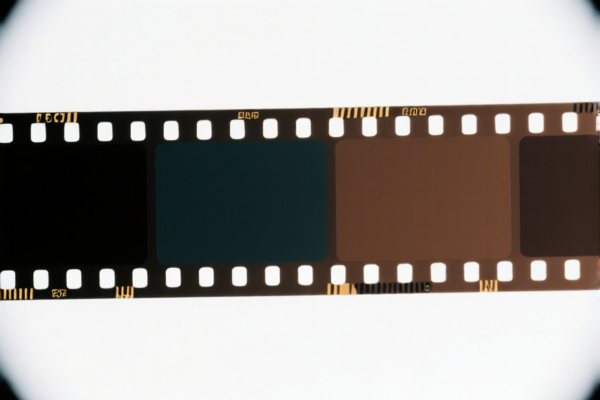
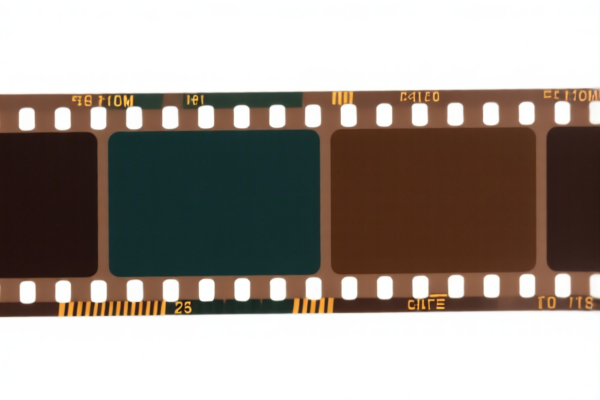
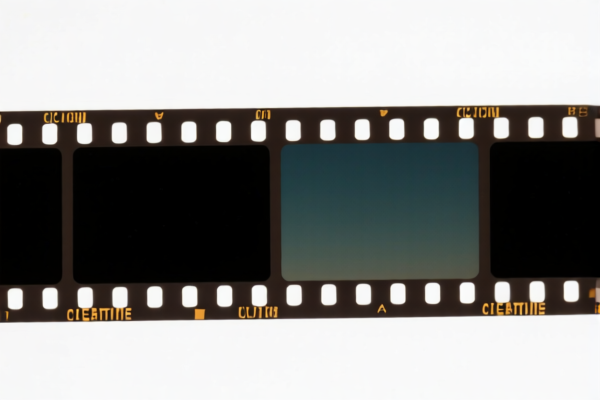

AI Analysis
🎞️ Color Scientific Film (X-Ray/Photographic Film)
🌐 HS Code Reference & Clearance Guide | 2026 Latest Tariff Analysis | Professional Customs Strategy
📌 I. Product Definition: What is "Color Scientific Film"?
Color Scientific Film generally refers to specialized photographic media used in industrial, medical, or scientific applications (such as X-ray imaging, non-destructive testing, or high-precision scientific recording). Unlike standard consumer film, these products are engineered for specific light spectra (like X-rays) and often require color processing or specific contrast characteristics.
⚠️ Key Distinction:
- Form: Must be unexposed, undeveloped film stock (sensitized material on a plastic base).
- Use: Specific scientific, medical, or industrial applications (e.g., X-ray radiography).
- Material: Non-paper, non-textile sensitized film.
📦 II. HS Code Classification Details (2026 Latest Tariff Authority Comparison)
Based on the provided data, the classification depends on the specific type (X-ray vs. Color) and form (Film/Sensitized Material) of the scientific film.
| HS Code | Product Description | Summary & Matching Logic | Total Tax Rate |
|---|---|---|---|
3702.10.00.30 |
X-Ray Film / Sensitized Material | Matches use (X-ray) and form (Film/Sensitized Material). Material inferred as non-paper, non-textile sensitized material. | 38.7% |
3702.10.00.60 |
Other Photographic Roll/Film | Matches use (For X-ray) and form (Film/Sensitized Material). Fits the description of "other" photographic rolls. | 38.7% |
3702.31.01.00 |
Color Sensitized Film | Matches characteristic (Color) and form (Sensitized Roll). Fits non-paper/cardboard sensitized media. | 38.7% |
3702.52.01.30 |
Color Reversal Film | Matches material (Color) and form (Film). Inferred as Color Reversal category (slides/positive film). | 38.7% |
3704.00.00.00 |
Exposed/Undeveloped Film | Matches material (Film) and form (Support for Photography). Fits classification for exposed/undeveloped film carriers. | 35.0% |
🔍 Critical Note:
- HS Codes3702.xxgenerally refer to unexposed sensitized films.
- HS Code3704.00.00refers to exposed but undeveloped film or film carriers.
- The majority of "new" scientific film stock falls under 3702, but specific characteristics (X-ray vs. Color) determine the exact subheading.
💰 III. 2026 Latest Tariff Rate Details (Including Surcharges & Policy Add-ons)
✅ Applicable Country: United States (US)
✅ Origin: China (CN)
✅ Effective Time: 2025/2026 (Current Trade Restrictions)
🎯 1. HS Codes: 3702.10.00.30, 3702.10.00.60, 3702.31.01.00, 3702.52.01.30
(Standard Unexposed Scientific/Color Films)
| Item | Detail |
|---|---|
| Base Tariff | 3.7% (Ad Valorem) |
| Section 301 Tariff | +25.0% (USITC Footnote for China-origin goods) |
| Section 122 Tariff | +10.0% (Specific surcharge for China) |
| Total Tax Rate | 38.7% |
| Calculation Method | CIF Value × 38.7% |
| De Minimis Exemption | ❌ Not Applicable (Denied) |
| Legal Basis Path | Base Rate → USITC:301Clause → IEEPA:Section122 → Target HS Code |
📌 Explanation:
- The 3.7% is the standard Most Favored Nation (MFN) rate for Chapter 37 products.
- The 25% is the standard Section 301 tariff applied to most Chinese industrial and consumer goods.
- The 10% is an additional surcharge under Section 122 of the Trade Act.
- Total Impact: A 38.7% tariff significantly increases the landed cost. This is not a low-tariff category.
🎯 2. HS Code: 3704.00.00.00
(Exposed/Undeveloped Film Carriers)
| Item | Detail |
|---|---|
| Base Tariff | 0.0% (Ad Valorem) |
| Section 301 Tariff | +25.0% |
| Section 122 Tariff | +10.0% |
| Total Tax Rate | 35.0% |
| Calculation Method | CIF Value × 35.0% |
| De Minimis Exemption | ❌ Not Applicable (Denied) |
| Legal Basis Path | Base Rate:0% → USITC:301Clause → IEEPA:Section122 → Target HS Code |
📌 Explanation:
- While the base rate is 0%, the surcharges bring it to 35.0%.
- This code is only applicable if the film is already exposed (e.g., X-ray films after scanning) but not yet developed, or if classified as a "carrier."
- Misclassification Risk: Declaring unexposed film as "exposed" to gain a lower rate is customs fraud and carries severe penalties.
🛠️ IV. Customs Clearance Practical Advice (Actionable Pitfall Guide)
✅ 1. Required Documentation Checklist
| Document | Required? | Description |
|---|---|---|
| Product Specification Sheet | ✅ | Must specify: Unexposed, Sensitized, Base Material (e.g., Polyester), Sensitivity (e.g., X-ray speed). |
| Commercial Invoice | ✅ | Clearly state: "Color Scientific Film, Unexposed, for Industrial/Medical Use." Avoid vague terms like "Photographic Paper." |
| Certificate of Origin | ✅ | Essential for determining Section 301/122 applicability. |
| Usage Declaration | ✅ | Confirm end-use: Scientific research, Medical diagnostics, or Industrial NDT (Non-Destructive Testing). |
| Composition Data | ✅ | Confirm non-paper, non-textile base to support HS Code 3702. |
✅ 2. Declaration Tips (Key Mnemonics)
🔥 "Be Specific: Color vs. X-Ray, Exposed vs. Unexposed!"
| Scenario | Correct Declaration | Error to Avoid |
|---|---|---|
| New X-Ray Film Stock | 3702.10.00.30 or 3702.10.00.60 |
Declaring as 3704 (Exposed) → Fraud Risk |
| Color Reversal Film (Slides) | 3702.52.01.30 |
Declaring as generic "Camera Film" → Valuation Risk |
| Exposed X-Ray Films (Medical) | 3704.00.00.00 |
Declaring as new film → Higher Duty (38.7% vs 35.0%) |
| Scientific Film on Paper Base | ⚠️ Check Classification | If paper-based, it may fall under Chapter 48, not 37. |
📌 Crucial Warning:
- Do NOT describe the product simply as "Film." Specify "Sensitized Photographic Film, Unexposed."
- If the film is Color, ensure it matches the 3702.31 or 3702.52 subheadings.
- If the film is for X-Ray, ensure it matches 3702.10.
✅ 3. Special Cases & Risk Management
| Situation | Recommendation |
|---|---|
| Mixed Shipments | Separate X-ray film from Color film in the invoice. Mixed classification can lead to audits. |
| High-Value Scientific Film | Consider Section 122 Exemptions if available (check current USITC lists for medical/scientific exemptions). |
| Non-US Origin | If manufactured in Vietnam, Malaysia, or Thailand, Section 301/122 may not apply → Tariff could be 0-5%. Provide full supply chain documentation. |
| Used/Developed Film | If fully developed, it may no longer be "sensitized" and could fall under Chapter 3704 or even Chapter 49 (if printed). Verify with customs broker. |
🌍 V. Global Market Comparison (2026)
| Country/Region | Recommended HS Code | Estimated Tariff (China Origin) | Notes |
|---|---|---|---|
| 🇺🇸 USA | 3702.10.00.30 / 3704.00.00.00 |
35.0% - 38.7% | High duties due to Section 301 & 122. |
| 🇨🇳 China | 3702.10.00.30 |
~5-10% | Lower duties, but import regulations for scientific materials apply. |
| 🇪🇺 EU | 3702.10.00 |
~6-9% | Standard WTO rates. No Section 301 equivalent. |
| 🇬🇧 UK | 3702.10.00 |
~6-9% | Post-Brexit tariff schedules similar to EU. |
📌 Conclusion:
- The US is the most expensive market for Chinese-sourced scientific film due to the 38.7% effective rate.
- Supply Chain Diversification: For US-bound goods, consider sourcing from non-China origins to avoid the 25%+301% and 10%+122% surcharges.
📌 VI. Common Mistakes & Pitfalls (Lessons Learned)
❌ Mistake 1: Declaring Unexposed Film as "Photographic Paper"
👉 Consequence: Wrong HS Code (Chapter 48). If caught, leads to penalties + back duties. Scientific film is rarely paper-based.
❌ Mistake 2: Ignoring Section 122 Tariff
👉 Consequence: Underpaying by 10%. US Customs and Border Protection (CBP) actively audits Chapter 37 products from China.
❌ Mistake 3: Mixing X-Ray and Color Film in One Line Item
👉 Consequence: Customs may select the highest duty rate for the entire shipment or initiate an inspection. Separate lines are mandatory.
❌ Mistake 4: Using "Scientific Material" as a Description
👉 Consequence: Vague descriptions lead to holds and inspections. Always use "Sensitized Photographic Film, Unexposed."
✅ Correct Practice:
"Unexposed Color Sensitized Photographic Film, Polyester Base, for Industrial X-Ray Imaging, Model XYZ, Origin: China"
🎯 VII. Conclusion: Precision Classification Saves Money!
🎯 Key Takeaway:
🔹 "X-Ray vs. Color vs. Exposed: Choose the Right 8-Digit Code."
🔹 "Total Duty: 38.7% for Unexposed, 35.0% for Exposed. Don't Misdeclare!"
📌 Pro Tip:
If your film is critical for medical or scientific research, check if it qualifies for Exempt List #3 or other Section 301 exclusions. Some medical imaging films have been excluded from certain surcharges.
Always apply for a CBP Binding Ruling before importing large volumes to ensure compliance.
📣 Immediate Action:
📞 Consult a Licensed Customs Broker to confirm the exact HS Code based on the film's base material and sensitivity.
🚀 Optimize Supply Chain: Consider sourcing from non-China countries for US-bound shipments to save ~30% in tariffs.
✨ Professional Clearance Starts with Accurate Classification!
💼 Every Percent of Tariff Counts!
Customer Reviews
About HS Code Classification
The Harmonized System (HS) is an internationally standardized nomenclature developed by the World Customs Organization (WCO) to classify traded products. Over 200 countries use the HS system as the basis for customs tariffs, trade statistics, and import/export regulations.
Each HS code follows a hierarchical structure:
- Chapter (2 digits) — Broad category of goods (e.g., Chapter 84: Machinery and Mechanical Appliances)
- Heading (4 digits) — More specific grouping within the chapter
- Subheading (6 digits) — Internationally standardized breakdown, used by all WCO member countries
- National subdivisions (8-10 digits) — Country-specific extensions for further classification, such as US HTSUS 10-digit codes
Correct HS code classification is essential for smooth customs clearance, accurate duty payment, and compliance with trade regulations. Misclassification can lead to customs delays, overpayment of duties, or penalties.
When importing from CN to US, the applicable tariff rates may include:
- Most-Favored-Nation (MFN) rate — The standard duty rate applied to WTO members
- General rate — Applied to countries without trade agreements
- Trade remedy duties — Additional tariffs such as Section 301 (anti-dumping), Section 232 (national security), or countervailing duties
The information provided on this page is for reference purposes only. For official classification, please consult with your local customs authority or a licensed customs broker.