Color Wide Art Photography Film
CN → US| HS编码 | 关税税率 | 原产国 | 目的国 | 文档 |
|---|---|---|---|---|
| 3702520130 | 38.7% | CN | US | 官方文档 |
| 3702520160 | 38.7% | CN | US | 官方文档 |
| 3704000000 | 35.0% | CN | US | 官方文档 |
| 3705000000 | 35.0% | CN | US | 官方文档 |
| 3704000000 | 35.0% | CN | US | 官方文档 |
商品图片


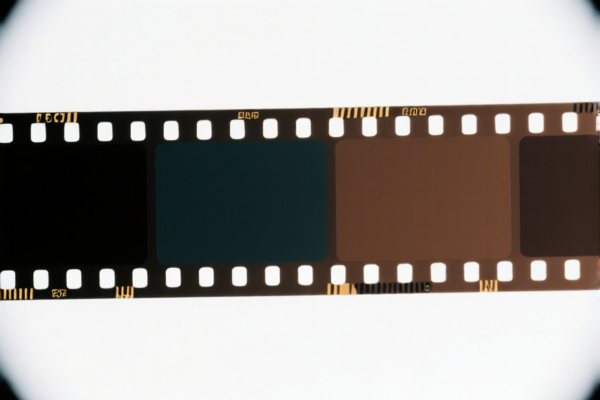
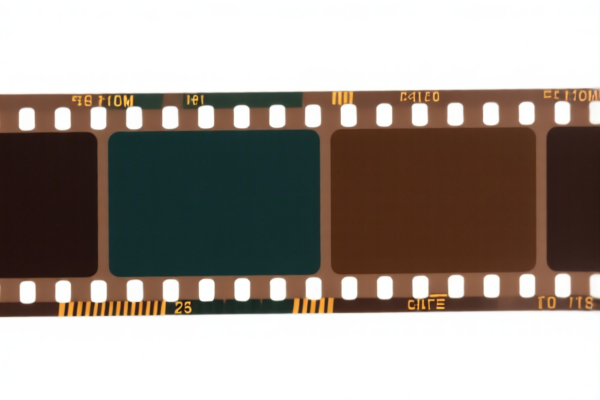
AI分析
🎞️ Color Wide Art Photography Film (Photographic Film)
🌐 HS Code Reference & Customs Clearance Guide | 2026 Latest Tariff Analysis | Professional Clearance Strategy
📌 I. Product Definition & Classification: Do You Really Understand "Color Film"?
Color Wide Art Photography Film is a light-sensitive material used for capturing high-resolution, wide-format images in artistic and professional photography. In international trade, it is categorized based on its state (exposed/unexposed), development status, and specific photographic purpose.
Key Distinctions: * Unexposed Film (Raw Material): Not yet photographed. Classified under 3702.52.01.30 or 3702.52.01.60. * Exposed/Undeveloped Film: Photographed but not chemically developed. Classified under 3704.00.00.00. * Developed Film/Negative: Chemically processed. Classified under 3705.00.00.00.
⚠️ Critical Classification Point:
- If the film is new, unexposed, and intended for color photography, it falls under 3702.52.
- If the film has been exposed (light hit the emulsion) but not developed, it is treated as "photographic paper/film, exposed but not developed," falling under 3704.00.
- If the film is developed (images visible), it is classified as "photographic plates and film, developed," falling under 3705.00.
📦 II. HS Code Classification Details (2026 Latest Tariff Authority Comparison)
| HS Code | Product Description | Applicable Scenario | Tax Rate (US/CN Origin) |
|---|---|---|---|
3702.52.01.30 |
Color film, matching color and film attributes, for photographic use | Unexposed color film rolls, specific artistic formats | 38.7% |
3702.52.01.60 |
Color film, for color photography, other than reversal film | Unexposed color negative film (standard rolls/bands) | 38.7% |
3704.00.00.00 |
Color film, exposed but not developed, photographic material | Exposed rolls/bands awaiting development; film scraps | 35.0% |
3705.00.00.00 |
Color film, developed photographic negatives and film | Developed negatives, slides, or processed film strips | 35.0% |
🔍 Key Reminder:
- Unexposed film (3702) carries a higher base tariff (3.7%) compared to exposed/developed film (0% base).
- Both categories are subject to the same Section 301 (25%) and Section 122 (10%) surcharges.
- The distinction between 3702 (unexposed) and 3704/3705 (exposed/developed) is crucial for inventory management and declaration accuracy.
💰 III. 2026 Latest Tariff Rate Breakdown (Including Surcharges & Policy Add-ons)
✅ Applicable Country: United States (US)
✅ Origin: China (CN)
✅ Effective Time: 2025/2026 (Current Trade Terms)
🎯 1. 3702.52.01.30 & 3702.52.01.60 —— Unexposed Color Film
| Item | Content |
|---|---|
| Base Tariff | 3.7% (ad valorem) |
| Section 301 Surcharge | +25.0% (US Trade Act) |
| Section 122 Surcharge | +10.0% (Specific Trade Action) |
| Total Tax Rate | 38.7% |
| Calculation Method | CIF Value × 38.7% |
| De Minimis Exemption | ❌ Not Available |
| Legal Basis Path | HTSUS:3702.52.01.30 → USITC:301_Footnote → IEEPA:122_Section |
📌 Explanation:
- The 3.7% base tariff applies to color film for photographic use.
- The 25% Section 301 tariff is the standard penalty on Chinese goods in this category.
- The 10% Section 122 tariff is an additional trade remedy surcharge.
- Total: 38.7%. This is a high-cost category for raw photographic materials.
🎯 2. 3704.00.00.00 —— Exposed, Undeveloped Film
| Item | Content |
|---|---|
| Base Tariff | 0.0% |
| Section 301 Surcharge | +25.0% |
| Section 122 Surcharge | +10.0% |
| Total Tax Rate | 35.0% |
| Calculation Method | CIF Value × 35.0% |
| De Minimis Exemption | ❌ Not Available |
| Legal Basis Path | HTSUS:3704.00.00.00 → USITC:301_Footnote → IEEPA:122_Section |
📌 Note:
- Although the base tariff is 0%, the surcharges remain identical.
- This category is often used for film waste, test strips, or films shot in remote locations awaiting development.
- Difference: Slightly cheaper than unexposed film (35.0% vs 38.7%).
🎯 3. 3705.00.00.00 —— Developed Film/Negatives
| Item | Content |
|---|---|
| Base Tariff | 0.0% |
| Section 301 Surcharge | +25.0% |
| Section 122 Surcharge | +10.0% |
| Total Tax Rate | 35.0% |
| Calculation Method | CIF Value × 35.0% |
| De Minimis Exemption | ❌ Not Available |
| Legal Basis Path | HTSUS:3705.00.00.00 → USITC:301_Footnote → IEEPA:122_Section |
📌 Note:
- Developed negatives, slides, or processed film fall here.
- Tax rate is identical to exposed film (35.0%).
- Critical: Ensure the film is indeed developed. If declared as developed but is actually unexposed, it will be reclassified to 3702 (38.7%), leading to back taxes.
🛠️ IV. Customs Clearance Practical Advice (Real-World Pitfall Avoidance)
✅ 1. Documentation Checklist (Mandatory)
| Document | Required? | Description |
|---|---|---|
| ✅ Product Specification Sheet | ✔️ | Must specify: Type (Color), Format (Wide/Art), State (Unexposed/Exposed/Developed). |
| ✅ Commercial Invoice | ✔️ | Clearly state: "Photographic Film, Color, Art/Professional Use." Avoid vague terms like "Photography Supplies." |
| ✅ Packing List | ✔️ | Detail roll count, length, and weight. |
| ✅ Certificate of Origin | ✔️ | Proves Chinese origin (triggering 301/122 tariffs). |
| ✅ Photo Samples (If Exposed/Developed) | ✔️ | Crucial for 3704 or 3705 classification. Shows images are visible. |
✅ 2. Declaration Tips (Key Mantra)
🔥 "State Defines Category: Unexposed 3702, Exposed 3704, Developed 3705!"
| Scenario | Correct Declaration | Error to Avoid |
|---|---|---|
| New Rolls (Sealed) | 3702.52.01.30 or .60 |
Misdeclaring as "Paper" or "Plastic" |
| Shoot-on Location (Unopened) | 3702.52.01.30 |
Do NOT declare as 3704 unless proven exposed. |
| Exposed Rolls (For Development) | 3704.00.00.00 |
Do NOT declare as 3705 if not yet developed. |
| Developed Negatives | 3705.00.00.00 |
Do NOT declare as 3702 (unexposed). |
📌 Critical Advice:
- If importing unexposed film that will be exposed after import, declare as 3702.
- If importing exposed film (e.g., from a photo tour), provide proof of exposure (photos of the film contents) to justify 3704.
- Never mix unexposed and exposed film in one HS Code declaration.
✅ 3. Special Cases
| Case | Handling Advice |
|---|---|
| Art Film (Niche Formats) | Ensure "Art/Professional Use" is stated. Generic "Color Film" still applies to 3702.52. |
| Digital Film Substitutes? | No. This is physical silver-halide or dye-based film. Digital sensors are classified elsewhere (8528/8541). |
| Bulk Import for Lab Use | If importing huge quantities of unexposed film for a lab, declare as 3702.52. |
| Samples (Exposure Test) | If tiny strips are exposed for testing, declare as 3704. |
🌍 V. Global Market Comparison (2026 Latest)
| Country/Region | Recommended HS Code | Tariff (China Origin) | Certification | Notes |
|---|---|---|---|---|
| 🇺🇸 USA | 3702.52.01.30 / 3704.00.00.00 |
38.7% / 35.0% | No specific FCC/CE for film | High tariffs due to 301/122. |
| 🇨🇳 China | 3702.52.01.30 |
~1-5% | None | Domestic production common. |
| 🇪🇺 EU | 3702.52 |
0% | CE (if chemical components) | No Section 301 equivalent. |
| 🇬🇧 UK | 3702.52 |
0-5% | UKCA (if applicable) | Post-Brexit rules. |
| 🇯🇵 Japan | 3702.52 |
3.0-5.0% | None | Low base tariffs. |
📌 Conclusion:
- USA is the most expensive market for photographic film imports due to Section 301 and 122 tariffs.
- For art photographers or studios importing film to the US, factor in a ~38.7% tax on unexposed film.
- Consider local sourcing or shipping via third-party countries (if rules of origin allow) to mitigate costs.
📌 VI. Common Errors & Pitfalls (Lessons Learned)
❌ Error 1: Declaring exposed film as unexposed film to save 3.7% base tariff.
👉 Consequence: Customs inspection reveals image data → Repossession, fines, or back taxes of 3.7% + penalties.
❌ Error 2: Declaring unexposed film as developed film to avoid base tariff.
👉 Consequence: Customs finds blank film → Classification error → Back taxes + interest.
❌ Error 3: Ignoring Section 122 Tariff.
👉 Consequence: Underpayment by 10% → Penalty and delayed clearance.
❌ Error 4: Using vague description "Film for Photography."
👉 Consequence: Customs queries for specifics → Delay in release.
✅ Correct Approach:
"Photographic Film, Color, Unexposed, Art/Wide Format, Model XYZ, Origin China."
OR
"Photographic Film, Color, Exposed but Not Developed, Art Negatives, Origin China."
🎯 VII. Conclusion: Professional Declaration, Cost Control, Smooth Clearance
🎯 Remember the Mantra:
🔹 "Unexposed 3702 (38.7%), Exposed 3704 (35.0%), Developed 3705 (35.0%)."
🔹 "Base Tariff varies, Surcharges are fixed."
🔹 "Declare the STATE, not just the material."
📌 Pro Tip:
If you are a digital photography studio importing film for archival or hybrid workflows, ensure the State (Unexposed/Exposed) is explicitly stated in your contract and invoice.
For large-scale imports, consider applying for a HTSUS Exclusion (if available for specific products) or using bonded warehouses to defer duties.
📣 Immediate Action:
📞 Consult a licensed customs broker.
📸 Provide sample photos if declaring exposed/developed film.
📋 Ensure Invoice Description matches HS Code Intent.
🚀 Clear your film smoothly, preserve your art, and protect your margins!
✨ Professional Clearance Starts with Accurate Classification!
💼 Your tax bill is calculated down to the cent!
用户评价
关于 HS 编码归类
协调制度(HS)是由世界海关组织(WCO)制定的国际贸易商品分类标准。全球 200 多个国家采用 HS 系统作为海关关税、贸易统计和进出口监管的基础。
每个 HS 编码遵循以下层级结构:
- 章(2 位)——商品大类(例如:第 84 章:机器和机械设备)
- 品目(4 位)——章内的更具体分类
- 子目(6 位)——国际通用细分,所有 WCO 成员国统一使用
- 本国细分(8-10 位)——各国自行扩展的细分编码,如美国 HTSUS 10 位编码
正确的 HS 编码归类对于顺利通关、准确缴纳关税和遵守贸易法规至关重要。错误归类可能导致海关延误、多缴关税或罚款。
从CN进口到US时,适用的关税税率可能包括:
- 最惠国(MFN)税率——适用于 WTO 成员国的标准关税税率
- 普通税率——适用于无贸易协定国家
- 贸易救济关税——附加关税,如 301 条款(反倾销)、232 条款(国家安全)或反补贴税
本页内容仅供参考。如需正式归类,请咨询当地海关或持牌报关代理。