Color Wide Art Photography Film
CN → US| HS Code | Tariff Rate | Origin | Destination | Doc |
|---|---|---|---|---|
| 3702520130 | 38.7% | CN | US | Official Doc |
| 3702520160 | 38.7% | CN | US | Official Doc |
| 3704000000 | 35.0% | CN | US | Official Doc |
| 3705000000 | 35.0% | CN | US | Official Doc |
| 3704000000 | 35.0% | CN | US | Official Doc |
Product Images


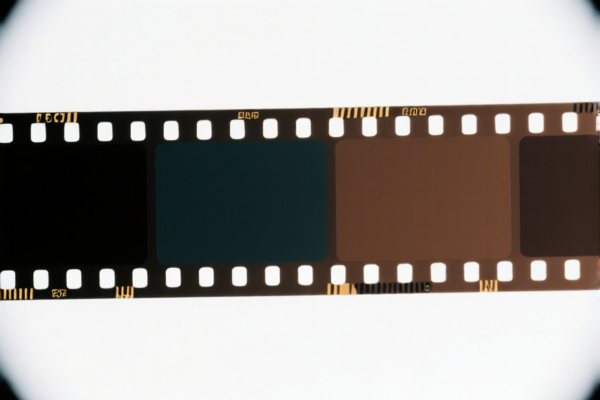
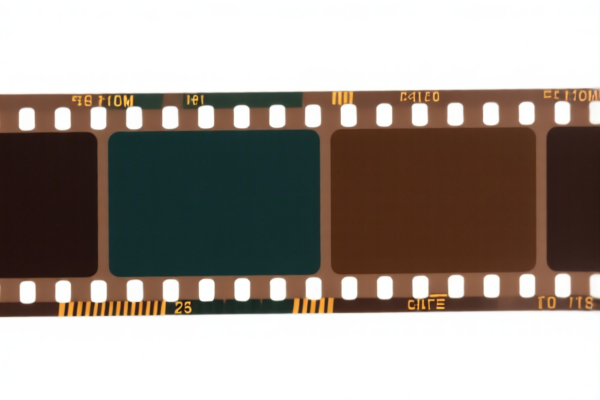
AI Analysis
🎞️ Color Wide Art Photography Film (Photographic Film)
🌐 HS Code Reference & Customs Clearance Guide | 2026 Latest Tariff Analysis | Professional Clearance Strategy
📌 I. Product Definition & Classification: Do You Really Understand "Color Film"?
Color Wide Art Photography Film is a light-sensitive material used for capturing high-resolution, wide-format images in artistic and professional photography. In international trade, it is categorized based on its state (exposed/unexposed), development status, and specific photographic purpose.
Key Distinctions: * Unexposed Film (Raw Material): Not yet photographed. Classified under 3702.52.01.30 or 3702.52.01.60. * Exposed/Undeveloped Film: Photographed but not chemically developed. Classified under 3704.00.00.00. * Developed Film/Negative: Chemically processed. Classified under 3705.00.00.00.
⚠️ Critical Classification Point:
- If the film is new, unexposed, and intended for color photography, it falls under 3702.52.
- If the film has been exposed (light hit the emulsion) but not developed, it is treated as "photographic paper/film, exposed but not developed," falling under 3704.00.
- If the film is developed (images visible), it is classified as "photographic plates and film, developed," falling under 3705.00.
📦 II. HS Code Classification Details (2026 Latest Tariff Authority Comparison)
| HS Code | Product Description | Applicable Scenario | Tax Rate (US/CN Origin) |
|---|---|---|---|
3702.52.01.30 |
Color film, matching color and film attributes, for photographic use | Unexposed color film rolls, specific artistic formats | 38.7% |
3702.52.01.60 |
Color film, for color photography, other than reversal film | Unexposed color negative film (standard rolls/bands) | 38.7% |
3704.00.00.00 |
Color film, exposed but not developed, photographic material | Exposed rolls/bands awaiting development; film scraps | 35.0% |
3705.00.00.00 |
Color film, developed photographic negatives and film | Developed negatives, slides, or processed film strips | 35.0% |
🔍 Key Reminder:
- Unexposed film (3702) carries a higher base tariff (3.7%) compared to exposed/developed film (0% base).
- Both categories are subject to the same Section 301 (25%) and Section 122 (10%) surcharges.
- The distinction between 3702 (unexposed) and 3704/3705 (exposed/developed) is crucial for inventory management and declaration accuracy.
💰 III. 2026 Latest Tariff Rate Breakdown (Including Surcharges & Policy Add-ons)
✅ Applicable Country: United States (US)
✅ Origin: China (CN)
✅ Effective Time: 2025/2026 (Current Trade Terms)
🎯 1. 3702.52.01.30 & 3702.52.01.60 —— Unexposed Color Film
| Item | Content |
|---|---|
| Base Tariff | 3.7% (ad valorem) |
| Section 301 Surcharge | +25.0% (US Trade Act) |
| Section 122 Surcharge | +10.0% (Specific Trade Action) |
| Total Tax Rate | 38.7% |
| Calculation Method | CIF Value × 38.7% |
| De Minimis Exemption | ❌ Not Available |
| Legal Basis Path | HTSUS:3702.52.01.30 → USITC:301_Footnote → IEEPA:122_Section |
📌 Explanation:
- The 3.7% base tariff applies to color film for photographic use.
- The 25% Section 301 tariff is the standard penalty on Chinese goods in this category.
- The 10% Section 122 tariff is an additional trade remedy surcharge.
- Total: 38.7%. This is a high-cost category for raw photographic materials.
🎯 2. 3704.00.00.00 —— Exposed, Undeveloped Film
| Item | Content |
|---|---|
| Base Tariff | 0.0% |
| Section 301 Surcharge | +25.0% |
| Section 122 Surcharge | +10.0% |
| Total Tax Rate | 35.0% |
| Calculation Method | CIF Value × 35.0% |
| De Minimis Exemption | ❌ Not Available |
| Legal Basis Path | HTSUS:3704.00.00.00 → USITC:301_Footnote → IEEPA:122_Section |
📌 Note:
- Although the base tariff is 0%, the surcharges remain identical.
- This category is often used for film waste, test strips, or films shot in remote locations awaiting development.
- Difference: Slightly cheaper than unexposed film (35.0% vs 38.7%).
🎯 3. 3705.00.00.00 —— Developed Film/Negatives
| Item | Content |
|---|---|
| Base Tariff | 0.0% |
| Section 301 Surcharge | +25.0% |
| Section 122 Surcharge | +10.0% |
| Total Tax Rate | 35.0% |
| Calculation Method | CIF Value × 35.0% |
| De Minimis Exemption | ❌ Not Available |
| Legal Basis Path | HTSUS:3705.00.00.00 → USITC:301_Footnote → IEEPA:122_Section |
📌 Note:
- Developed negatives, slides, or processed film fall here.
- Tax rate is identical to exposed film (35.0%).
- Critical: Ensure the film is indeed developed. If declared as developed but is actually unexposed, it will be reclassified to 3702 (38.7%), leading to back taxes.
🛠️ IV. Customs Clearance Practical Advice (Real-World Pitfall Avoidance)
✅ 1. Documentation Checklist (Mandatory)
| Document | Required? | Description |
|---|---|---|
| ✅ Product Specification Sheet | ✔️ | Must specify: Type (Color), Format (Wide/Art), State (Unexposed/Exposed/Developed). |
| ✅ Commercial Invoice | ✔️ | Clearly state: "Photographic Film, Color, Art/Professional Use." Avoid vague terms like "Photography Supplies." |
| ✅ Packing List | ✔️ | Detail roll count, length, and weight. |
| ✅ Certificate of Origin | ✔️ | Proves Chinese origin (triggering 301/122 tariffs). |
| ✅ Photo Samples (If Exposed/Developed) | ✔️ | Crucial for 3704 or 3705 classification. Shows images are visible. |
✅ 2. Declaration Tips (Key Mantra)
🔥 "State Defines Category: Unexposed 3702, Exposed 3704, Developed 3705!"
| Scenario | Correct Declaration | Error to Avoid |
|---|---|---|
| New Rolls (Sealed) | 3702.52.01.30 or .60 |
Misdeclaring as "Paper" or "Plastic" |
| Shoot-on Location (Unopened) | 3702.52.01.30 |
Do NOT declare as 3704 unless proven exposed. |
| Exposed Rolls (For Development) | 3704.00.00.00 |
Do NOT declare as 3705 if not yet developed. |
| Developed Negatives | 3705.00.00.00 |
Do NOT declare as 3702 (unexposed). |
📌 Critical Advice:
- If importing unexposed film that will be exposed after import, declare as 3702.
- If importing exposed film (e.g., from a photo tour), provide proof of exposure (photos of the film contents) to justify 3704.
- Never mix unexposed and exposed film in one HS Code declaration.
✅ 3. Special Cases
| Case | Handling Advice |
|---|---|
| Art Film (Niche Formats) | Ensure "Art/Professional Use" is stated. Generic "Color Film" still applies to 3702.52. |
| Digital Film Substitutes? | No. This is physical silver-halide or dye-based film. Digital sensors are classified elsewhere (8528/8541). |
| Bulk Import for Lab Use | If importing huge quantities of unexposed film for a lab, declare as 3702.52. |
| Samples (Exposure Test) | If tiny strips are exposed for testing, declare as 3704. |
🌍 V. Global Market Comparison (2026 Latest)
| Country/Region | Recommended HS Code | Tariff (China Origin) | Certification | Notes |
|---|---|---|---|---|
| 🇺🇸 USA | 3702.52.01.30 / 3704.00.00.00 |
38.7% / 35.0% | No specific FCC/CE for film | High tariffs due to 301/122. |
| 🇨🇳 China | 3702.52.01.30 |
~1-5% | None | Domestic production common. |
| 🇪🇺 EU | 3702.52 |
0% | CE (if chemical components) | No Section 301 equivalent. |
| 🇬🇧 UK | 3702.52 |
0-5% | UKCA (if applicable) | Post-Brexit rules. |
| 🇯🇵 Japan | 3702.52 |
3.0-5.0% | None | Low base tariffs. |
📌 Conclusion:
- USA is the most expensive market for photographic film imports due to Section 301 and 122 tariffs.
- For art photographers or studios importing film to the US, factor in a ~38.7% tax on unexposed film.
- Consider local sourcing or shipping via third-party countries (if rules of origin allow) to mitigate costs.
📌 VI. Common Errors & Pitfalls (Lessons Learned)
❌ Error 1: Declaring exposed film as unexposed film to save 3.7% base tariff.
👉 Consequence: Customs inspection reveals image data → Repossession, fines, or back taxes of 3.7% + penalties.
❌ Error 2: Declaring unexposed film as developed film to avoid base tariff.
👉 Consequence: Customs finds blank film → Classification error → Back taxes + interest.
❌ Error 3: Ignoring Section 122 Tariff.
👉 Consequence: Underpayment by 10% → Penalty and delayed clearance.
❌ Error 4: Using vague description "Film for Photography."
👉 Consequence: Customs queries for specifics → Delay in release.
✅ Correct Approach:
"Photographic Film, Color, Unexposed, Art/Wide Format, Model XYZ, Origin China."
OR
"Photographic Film, Color, Exposed but Not Developed, Art Negatives, Origin China."
🎯 VII. Conclusion: Professional Declaration, Cost Control, Smooth Clearance
🎯 Remember the Mantra:
🔹 "Unexposed 3702 (38.7%), Exposed 3704 (35.0%), Developed 3705 (35.0%)."
🔹 "Base Tariff varies, Surcharges are fixed."
🔹 "Declare the STATE, not just the material."
📌 Pro Tip:
If you are a digital photography studio importing film for archival or hybrid workflows, ensure the State (Unexposed/Exposed) is explicitly stated in your contract and invoice.
For large-scale imports, consider applying for a HTSUS Exclusion (if available for specific products) or using bonded warehouses to defer duties.
📣 Immediate Action:
📞 Consult a licensed customs broker.
📸 Provide sample photos if declaring exposed/developed film.
📋 Ensure Invoice Description matches HS Code Intent.
🚀 Clear your film smoothly, preserve your art, and protect your margins!
✨ Professional Clearance Starts with Accurate Classification!
💼 Your tax bill is calculated down to the cent!
Customer Reviews
About HS Code Classification
The Harmonized System (HS) is an internationally standardized nomenclature developed by the World Customs Organization (WCO) to classify traded products. Over 200 countries use the HS system as the basis for customs tariffs, trade statistics, and import/export regulations.
Each HS code follows a hierarchical structure:
- Chapter (2 digits) — Broad category of goods (e.g., Chapter 84: Machinery and Mechanical Appliances)
- Heading (4 digits) — More specific grouping within the chapter
- Subheading (6 digits) — Internationally standardized breakdown, used by all WCO member countries
- National subdivisions (8-10 digits) — Country-specific extensions for further classification, such as US HTSUS 10-digit codes
Correct HS code classification is essential for smooth customs clearance, accurate duty payment, and compliance with trade regulations. Misclassification can lead to customs delays, overpayment of duties, or penalties.
When importing from CN to US, the applicable tariff rates may include:
- Most-Favored-Nation (MFN) rate — The standard duty rate applied to WTO members
- General rate — Applied to countries without trade agreements
- Trade remedy duties — Additional tariffs such as Section 301 (anti-dumping), Section 232 (national security), or countervailing duties
The information provided on this page is for reference purposes only. For official classification, please consult with your local customs authority or a licensed customs broker.