Colored Wide Grain Film
CN → US| HS编码 | 关税税率 | 原产国 | 目的国 | 文档 |
|---|---|---|---|---|
| 5407200000 | 35.0% | CN | US | 官方文档 |
| 5407301000 | 35.0% | CN | US | 官方文档 |
| 3920200055 | 39.2% | CN | US | 官方文档 |
| 3920100000 | 39.2% | CN | US | 官方文档 |
| 3919905060 | 40.8% | CN | US | 官方文档 |
商品图片


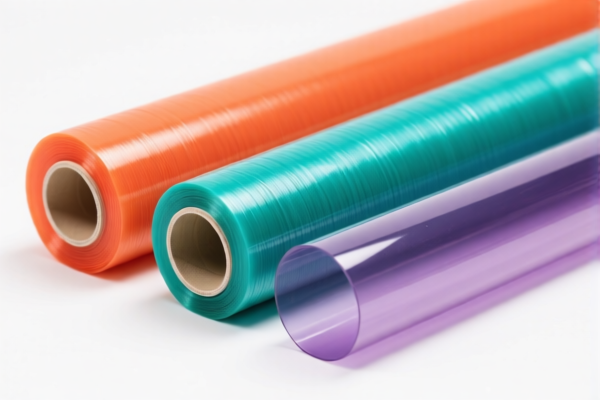
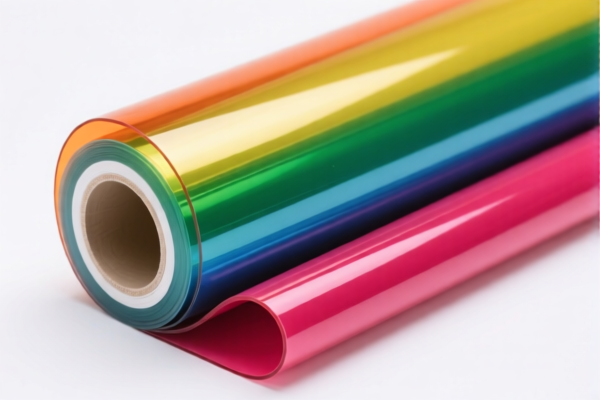
AI分析
🎨 Colored Wide Grain Film (彩宽膜)
🌐 HS Code Reference & Customs Clearance Guide | 2026 Latest Tariff Analysis | Professional-Level Strategy
📌 I. Product Definition & Classification: What Exactly is "Colored Wide Grain Film"?
"Colored Wide Grain Film" (often referred to in trade as wide-width colored film or ribbon) is a versatile plastic material used primarily in packaging, textiles, and industrial applications. Its classification hinges on two critical factors:
1. Material Composition: Is it a synthetic fiber fabric (Chapter 54) or a plastic sheet/film (Chapter 39)?
2. Physical Form: Is it woven/processed as a "strip-like object" (like a ribbon) or a continuous "wide membrane"?
⚠️ Key Distinction:
- If the product is a woven fabric made from synthetic filament yarns, even if it looks like a film, it belongs to Chapter 54.
- If it is a solid plastic sheet/film (non-woven, extruded) without fiber structure, it belongs to Chapter 39.
- Misclassification is common: Treating a plastic film as a "woven fabric" or vice versa leads to significant duty discrepancies.
📦 II. HS Code Classification Details (2026 Latest Tariff Authority Match)
Based on the provided data, there are 5 potential HS Codes depending on the exact material and structural interpretation.
| HS Code | Product Description | Key Characteristic | Total Tax Rate (US Import from CN) |
|---|---|---|---|
5407.20.00.00 |
Woven Fabric of Synthetic Filament Yarns | "Strip-like Object": Interpreted as a woven textile/ribbon. Material: Synthetic filament. | 35.0% |
5407.30.10.00 |
Woven Fabric of Synthetic Filament Yarns | "Film/Fabric Hybrid": Common sense inference. Treated as a textile form. No material conflict. | 35.0% |
3920.20.00.55 |
Other Plates, Sheets, Film | "Plastic Film": Inferred as Polypropylene (PP) or similar plastic. Color attribute does not conflict. | 39.2% |
3920.10.00.00 |
Plates, Sheets, Film | "Polymer Film": Inferred as Vinyl/Polyethylene. Fits the "membrane" shape. | 39.2% |
3919.90.50.60 |
Self-Adhesive Plates/Sheets | "Other Plastic Film": Generic plastic film category. "Other" classification under Chapter 39. | 40.8% |
🔍 Critical Analysis:
- The Chapter 54 codes (5407) assume the product is a woven textile (even if narrow/ribbon-like).
- The Chapter 39 codes (3920,3919) assume the product is a non-woven plastic sheet/film.
- Tax Difference: There is a 4.2% - 5.8% gap between Chapter 54 (35%) and Chapter 39 (39.2%+). Accurate material definition is cost-critical.
💰 III. 2026 Latest Tariff Rate Breakdown (Including Surcharges & Policy Add-ons)
✅ Applicable Country: United States (US)
✅ Origin: China (CN)
✅ Effective Time: November 10, 2025 (and onwards)
🎯 1. Chapter 54: Woven Fabrics (5407.20.00.00 / 5407.30.10.00)
| Item | Content |
|---|---|
| Base Tariff | 0.0% |
| USITC Surcharge (Section 301) | +25.0% |
| IEEPA Surcharge (Section 122/China) | +10.0% |
| Total Effective Rate | 35.0% |
| Calculation Basis | CIF Value × 35% |
| De Minimis Exemption | ❌ Not Applicable (Denied) |
| Legal Path | USITC:5407.xxxx → Section 301: 25% → IEEPA: 10% |
📌 Explanation:
- Base 0%: Textile products often have low base MFN tariffs.
- 25% Section 301: Standard penalty on Chinese textiles/hard goods.
- 10% IEEPA: Additional penalty under International Emergency Economic Powers Act for specific Chinese imports.
- Total 35%: This is the cost you must absorb or pass on.
🎯 2. Chapter 39: Plastic Products (3920.20.00.55 / 3920.10.00.00)
| Item | Content |
|---|---|
| Base Tariff | 4.2% (for 3920) |
| USITC Surcharge (Section 301) | +25.0% |
| IEEPA Surcharge (Section 122/China) | +10.0% |
| Total Effective Rate | 39.2% |
| Calculation Basis | CIF Value × 39.2% |
| De Minimis Exemption | ❌ Not Applicable (Denied) |
📌 Explanation:
- Base 4.2%: Plastic films generally have a small base tariff.
- Add-ons: Same 35% in surcharges as above.
- Total 39.2%: Higher than textiles due to the 4.2% base.
🎯 3. Chapter 39: Other Adhesive/Plastic Items (3919.90.50.60)
| Item | Content |
|---|---|
| Base Tariff | 5.8% |
| USITC Surcharge (Section 301) | +25.0% |
| IEEPA Surcharge | +10.0% |
| Total Effective Rate | 40.8% |
| Calculation Basis | CIF Value × 40.8% |
📌 Warning: This is the highest rate among the options. Only use if the product is self-adhesive or does not fit standard film/weave definitions.
🛠️ IV. Customs Clearance Practical Advice (Avoiding Pitfalls)
✅ 1. Documentation Checklist (Mandatory)
| Document | Required? | Purpose |
|---|---|---|
| ✅ Product Specification Sheet | YES | Must clearly state: Material (e.g., "100% Polypropylene" vs. "Polyester Filament") and Process (e.g., "Extruded Film" vs. "Woven Fabric"). |
| ✅ Physical Samples | YES | Customs officers may test to determine if it is "woven" (textile) or "cast/extruded" (plastic). |
| ✅ Commercial Invoice | YES | Description must match HS Code logic. If HS is 3920, do NOT use words like "Woven Fabric". |
| ✅ Packing List | YES | Weight and dimensions must align with standard film rolls or fabric bales. |
| ✅ Certificate of Origin (CO) | Optional | Required for origin verification, but does NOT reduce US tariffs for China. |
✅ 2. Classification Strategy (The "Woven vs. Film" Battle)
| Scenario | Recommended HS Code | Reasoning |
|---|---|---|
| Product is clearly woven (interlaced threads, visible grid) | 5407.20.00.00 / 5407.30.10.00 |
It is a textile. Base rate 0%. Saves 4.2%. |
| Product is smooth, continuous, non-woven plastic | 3920.20.00.55 / 3920.10.00.00 |
It is a plastic film. Base rate 4.2%. Higher tax. |
| Product is ambiguous (looks like both) | Apply for Advance Ruling | Do not guess. Misclassification leads to penalties. |
🔥 Pro Tip:
If the "Colored Wide Grain Film" is actually woven (like a ribbon made of synthetic fibers), insist on Chapter 54.
- Tax Saving: 39.2% → 35.0% (4.2% savings).
- On a $100,000 shipment, that’s $4,200 saved.
✅ 3. Common Errors & Pitfalls
| ❌ Error | ✅ Consequence | ✅ Correct Action |
|---|---|---|
| Calling it "Film" but it’s woven | Customs reclassifies to Textile (5407) → Retroactive tax change? No, but delays. | Describe accurately: "Woven Synthetic Film". |
| Calling it "Fabric" but it’s plastic | Customs reclassifies to Plastic (3920) → Higher Tax (39.2% vs 35%). | Verify material structure under microscope. |
| Ignoring the 10% IEEPA Surcharge | Budget miscalculation. | Factor in Total 35-40.8% in cost model. |
| Using "De Minimis" for small packages | Denied. All these HS codes are excluded from $800 exemption. | Pay duties on every shipment. |
🌍 V. Global Market Comparison (2026 Update)
| Market | Recommended HS | Total Duty (China Origin) | Notes |
|---|---|---|---|
| 🇺🇸 USA | 5407.20.00.00 |
35.0% | High duties due to 301 + IEEPA. |
| 🇺🇸 USA | 3920.20.00.55 |
39.2% | Plastic films face higher base rates. |
| 🇨🇳 China | 5407.20.00.00 |
~5-10% | Import duty only, no US surcharges. |
| 🇪🇺 EU | 5407.20.00.00 |
~5-8% | Lower tariffs, no IEEPA. |
| 🇬🇧 UK | 5407.20.00.00 |
~5-8% | Post-Brexit tariffs, no US-style surcharges. |
📌 Conclusion:
The US market is the most expensive due to layered surcharges.
- If possible, shift production to Vietnam/Mexico to avoid Section 301 & IEEPA.
- If producing in China, optimize HS Code to5407(Textile) if structurally possible to save 4.2%.
📌 VI. Final Recommendation & Action Plan
🎯 Step 1: Determine Material Structure
- Is it woven? → Choose
5407(Tax: 35.0%). - Is it extruded/plastic? → Choose
3920(Tax: 39.2%). - Is it adhesive? → Avoid
3919(Tax: 40.8%) unless necessary.
🎯 Step 2: Prepare for High Duties
- Budget for ~35-40% duty.
- No de minimis exemption. Every shipment pays.
🎯 Step 3: Document Precision
- Invoice Description:
- For 5407: "Woven Synthetic Fabric Film, Polyester, Colored, Wide Width"
- For 3920: "Plastic Film, Polypropylene, Cast, Colored, Wide Width"
📣 Immediate Action Required:
📞 Contact a Customs Broker: Provide physical samples for classification ruling.
📝 Update Costing Model: Reflect 35.0% (Textile) or 39.2% (Plastic) duty in your pricing.
🚀 Optimize Supply Chain: If margins are tight, consider non-China origins to bypass 35%+ tariffs.
✨ Precision in Classification is Profit in the Pocket!
💼 Don’t let a 4.2% difference eat your margin. Classify correctly.
用户评价
关于 HS 编码归类
协调制度(HS)是由世界海关组织(WCO)制定的国际贸易商品分类标准。全球 200 多个国家采用 HS 系统作为海关关税、贸易统计和进出口监管的基础。
每个 HS 编码遵循以下层级结构:
- 章(2 位)——商品大类(例如:第 84 章:机器和机械设备)
- 品目(4 位)——章内的更具体分类
- 子目(6 位)——国际通用细分,所有 WCO 成员国统一使用
- 本国细分(8-10 位)——各国自行扩展的细分编码,如美国 HTSUS 10 位编码
正确的 HS 编码归类对于顺利通关、准确缴纳关税和遵守贸易法规至关重要。错误归类可能导致海关延误、多缴关税或罚款。
从CN进口到US时,适用的关税税率可能包括:
- 最惠国(MFN)税率——适用于 WTO 成员国的标准关税税率
- 普通税率——适用于无贸易协定国家
- 贸易救济关税——附加关税,如 301 条款(反倾销)、232 条款(国家安全)或反补贴税
本页内容仅供参考。如需正式归类,请咨询当地海关或持牌报关代理。