Colored Wide Grain Film
CN → US| HS Code | Tariff Rate | Origin | Destination | Doc |
|---|---|---|---|---|
| 5407200000 | 35.0% | CN | US | Official Doc |
| 5407301000 | 35.0% | CN | US | Official Doc |
| 3920200055 | 39.2% | CN | US | Official Doc |
| 3920100000 | 39.2% | CN | US | Official Doc |
| 3919905060 | 40.8% | CN | US | Official Doc |
Product Images


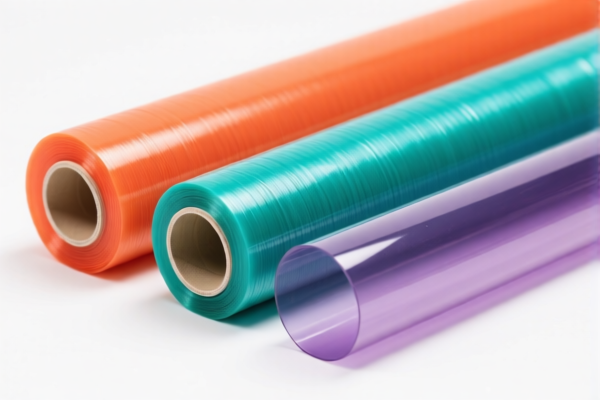
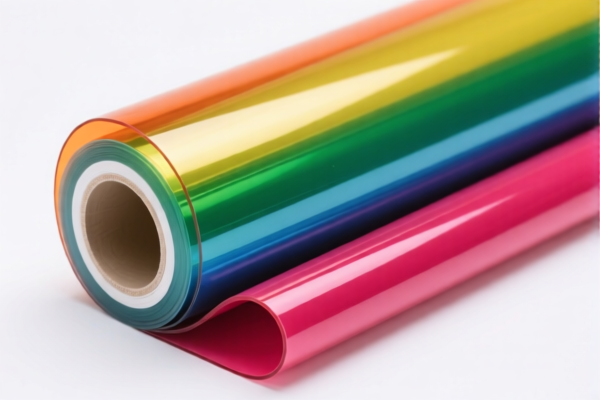
AI Analysis
🎨 Colored Wide Grain Film (彩宽膜)
🌐 HS Code Reference & Customs Clearance Guide | 2026 Latest Tariff Analysis | Professional-Level Strategy
📌 I. Product Definition & Classification: What Exactly is "Colored Wide Grain Film"?
"Colored Wide Grain Film" (often referred to in trade as wide-width colored film or ribbon) is a versatile plastic material used primarily in packaging, textiles, and industrial applications. Its classification hinges on two critical factors:
1. Material Composition: Is it a synthetic fiber fabric (Chapter 54) or a plastic sheet/film (Chapter 39)?
2. Physical Form: Is it woven/processed as a "strip-like object" (like a ribbon) or a continuous "wide membrane"?
⚠️ Key Distinction:
- If the product is a woven fabric made from synthetic filament yarns, even if it looks like a film, it belongs to Chapter 54.
- If it is a solid plastic sheet/film (non-woven, extruded) without fiber structure, it belongs to Chapter 39.
- Misclassification is common: Treating a plastic film as a "woven fabric" or vice versa leads to significant duty discrepancies.
📦 II. HS Code Classification Details (2026 Latest Tariff Authority Match)
Based on the provided data, there are 5 potential HS Codes depending on the exact material and structural interpretation.
| HS Code | Product Description | Key Characteristic | Total Tax Rate (US Import from CN) |
|---|---|---|---|
5407.20.00.00 |
Woven Fabric of Synthetic Filament Yarns | "Strip-like Object": Interpreted as a woven textile/ribbon. Material: Synthetic filament. | 35.0% |
5407.30.10.00 |
Woven Fabric of Synthetic Filament Yarns | "Film/Fabric Hybrid": Common sense inference. Treated as a textile form. No material conflict. | 35.0% |
3920.20.00.55 |
Other Plates, Sheets, Film | "Plastic Film": Inferred as Polypropylene (PP) or similar plastic. Color attribute does not conflict. | 39.2% |
3920.10.00.00 |
Plates, Sheets, Film | "Polymer Film": Inferred as Vinyl/Polyethylene. Fits the "membrane" shape. | 39.2% |
3919.90.50.60 |
Self-Adhesive Plates/Sheets | "Other Plastic Film": Generic plastic film category. "Other" classification under Chapter 39. | 40.8% |
🔍 Critical Analysis:
- The Chapter 54 codes (5407) assume the product is a woven textile (even if narrow/ribbon-like).
- The Chapter 39 codes (3920,3919) assume the product is a non-woven plastic sheet/film.
- Tax Difference: There is a 4.2% - 5.8% gap between Chapter 54 (35%) and Chapter 39 (39.2%+). Accurate material definition is cost-critical.
💰 III. 2026 Latest Tariff Rate Breakdown (Including Surcharges & Policy Add-ons)
✅ Applicable Country: United States (US)
✅ Origin: China (CN)
✅ Effective Time: November 10, 2025 (and onwards)
🎯 1. Chapter 54: Woven Fabrics (5407.20.00.00 / 5407.30.10.00)
| Item | Content |
|---|---|
| Base Tariff | 0.0% |
| USITC Surcharge (Section 301) | +25.0% |
| IEEPA Surcharge (Section 122/China) | +10.0% |
| Total Effective Rate | 35.0% |
| Calculation Basis | CIF Value × 35% |
| De Minimis Exemption | ❌ Not Applicable (Denied) |
| Legal Path | USITC:5407.xxxx → Section 301: 25% → IEEPA: 10% |
📌 Explanation:
- Base 0%: Textile products often have low base MFN tariffs.
- 25% Section 301: Standard penalty on Chinese textiles/hard goods.
- 10% IEEPA: Additional penalty under International Emergency Economic Powers Act for specific Chinese imports.
- Total 35%: This is the cost you must absorb or pass on.
🎯 2. Chapter 39: Plastic Products (3920.20.00.55 / 3920.10.00.00)
| Item | Content |
|---|---|
| Base Tariff | 4.2% (for 3920) |
| USITC Surcharge (Section 301) | +25.0% |
| IEEPA Surcharge (Section 122/China) | +10.0% |
| Total Effective Rate | 39.2% |
| Calculation Basis | CIF Value × 39.2% |
| De Minimis Exemption | ❌ Not Applicable (Denied) |
📌 Explanation:
- Base 4.2%: Plastic films generally have a small base tariff.
- Add-ons: Same 35% in surcharges as above.
- Total 39.2%: Higher than textiles due to the 4.2% base.
🎯 3. Chapter 39: Other Adhesive/Plastic Items (3919.90.50.60)
| Item | Content |
|---|---|
| Base Tariff | 5.8% |
| USITC Surcharge (Section 301) | +25.0% |
| IEEPA Surcharge | +10.0% |
| Total Effective Rate | 40.8% |
| Calculation Basis | CIF Value × 40.8% |
📌 Warning: This is the highest rate among the options. Only use if the product is self-adhesive or does not fit standard film/weave definitions.
🛠️ IV. Customs Clearance Practical Advice (Avoiding Pitfalls)
✅ 1. Documentation Checklist (Mandatory)
| Document | Required? | Purpose |
|---|---|---|
| ✅ Product Specification Sheet | YES | Must clearly state: Material (e.g., "100% Polypropylene" vs. "Polyester Filament") and Process (e.g., "Extruded Film" vs. "Woven Fabric"). |
| ✅ Physical Samples | YES | Customs officers may test to determine if it is "woven" (textile) or "cast/extruded" (plastic). |
| ✅ Commercial Invoice | YES | Description must match HS Code logic. If HS is 3920, do NOT use words like "Woven Fabric". |
| ✅ Packing List | YES | Weight and dimensions must align with standard film rolls or fabric bales. |
| ✅ Certificate of Origin (CO) | Optional | Required for origin verification, but does NOT reduce US tariffs for China. |
✅ 2. Classification Strategy (The "Woven vs. Film" Battle)
| Scenario | Recommended HS Code | Reasoning |
|---|---|---|
| Product is clearly woven (interlaced threads, visible grid) | 5407.20.00.00 / 5407.30.10.00 |
It is a textile. Base rate 0%. Saves 4.2%. |
| Product is smooth, continuous, non-woven plastic | 3920.20.00.55 / 3920.10.00.00 |
It is a plastic film. Base rate 4.2%. Higher tax. |
| Product is ambiguous (looks like both) | Apply for Advance Ruling | Do not guess. Misclassification leads to penalties. |
🔥 Pro Tip:
If the "Colored Wide Grain Film" is actually woven (like a ribbon made of synthetic fibers), insist on Chapter 54.
- Tax Saving: 39.2% → 35.0% (4.2% savings).
- On a $100,000 shipment, that’s $4,200 saved.
✅ 3. Common Errors & Pitfalls
| ❌ Error | ✅ Consequence | ✅ Correct Action |
|---|---|---|
| Calling it "Film" but it’s woven | Customs reclassifies to Textile (5407) → Retroactive tax change? No, but delays. | Describe accurately: "Woven Synthetic Film". |
| Calling it "Fabric" but it’s plastic | Customs reclassifies to Plastic (3920) → Higher Tax (39.2% vs 35%). | Verify material structure under microscope. |
| Ignoring the 10% IEEPA Surcharge | Budget miscalculation. | Factor in Total 35-40.8% in cost model. |
| Using "De Minimis" for small packages | Denied. All these HS codes are excluded from $800 exemption. | Pay duties on every shipment. |
🌍 V. Global Market Comparison (2026 Update)
| Market | Recommended HS | Total Duty (China Origin) | Notes |
|---|---|---|---|
| 🇺🇸 USA | 5407.20.00.00 |
35.0% | High duties due to 301 + IEEPA. |
| 🇺🇸 USA | 3920.20.00.55 |
39.2% | Plastic films face higher base rates. |
| 🇨🇳 China | 5407.20.00.00 |
~5-10% | Import duty only, no US surcharges. |
| 🇪🇺 EU | 5407.20.00.00 |
~5-8% | Lower tariffs, no IEEPA. |
| 🇬🇧 UK | 5407.20.00.00 |
~5-8% | Post-Brexit tariffs, no US-style surcharges. |
📌 Conclusion:
The US market is the most expensive due to layered surcharges.
- If possible, shift production to Vietnam/Mexico to avoid Section 301 & IEEPA.
- If producing in China, optimize HS Code to5407(Textile) if structurally possible to save 4.2%.
📌 VI. Final Recommendation & Action Plan
🎯 Step 1: Determine Material Structure
- Is it woven? → Choose
5407(Tax: 35.0%). - Is it extruded/plastic? → Choose
3920(Tax: 39.2%). - Is it adhesive? → Avoid
3919(Tax: 40.8%) unless necessary.
🎯 Step 2: Prepare for High Duties
- Budget for ~35-40% duty.
- No de minimis exemption. Every shipment pays.
🎯 Step 3: Document Precision
- Invoice Description:
- For 5407: "Woven Synthetic Fabric Film, Polyester, Colored, Wide Width"
- For 3920: "Plastic Film, Polypropylene, Cast, Colored, Wide Width"
📣 Immediate Action Required:
📞 Contact a Customs Broker: Provide physical samples for classification ruling.
📝 Update Costing Model: Reflect 35.0% (Textile) or 39.2% (Plastic) duty in your pricing.
🚀 Optimize Supply Chain: If margins are tight, consider non-China origins to bypass 35%+ tariffs.
✨ Precision in Classification is Profit in the Pocket!
💼 Don’t let a 4.2% difference eat your margin. Classify correctly.
Customer Reviews
About HS Code Classification
The Harmonized System (HS) is an internationally standardized nomenclature developed by the World Customs Organization (WCO) to classify traded products. Over 200 countries use the HS system as the basis for customs tariffs, trade statistics, and import/export regulations.
Each HS code follows a hierarchical structure:
- Chapter (2 digits) — Broad category of goods (e.g., Chapter 84: Machinery and Mechanical Appliances)
- Heading (4 digits) — More specific grouping within the chapter
- Subheading (6 digits) — Internationally standardized breakdown, used by all WCO member countries
- National subdivisions (8-10 digits) — Country-specific extensions for further classification, such as US HTSUS 10-digit codes
Correct HS code classification is essential for smooth customs clearance, accurate duty payment, and compliance with trade regulations. Misclassification can lead to customs delays, overpayment of duties, or penalties.
When importing from CN to US, the applicable tariff rates may include:
- Most-Favored-Nation (MFN) rate — The standard duty rate applied to WTO members
- General rate — Applied to countries without trade agreements
- Trade remedy duties — Additional tariffs such as Section 301 (anti-dumping), Section 232 (national security), or countervailing duties
The information provided on this page is for reference purposes only. For official classification, please consult with your local customs authority or a licensed customs broker.