商品图片
AI分析
🌲 Coniferous Branches: The Ultimate Guide to HS Code Classification & US Customs Clearance (2026)
🌐 HS Code Reference & Customs Clearance Strategy | 2026 Latest Tariff Analysis | Professional-Level Compliance Guide
📌 I. Product Definition & Classification: Do You Really Understand "Coniferous Branches"?
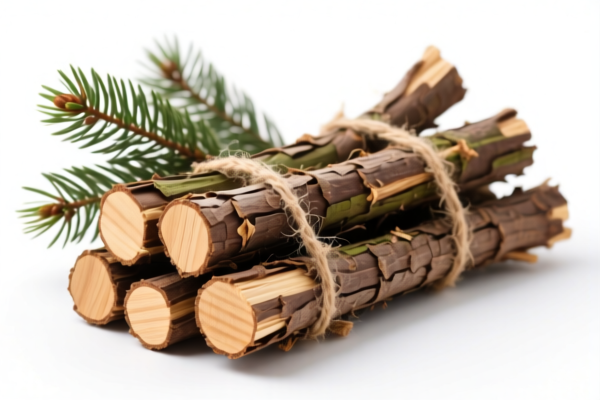
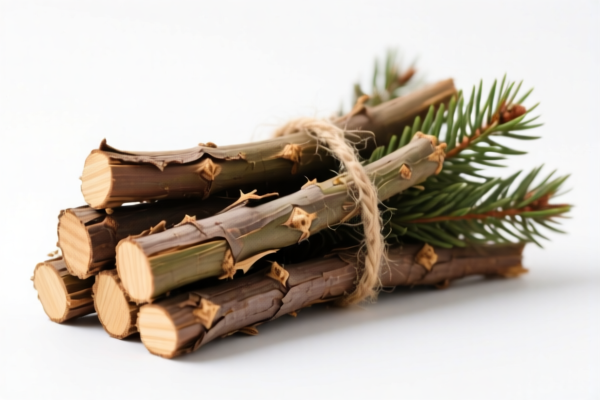
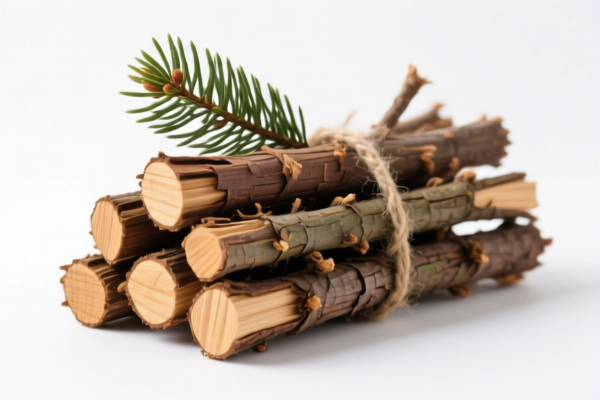
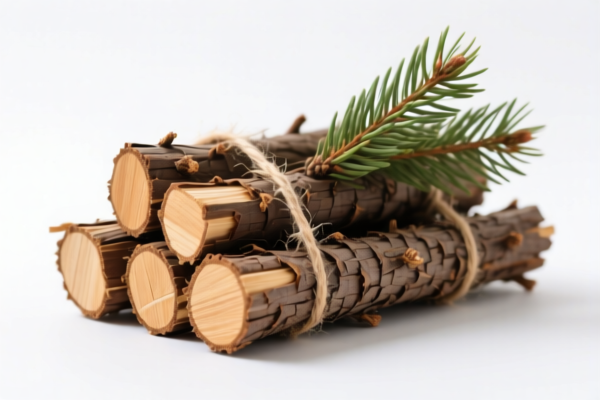
Coniferous branches are a specialized category of botanical materials used primarily for decorative, ornamental, or floral arrangement purposes. In international trade, they are strictly classified based on their state (fresh/dried/preserved) and primary use.
Key Distinctions: * Christmas Trees & Decorative Branches (HS 0604.20): Specifically defined as branches (whether or not with foliage) used primarily for decorative purposes, such as Christmas trees or holiday decorations. These are the most common imports. * Other Coniferous Branches (HS 0604.90): Includes branches not elsewhere specified, such as those used for crafts, general ornamental purposes, or other non-specific decorative uses.
⚠️ Critical Differentiation:
- If the product is explicitly marketed or used as Christmas trees or decorative foliage → HS 0604.20
- If the product is general coniferous branches not fitting the specific "Christmas tree" or primary decorative definition → HS 0604.90
- Note: Both categories fall under Chapter 06 (Live Trees and Other Plants; Bulbs, Roots and the Like; Cut Flowers and Ornamental Foliage).
📦 II. HS Code Classification Details (2026 Latest Tariff Authority Comparison)
| HS Code | Product Description | Applicable Scenario | Primary Use |
|---|---|---|---|
0604.20 |
Coniferous branches, whether or not with foliage, fresh, dried, or preserved, used primarily for decorative purposes | Christmas trees, holiday garlands, decorative wreaths, floral centerpieces | ✅ Decorative (Primary) |
0604.90 |
Other coniferous branches, not elsewhere specified, including those used for ornamental or decorative purposes, excluding those classified under 0604.20 | General ornamental branches, craft materials, non-specific foliage | ✅ Ornamental/Decorative (General) |
🔍 Key Reminder:
- All coniferous branches must be classified under Chapter 06.
- Fresh vs. Dried: Both fresh and dried/coniferous branches are included in 0604.20 if used for decorative purposes.
- Preserved: Preserved branches (chemically treated to maintain appearance) are also covered under 0604.20 if used decoratively.
- Misclassification Risk: Declaring decorative branches as "raw timber" or "plant material" (e.g., Chapter 44 or 14) will lead to customs delays, penalties, or seizure.
💰 III. 2026 Latest Tariff Rate Details (Including Additional Duties & Policy Add-ons)
✅ Applicable Country: United States (US)
✅ Origin: China (CN)
✅ Effective Date: 2025-11-10 onwards (including subsequent imports)
🎯 1. 0604.20 —— Coniferous Branches for Decorative Purposes (e.g., Christmas Trees)
| Item | Content |
|---|---|
| Base Tariff Rate | 0% (ad valorem) |
| USITC Additional Duty | +25% (from USITC Footnote 9903.88.01) |
| IEEPA Additional Duty | +10% (targeting Chinese/HK products, effective from 2025-11-10) |
| Total Tariff Rate | 35% |
| Tax Calculation | CIF Value × 35% |
| De Minimis Exemption Available? | ❌ No (deny_de_minimis) |
| Legal Basis Path | IEEPA:9903.01.25 → IEEPA:9903.01.24 → USITC:0604.20 → FOOTNOTE:9903.88.01 |
📌 Explanation:
- The 25% USITC duty stems from the "Section 301" additional tariffs on Chinese goods.
- The 10% IEEPA duty is an additional tariff under the International Emergency Economic Powers Act.
- Total 35% is a high tariff rate. Importers must factor this into their cost structure.
- De Minimis Exemption: Small shipments (under $800) cannot use the de minimis exemption for these goods. They are subject to full duty assessment.
🎯 2. 0604.90 —— Other Coniferous Branches (General Ornamental/Craft)
| Item | Content |
|---|---|
| Base Tariff Rate | 0% |
| USITC Additional Duty | +25% |
| IEEPA Additional Duty | +10% |
| Total Tariff Rate | 35% |
| Tax Calculation | CIF × 35% |
| De Minimis Exemption Available? | ❌ No |
| Legal Basis Path | IEEPA:9901.25 → IEEPA:9903.01.24 → USITC:0604.90 → FOOTNOTE:9903.88.01 |
📌 Note:
- This classification has the same tariff structure as 0604.20.
- Even if the branches are used for non-Christmas decorations (e.g., wreaths, garlands, crafts), if they are coniferous, they fall under 0604.90 or 0604.20 and are subject to the same 35% total duty.
- No differentiation in tariff rate between decorative and general ornamental coniferous branches from China.
🛠️ IV. Customs Clearance Practical Advice (Battle-Tested Pitfall Avoidance Guide)
✅ 1. Documentation Checklist (All Required)
| Document | Mandatory | Description |
|---|---|---|
| ✅ Product Specification Sheet | ✔️ | Includes type of conifer, freshness (fresh/dried/preserved), length, packaging details |
| ✅ Photos of Product & Packaging | ✔️ | Clear images showing branches, foliage, and any labels. Must show "fresh" or "dried" state |
| ✅ Commercial Invoice | ✔️ | Must clearly state: "Coniferous Branches, Decorative Use, Fresh/Dried" |
| ✅ Packing List | ✔️ | Details net/gross weight, quantity, and packaging type |
| ✅ Phytosanitary Certificate | ✔️ | CRITICAL: US CBP requires phytosanitary certificates for fresh plant material to prevent pests/diseases |
| ✅ Certificate of Origin (CO) | ✔️ | If claiming preferential treatment (not applicable for China due to 301 tariffs, but still required for standard entry) |
✅ 2. Declaration Tips (Key Mnemonics)
🔥 "Declare Decorative, Not Timber, Fresh or Dried, Phytosanitary Is Key!"
| Scenario | Correct Declaration | Wrong Practice |
|---|---|---|
| Christmas Trees/Decorative Branches | 0604.20 |
Misdeclaring as "Wood" or "Lumber" → Seizure |
| Dried/Preserved Branches for Crafts | 0604.90 |
Not stating "dried" → Phytosanitary Rejection |
| Fresh Branches with Foliage | 0604.20 or 0604.90 |
No Phytosanitary Certificate → Detention/Return |
| Mixed Packaging (Decorative + Non-Decorative) | Split by HS Code | Bundling all under one code → Audit Risk |
✅ 3. Special Circumstances Handling
| Scenario | Handling Advice |
|---|---|
| Importing During Holiday Season | Ensure Phytosanitary Certificates are issued within 30 days of shipment. Fresh branches are highly scrutinized. |
| Dried/Preserved Branches | While less risky than fresh, still require accurate description ("Dried Coniferous Branches") to avoid misclassification as "raw materials." |
| Small B2C Shipments | ❌ No De Minimis Exemption. Even small orders of decorative coniferous branches from China are subject to 35% duty. Factor this into pricing. |
| Re-export from Third Country | If transshipped through Vietnam or Mexico, ensure substantial transformation occurred. Simple transshipment does not change origin. |
🌍 V. Global Market Clearance Comparison (2026 Latest)
| Country/Region | Recommended HS Code | Tariff (China Origin) | Certification Requirements | Notes |
|---|---|---|---|---|
| 🇺🇸 United States | 0604.20 / 0604.90 |
35% (25% USITC + 10% IEEPA) | Phytosanitary Certificate + FDA Registration (if applicable) | Highest barrier due to 301 tariffs. No de minimis. |
| 🇨🇳 China | 0604.20 / 0604.90 |
0% (Import Duty) | None (for domestic trade) | No additional duties. |
| 🇪🇺 European Union | 0604.20 / 0604.90 |
0% (Most Favored Nation) | Phytosanitary Certificate (Plant Health) | No Section 301-style tariffs. Easier entry. |
| 🇬🇧 United Kingdom | 0604.20 / 0604.90 |
0% | Phytosanitary Certificate | Post-Brexit rules apply. No extra tariffs. |
| 🇨🇦 Canada | 0604.20 / 0604.90 |
0% (CUSMA) | Phytosanitary Certificate | Favorable under CUSMA. |
📌 Conclusion:
- The US is the most expensive market for importing coniferous branches from China due to the 35% total duty.
- EU, UK, Canada, and China have 0% import duty (or low duty), making them more attractive for cost-sensitive imports.
- Phytosanitary compliance is universal and critical, especially for fresh branches.
📌 VI. Common Errors & Pitfall Avoidance Guide (Lessons Learned)
❌ Error 1: Declaring decorative coniferous branches as "Wooden Decor" or "Artificial Plants"
👉 Consequence: Misclassification → Penalties + Back Taxes. CBP is strict on Chapter 06 items.
❌ Error 2: Missing Phytosanitary Certificate for Fresh Branches
👉 Consequence: Shipment Detention or Return. USDA APHIS strictly enforces this.
❌ Error 3: Assuming De Minimis Applies to Small Orders
👉 Consequence: Unexpected 35% Duty Charges. De minimis is denied for these HS codes from China.
❌ Error 4: Combining Fresh and Dried Branches in One Shipment Without Proper Documentation
👉 Consequence: Customs Delay. Fresh branches require phytosanitary certificates; dried do not. Clear separation is needed.
✅ Correct Practice:
"Coniferous Branches, Decorative Use, Fresh, With Foliage, HS 0604.20, Phytosanitary Certificate Attached"
🎯 VII. Conclusion: Professional Declaration, Save Time, Reduce Costs!
🎯 Remember the Mnemonic:
🔹 "Decorative Conifer, HS 0604, 35% Duty in US, No De Minimis, Phytosanitary Must!"
🔹 "HS Code Determines Duty, 35% is High, Declare Correctly to Avoid Fines!"
📌 Pro Tip:
If your coniferous branches are originally grown in Vietnam, Mexico, or Malaysia, you may be eligible for preferential tariffs (e.g., 0% under USMCA for Mexico/Canada). However, if they are grown in China, the 35% duty applies.
Recommendation: Consider supplier diversification or pre-clearance rulings to mitigate risk.
📣 Immediate Action:
📞 Contact a licensed customs broker + Provide product photos + Obtain Phytosanitary Certificate
🚀 Ensure your coniferous branches clear customs smoothly, avoid delays, and maximize profit!
✨ Professional Customs Clearance Starts with Accurate Classification!
💼 Every Dollar Saved is a Dollar Earned!
用户评价
关于 HS 编码归类
协调制度(HS)是由世界海关组织(WCO)制定的国际贸易商品分类标准。全球 200 多个国家采用 HS 系统作为海关关税、贸易统计和进出口监管的基础。
每个 HS 编码遵循以下层级结构:
- 章(2 位)——商品大类(例如:第 84 章:机器和机械设备)
- 品目(4 位)——章内的更具体分类
- 子目(6 位)——国际通用细分,所有 WCO 成员国统一使用
- 本国细分(8-10 位)——各国自行扩展的细分编码,如美国 HTSUS 10 位编码
正确的 HS 编码归类对于顺利通关、准确缴纳关税和遵守贸易法规至关重要。错误归类可能导致海关延误、多缴关税或罚款。
从CN进口到US时,适用的关税税率可能包括:
- 最惠国(MFN)税率——适用于 WTO 成员国的标准关税税率
- 普通税率——适用于无贸易协定国家
- 贸易救济关税——附加关税,如 301 条款(反倾销)、232 条款(国家安全)或反补贴税
本页内容仅供参考。如需正式归类,请咨询当地海关或持牌报关代理。