Coniferous Branches
CN → US| HS Code | Tariff Rate | Origin | Destination | Doc |
|---|---|---|---|---|
| 060420 | 0.0% | CN | US | Official Doc |
| 060490 | 0.0% | CN | US | Official Doc |
Product Images
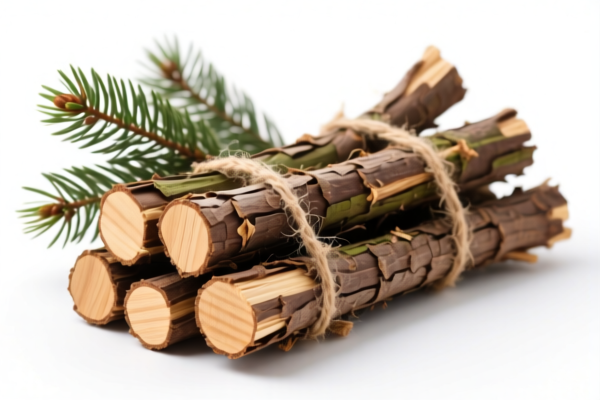
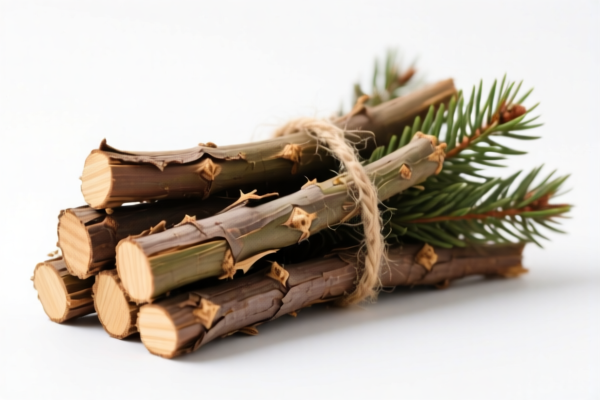
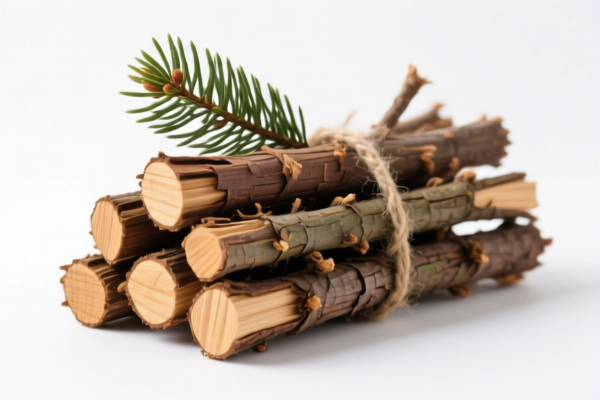
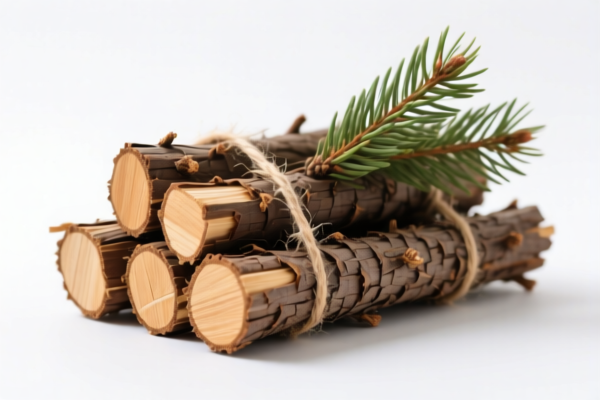
AI Analysis
🌲 Coniferous Branches: The Ultimate Guide to HS Code Classification & US Customs Clearance (2026)
🌐 HS Code Reference & Customs Clearance Strategy | 2026 Latest Tariff Analysis | Professional-Level Compliance Guide
📌 I. Product Definition & Classification: Do You Really Understand "Coniferous Branches"?
Coniferous branches are a specialized category of botanical materials used primarily for decorative, ornamental, or floral arrangement purposes. In international trade, they are strictly classified based on their state (fresh/dried/preserved) and primary use.
Key Distinctions: * Christmas Trees & Decorative Branches (HS 0604.20): Specifically defined as branches (whether or not with foliage) used primarily for decorative purposes, such as Christmas trees or holiday decorations. These are the most common imports. * Other Coniferous Branches (HS 0604.90): Includes branches not elsewhere specified, such as those used for crafts, general ornamental purposes, or other non-specific decorative uses.
⚠️ Critical Differentiation:
- If the product is explicitly marketed or used as Christmas trees or decorative foliage → HS 0604.20
- If the product is general coniferous branches not fitting the specific "Christmas tree" or primary decorative definition → HS 0604.90
- Note: Both categories fall under Chapter 06 (Live Trees and Other Plants; Bulbs, Roots and the Like; Cut Flowers and Ornamental Foliage).
📦 II. HS Code Classification Details (2026 Latest Tariff Authority Comparison)
| HS Code | Product Description | Applicable Scenario | Primary Use |
|---|---|---|---|
0604.20 |
Coniferous branches, whether or not with foliage, fresh, dried, or preserved, used primarily for decorative purposes | Christmas trees, holiday garlands, decorative wreaths, floral centerpieces | ✅ Decorative (Primary) |
0604.90 |
Other coniferous branches, not elsewhere specified, including those used for ornamental or decorative purposes, excluding those classified under 0604.20 | General ornamental branches, craft materials, non-specific foliage | ✅ Ornamental/Decorative (General) |
🔍 Key Reminder:
- All coniferous branches must be classified under Chapter 06.
- Fresh vs. Dried: Both fresh and dried/coniferous branches are included in 0604.20 if used for decorative purposes.
- Preserved: Preserved branches (chemically treated to maintain appearance) are also covered under 0604.20 if used decoratively.
- Misclassification Risk: Declaring decorative branches as "raw timber" or "plant material" (e.g., Chapter 44 or 14) will lead to customs delays, penalties, or seizure.
💰 III. 2026 Latest Tariff Rate Details (Including Additional Duties & Policy Add-ons)
✅ Applicable Country: United States (US)
✅ Origin: China (CN)
✅ Effective Date: 2025-11-10 onwards (including subsequent imports)
🎯 1. 0604.20 —— Coniferous Branches for Decorative Purposes (e.g., Christmas Trees)
| Item | Content |
|---|---|
| Base Tariff Rate | 0% (ad valorem) |
| USITC Additional Duty | +25% (from USITC Footnote 9903.88.01) |
| IEEPA Additional Duty | +10% (targeting Chinese/HK products, effective from 2025-11-10) |
| Total Tariff Rate | 35% |
| Tax Calculation | CIF Value × 35% |
| De Minimis Exemption Available? | ❌ No (deny_de_minimis) |
| Legal Basis Path | IEEPA:9903.01.25 → IEEPA:9903.01.24 → USITC:0604.20 → FOOTNOTE:9903.88.01 |
📌 Explanation:
- The 25% USITC duty stems from the "Section 301" additional tariffs on Chinese goods.
- The 10% IEEPA duty is an additional tariff under the International Emergency Economic Powers Act.
- Total 35% is a high tariff rate. Importers must factor this into their cost structure.
- De Minimis Exemption: Small shipments (under $800) cannot use the de minimis exemption for these goods. They are subject to full duty assessment.
🎯 2. 0604.90 —— Other Coniferous Branches (General Ornamental/Craft)
| Item | Content |
|---|---|
| Base Tariff Rate | 0% |
| USITC Additional Duty | +25% |
| IEEPA Additional Duty | +10% |
| Total Tariff Rate | 35% |
| Tax Calculation | CIF × 35% |
| De Minimis Exemption Available? | ❌ No |
| Legal Basis Path | IEEPA:9901.25 → IEEPA:9903.01.24 → USITC:0604.90 → FOOTNOTE:9903.88.01 |
📌 Note:
- This classification has the same tariff structure as 0604.20.
- Even if the branches are used for non-Christmas decorations (e.g., wreaths, garlands, crafts), if they are coniferous, they fall under 0604.90 or 0604.20 and are subject to the same 35% total duty.
- No differentiation in tariff rate between decorative and general ornamental coniferous branches from China.
🛠️ IV. Customs Clearance Practical Advice (Battle-Tested Pitfall Avoidance Guide)
✅ 1. Documentation Checklist (All Required)
| Document | Mandatory | Description |
|---|---|---|
| ✅ Product Specification Sheet | ✔️ | Includes type of conifer, freshness (fresh/dried/preserved), length, packaging details |
| ✅ Photos of Product & Packaging | ✔️ | Clear images showing branches, foliage, and any labels. Must show "fresh" or "dried" state |
| ✅ Commercial Invoice | ✔️ | Must clearly state: "Coniferous Branches, Decorative Use, Fresh/Dried" |
| ✅ Packing List | ✔️ | Details net/gross weight, quantity, and packaging type |
| ✅ Phytosanitary Certificate | ✔️ | CRITICAL: US CBP requires phytosanitary certificates for fresh plant material to prevent pests/diseases |
| ✅ Certificate of Origin (CO) | ✔️ | If claiming preferential treatment (not applicable for China due to 301 tariffs, but still required for standard entry) |
✅ 2. Declaration Tips (Key Mnemonics)
🔥 "Declare Decorative, Not Timber, Fresh or Dried, Phytosanitary Is Key!"
| Scenario | Correct Declaration | Wrong Practice |
|---|---|---|
| Christmas Trees/Decorative Branches | 0604.20 |
Misdeclaring as "Wood" or "Lumber" → Seizure |
| Dried/Preserved Branches for Crafts | 0604.90 |
Not stating "dried" → Phytosanitary Rejection |
| Fresh Branches with Foliage | 0604.20 or 0604.90 |
No Phytosanitary Certificate → Detention/Return |
| Mixed Packaging (Decorative + Non-Decorative) | Split by HS Code | Bundling all under one code → Audit Risk |
✅ 3. Special Circumstances Handling
| Scenario | Handling Advice |
|---|---|
| Importing During Holiday Season | Ensure Phytosanitary Certificates are issued within 30 days of shipment. Fresh branches are highly scrutinized. |
| Dried/Preserved Branches | While less risky than fresh, still require accurate description ("Dried Coniferous Branches") to avoid misclassification as "raw materials." |
| Small B2C Shipments | ❌ No De Minimis Exemption. Even small orders of decorative coniferous branches from China are subject to 35% duty. Factor this into pricing. |
| Re-export from Third Country | If transshipped through Vietnam or Mexico, ensure substantial transformation occurred. Simple transshipment does not change origin. |
🌍 V. Global Market Clearance Comparison (2026 Latest)
| Country/Region | Recommended HS Code | Tariff (China Origin) | Certification Requirements | Notes |
|---|---|---|---|---|
| 🇺🇸 United States | 0604.20 / 0604.90 |
35% (25% USITC + 10% IEEPA) | Phytosanitary Certificate + FDA Registration (if applicable) | Highest barrier due to 301 tariffs. No de minimis. |
| 🇨🇳 China | 0604.20 / 0604.90 |
0% (Import Duty) | None (for domestic trade) | No additional duties. |
| 🇪🇺 European Union | 0604.20 / 0604.90 |
0% (Most Favored Nation) | Phytosanitary Certificate (Plant Health) | No Section 301-style tariffs. Easier entry. |
| 🇬🇧 United Kingdom | 0604.20 / 0604.90 |
0% | Phytosanitary Certificate | Post-Brexit rules apply. No extra tariffs. |
| 🇨🇦 Canada | 0604.20 / 0604.90 |
0% (CUSMA) | Phytosanitary Certificate | Favorable under CUSMA. |
📌 Conclusion:
- The US is the most expensive market for importing coniferous branches from China due to the 35% total duty.
- EU, UK, Canada, and China have 0% import duty (or low duty), making them more attractive for cost-sensitive imports.
- Phytosanitary compliance is universal and critical, especially for fresh branches.
📌 VI. Common Errors & Pitfall Avoidance Guide (Lessons Learned)
❌ Error 1: Declaring decorative coniferous branches as "Wooden Decor" or "Artificial Plants"
👉 Consequence: Misclassification → Penalties + Back Taxes. CBP is strict on Chapter 06 items.
❌ Error 2: Missing Phytosanitary Certificate for Fresh Branches
👉 Consequence: Shipment Detention or Return. USDA APHIS strictly enforces this.
❌ Error 3: Assuming De Minimis Applies to Small Orders
👉 Consequence: Unexpected 35% Duty Charges. De minimis is denied for these HS codes from China.
❌ Error 4: Combining Fresh and Dried Branches in One Shipment Without Proper Documentation
👉 Consequence: Customs Delay. Fresh branches require phytosanitary certificates; dried do not. Clear separation is needed.
✅ Correct Practice:
"Coniferous Branches, Decorative Use, Fresh, With Foliage, HS 0604.20, Phytosanitary Certificate Attached"
🎯 VII. Conclusion: Professional Declaration, Save Time, Reduce Costs!
🎯 Remember the Mnemonic:
🔹 "Decorative Conifer, HS 0604, 35% Duty in US, No De Minimis, Phytosanitary Must!"
🔹 "HS Code Determines Duty, 35% is High, Declare Correctly to Avoid Fines!"
📌 Pro Tip:
If your coniferous branches are originally grown in Vietnam, Mexico, or Malaysia, you may be eligible for preferential tariffs (e.g., 0% under USMCA for Mexico/Canada). However, if they are grown in China, the 35% duty applies.
Recommendation: Consider supplier diversification or pre-clearance rulings to mitigate risk.
📣 Immediate Action:
📞 Contact a licensed customs broker + Provide product photos + Obtain Phytosanitary Certificate
🚀 Ensure your coniferous branches clear customs smoothly, avoid delays, and maximize profit!
✨ Professional Customs Clearance Starts with Accurate Classification!
💼 Every Dollar Saved is a Dollar Earned!
Customer Reviews
About HS Code Classification
The Harmonized System (HS) is an internationally standardized nomenclature developed by the World Customs Organization (WCO) to classify traded products. Over 200 countries use the HS system as the basis for customs tariffs, trade statistics, and import/export regulations.
Each HS code follows a hierarchical structure:
- Chapter (2 digits) — Broad category of goods (e.g., Chapter 84: Machinery and Mechanical Appliances)
- Heading (4 digits) — More specific grouping within the chapter
- Subheading (6 digits) — Internationally standardized breakdown, used by all WCO member countries
- National subdivisions (8-10 digits) — Country-specific extensions for further classification, such as US HTSUS 10-digit codes
Correct HS code classification is essential for smooth customs clearance, accurate duty payment, and compliance with trade regulations. Misclassification can lead to customs delays, overpayment of duties, or penalties.
When importing from CN to US, the applicable tariff rates may include:
- Most-Favored-Nation (MFN) rate — The standard duty rate applied to WTO members
- General rate — Applied to countries without trade agreements
- Trade remedy duties — Additional tariffs such as Section 301 (anti-dumping), Section 232 (national security), or countervailing duties
The information provided on this page is for reference purposes only. For official classification, please consult with your local customs authority or a licensed customs broker.