Coniferous Twigs
CN → US| HS编码 | 关税税率 | 原产国 | 目的国 | 文档 |
|---|---|---|---|---|
| 1404909090 | 35.0% | CN | US | 官方文档 |
| 1404901000 | 0.0% | CN | US | 官方文档 |
| 1211909300 | 41.0% | CN | US | 官方文档 |
| 1211908990 | 35.0% | CN | US | 官方文档 |
| 060420 | 0.0% | CN | US | 官方文档 |
商品图片
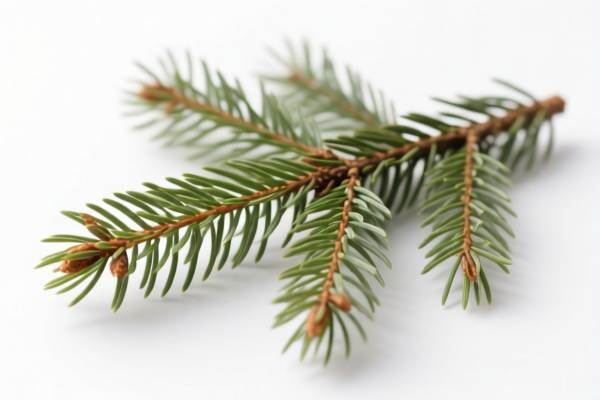
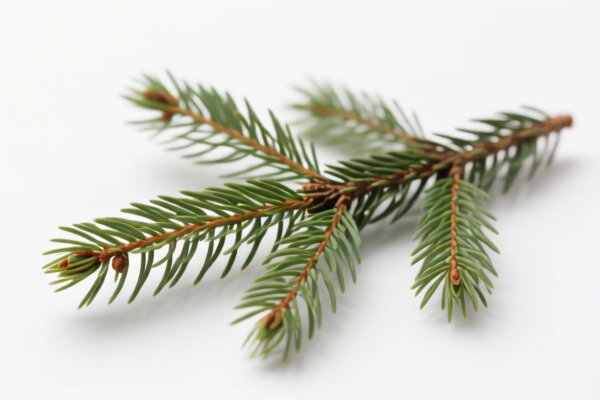
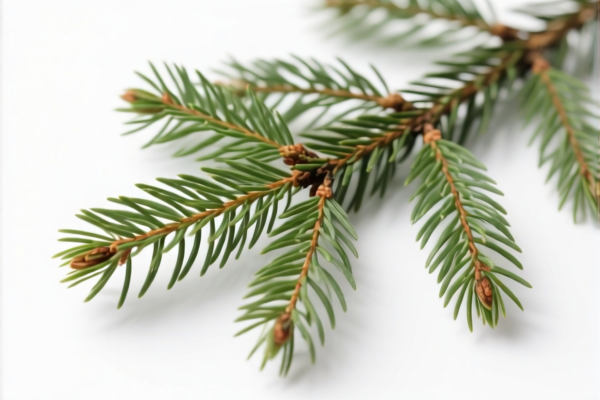
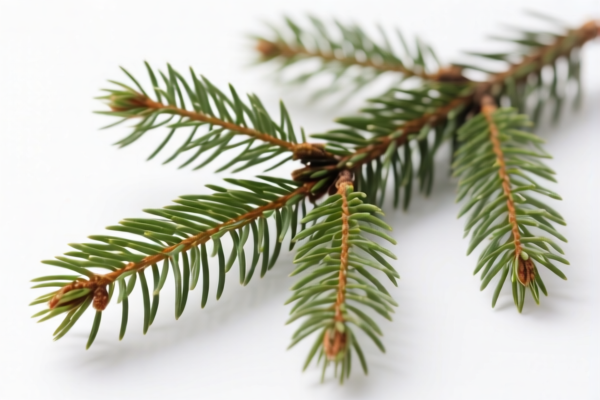
AI分析
🌿 Coniferous Twigs (Vegetable Products for Plaiting/Ornamental Use)
🌐 HS Code Reference & Customs Clearance Guide | 2026 Latest Tariff Analysis | Professional Compliance Strategy
📌 1. Product Definition: Are You Importing "Decorative Moss" or "Plaiting Raw Material"?
In international trade, "Coniferous Twigs" are highly context-dependent. They fall into two distinct HS Code categories based on their primary use and preparation:
Category A: Ornamental/Foliage (HS 0604.20)
Used primarily for bouquets, floral arrangements, or interior decoration.
Examples: Dried eucalyptus-style conifer branches, moss-covered twigs for home decor, dyed pine sprigs.
Category B: Raw Material for Plaiting (HS 1401.90)
Used primarily as raw material for weaving baskets, mats, furniture, or crafts.
Examples: Raw rattan, willow rods, unprocessed coniferous branches stripped of leaves, suitable for basketry.
⚠️ Key Distinction Point:
- If the item is cut, dyed, bleached, or arranged for aesthetic/decorative purposes → HS 0604.20
- If the item is raw, unprocessed, or specifically sized for weaving/plaiting → HS 1401.90
📦 2. HS Code Classification Details (2026 Latest Tariff Authority Comparison)
| HS Code | Product Description | Primary Use | Processing State |
|---|---|---|---|
0604.20 |
Foliage, branches, mosses, lichens for bouquets/ornamental purposes | Decoration, Floral Arrangement | Fresh, dried, dyed, bleached, impregnated |
1404.90.90.90 |
Vegetable products primarily for plaiting (e.g., bamboo, rattan, willow, coniferous twigs) | Basketry, Woven Goods, Crafts | Raw, processed for plaiting, not elsewhere specified |
1404.90.10.00 |
Vegetable hair | Specialty fibers (rare for conifers) | Processed fibers |
1211.90.93.00 |
Plants for perfumery/pharmacy/insecticidal purposes | Medicine, Perfume, Pest Control | Chilled/frozen |
1211.90.89.90 |
Plants for perfumery/pharmacy/insecticidal purposes (other) | Medicine, Perfume, Pest Control | Fresh/dried |
🔍 Critical Reminder:
- Coniferous twigs for decoration MUST be classified under 0604.20. Do NOT misclassify decorative items as raw materials.
- Coniferous twigs for weaving MUST be classified under 1401.90. Decorative items cannot be declared as plaiting material to avoid taxes.
- HS 1211 series applies ONLY if the twigs are specifically intended for medicinal, perfumery, or insecticidal use.
💰 3. 2026 Latest Tariff Rate Breakdown (Including Additional Taxes & Policy Surcharges)
✅ Applicable Country: United States (US)
✅ Country of Origin: China (CN)
✅ Effective Date: November 10, 2025 onwards (including subsequent imports)
🎯 1. 0604.20 —— Foliage/Ornamental Coniferous Branches
| Item | Content |
|---|---|
| Base Tariff | Error (Failed to retrieve tax information) |
| Total Tax Rate | Error |
| USITC Surcharge | Unknown/Failed to retrieve |
| IEEPA Surcharge | Unknown/Failed to retrieve |
| Total Effective Rate | Uncertain – High Risk |
| Tax Calculation | CIF Value × (Unknown Rate) |
| De Minimis Exemption | ❌ Likely Not Eligible (If subject to Section 301/IEEPA) |
| Legal Basis | USITC:0604.20 → Tax Retrieval Error |
📌 Explanation:
- Tax Information Failed to Retrieve: This is a critical compliance risk.
- In previous years, HS 0604.20 items from China often faced Section 301 tariffs (25%).
- Action Required: You MUST verify the current tax status with a customs broker before shipment. Do NOT assume 0% tax.
- If the system shows "Error," it implies potential data mismatch or recent tariff changes. Risk of audit is HIGH.
🎯 2. 1404.90.90.90 —— Vegetable Products for Plaiting (Coniferous Twigs)
| Item | Content |
|---|---|
| Base Tariff | 0.0% |
| Section 301 Surcharge | +25.0% |
| IEEPA Surcharge | (Not specified in data, assume 0% unless China-origin triggers IEEPA) |
| Total Tax Rate | 25.0% |
| Tax Calculation | CIF Value × 25% |
| De Minimis Exemption | ❌ Not Eligible (if subject to Section 301) |
| Legal Basis | USITC:1404.90.90.90 → FOOTNOTE:301 |
📌 Note:
- 25% Total Tax: This is a standard Section 301 tariff for Chinese-origin plaiting materials.
- Base Rate is 0%: The high cost comes entirely from the 25% surcharge.
- Application: Applies to raw or prepared twigs used for weaving.
🎯 3. 1404.90.10.00 —— Vegetable Hair
| Item | Content |
|---|---|
| Base Tariff | 0.5¢/kg (Specific Rate) |
| Section 301 Surcharge | +25.0% (Ad Valorem) |
| Total Tax Rate | 0.5¢/kg + 25.0% |
| Tax Calculation | (Weight × 0.5¢) + (CIF × 25%) |
| De Minimis Exemption | ❌ Not Eligible |
📌 Note:
- Rarely used for coniferous twigs. Applies to specific vegetable fibers.
🎯 4. 1211.90.93.00 & 1211.90.89.90 —— Medicinal/Perfumery Plants
| Item | Content |
|---|---|
| Base Tariff | 0.0% |
| Section 301 Surcharge | 0.0% (for 1211.90.93.00) / 25.0% (for 1211.90.89.90) |
| Total Tax Rate | 0.0% (Chilled/Frozen) / 25.0% (Fresh/Dried Other) |
| De Minimis Exemption | ❌ Not Eligible (if subject to Section 301) |
📌 Note:
- Only applicable if twigs are explicitly marketed/used for perfumery, pharmacy, or insecticidal purposes.
- If declared as "coniferous twigs for decoration," this HS Code is incorrect.
🛠️ 4. Customs Clearance Practical Advice (Avoiding Pitfalls)
✅ 1. Required Documentation List (Non-Negotiable)
| Document | Required | Purpose |
|---|---|---|
| ✅ Product Specification | ✔️ | Detail: Fresh/dried, dyed/bleached, use (decor vs. weaving) |
| ✅ Material Composition | ✔️ | Confirm 100% vegetable origin (no synthetic backing) |
| ✅ Photos | ✔️ | Show texture, length, presence of moss/lichen |
| ✅ Usage Declaration | ✔️ | "For Ornamental Purposes" OR "For Plaiting/Weaving" |
| ✅ Commercial Invoice | ✔️ | Clear description matching HS Code |
| ✅ Packing List | ✔️ | Weight, dimensions, number of bundles |
✅ 2. Declaration Strategy (Key Mnemonic)
🔥 "Use Determines HS: Ornament=0604, Plait=1401!"
| Scenario | Correct HS Code | Common Mistake | Consequence |
|---|---|---|---|
| Decorative dried pine cones/branches | 0604.20 |
Declared as 1401.90 |
Tax underpayment penalty |
| Raw willow/conifer rods for baskets | 1404.90.90.90 |
Declared as 0604.20 |
Tax overpayment (or vice versa) |
| Medicinal herb bundles | 1211.90.89.90 |
Declared as 0604.20 |
Misclassification audit risk |
📌 Crucial:
- If you declare1211.90.93.00(0% tax) but the product is not for perfumery/pharmacy, customs will reclassify to0604.20or1404.90and impose penalties.
✅ 3. Special Case Handling
| Scenario | Handling Advice |
|---|---|
| Mixed Bundles | If a bundle contains both decorative foliage AND plaiting rods, declare separately or use the primary use. Mixed declarations lead to delays. |
| Moss/Lichen Covered Twigs | If moss/lichen is the primary ornamental feature, classify as 0604.20. |
| Dyed/Bleached Twigs | Still 0604.20 if for decoration. Processing (dyeing) does not change HS if use remains ornamental. |
| Origin: Non-China | If from Vietnam/Malaysia, Section 301 (25%) may NOT apply. Check IEEPA exemptions. |
🌍 5. Global Market Comparison (2026 Latest)
| Country/Region | Recommended HS Code | Estimated Duty (China Origin) | Certification | Notes |
|---|---|---|---|---|
| 🇺🇸 USA | 0604.20 / 1404.90.90.90 |
Error / 25% | None | High Risk for 0604.20 due to tax retrieval error. |
| 🇪🇺 EU | 0604.20 / 1401.90 |
0% - 4% | None | Generally lower duties than US. |
| 🇨🇳 China | 0604.20 / 1401.90 |
0% - 5% | None | Import duties low. |
| 🇯🇵 Japan | 0604.20 / 1401.90 |
0% - 3% | None |
📌 Conclusion:
- USA is the most complex market for these goods due to Section 301 tariffs and tax data retrieval errors.
- EU/Asia are more favorable with lower duties.
📌 6. Common Errors & Pitfall Guide (Lessons Learned)
❌ Mistake 1: Declaring decorative dried branches as "Plaiting Materials" to avoid tax
👉 Consequence: Customs verifies use. If found decorative, penalty + back taxes.
❌ Mistake 2: Ignoring the "Tax Error" for HS 0604.20
👉 Consequence: Shipment held at port pending manual tax verification. Delays 7-14 days.
❌ Mistake 3: Mixing medicinal herbs with decorative foliage in one shipment
👉 Consequence: Customs may reclassify entire shipment to the highest tax rate or require separate entries.
✅ Correct Practice:
"Dried Coniferous Branches, Dyed Gold, for Floral Arrangements" → HS 0604.20
"Raw Coniferous Twigs, Untreated, for Basket Weaving" → HS 1404.90.90.90
🎯 7. Conclusion: Precision in Classification Saves Costs
🎯 Remember Mnemonic:
🔹 "Decoration = 0604, Plaiting = 1401!"
🔹 "Tax Error on 0604? Check Before Ship!"
🔹 "Use Dictates HS, Not Just Material!"
📌 Pro Tip:
- For HS 0604.20, contact a customs broker BEFORE shipment to confirm the exact tax rate due to the "Error" status.
- For HS 1404.90.90.90, budget for 25% additional tariff.
- If possible, consider non-China origins to avoid Section 301 surcharges.
📣 Immediate Action:
📞 Consult Customs Broker
📝 Prepare Detailed Product Description
📦 Verify Final HS Code Before Booking Freight
🚀 Ensure Smooth Clearance, Avoid Delays, Protect Margins!
✨ Professional Clearance Starts with Accurate Classification!
💼 Every Dollar Saved in Tariffs is Pure Profit!
用户评价
关于 HS 编码归类
协调制度(HS)是由世界海关组织(WCO)制定的国际贸易商品分类标准。全球 200 多个国家采用 HS 系统作为海关关税、贸易统计和进出口监管的基础。
每个 HS 编码遵循以下层级结构:
- 章(2 位)——商品大类(例如:第 84 章:机器和机械设备)
- 品目(4 位)——章内的更具体分类
- 子目(6 位)——国际通用细分,所有 WCO 成员国统一使用
- 本国细分(8-10 位)——各国自行扩展的细分编码,如美国 HTSUS 10 位编码
正确的 HS 编码归类对于顺利通关、准确缴纳关税和遵守贸易法规至关重要。错误归类可能导致海关延误、多缴关税或罚款。
从CN进口到US时,适用的关税税率可能包括:
- 最惠国(MFN)税率——适用于 WTO 成员国的标准关税税率
- 普通税率——适用于无贸易协定国家
- 贸易救济关税——附加关税,如 301 条款(反倾销)、232 条款(国家安全)或反补贴税
本页内容仅供参考。如需正式归类,请咨询当地海关或持牌报关代理。