Coniferous Twigs
CN → US| HS Code | Tariff Rate | Origin | Destination | Doc |
|---|---|---|---|---|
| 1404909090 | 35.0% | CN | US | Official Doc |
| 1404901000 | 0.0% | CN | US | Official Doc |
| 1211909300 | 41.0% | CN | US | Official Doc |
| 1211908990 | 35.0% | CN | US | Official Doc |
| 060420 | 0.0% | CN | US | Official Doc |
Product Images
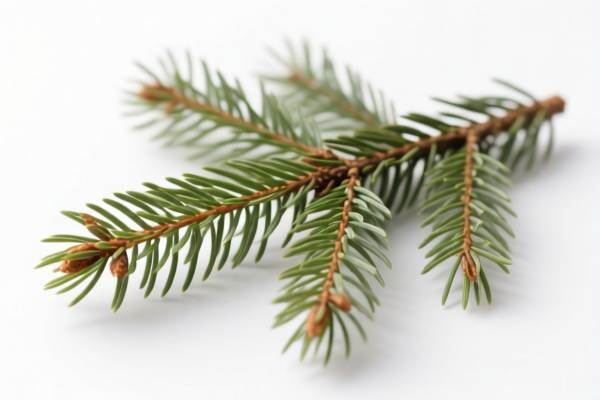
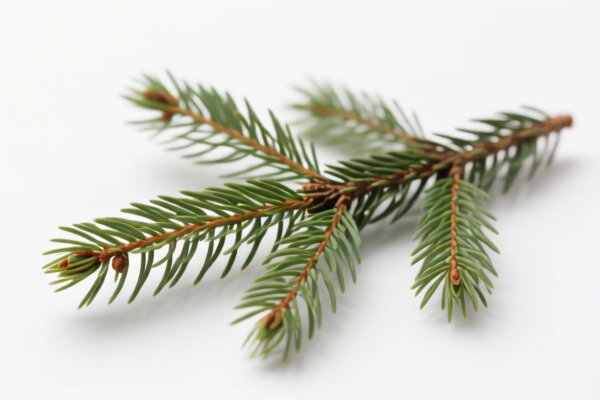
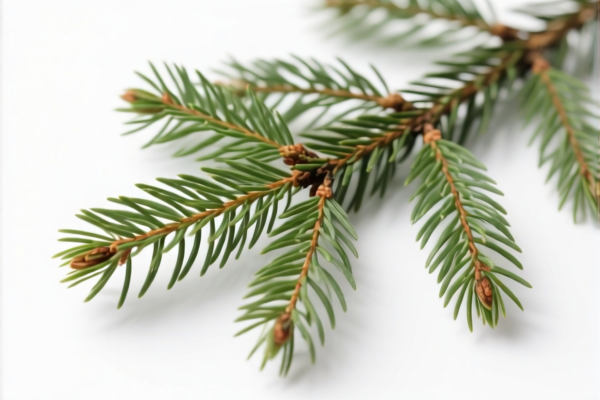
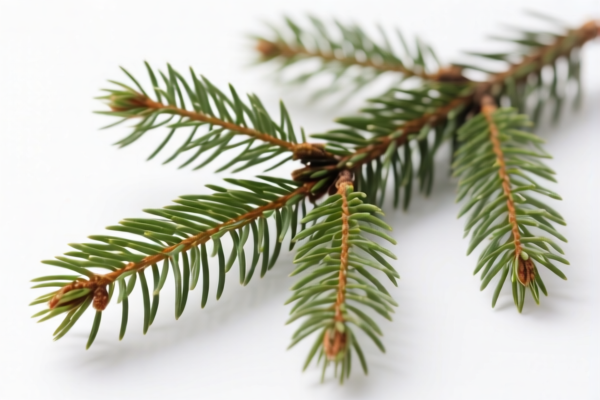
AI Analysis
🌿 Coniferous Twigs (Vegetable Products for Plaiting/Ornamental Use)
🌐 HS Code Reference & Customs Clearance Guide | 2026 Latest Tariff Analysis | Professional Compliance Strategy
📌 1. Product Definition: Are You Importing "Decorative Moss" or "Plaiting Raw Material"?
In international trade, "Coniferous Twigs" are highly context-dependent. They fall into two distinct HS Code categories based on their primary use and preparation:
Category A: Ornamental/Foliage (HS 0604.20)
Used primarily for bouquets, floral arrangements, or interior decoration.
Examples: Dried eucalyptus-style conifer branches, moss-covered twigs for home decor, dyed pine sprigs.
Category B: Raw Material for Plaiting (HS 1401.90)
Used primarily as raw material for weaving baskets, mats, furniture, or crafts.
Examples: Raw rattan, willow rods, unprocessed coniferous branches stripped of leaves, suitable for basketry.
⚠️ Key Distinction Point:
- If the item is cut, dyed, bleached, or arranged for aesthetic/decorative purposes → HS 0604.20
- If the item is raw, unprocessed, or specifically sized for weaving/plaiting → HS 1401.90
📦 2. HS Code Classification Details (2026 Latest Tariff Authority Comparison)
| HS Code | Product Description | Primary Use | Processing State |
|---|---|---|---|
0604.20 |
Foliage, branches, mosses, lichens for bouquets/ornamental purposes | Decoration, Floral Arrangement | Fresh, dried, dyed, bleached, impregnated |
1404.90.90.90 |
Vegetable products primarily for plaiting (e.g., bamboo, rattan, willow, coniferous twigs) | Basketry, Woven Goods, Crafts | Raw, processed for plaiting, not elsewhere specified |
1404.90.10.00 |
Vegetable hair | Specialty fibers (rare for conifers) | Processed fibers |
1211.90.93.00 |
Plants for perfumery/pharmacy/insecticidal purposes | Medicine, Perfume, Pest Control | Chilled/frozen |
1211.90.89.90 |
Plants for perfumery/pharmacy/insecticidal purposes (other) | Medicine, Perfume, Pest Control | Fresh/dried |
🔍 Critical Reminder:
- Coniferous twigs for decoration MUST be classified under 0604.20. Do NOT misclassify decorative items as raw materials.
- Coniferous twigs for weaving MUST be classified under 1401.90. Decorative items cannot be declared as plaiting material to avoid taxes.
- HS 1211 series applies ONLY if the twigs are specifically intended for medicinal, perfumery, or insecticidal use.
💰 3. 2026 Latest Tariff Rate Breakdown (Including Additional Taxes & Policy Surcharges)
✅ Applicable Country: United States (US)
✅ Country of Origin: China (CN)
✅ Effective Date: November 10, 2025 onwards (including subsequent imports)
🎯 1. 0604.20 —— Foliage/Ornamental Coniferous Branches
| Item | Content |
|---|---|
| Base Tariff | Error (Failed to retrieve tax information) |
| Total Tax Rate | Error |
| USITC Surcharge | Unknown/Failed to retrieve |
| IEEPA Surcharge | Unknown/Failed to retrieve |
| Total Effective Rate | Uncertain – High Risk |
| Tax Calculation | CIF Value × (Unknown Rate) |
| De Minimis Exemption | ❌ Likely Not Eligible (If subject to Section 301/IEEPA) |
| Legal Basis | USITC:0604.20 → Tax Retrieval Error |
📌 Explanation:
- Tax Information Failed to Retrieve: This is a critical compliance risk.
- In previous years, HS 0604.20 items from China often faced Section 301 tariffs (25%).
- Action Required: You MUST verify the current tax status with a customs broker before shipment. Do NOT assume 0% tax.
- If the system shows "Error," it implies potential data mismatch or recent tariff changes. Risk of audit is HIGH.
🎯 2. 1404.90.90.90 —— Vegetable Products for Plaiting (Coniferous Twigs)
| Item | Content |
|---|---|
| Base Tariff | 0.0% |
| Section 301 Surcharge | +25.0% |
| IEEPA Surcharge | (Not specified in data, assume 0% unless China-origin triggers IEEPA) |
| Total Tax Rate | 25.0% |
| Tax Calculation | CIF Value × 25% |
| De Minimis Exemption | ❌ Not Eligible (if subject to Section 301) |
| Legal Basis | USITC:1404.90.90.90 → FOOTNOTE:301 |
📌 Note:
- 25% Total Tax: This is a standard Section 301 tariff for Chinese-origin plaiting materials.
- Base Rate is 0%: The high cost comes entirely from the 25% surcharge.
- Application: Applies to raw or prepared twigs used for weaving.
🎯 3. 1404.90.10.00 —— Vegetable Hair
| Item | Content |
|---|---|
| Base Tariff | 0.5¢/kg (Specific Rate) |
| Section 301 Surcharge | +25.0% (Ad Valorem) |
| Total Tax Rate | 0.5¢/kg + 25.0% |
| Tax Calculation | (Weight × 0.5¢) + (CIF × 25%) |
| De Minimis Exemption | ❌ Not Eligible |
📌 Note:
- Rarely used for coniferous twigs. Applies to specific vegetable fibers.
🎯 4. 1211.90.93.00 & 1211.90.89.90 —— Medicinal/Perfumery Plants
| Item | Content |
|---|---|
| Base Tariff | 0.0% |
| Section 301 Surcharge | 0.0% (for 1211.90.93.00) / 25.0% (for 1211.90.89.90) |
| Total Tax Rate | 0.0% (Chilled/Frozen) / 25.0% (Fresh/Dried Other) |
| De Minimis Exemption | ❌ Not Eligible (if subject to Section 301) |
📌 Note:
- Only applicable if twigs are explicitly marketed/used for perfumery, pharmacy, or insecticidal purposes.
- If declared as "coniferous twigs for decoration," this HS Code is incorrect.
🛠️ 4. Customs Clearance Practical Advice (Avoiding Pitfalls)
✅ 1. Required Documentation List (Non-Negotiable)
| Document | Required | Purpose |
|---|---|---|
| ✅ Product Specification | ✔️ | Detail: Fresh/dried, dyed/bleached, use (decor vs. weaving) |
| ✅ Material Composition | ✔️ | Confirm 100% vegetable origin (no synthetic backing) |
| ✅ Photos | ✔️ | Show texture, length, presence of moss/lichen |
| ✅ Usage Declaration | ✔️ | "For Ornamental Purposes" OR "For Plaiting/Weaving" |
| ✅ Commercial Invoice | ✔️ | Clear description matching HS Code |
| ✅ Packing List | ✔️ | Weight, dimensions, number of bundles |
✅ 2. Declaration Strategy (Key Mnemonic)
🔥 "Use Determines HS: Ornament=0604, Plait=1401!"
| Scenario | Correct HS Code | Common Mistake | Consequence |
|---|---|---|---|
| Decorative dried pine cones/branches | 0604.20 |
Declared as 1401.90 |
Tax underpayment penalty |
| Raw willow/conifer rods for baskets | 1404.90.90.90 |
Declared as 0604.20 |
Tax overpayment (or vice versa) |
| Medicinal herb bundles | 1211.90.89.90 |
Declared as 0604.20 |
Misclassification audit risk |
📌 Crucial:
- If you declare1211.90.93.00(0% tax) but the product is not for perfumery/pharmacy, customs will reclassify to0604.20or1404.90and impose penalties.
✅ 3. Special Case Handling
| Scenario | Handling Advice |
|---|---|
| Mixed Bundles | If a bundle contains both decorative foliage AND plaiting rods, declare separately or use the primary use. Mixed declarations lead to delays. |
| Moss/Lichen Covered Twigs | If moss/lichen is the primary ornamental feature, classify as 0604.20. |
| Dyed/Bleached Twigs | Still 0604.20 if for decoration. Processing (dyeing) does not change HS if use remains ornamental. |
| Origin: Non-China | If from Vietnam/Malaysia, Section 301 (25%) may NOT apply. Check IEEPA exemptions. |
🌍 5. Global Market Comparison (2026 Latest)
| Country/Region | Recommended HS Code | Estimated Duty (China Origin) | Certification | Notes |
|---|---|---|---|---|
| 🇺🇸 USA | 0604.20 / 1404.90.90.90 |
Error / 25% | None | High Risk for 0604.20 due to tax retrieval error. |
| 🇪🇺 EU | 0604.20 / 1401.90 |
0% - 4% | None | Generally lower duties than US. |
| 🇨🇳 China | 0604.20 / 1401.90 |
0% - 5% | None | Import duties low. |
| 🇯🇵 Japan | 0604.20 / 1401.90 |
0% - 3% | None |
📌 Conclusion:
- USA is the most complex market for these goods due to Section 301 tariffs and tax data retrieval errors.
- EU/Asia are more favorable with lower duties.
📌 6. Common Errors & Pitfall Guide (Lessons Learned)
❌ Mistake 1: Declaring decorative dried branches as "Plaiting Materials" to avoid tax
👉 Consequence: Customs verifies use. If found decorative, penalty + back taxes.
❌ Mistake 2: Ignoring the "Tax Error" for HS 0604.20
👉 Consequence: Shipment held at port pending manual tax verification. Delays 7-14 days.
❌ Mistake 3: Mixing medicinal herbs with decorative foliage in one shipment
👉 Consequence: Customs may reclassify entire shipment to the highest tax rate or require separate entries.
✅ Correct Practice:
"Dried Coniferous Branches, Dyed Gold, for Floral Arrangements" → HS 0604.20
"Raw Coniferous Twigs, Untreated, for Basket Weaving" → HS 1404.90.90.90
🎯 7. Conclusion: Precision in Classification Saves Costs
🎯 Remember Mnemonic:
🔹 "Decoration = 0604, Plaiting = 1401!"
🔹 "Tax Error on 0604? Check Before Ship!"
🔹 "Use Dictates HS, Not Just Material!"
📌 Pro Tip:
- For HS 0604.20, contact a customs broker BEFORE shipment to confirm the exact tax rate due to the "Error" status.
- For HS 1404.90.90.90, budget for 25% additional tariff.
- If possible, consider non-China origins to avoid Section 301 surcharges.
📣 Immediate Action:
📞 Consult Customs Broker
📝 Prepare Detailed Product Description
📦 Verify Final HS Code Before Booking Freight
🚀 Ensure Smooth Clearance, Avoid Delays, Protect Margins!
✨ Professional Clearance Starts with Accurate Classification!
💼 Every Dollar Saved in Tariffs is Pure Profit!
Customer Reviews
About HS Code Classification
The Harmonized System (HS) is an internationally standardized nomenclature developed by the World Customs Organization (WCO) to classify traded products. Over 200 countries use the HS system as the basis for customs tariffs, trade statistics, and import/export regulations.
Each HS code follows a hierarchical structure:
- Chapter (2 digits) — Broad category of goods (e.g., Chapter 84: Machinery and Mechanical Appliances)
- Heading (4 digits) — More specific grouping within the chapter
- Subheading (6 digits) — Internationally standardized breakdown, used by all WCO member countries
- National subdivisions (8-10 digits) — Country-specific extensions for further classification, such as US HTSUS 10-digit codes
Correct HS code classification is essential for smooth customs clearance, accurate duty payment, and compliance with trade regulations. Misclassification can lead to customs delays, overpayment of duties, or penalties.
When importing from CN to US, the applicable tariff rates may include:
- Most-Favored-Nation (MFN) rate — The standard duty rate applied to WTO members
- General rate — Applied to countries without trade agreements
- Trade remedy duties — Additional tariffs such as Section 301 (anti-dumping), Section 232 (national security), or countervailing duties
The information provided on this page is for reference purposes only. For official classification, please consult with your local customs authority or a licensed customs broker.