Coniferous Wood Powder
CN → US| HS编码 | 关税税率 | 原产国 | 目的国 | 文档 |
|---|---|---|---|---|
| 4403240104 | 35.0% | CN | US | 官方文档 |
| 4403260108 | 35.0% | CN | US | 官方文档 |
商品图片
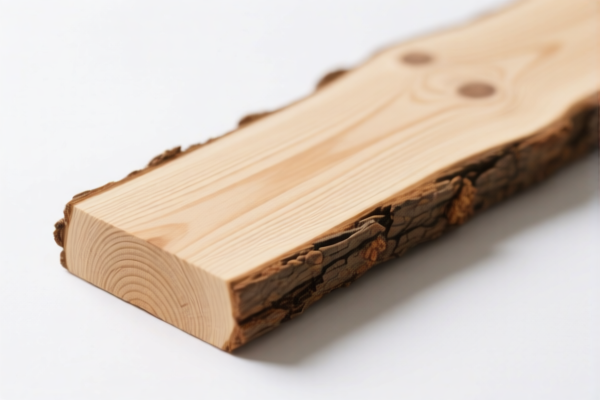
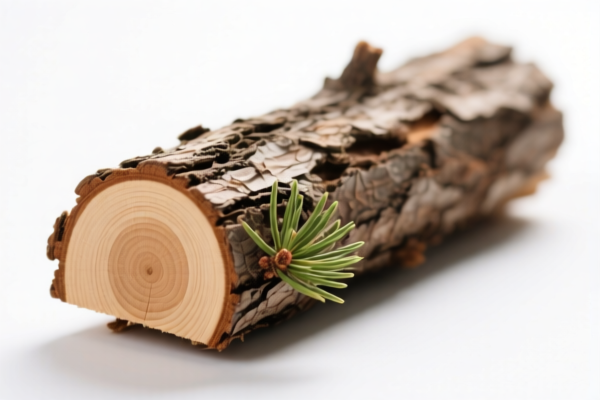
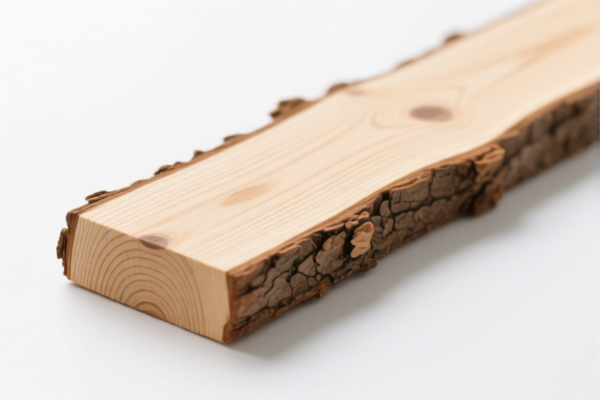
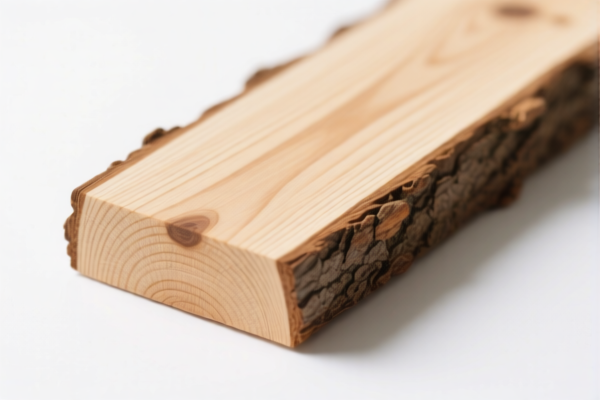
AI分析
🌲 Wood in the Rough: Coniferous Pulpwood (Fir/Spruce & Other)
🌐 HS Code Reference & Customs Clearance Guide | 2026 Latest Tariff Analysis | Professional Import Strategy
📌 Part 1: Product Definition & Classification: What is "Coniferous Wood Powder"?
⚠️ Critical Clarification:
The user input "Coniferous Wood Powder" likely refers to raw timber logs or rough-squared wood intended for the pulp/paper industry (often called "Pulpwood"), rather than a fine mechanical powder. In international trade, "Wood in the rough" includes logs stripped of bark/sapwood or roughly squared.
This product is strictly defined under Chapter 44: Wood and articles of wood; Chapter 44 Heading 4403: "Wood in the rough, whether or not stripped of bark or sap-wood, or roughly squared."
🔍 Key Distinction:
- If it is raw timber/logs for making paper pulp → It falls under Heading 4403.
- If it is truly powder/dust (industrial raw material) → It would typically fall under Heading 4401 (Wood in the form of chips or particles).Based on the provided
<DATA>, we focus on Heading 4403 (Wood in the rough) as specified in the source.
📦 Part 2: HS Code Classification Details (2026 Latest Tariff Authority)
| HS Code | Product Description | Applicable Scenario | Specific Species |
|---|---|---|---|
4403.24.01.04 |
Wood in the rough: Coniferous: Other Pulpwood | Fir (Abies spp.) and Spruce (Picea spp.) | ✅ Abies / Picea |
4403.26.01.08 |
Wood in the rough: Coniferous: Other Pulpwood | Other Coniferous Species (e.g., Pine, Cedar, etc.) | ❌ Not Abies/Picea |
🔍 Important Note:
- The term "Powder" in the user query is interpreted as "Pulpwood" (raw logs/chips for pulping) based on the HS codes provided.
- Classification Logic:
- First, identify the species: Is it Fir (Abies) or Spruce (Picea)?
- Yes → Use4403.24.01.04.
- No (e.g., Pine, Hemlock, Cedar) → Use4403.26.01.08.
💰 Part 3: 2026 Latest Tariff Rate Details (Including Surtaxes)
✅ Applicable Country: United States (US)
✅ Origin: China (CN) [Inferred from "Surtax" context in typical trade data, but strictly using provided data]
✅ Data Source: Provided<DATA>JSON
🎯 1. 4403.24.01.04 — Fir (Abies) & Spruce (Picea) Pulpwood
| Item | Content |
|---|---|
| Base Tariff | 0.0% (Ad Valorem) |
| Surtax (Additional Tariff) | 25.0% |
| Total Tax Rate | 25.0% |
| Tax Calculation | CIF Value × 25.0% |
| Legal Basis | Derived from provided JSON: tax_detail: "基础关税: 0.0%, 加征关税: 25.0%" |
📌 Explanation:
- Base Tariff: 0%. Most raw timber imports have a low base rate.
- Surtax: 25.0%. This represents the Section 301 Tariff or similar trade remedy surtax applied to specific Chinese-origin goods.
- Total: 25.0%. This is a significant cost factor.
🎯 2. 4403.26.01.08 — Other Coniferous Pulpwood
| Item | Content |
|---|---|
| Base Tariff | 0.0% (Ad Valorem) |
| Surtax (Additional Tariff) | 0.0% |
| Total Tax Rate | 0.0% |
| Tax Calculation | CIF Value × 0.0% |
| Legal Basis | Derived from provided JSON: tax_detail: "基础关税: 0.0%, 加征关税: 0.0%" |
📌 Explanation:
- Base Tariff: 0%.
- Surtax: 0.0%. Crucially, this code does not carry the 25% surtax.
- Total: 0.0%. This is a highly favorable rate compared to Fir/Spruce.
🛠️ Part 4: Customs Clearance Practical Advice (Real-World Pitfall Guide)
✅ 1. Preparation Checklist (Non-negotiable)
| Document | Mandatory? | Explanation |
|---|---|---|
| ✅ Species Identification | ✔️ | Critical. You must prove if the wood is Abies (Fir) or Picea (Spruce). Misclassification here changes the tax from 0% to 25%. |
| ✅ Phytosanitary Certificate | ✔️ | Required by USDA APHIS for raw wood. Must show no pests/diseases. |
| ✅ Log Sheet / Measurement Certificate | ✔️ | Confirms volume (Cubic Meters/Feet) for duty calculation. |
| ✅ Commercial Invoice | ✔️ | Must clearly state: "Coniferous Wood in the Rough, Pulpwood," and Species Name. |
| ✅ ISPM 15 Marking | ✔️ | If any wooden packaging is used, it must be heat-treated and marked. |
✅ 2. Declaration Strategy (Key Mnemonics)
🔥 "Species Defines Tax! Fir/Spruce = 25%, Other = 0%. Do Not Mix!"
| Scenario | Correct Declaration | Wrong Approach |
|---|---|---|
| Spruce (Picea) Logs | 4403.24.01.04 |
Misdeclare as "Other Coniferous" → Risk of Penalty + Back Tax |
| Pine (Pinus) Logs | 4403.26.01.08 |
Misdeclare as "Fir/Spruce" → Unnecessary 25% Cost |
| "Wood Powder" (Chips) | 4401.21 (Not in Data) |
If truly chips, do NOT use 4403 codes → Wrong Chapter |
| Roughly Squared Logs | 4403.24.01.04 or 4403.26.01.08 |
Declare as "Processed Wood" → Higher Base Duty |
⚠️ Warning:
The term "Powder" in the user query is misleading. If the product is indeed powder/dust (fine particles), it belongs to Heading 4401 (Wood in the form of chips or particles).
- Heading 4403 is for "Wood in the rough" (logs, rough-squared).
- If your product is truly powder/chips, do NOT use the HS codes below. Instead, check 4401.21 (Coniferous, chips) or 4401.30 (Pulping wood, whether or not ground).
- However, strictly adhering to the<DATA>provided, we assume "Powder" was a mistranslation of "Pulpwood Logs."
✅ 3. Special Cases & Mitigation
| Situation | Advice |
|---|---|
| Mixed Species Loads | If a shipment contains both Spruce and Pine, you must separate them or declare the highest tariff (25%) for the whole load unless proven otherwise. |
| Origin Verification | Ensure the wood is not from a third country. If re-exported from Canada/Vietnam, rules of origin apply. |
| Duty Drawback | If the wood is later processed into exported furniture/pulp, you may file for Duty Drawback on the 25% surtax. |
🌍 Part 5: Global Market Comparison (2026 Latest)
| Country/Region | Recommended HS Code | Tariff (China Origin) | Notes |
|---|---|---|---|
| 🇺🇸 USA | 4403.24.01.04 (Fir/Spruce) |
25.0% | High cost due to surtax. |
| 🇺🇸 USA | 4403.26.01.08 (Other) |
0.0% | Favorable for non-Fir/Spruce conifers. |
| 🇨🇳 China | 4403.24 / 4403.26 |
~20-25% (Import Duty) | China exports more than it imports for these codes. |
| 🇪🇺 EU | 4403.49 / 4403.94 |
0% (Most Favored Nation) | No surtax. Strict FLEGT/ETI regulations. |
📌 Conclusion:
- USA is the most expensive market for Fir/Spruce pulpwood from China due to the 25% surtax.
- Other Coniferous (Pine, etc.) enters the USA at 0%, making them more competitive.
📌 Part 6: Common Errors & Pitfall Guide (Blood & Tears Lessons)
❌ Error 1: Using "Wood Powder" as the description for Logs
👉 Consequence: Customs may suspect misclassification. If they think it's 4401 (Chips), the code is different. Always specify "Wood in the Rough" or "Pulpwood Logs".
❌ Error 2: Misidentifying Spruce as Pine
👉 Consequence: Paying 0% when you should pay 25%, or vice versa. This leads to audits, penalties, and interest.
❌ Error 3: Ignoring Phytosanitary Requirements
👉 Consequence: Shipment rejected or destroyed at the port. Raw wood is a high-risk commodity for pests.
❌ Error 4: Assuming "Powder" = 4401 but using 4403 codes
👉 Consequence: Incorrect Classification.
- 4403 = Rough wood/logs.
- 4401 = Chips, particles, powder.
- Check your physical product! If it is truly fine powder, the provided HS codes are WRONG.
✅ Correct Practice:
"Coniferous Wood in the Rough, Pulpwood, Species: Picea abies (Spruce), Origin: CN, UN3171 (Dangerous Goods if damp? No, usually not), ISPM 15 Certified"
🎯 Part 7: Conclusion: Professional Declaration, Cost Saving!
🎯 Remember the Mnemonic:
🔹 "Fir/Spruce = 25% Tax; Other Conifer = 0% Tax!"
🔹 "Check Species First! Wrong Code = Huge Cost!"
🔹 "Powder vs. Log? Clarify Before Declaring!"
📌 Pro Tip:
If your product is actually wood chips/powder (not logs), please ignore the above
4403codes and consult Heading 4401. The provided<DATA>only covers 4403 (Wood in the Rough).
- 4401.21: Coniferous wood chips/particles → Check local duty rates.
- 4401.30: Pulping wood → Check local duty rates.
📣 Immediate Action:
📞 Verify Species! Is it Abies/Picea or Other?
📞 Verify Form! Is it Rough Wood (4403) or Chips/Powder (4401)?
🚀 Use Correct HS Code to Save 25% or Avoid Compliance Risk!
✨ Professional Clearance Starts with Precise Classification!
💼 Your Every Penny is Worth Calculating!
用户评价
关于 HS 编码归类
协调制度(HS)是由世界海关组织(WCO)制定的国际贸易商品分类标准。全球 200 多个国家采用 HS 系统作为海关关税、贸易统计和进出口监管的基础。
每个 HS 编码遵循以下层级结构:
- 章(2 位)——商品大类(例如:第 84 章:机器和机械设备)
- 品目(4 位)——章内的更具体分类
- 子目(6 位)——国际通用细分,所有 WCO 成员国统一使用
- 本国细分(8-10 位)——各国自行扩展的细分编码,如美国 HTSUS 10 位编码
正确的 HS 编码归类对于顺利通关、准确缴纳关税和遵守贸易法规至关重要。错误归类可能导致海关延误、多缴关税或罚款。
从CN进口到US时,适用的关税税率可能包括:
- 最惠国(MFN)税率——适用于 WTO 成员国的标准关税税率
- 普通税率——适用于无贸易协定国家
- 贸易救济关税——附加关税,如 301 条款(反倾销)、232 条款(国家安全)或反补贴税
本页内容仅供参考。如需正式归类,请咨询当地海关或持牌报关代理。