Coniferous Wood Powder
CN → US| HS Code | Tariff Rate | Origin | Destination | Doc |
|---|---|---|---|---|
| 4403240104 | 35.0% | CN | US | Official Doc |
| 4403260108 | 35.0% | CN | US | Official Doc |
Product Images
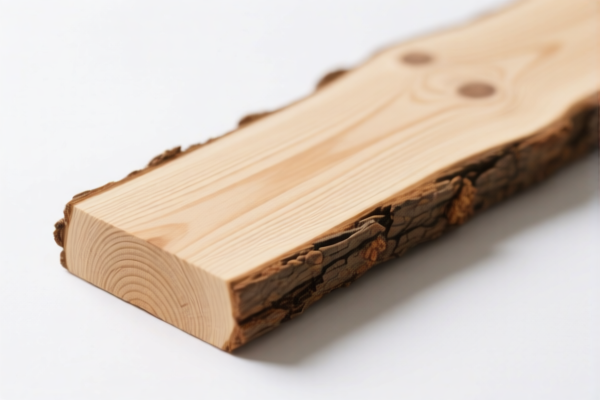
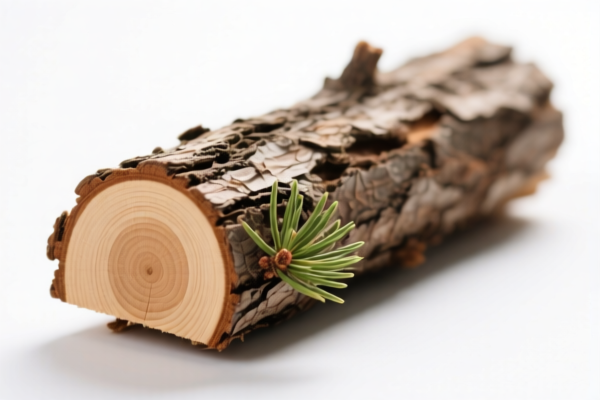
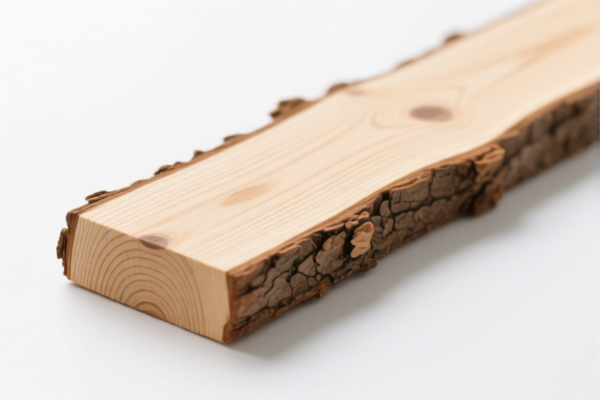
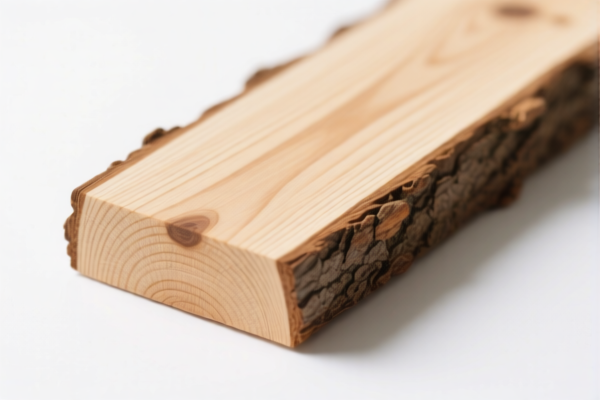
AI Analysis
🌲 Wood in the Rough: Coniferous Pulpwood (Fir/Spruce & Other)
🌐 HS Code Reference & Customs Clearance Guide | 2026 Latest Tariff Analysis | Professional Import Strategy
📌 Part 1: Product Definition & Classification: What is "Coniferous Wood Powder"?
⚠️ Critical Clarification:
The user input "Coniferous Wood Powder" likely refers to raw timber logs or rough-squared wood intended for the pulp/paper industry (often called "Pulpwood"), rather than a fine mechanical powder. In international trade, "Wood in the rough" includes logs stripped of bark/sapwood or roughly squared.
This product is strictly defined under Chapter 44: Wood and articles of wood; Chapter 44 Heading 4403: "Wood in the rough, whether or not stripped of bark or sap-wood, or roughly squared."
🔍 Key Distinction:
- If it is raw timber/logs for making paper pulp → It falls under Heading 4403.
- If it is truly powder/dust (industrial raw material) → It would typically fall under Heading 4401 (Wood in the form of chips or particles).Based on the provided
<DATA>, we focus on Heading 4403 (Wood in the rough) as specified in the source.
📦 Part 2: HS Code Classification Details (2026 Latest Tariff Authority)
| HS Code | Product Description | Applicable Scenario | Specific Species |
|---|---|---|---|
4403.24.01.04 |
Wood in the rough: Coniferous: Other Pulpwood | Fir (Abies spp.) and Spruce (Picea spp.) | ✅ Abies / Picea |
4403.26.01.08 |
Wood in the rough: Coniferous: Other Pulpwood | Other Coniferous Species (e.g., Pine, Cedar, etc.) | ❌ Not Abies/Picea |
🔍 Important Note:
- The term "Powder" in the user query is interpreted as "Pulpwood" (raw logs/chips for pulping) based on the HS codes provided.
- Classification Logic:
- First, identify the species: Is it Fir (Abies) or Spruce (Picea)?
- Yes → Use4403.24.01.04.
- No (e.g., Pine, Hemlock, Cedar) → Use4403.26.01.08.
💰 Part 3: 2026 Latest Tariff Rate Details (Including Surtaxes)
✅ Applicable Country: United States (US)
✅ Origin: China (CN) [Inferred from "Surtax" context in typical trade data, but strictly using provided data]
✅ Data Source: Provided<DATA>JSON
🎯 1. 4403.24.01.04 — Fir (Abies) & Spruce (Picea) Pulpwood
| Item | Content |
|---|---|
| Base Tariff | 0.0% (Ad Valorem) |
| Surtax (Additional Tariff) | 25.0% |
| Total Tax Rate | 25.0% |
| Tax Calculation | CIF Value × 25.0% |
| Legal Basis | Derived from provided JSON: tax_detail: "基础关税: 0.0%, 加征关税: 25.0%" |
📌 Explanation:
- Base Tariff: 0%. Most raw timber imports have a low base rate.
- Surtax: 25.0%. This represents the Section 301 Tariff or similar trade remedy surtax applied to specific Chinese-origin goods.
- Total: 25.0%. This is a significant cost factor.
🎯 2. 4403.26.01.08 — Other Coniferous Pulpwood
| Item | Content |
|---|---|
| Base Tariff | 0.0% (Ad Valorem) |
| Surtax (Additional Tariff) | 0.0% |
| Total Tax Rate | 0.0% |
| Tax Calculation | CIF Value × 0.0% |
| Legal Basis | Derived from provided JSON: tax_detail: "基础关税: 0.0%, 加征关税: 0.0%" |
📌 Explanation:
- Base Tariff: 0%.
- Surtax: 0.0%. Crucially, this code does not carry the 25% surtax.
- Total: 0.0%. This is a highly favorable rate compared to Fir/Spruce.
🛠️ Part 4: Customs Clearance Practical Advice (Real-World Pitfall Guide)
✅ 1. Preparation Checklist (Non-negotiable)
| Document | Mandatory? | Explanation |
|---|---|---|
| ✅ Species Identification | ✔️ | Critical. You must prove if the wood is Abies (Fir) or Picea (Spruce). Misclassification here changes the tax from 0% to 25%. |
| ✅ Phytosanitary Certificate | ✔️ | Required by USDA APHIS for raw wood. Must show no pests/diseases. |
| ✅ Log Sheet / Measurement Certificate | ✔️ | Confirms volume (Cubic Meters/Feet) for duty calculation. |
| ✅ Commercial Invoice | ✔️ | Must clearly state: "Coniferous Wood in the Rough, Pulpwood," and Species Name. |
| ✅ ISPM 15 Marking | ✔️ | If any wooden packaging is used, it must be heat-treated and marked. |
✅ 2. Declaration Strategy (Key Mnemonics)
🔥 "Species Defines Tax! Fir/Spruce = 25%, Other = 0%. Do Not Mix!"
| Scenario | Correct Declaration | Wrong Approach |
|---|---|---|
| Spruce (Picea) Logs | 4403.24.01.04 |
Misdeclare as "Other Coniferous" → Risk of Penalty + Back Tax |
| Pine (Pinus) Logs | 4403.26.01.08 |
Misdeclare as "Fir/Spruce" → Unnecessary 25% Cost |
| "Wood Powder" (Chips) | 4401.21 (Not in Data) |
If truly chips, do NOT use 4403 codes → Wrong Chapter |
| Roughly Squared Logs | 4403.24.01.04 or 4403.26.01.08 |
Declare as "Processed Wood" → Higher Base Duty |
⚠️ Warning:
The term "Powder" in the user query is misleading. If the product is indeed powder/dust (fine particles), it belongs to Heading 4401 (Wood in the form of chips or particles).
- Heading 4403 is for "Wood in the rough" (logs, rough-squared).
- If your product is truly powder/chips, do NOT use the HS codes below. Instead, check 4401.21 (Coniferous, chips) or 4401.30 (Pulping wood, whether or not ground).
- However, strictly adhering to the<DATA>provided, we assume "Powder" was a mistranslation of "Pulpwood Logs."
✅ 3. Special Cases & Mitigation
| Situation | Advice |
|---|---|
| Mixed Species Loads | If a shipment contains both Spruce and Pine, you must separate them or declare the highest tariff (25%) for the whole load unless proven otherwise. |
| Origin Verification | Ensure the wood is not from a third country. If re-exported from Canada/Vietnam, rules of origin apply. |
| Duty Drawback | If the wood is later processed into exported furniture/pulp, you may file for Duty Drawback on the 25% surtax. |
🌍 Part 5: Global Market Comparison (2026 Latest)
| Country/Region | Recommended HS Code | Tariff (China Origin) | Notes |
|---|---|---|---|
| 🇺🇸 USA | 4403.24.01.04 (Fir/Spruce) |
25.0% | High cost due to surtax. |
| 🇺🇸 USA | 4403.26.01.08 (Other) |
0.0% | Favorable for non-Fir/Spruce conifers. |
| 🇨🇳 China | 4403.24 / 4403.26 |
~20-25% (Import Duty) | China exports more than it imports for these codes. |
| 🇪🇺 EU | 4403.49 / 4403.94 |
0% (Most Favored Nation) | No surtax. Strict FLEGT/ETI regulations. |
📌 Conclusion:
- USA is the most expensive market for Fir/Spruce pulpwood from China due to the 25% surtax.
- Other Coniferous (Pine, etc.) enters the USA at 0%, making them more competitive.
📌 Part 6: Common Errors & Pitfall Guide (Blood & Tears Lessons)
❌ Error 1: Using "Wood Powder" as the description for Logs
👉 Consequence: Customs may suspect misclassification. If they think it's 4401 (Chips), the code is different. Always specify "Wood in the Rough" or "Pulpwood Logs".
❌ Error 2: Misidentifying Spruce as Pine
👉 Consequence: Paying 0% when you should pay 25%, or vice versa. This leads to audits, penalties, and interest.
❌ Error 3: Ignoring Phytosanitary Requirements
👉 Consequence: Shipment rejected or destroyed at the port. Raw wood is a high-risk commodity for pests.
❌ Error 4: Assuming "Powder" = 4401 but using 4403 codes
👉 Consequence: Incorrect Classification.
- 4403 = Rough wood/logs.
- 4401 = Chips, particles, powder.
- Check your physical product! If it is truly fine powder, the provided HS codes are WRONG.
✅ Correct Practice:
"Coniferous Wood in the Rough, Pulpwood, Species: Picea abies (Spruce), Origin: CN, UN3171 (Dangerous Goods if damp? No, usually not), ISPM 15 Certified"
🎯 Part 7: Conclusion: Professional Declaration, Cost Saving!
🎯 Remember the Mnemonic:
🔹 "Fir/Spruce = 25% Tax; Other Conifer = 0% Tax!"
🔹 "Check Species First! Wrong Code = Huge Cost!"
🔹 "Powder vs. Log? Clarify Before Declaring!"
📌 Pro Tip:
If your product is actually wood chips/powder (not logs), please ignore the above
4403codes and consult Heading 4401. The provided<DATA>only covers 4403 (Wood in the Rough).
- 4401.21: Coniferous wood chips/particles → Check local duty rates.
- 4401.30: Pulping wood → Check local duty rates.
📣 Immediate Action:
📞 Verify Species! Is it Abies/Picea or Other?
📞 Verify Form! Is it Rough Wood (4403) or Chips/Powder (4401)?
🚀 Use Correct HS Code to Save 25% or Avoid Compliance Risk!
✨ Professional Clearance Starts with Precise Classification!
💼 Your Every Penny is Worth Calculating!
Customer Reviews
About HS Code Classification
The Harmonized System (HS) is an internationally standardized nomenclature developed by the World Customs Organization (WCO) to classify traded products. Over 200 countries use the HS system as the basis for customs tariffs, trade statistics, and import/export regulations.
Each HS code follows a hierarchical structure:
- Chapter (2 digits) — Broad category of goods (e.g., Chapter 84: Machinery and Mechanical Appliances)
- Heading (4 digits) — More specific grouping within the chapter
- Subheading (6 digits) — Internationally standardized breakdown, used by all WCO member countries
- National subdivisions (8-10 digits) — Country-specific extensions for further classification, such as US HTSUS 10-digit codes
Correct HS code classification is essential for smooth customs clearance, accurate duty payment, and compliance with trade regulations. Misclassification can lead to customs delays, overpayment of duties, or penalties.
When importing from CN to US, the applicable tariff rates may include:
- Most-Favored-Nation (MFN) rate — The standard duty rate applied to WTO members
- General rate — Applied to countries without trade agreements
- Trade remedy duties — Additional tariffs such as Section 301 (anti-dumping), Section 232 (national security), or countervailing duties
The information provided on this page is for reference purposes only. For official classification, please consult with your local customs authority or a licensed customs broker.