Corded Power Bank
CN → US| HS编码 | 关税税率 | 原产国 | 目的国 | 文档 |
|---|---|---|---|---|
| 8504409510 | 35.0% | CN | US | 官方文档 |
| 8507808200 | 38.4% | CN | US | 官方文档 |
| 8504409520 | 35.0% | CN | US | 官方文档 |
| 8544429010 | 87.6% | CN | US | 官方文档 |
商品图片
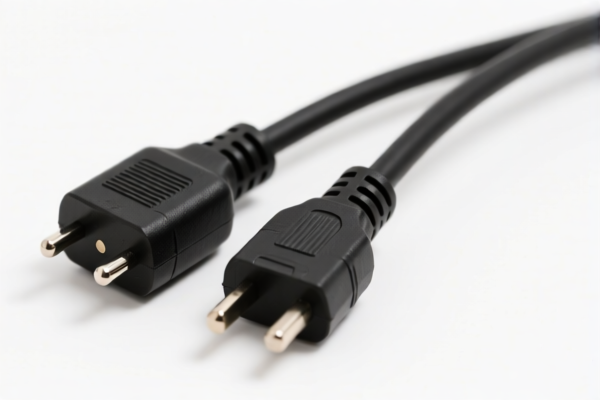
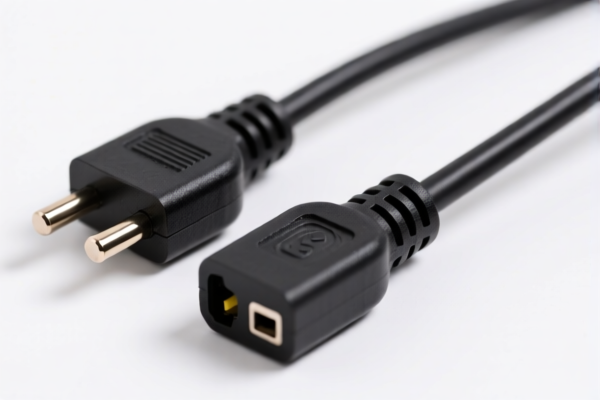
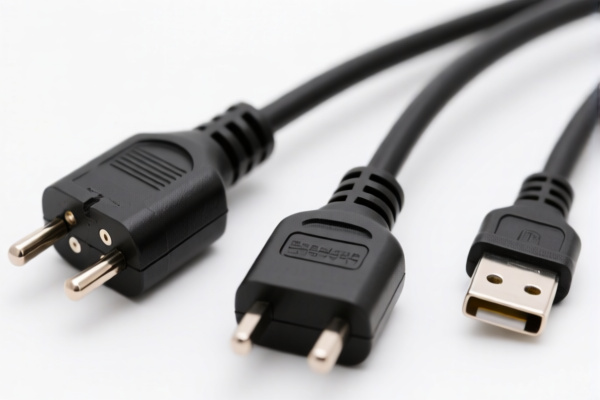
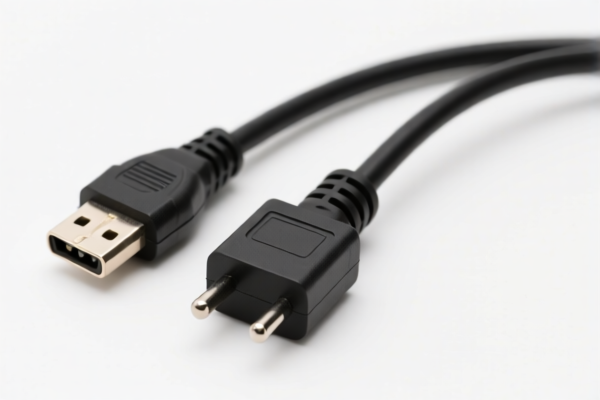
AI分析
🔋 Corded Power Bank (Portable Power Supply)
🌐 HS Code Reference & Customs Clearance Guide | 2026 Latest Tariff Analysis | Professional Clearance Strategy
📌 I. Product Definition & Classification: Do You Really Understand "Corded Power Banks"?
A "Corded Power Bank" is a dual-nature product in international trade. It serves two distinct functions: 1. Energy Storage: It acts as a portable battery to store electricity. 2. Conversion/Supply: It acts as a static converter (power supply) to output current to devices.
In customs classification, the primary function determines the HS Code. However, depending on the internal structure (whether it is primarily a battery cell or a converter circuit), it may be classified differently. Below are the four possible classifications derived from the provided data.
⚠️ Key Distinction Point:
- If the device is primarily viewed as a portable rechargeable battery (storing energy) → 8507.80.82.00
- If the device is primarily viewed as a static converter/power supply unit (transforming/regulating voltage) → 8504.40.95.x
📦 II. HS Code Classification Details (2026 Latest Tariff Authority Match)
Based on the provided data, here are the four specific HS Codes and their rationales:
| HS Code | Product Description | Applicable Scenario | Primary Function Attribute |
|---|---|---|---|
8504.40.95.10 |
Static Converters - Other converters - Power supply units | Output power ≤ 50W. Fits the functional characteristic of a power supply unit in the range of static converters. | ✅ Converter/Power Supply |
8507.80.82.00 |
Electrical Storage Batteries | Portable batteries that do not conflict with other battery categories. Fits the material and use characteristics of electric storage batteries. | ✅ Battery/Storage |
8504.40.95.20 |
Static Converters - Other converters - Rectifying apparatus | Output power between 50W and 150W. Fits the classification of portable power equipment in this specific power range. | ✅ Converter/Rectifier |
8544.42.90.10 |
Insulated Wires, Cables, etc. | Specifically refers to the charging cable component. Defined as conductors with joints/extensions. | ✅ Accessory/Cable |
🔍 Critical Reminder:
- 8504 Codes are for the device itself functioning as a power converter/supply. - 8507 Code is for the device itself functioning as a battery storage unit. - 8544 Code is strictly for the cable component, not the power bank unit. Do not confuse the accessory with the main unit.
💰 III. 2026 Latest Tariff Rate Breakdown (Including Surtaxes & Policy Add-ons)
✅ Applicable Country: United States (US)
✅ Origin: China (CN)
✅ Effective Time: Includes imports post-2025 (based on 122 Clause and Section 301 data)
🎯 1. 8504.40.95.10 —— Power Supply Unit (Output ≤ 50W)
| Item | Content |
|---|---|
| Base Tariff | 0.0% (ad valorem) |
| Section 301 Surtax | +25.0% (Add-on Tariff) |
| Section 122 Clause Tariff | +10.0% |
| Total Tax Rate | 35.0% |
| Tax Calculation | CIF Value × 35% |
| De Minimis Eligibility | ❌ Not Applicable (Standard trade route) |
| Legal Basis Path | HS:8504.40.95.10 → Section 301: 25% → Section 122: 10% |
📌 Explanation:
- Although the base tariff is 0%, the heavy surtaxes bring the total to 35%. - This classification is favorable for low-power portable chargers (under 50W).
🎯 2. 8507.80.82.00 —— Portable Battery (Electrical Storage)
| Item | Content |
|---|---|
| Base Tariff | 3.4% |
| Section 301 Surtax | +25.0% |
| Section 122 Clause Tariff | +10.0% |
| Total Tax Rate | 38.4% |
| Tax Calculation | CIF Value × 38.4% |
| De Minimis Eligibility | ❌ Not Applicable |
| Legal Basis Path | HS:8507.80.82.00 → Section 301: 25% → Section 122: 10% |
📌 Explanation:
- This is the highest tariff among the power bank units (38.4%). - It applies if customs determines the product is primarily a battery rather than a converter. - Strategy Tip: If possible, argue for the 8504 classification (35%) as it saves 3.4% in base tariff.
🎯 3. 8504.40.95.20 —— Rectifying Apparatus (Output 50W-150W)
| Item | Content |
|---|---|
| Base Tariff | 0.0% (ad valorem) |
| Section 301 Surtax | +25.0% |
| Section 122 Clause Tariff | +10.0% |
| Total Tax Rate | 35.0% |
| Tax Calculation | CIF Value × 35% |
| De Minimis Eligibility | ❌ Not Applicable |
| Legal Basis Path | HS:8504.40.95.20 → Section 301: 25% → Section 122: 10% |
📌 Explanation:
- Applies to higher-power portable stations (50W-150W). - Like the 50W unit, it benefits from a 0% base tariff, keeping the total at 35%.
🎯 4. 8544.42.90.10 —— Insulated Cables (Charging Cable)
| Item | Content |
|---|---|
| Base Tariff | 2.6% |
| Section 301 Surtax | +25.0% |
| Section 122 Clause Tariff | +10.0% |
| Steel/Aluminum/Copper Surtax | +50.0% (Additional surtax for specific metal content/products) |
| Total Tax Rate | 87.6% |
| Tax Calculation | CIF Value × 87.6% |
| De Minimis Eligibility | ❌ Not Applicable |
| Legal Basis Path | HS:8544.42.90.10 → Section 301: 25% → Section 122: 10% → Metal Surtax: 50% |
📌 Explanation:
- ⚠️ EXTREMELY HIGH RATE: 87.6%
- This applies ONLY if the charging cable is declared separately as an insulated wire/cable. - The 50% surtax is triggered due to steel, aluminum, or copper product regulations. - WARNING: Never declare the cable separately if it is part of a complete power bank set. It will drastically increase the average tax rate.
🛠️ IV. Customs Clearance Practical Advice (Real-World Pitfall Guide)
✅ 1. Preparation Checklist (Essential Documents)
| Document | Required? | Description |
|---|---|---|
| ✅ Product Specifications | ✔️ | Must clearly state: Input/Output Voltage, Max Power Output (Watts), Battery Capacity (mAh/Wh). |
| ✅ Internal Circuit Diagram | ✔️ | Crucial to prove it is a "Converter" (8504) vs. "Battery" (8507). |
| ✅ Product Photos | ✔️ | Clear shots of the unit, ports, and labeling. Show if it has a battery cell or just a power module. |
| ✅ Commercial Invoice | ✔️ | Declare as "Portable Power Supply Unit" or "Battery Charger" accurately. |
| ✅ Packing List | ✔️ | Do not split the cable and the power bank if they are sold as a set. |
✅ 2. Declaration Strategy (Key Mantra)
🔥 "Combine as Set, Separate Cable Kills the Margin!"
| Scenario | Correct Declaration | Wrong Action | Consequence |
|---|---|---|---|
| Power Bank + Cable Kit | Declare as One Set under 8504 or 8507 |
Declare cable separately (8544) |
Tax jumps from 35% to 87.6% on cable portion! |
| Power Bank ≤ 50W | Use 8504.40.95.10 |
Use 8507.80.82.00 |
Save 3.4% by choosing 8504 (0% base). |
| Power Bank 50W-150W | Use 8504.40.95.20 |
Use 8507.80.82.00 |
Save 3.4% by choosing 8504 (0% base). |
| Pure Battery (No Output Ports) | Use 8507.80.82.00 |
Use 8504 |
Must be battery if no conversion function exists. |
✅ 3. Special Handling
| Situation | Handling Suggestion |
|---|---|
| High-Power Station (>150W) | Not covered in DATA. Check latest HS updates; likely higher tax. |
| Battery-Only Power Bank | If it has no output conversion circuit (just DC-DC without regulation), it might be strictly 8507. Provide circuit proof. |
| Cable Included | Always include in the main HS Code. Do not declare the USB-C/Micro-USB cable as "Insulated Wire" (8544). It will trigger the 50% metal surtax. |
| Mixed Shipping | If shipping cables alone, expect 87.6% tax. Consider bundling with the unit. |
🌍 V. Global Market Comparison (2026 Latest)
| Country/Region | Recommended HS Code | Estimated Tariff (China Origin) | Certification Requirements | Notes |
|---|---|---|---|---|
| 🇺🇸 USA | 8504.40.95.10/20 |
35.0% (Best Option) | FCC | Avoid 8544 (87.6%). Avoid 8507 (38.4%). |
| 🇨🇳 China | 8504.40.95.10 |
~10-15% (Import) | CCC | Lower base tariffs than US. |
| 🇪🇺 EU | 8504.40 |
0-4% (Standard) | CE, RoHS, EPR | No 25%/10% US-style surtaxes. |
| 🇬🇧 UK | 8504.40 |
0-4% (Standard) | UKCA | Post-Brexit rules apply. |
| 🇯🇵 Japan | 8504.40 |
0-8% | PSE | Check for specific battery regulations. |
📌 Conclusion:
- The USA is the most challenging market due to Section 301 (25%) and Section 122 (10%) surtaxes. - Optimization: Aim for HS 8504 (0% base) instead of 8507 (3.4% base) to save money. - Fatal Error: Never declare the charging cable separately as8544. The 87.6% tax will destroy your profit margin.
📌 VI. Common Errors & Pitfalls Guide (Lessons from Blood & Tears)
❌ Error 1: Declaring the Power Bank and Cable as separate line items.
👉 Consequence: The cable (8544) gets hit with an 87.6% tax rate. If the cable is 10% of the value, the average tax rate skyrockets.
👉 Fix: Declare as a Set under the main product HS Code (8504).
❌ Error 2: Using 8507.80.82.00 for all power banks.
👉 Consequence: You pay 38.4% instead of 35.0%. Over 1,000 units, this is a significant loss.
👉 Fix: Argue that the device is a "Static Converter/Power Supply" (8504) due to its regulation and output circuitry, especially if output is ≤50W or 50-150W.
❌ Error 3: Ignoring the Power Output (Watts).
👉 Consequence: Misclassification between 8504.40.95.10 and 8504.40.95.20.
👉 Fix: Ensure specs clearly state the power range. ≤50W goes to .10; 50W-150W goes to .20. Both have 35% tax, but accuracy prevents audits.
✅ Correct Declaration Example:
"Portable Power Bank Unit, Model XYZ, Output 5V/3A (15W), Included USB-C Cable, FCC Certified"
HS Code:8504.40.95.10(Tax: 35%)
NOT "Cable" + "Battery" (Tax: 87.6% + 38.4%)
🎯 VII. Conclusion: Precision Classification, Cost Savings, Smooth Clearance!
🎯 Remember the Mantra:
🔹 "Power Bank is Converter (8504), not just Battery (8507)."
🔹 "Cable is Part of the Set, Not a Separate Wire (8544)."
🔹 "Target 35% Tax Rate, Avoid 87.6% Trap."
📌 Pro Tip:
If your power bank is ≤50W, always fight for 8504.40.95.10. It offers the lowest base tariff (0%) within the high-surtax environment. Provide circuit diagrams to prove it is a converter.
📣 Immediate Action:
📞 Consult with your customs broker to apply for Advance Ruling if shipping large volumes.
📦 Ensure your invoice describes the item as a "Power Supply Unit" or "Portable Charger System", avoiding generic terms like "Battery" or "Wire".
✨ Professional Clearance Starts with Accurate Classification!
💼 Every Percent Saved is Pure Profit!
用户评价
关于 HS 编码归类
协调制度(HS)是由世界海关组织(WCO)制定的国际贸易商品分类标准。全球 200 多个国家采用 HS 系统作为海关关税、贸易统计和进出口监管的基础。
每个 HS 编码遵循以下层级结构:
- 章(2 位)——商品大类(例如:第 84 章:机器和机械设备)
- 品目(4 位)——章内的更具体分类
- 子目(6 位)——国际通用细分,所有 WCO 成员国统一使用
- 本国细分(8-10 位)——各国自行扩展的细分编码,如美国 HTSUS 10 位编码
正确的 HS 编码归类对于顺利通关、准确缴纳关税和遵守贸易法规至关重要。错误归类可能导致海关延误、多缴关税或罚款。
从CN进口到US时,适用的关税税率可能包括:
- 最惠国(MFN)税率——适用于 WTO 成员国的标准关税税率
- 普通税率——适用于无贸易协定国家
- 贸易救济关税——附加关税,如 301 条款(反倾销)、232 条款(国家安全)或反补贴税
本页内容仅供参考。如需正式归类,请咨询当地海关或持牌报关代理。