Corded Power Bank
CN → US| HS Code | Tariff Rate | Origin | Destination | Doc |
|---|---|---|---|---|
| 8504409510 | 35.0% | CN | US | Official Doc |
| 8507808200 | 38.4% | CN | US | Official Doc |
| 8504409520 | 35.0% | CN | US | Official Doc |
| 8544429010 | 87.6% | CN | US | Official Doc |
Product Images
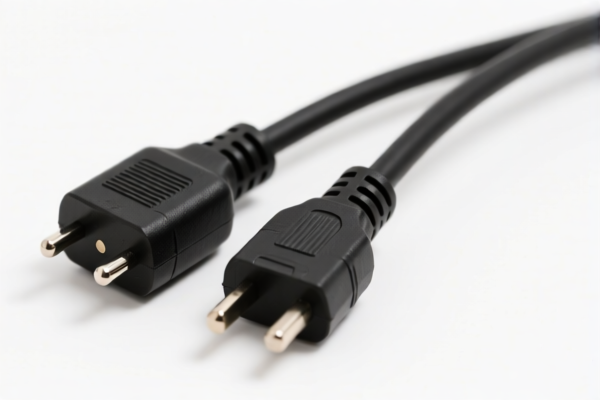
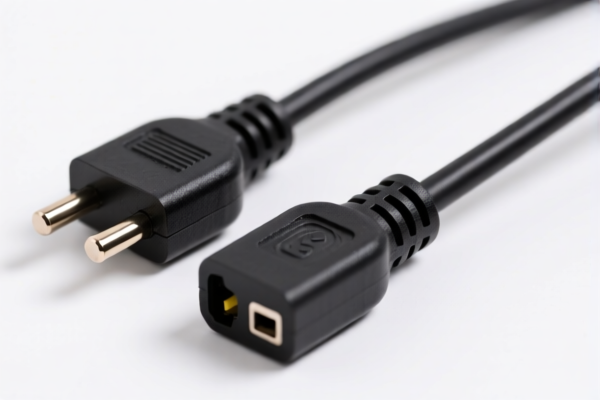
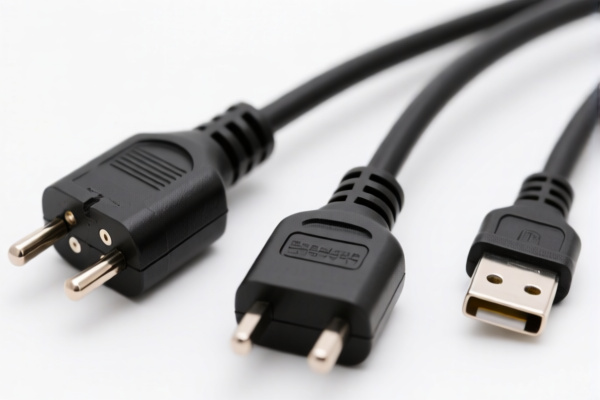
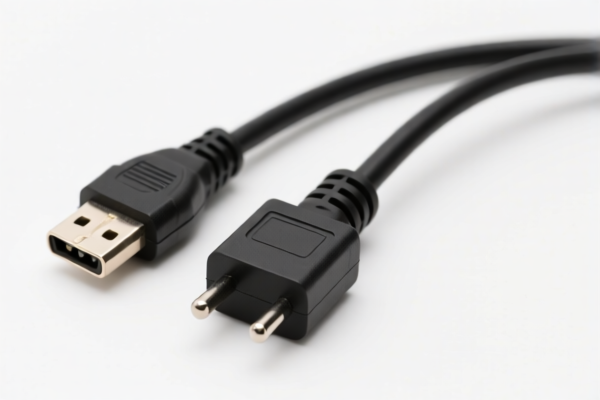
AI Analysis
🔋 Corded Power Bank (Portable Power Supply)
🌐 HS Code Reference & Customs Clearance Guide | 2026 Latest Tariff Analysis | Professional Clearance Strategy
📌 I. Product Definition & Classification: Do You Really Understand "Corded Power Banks"?
A "Corded Power Bank" is a dual-nature product in international trade. It serves two distinct functions: 1. Energy Storage: It acts as a portable battery to store electricity. 2. Conversion/Supply: It acts as a static converter (power supply) to output current to devices.
In customs classification, the primary function determines the HS Code. However, depending on the internal structure (whether it is primarily a battery cell or a converter circuit), it may be classified differently. Below are the four possible classifications derived from the provided data.
⚠️ Key Distinction Point:
- If the device is primarily viewed as a portable rechargeable battery (storing energy) → 8507.80.82.00
- If the device is primarily viewed as a static converter/power supply unit (transforming/regulating voltage) → 8504.40.95.x
📦 II. HS Code Classification Details (2026 Latest Tariff Authority Match)
Based on the provided data, here are the four specific HS Codes and their rationales:
| HS Code | Product Description | Applicable Scenario | Primary Function Attribute |
|---|---|---|---|
8504.40.95.10 |
Static Converters - Other converters - Power supply units | Output power ≤ 50W. Fits the functional characteristic of a power supply unit in the range of static converters. | ✅ Converter/Power Supply |
8507.80.82.00 |
Electrical Storage Batteries | Portable batteries that do not conflict with other battery categories. Fits the material and use characteristics of electric storage batteries. | ✅ Battery/Storage |
8504.40.95.20 |
Static Converters - Other converters - Rectifying apparatus | Output power between 50W and 150W. Fits the classification of portable power equipment in this specific power range. | ✅ Converter/Rectifier |
8544.42.90.10 |
Insulated Wires, Cables, etc. | Specifically refers to the charging cable component. Defined as conductors with joints/extensions. | ✅ Accessory/Cable |
🔍 Critical Reminder:
- 8504 Codes are for the device itself functioning as a power converter/supply. - 8507 Code is for the device itself functioning as a battery storage unit. - 8544 Code is strictly for the cable component, not the power bank unit. Do not confuse the accessory with the main unit.
💰 III. 2026 Latest Tariff Rate Breakdown (Including Surtaxes & Policy Add-ons)
✅ Applicable Country: United States (US)
✅ Origin: China (CN)
✅ Effective Time: Includes imports post-2025 (based on 122 Clause and Section 301 data)
🎯 1. 8504.40.95.10 —— Power Supply Unit (Output ≤ 50W)
| Item | Content |
|---|---|
| Base Tariff | 0.0% (ad valorem) |
| Section 301 Surtax | +25.0% (Add-on Tariff) |
| Section 122 Clause Tariff | +10.0% |
| Total Tax Rate | 35.0% |
| Tax Calculation | CIF Value × 35% |
| De Minimis Eligibility | ❌ Not Applicable (Standard trade route) |
| Legal Basis Path | HS:8504.40.95.10 → Section 301: 25% → Section 122: 10% |
📌 Explanation:
- Although the base tariff is 0%, the heavy surtaxes bring the total to 35%. - This classification is favorable for low-power portable chargers (under 50W).
🎯 2. 8507.80.82.00 —— Portable Battery (Electrical Storage)
| Item | Content |
|---|---|
| Base Tariff | 3.4% |
| Section 301 Surtax | +25.0% |
| Section 122 Clause Tariff | +10.0% |
| Total Tax Rate | 38.4% |
| Tax Calculation | CIF Value × 38.4% |
| De Minimis Eligibility | ❌ Not Applicable |
| Legal Basis Path | HS:8507.80.82.00 → Section 301: 25% → Section 122: 10% |
📌 Explanation:
- This is the highest tariff among the power bank units (38.4%). - It applies if customs determines the product is primarily a battery rather than a converter. - Strategy Tip: If possible, argue for the 8504 classification (35%) as it saves 3.4% in base tariff.
🎯 3. 8504.40.95.20 —— Rectifying Apparatus (Output 50W-150W)
| Item | Content |
|---|---|
| Base Tariff | 0.0% (ad valorem) |
| Section 301 Surtax | +25.0% |
| Section 122 Clause Tariff | +10.0% |
| Total Tax Rate | 35.0% |
| Tax Calculation | CIF Value × 35% |
| De Minimis Eligibility | ❌ Not Applicable |
| Legal Basis Path | HS:8504.40.95.20 → Section 301: 25% → Section 122: 10% |
📌 Explanation:
- Applies to higher-power portable stations (50W-150W). - Like the 50W unit, it benefits from a 0% base tariff, keeping the total at 35%.
🎯 4. 8544.42.90.10 —— Insulated Cables (Charging Cable)
| Item | Content |
|---|---|
| Base Tariff | 2.6% |
| Section 301 Surtax | +25.0% |
| Section 122 Clause Tariff | +10.0% |
| Steel/Aluminum/Copper Surtax | +50.0% (Additional surtax for specific metal content/products) |
| Total Tax Rate | 87.6% |
| Tax Calculation | CIF Value × 87.6% |
| De Minimis Eligibility | ❌ Not Applicable |
| Legal Basis Path | HS:8544.42.90.10 → Section 301: 25% → Section 122: 10% → Metal Surtax: 50% |
📌 Explanation:
- ⚠️ EXTREMELY HIGH RATE: 87.6%
- This applies ONLY if the charging cable is declared separately as an insulated wire/cable. - The 50% surtax is triggered due to steel, aluminum, or copper product regulations. - WARNING: Never declare the cable separately if it is part of a complete power bank set. It will drastically increase the average tax rate.
🛠️ IV. Customs Clearance Practical Advice (Real-World Pitfall Guide)
✅ 1. Preparation Checklist (Essential Documents)
| Document | Required? | Description |
|---|---|---|
| ✅ Product Specifications | ✔️ | Must clearly state: Input/Output Voltage, Max Power Output (Watts), Battery Capacity (mAh/Wh). |
| ✅ Internal Circuit Diagram | ✔️ | Crucial to prove it is a "Converter" (8504) vs. "Battery" (8507). |
| ✅ Product Photos | ✔️ | Clear shots of the unit, ports, and labeling. Show if it has a battery cell or just a power module. |
| ✅ Commercial Invoice | ✔️ | Declare as "Portable Power Supply Unit" or "Battery Charger" accurately. |
| ✅ Packing List | ✔️ | Do not split the cable and the power bank if they are sold as a set. |
✅ 2. Declaration Strategy (Key Mantra)
🔥 "Combine as Set, Separate Cable Kills the Margin!"
| Scenario | Correct Declaration | Wrong Action | Consequence |
|---|---|---|---|
| Power Bank + Cable Kit | Declare as One Set under 8504 or 8507 |
Declare cable separately (8544) |
Tax jumps from 35% to 87.6% on cable portion! |
| Power Bank ≤ 50W | Use 8504.40.95.10 |
Use 8507.80.82.00 |
Save 3.4% by choosing 8504 (0% base). |
| Power Bank 50W-150W | Use 8504.40.95.20 |
Use 8507.80.82.00 |
Save 3.4% by choosing 8504 (0% base). |
| Pure Battery (No Output Ports) | Use 8507.80.82.00 |
Use 8504 |
Must be battery if no conversion function exists. |
✅ 3. Special Handling
| Situation | Handling Suggestion |
|---|---|
| High-Power Station (>150W) | Not covered in DATA. Check latest HS updates; likely higher tax. |
| Battery-Only Power Bank | If it has no output conversion circuit (just DC-DC without regulation), it might be strictly 8507. Provide circuit proof. |
| Cable Included | Always include in the main HS Code. Do not declare the USB-C/Micro-USB cable as "Insulated Wire" (8544). It will trigger the 50% metal surtax. |
| Mixed Shipping | If shipping cables alone, expect 87.6% tax. Consider bundling with the unit. |
🌍 V. Global Market Comparison (2026 Latest)
| Country/Region | Recommended HS Code | Estimated Tariff (China Origin) | Certification Requirements | Notes |
|---|---|---|---|---|
| 🇺🇸 USA | 8504.40.95.10/20 |
35.0% (Best Option) | FCC | Avoid 8544 (87.6%). Avoid 8507 (38.4%). |
| 🇨🇳 China | 8504.40.95.10 |
~10-15% (Import) | CCC | Lower base tariffs than US. |
| 🇪🇺 EU | 8504.40 |
0-4% (Standard) | CE, RoHS, EPR | No 25%/10% US-style surtaxes. |
| 🇬🇧 UK | 8504.40 |
0-4% (Standard) | UKCA | Post-Brexit rules apply. |
| 🇯🇵 Japan | 8504.40 |
0-8% | PSE | Check for specific battery regulations. |
📌 Conclusion:
- The USA is the most challenging market due to Section 301 (25%) and Section 122 (10%) surtaxes. - Optimization: Aim for HS 8504 (0% base) instead of 8507 (3.4% base) to save money. - Fatal Error: Never declare the charging cable separately as8544. The 87.6% tax will destroy your profit margin.
📌 VI. Common Errors & Pitfalls Guide (Lessons from Blood & Tears)
❌ Error 1: Declaring the Power Bank and Cable as separate line items.
👉 Consequence: The cable (8544) gets hit with an 87.6% tax rate. If the cable is 10% of the value, the average tax rate skyrockets.
👉 Fix: Declare as a Set under the main product HS Code (8504).
❌ Error 2: Using 8507.80.82.00 for all power banks.
👉 Consequence: You pay 38.4% instead of 35.0%. Over 1,000 units, this is a significant loss.
👉 Fix: Argue that the device is a "Static Converter/Power Supply" (8504) due to its regulation and output circuitry, especially if output is ≤50W or 50-150W.
❌ Error 3: Ignoring the Power Output (Watts).
👉 Consequence: Misclassification between 8504.40.95.10 and 8504.40.95.20.
👉 Fix: Ensure specs clearly state the power range. ≤50W goes to .10; 50W-150W goes to .20. Both have 35% tax, but accuracy prevents audits.
✅ Correct Declaration Example:
"Portable Power Bank Unit, Model XYZ, Output 5V/3A (15W), Included USB-C Cable, FCC Certified"
HS Code:8504.40.95.10(Tax: 35%)
NOT "Cable" + "Battery" (Tax: 87.6% + 38.4%)
🎯 VII. Conclusion: Precision Classification, Cost Savings, Smooth Clearance!
🎯 Remember the Mantra:
🔹 "Power Bank is Converter (8504), not just Battery (8507)."
🔹 "Cable is Part of the Set, Not a Separate Wire (8544)."
🔹 "Target 35% Tax Rate, Avoid 87.6% Trap."
📌 Pro Tip:
If your power bank is ≤50W, always fight for 8504.40.95.10. It offers the lowest base tariff (0%) within the high-surtax environment. Provide circuit diagrams to prove it is a converter.
📣 Immediate Action:
📞 Consult with your customs broker to apply for Advance Ruling if shipping large volumes.
📦 Ensure your invoice describes the item as a "Power Supply Unit" or "Portable Charger System", avoiding generic terms like "Battery" or "Wire".
✨ Professional Clearance Starts with Accurate Classification!
💼 Every Percent Saved is Pure Profit!
Customer Reviews
About HS Code Classification
The Harmonized System (HS) is an internationally standardized nomenclature developed by the World Customs Organization (WCO) to classify traded products. Over 200 countries use the HS system as the basis for customs tariffs, trade statistics, and import/export regulations.
Each HS code follows a hierarchical structure:
- Chapter (2 digits) — Broad category of goods (e.g., Chapter 84: Machinery and Mechanical Appliances)
- Heading (4 digits) — More specific grouping within the chapter
- Subheading (6 digits) — Internationally standardized breakdown, used by all WCO member countries
- National subdivisions (8-10 digits) — Country-specific extensions for further classification, such as US HTSUS 10-digit codes
Correct HS code classification is essential for smooth customs clearance, accurate duty payment, and compliance with trade regulations. Misclassification can lead to customs delays, overpayment of duties, or penalties.
When importing from CN to US, the applicable tariff rates may include:
- Most-Favored-Nation (MFN) rate — The standard duty rate applied to WTO members
- General rate — Applied to countries without trade agreements
- Trade remedy duties — Additional tariffs such as Section 301 (anti-dumping), Section 232 (national security), or countervailing duties
The information provided on this page is for reference purposes only. For official classification, please consult with your local customs authority or a licensed customs broker.