Cork Pellets (Soil Conditioner)
CN → US| HS编码 | 关税税率 | 原产国 | 目的国 | 文档 |
|---|---|---|---|---|
| 4501100000 | 35.0% | CN | US | 官方文档 |
| 4501904000 | 35.0% | CN | US | 官方文档 |
| 4503902000 | 35.0% | CN | US | 官方文档 |
| 4503906000 | 49.0% | CN | US | 官方文档 |
| 4501100000 | 35.0% | CN | US | 官方文档 |
商品图片
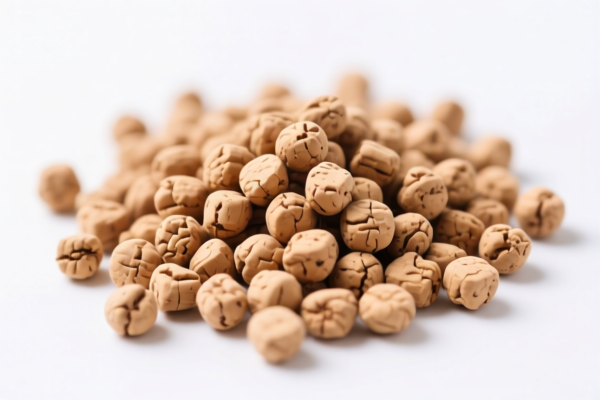
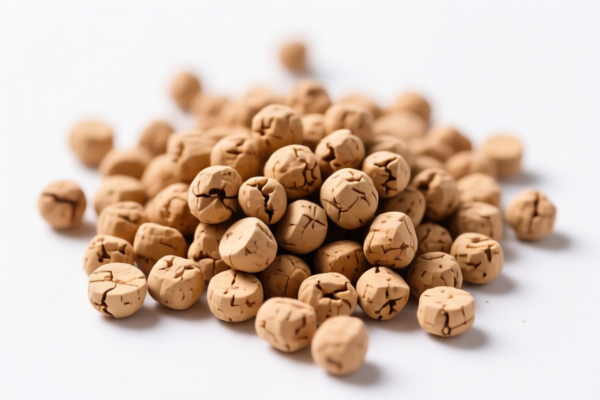
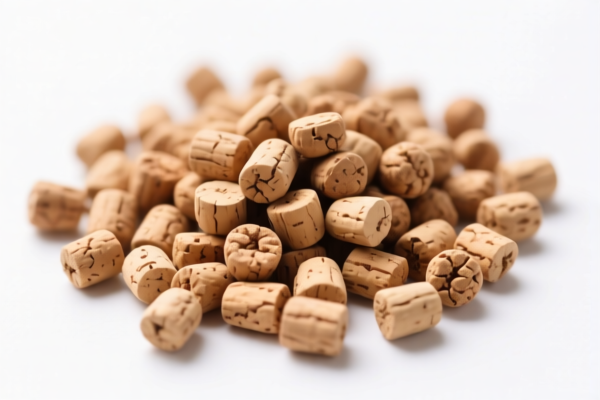
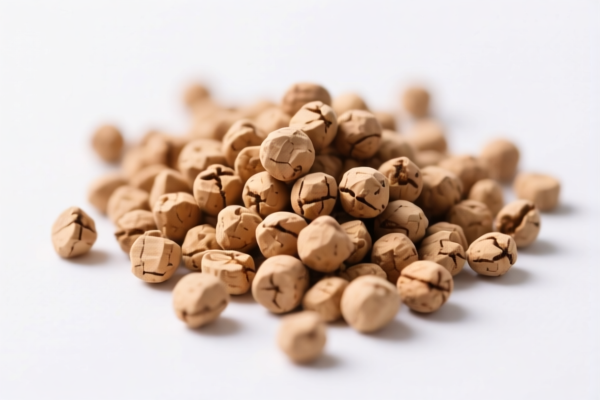
AI分析
🌱 Cork Pellets (Soil Conditioner)
🌐 HS Code Reference & Customs Clearance Guide | 2026 Latest Tariff Analysis | Strategic Compliance for Natural Cork
📌 I. Product Definition & Classification: Is Your "Cork Pellets" Really Just Crushed Cork?
Cork pellets, often marketed as eco-friendly soil conditioners, are derived from natural cork material. In international trade, the classification hinges strictly on the processing level of the material, not its intended end-use (e.g., gardening or insulation).
Two Key Distinctions: 1. Raw/Simplely Prepared Cork (Chunks/Bark): The material is still in large, recognizable pieces, cut from the bark but not mechanically processed into small particles. 2. Crushed, Granulated, or Ground Cork (Pellets/Powder): The material has been mechanically reduced in size, losing its original large structural form.
⚠️ Critical Classification Point:
- If the product consists of large chunks, slices, or blocks of natural cork → It falls under 4501.10.00.00.
- If the product consists of small particles, grains, or pellets (like the "Soil Conditioner" pellets) → It falls under 4501.90.40.00.
- Note: Even if labeled as "Soil Conditioner," if the physical form is granulated/crushed, it must be classified under the "Crushed/Granulated" heading, not "Raw."
📦 II. HS Code Classification Details (2026 Latest Tariff Authority Comparison)
| HS Code | Product Description | Applicable Scenario | Physical State | Tax Rate |
|---|---|---|---|---|
4501.10.00.00 |
Natural cork, raw or simply prepared | Large cork barks, blocks, or chunks; minimal processing (cutting/planing) | 🟦 Large/Chunk | 25.0% |
4501.90.40.00 |
Crushed, granulated or ground cork | Cork pellets, granules, powder; used for soil, insulation, or composites | 🔴 Small/Granular | 25.0% |
🔍 Key Reminder:
- "Pellets" imply granularity. Therefore,4501.90.40.00is the most accurate classification for "Cork Pellets" sold as soil conditioners.
- Using4501.10.00.00for pellets is a classification error that can lead to customs delays, fines, or forced re-classification.
- Both codes carry the same total tax burden in this specific dataset, but accuracy is vital for compliance and audit trails.
💰 III. 2026 Latest Tariff Rate Breakdown (Including Surcharges)
✅ Applicable Country: United States (US)
✅ Origin: China (CN) (Note: Tax rates apply based on origin; adjust if originating from Vietnam/EU)
✅ Effective Time: Current US Trade Policy (Section 301 / IEEPA implications)
🎯 1. 4501.90.40.00 — Crushed, Granulated or Ground Cork (Cork Pellets)
| Item | Content |
|---|---|
| Base Tariff | 0.0% (ad valorem) |
| Section 301 / Additional Tariff | +25.0% |
| Total Tax Rate | 25.0% |
| Tax Calculation | CIF Value × 25% |
| De Minimis Exemption | ❌ Not Applicable (For commercial shipments) |
| Legal Basis Path | USITC:4501.90.40.00 → SECTION 301:4501 → Additional Duty: 25% |
📌 Explanation:
- The 0% base rate reflects the standard Most Favored Nation (MFN) duty for cork products.
- The 25% additional tariff is applied due to trade measures against Chinese-origin goods (Section 301).
- Total Effective Duty: 25%. This is a high-cost item for importers if sourced from China.
- No IEEPA 10% surcharge is listed in the provided data for this specific HS code, so we rely strictly on the "25.0%" total tax provided.
🎯 2. 4501.10.00.00 — Natural Cork, Raw or Simply Prepared
| Item | Content |
|---|---|
| Base Tariff | 0.0% |
| Section 301 / Additional Tariff | +25.0% |
| Total Tax Rate | 25.0% |
| Tax Calculation | CIF Value × 25% |
| De Minimis Exemption | ❌ Not Applicable |
| Legal Basis Path | USITC:4501.10.00.00 → SECTION 301:4501 → Additional Duty: 25% |
📌 Note:
- While the rate is identical, misclassification of pellets as raw cork (4501.10.00.00) is risky.
- Customs officers may inspect physical samples. If they find granules/pellets, they will reject the4501.10declaration.
🛠️ IV. Customs Clearance Practical Advice (Real-World Pitfall Avoidance)
✅ 1. Required Documentation Checklist (Non-Negotiable)
| Document | Must Provide | Explanation |
|---|---|---|
| ✅ Product Specification Sheet | ✔️ | Must explicitly state: "Crushed, Granulated, or Ground Natural Cork" and "Intended Use: Soil Conditioner." |
| ✅ Physical Sample/Photo | ✔️ | High-res images showing particle size (e.g., 1-5mm pellets). |
| ✅ Commercial Invoice | ✔️ | Description must match HS Code: "Cork Pellets (Crushed Natural Cork)." Do NOT use vague terms like "Organic Filler." |
| ✅ Certificate of Origin (CO) | ✔️ | Essential for proving origin (e.g., China vs. Portugal). If from Portugal, tariffs may differ! |
| ✅ Material Safety Data Sheet (MSDS) | ✔️ | To confirm no chemical treatments (which would move it to Chapter 38). |
✅ 2. Declaration Strategy (Key Mnemonic)
🔥 "Granules = Crushed, Chunks = Raw. Name It Right, Avoid the Fight!"
| Scenario | Correct HS Code | Wrong Action | Consequence |
|---|---|---|---|
| Pellets/Granules (Soil Conditioner) | 4501.90.40.00 |
Declaring as 4501.10.00.00 |
Customs inspection → Delay → Possible penalty |
| Large Chunks/Bark | 4501.10.00.00 |
Declaring as 4501.90.40.00 |
Minor error, but inconsistent with physical evidence |
| Treated Cork (Chemically bonded) | Not 4501 | Declaring as 4501.90.40.00 |
Wrong chapter entirely (likely 3906 or 3824) → Severe penalty |
✅ 3. Special Cases & Handling
| Situation | Handling Advice |
|---|---|
| Mixed Sizes | If the shipment contains both chunks and granules, classify based on the majority by value or volume. If mixed 50/50, consult a customs broker for potential split classification or worst-case scenario (granules). |
| Organic Certification | If marketed as "Organic Soil Amendment," ensure the certificate matches the natural cork origin. No extra tax, but customs may ask for proof of "natural" status to rule out synthetic rubbers. |
| Origin Diversification | If sourced from Portugal or Spain, the 25% Section 301 tariff may not apply. Verify with a trade lawyer! |
🌍 V. Global Market Comparison (2026 Latest)
| Country/Region | Recommended HS Code | Tariff (China Origin) | Certification | Notes |
|---|---|---|---|---|
| 🇺🇸 USA | 4501.90.40.00 |
25.0% | None specific | High duty due to Section 301. |
| 🇨🇳 China | 4501.90.40.00 |
0% - 5% (Import Duty) | N/A | Low import duty, but consider export controls. |
| 🇪🇺 EU | 4501.90 |
0% | CE (if composite) | Generally duty-free for raw/cork products. |
| 🇬🇧 UK | 4501.90 |
0% | UKCA | Post-Brexit trade terms may vary. |
| 🇨🇦 Canada | 4501.90 |
0% | None | FTA benefits may apply if from eligible countries. |
📌 Conclusion:
- The US market is the most expensive for Chinese-origin cork pellets due to the 25% surcharge.
- EU/UK/Canada offer better tariff opportunities for this product.
- Consider supply chain diversification (e.g., sourcing from Portugal) to mitigate US tariff risks.
📌 VI. Common Errors & Pitfall Guide (Lessons Learned)
❌ Error 1: Labeling "Cork Pellets" as "Cork Granules" without specifying "Natural"
👉 Consequence: Customs may suspect synthetic rubber or plastic filler → MSDS required + higher scrutiny.
❌ Error 2: Using HS Code 3906 (Rubber) for Cork Pellets
👉 Consequence: Wrong classification! Cork is Chapter 45, not Chapter 39. Leads to significant fines.
❌ Error 3: Ignoring the "Crushed" vs. "Raw" distinction
👉 Consequence: If you declare 4501.10 for pellets, customs will flag the discrepancy between the description and the physical reality. Inspection triggered.
❌ Error 4: Failing to disclose "Soil Conditioner" use
👉 Consequence: If not declared, customs may assume it's for industrial insulation and apply different regulatory checks (e.g., EPA for soil amendments).
✅ Correct Practice:
"Natural Cork Pellets, Crushed and Granulated, 1-3mm, Unprocessed, Intended for Use as Soil Conditioner, HS 4501.90.40.00"
🎯 VII. Conclusion: Precision in Classification Saves Costs!
🎯 Remember the Mantra:
🔹 "Pellets are Crushed (4501.90), Chunks are Raw (4501.10). Both are 25% in the US, but Accuracy Prevents Delay!"
🔹 "Check Your Origin: China = 25%, Portugal = 0% (Check Current TPA)."
📌 Pro Tip:
- If you are importing large volumes, consider applying for a Customs Ruling (CBP Ruling) to get a binding classification decision from US Customs and Border Protection. This provides legal certainty against the 25% tariff if there’s any ambiguity about the "crushed" status.
- For soil amendment claims, ensure compliance with EPA regulations in addition to CBP classification.
📣 Immediate Action:
📞 Contact a licensed customs broker with product photos and spec sheets.
🚀 Confirm HS Code 4501.90.40.00 and calculate landed cost with 25% duty.
💡 Explore alternative origins (EU) to potentially reduce tariff burden.
✨ Professional Clearance Starts with Accurate Classification!
💼 Every percentage point of duty affects your bottom line!
用户评价
关于 HS 编码归类
协调制度(HS)是由世界海关组织(WCO)制定的国际贸易商品分类标准。全球 200 多个国家采用 HS 系统作为海关关税、贸易统计和进出口监管的基础。
每个 HS 编码遵循以下层级结构:
- 章(2 位)——商品大类(例如:第 84 章:机器和机械设备)
- 品目(4 位)——章内的更具体分类
- 子目(6 位)——国际通用细分,所有 WCO 成员国统一使用
- 本国细分(8-10 位)——各国自行扩展的细分编码,如美国 HTSUS 10 位编码
正确的 HS 编码归类对于顺利通关、准确缴纳关税和遵守贸易法规至关重要。错误归类可能导致海关延误、多缴关税或罚款。
从CN进口到US时,适用的关税税率可能包括:
- 最惠国(MFN)税率——适用于 WTO 成员国的标准关税税率
- 普通税率——适用于无贸易协定国家
- 贸易救济关税——附加关税,如 301 条款(反倾销)、232 条款(国家安全)或反补贴税
本页内容仅供参考。如需正式归类,请咨询当地海关或持牌报关代理。