Cork Pellets (Soil Conditioner)
CN → US| HS Code | Tariff Rate | Origin | Destination | Doc |
|---|---|---|---|---|
| 4501100000 | 35.0% | CN | US | Official Doc |
| 4501904000 | 35.0% | CN | US | Official Doc |
| 4503902000 | 35.0% | CN | US | Official Doc |
| 4503906000 | 49.0% | CN | US | Official Doc |
| 4501100000 | 35.0% | CN | US | Official Doc |
Product Images
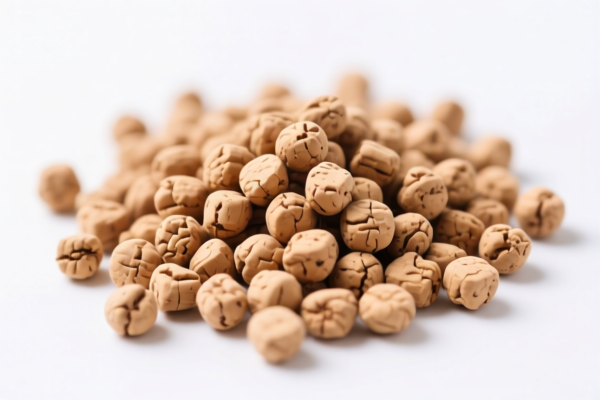
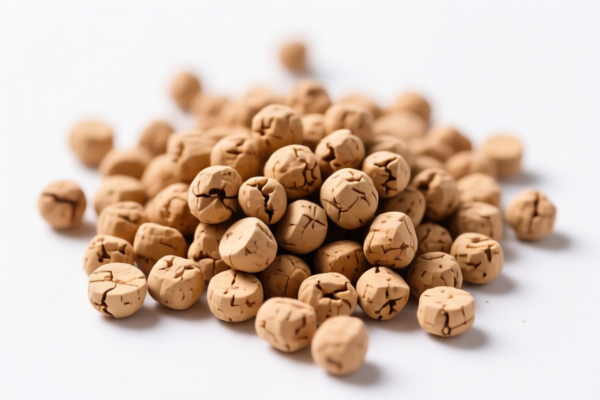
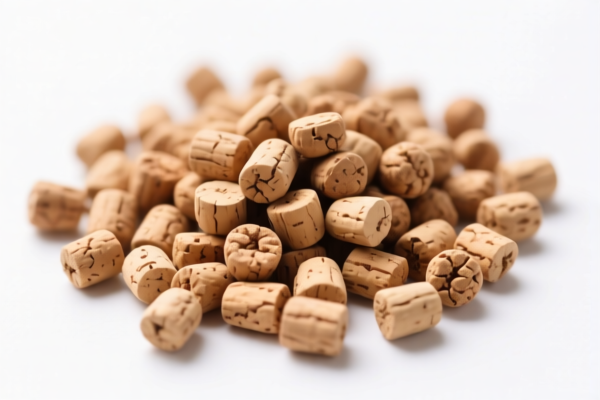
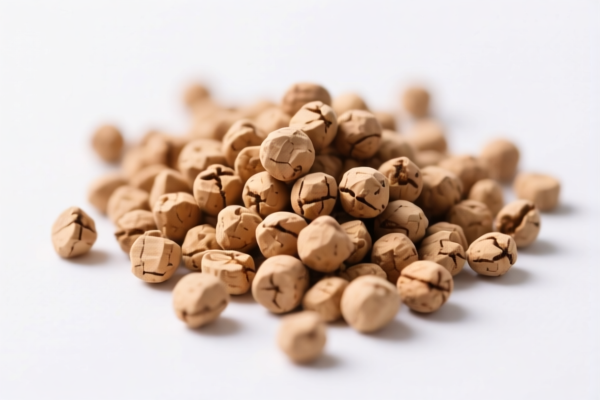
AI Analysis
🌱 Cork Pellets (Soil Conditioner)
🌐 HS Code Reference & Customs Clearance Guide | 2026 Latest Tariff Analysis | Strategic Compliance for Natural Cork
📌 I. Product Definition & Classification: Is Your "Cork Pellets" Really Just Crushed Cork?
Cork pellets, often marketed as eco-friendly soil conditioners, are derived from natural cork material. In international trade, the classification hinges strictly on the processing level of the material, not its intended end-use (e.g., gardening or insulation).
Two Key Distinctions: 1. Raw/Simplely Prepared Cork (Chunks/Bark): The material is still in large, recognizable pieces, cut from the bark but not mechanically processed into small particles. 2. Crushed, Granulated, or Ground Cork (Pellets/Powder): The material has been mechanically reduced in size, losing its original large structural form.
⚠️ Critical Classification Point:
- If the product consists of large chunks, slices, or blocks of natural cork → It falls under 4501.10.00.00.
- If the product consists of small particles, grains, or pellets (like the "Soil Conditioner" pellets) → It falls under 4501.90.40.00.
- Note: Even if labeled as "Soil Conditioner," if the physical form is granulated/crushed, it must be classified under the "Crushed/Granulated" heading, not "Raw."
📦 II. HS Code Classification Details (2026 Latest Tariff Authority Comparison)
| HS Code | Product Description | Applicable Scenario | Physical State | Tax Rate |
|---|---|---|---|---|
4501.10.00.00 |
Natural cork, raw or simply prepared | Large cork barks, blocks, or chunks; minimal processing (cutting/planing) | 🟦 Large/Chunk | 25.0% |
4501.90.40.00 |
Crushed, granulated or ground cork | Cork pellets, granules, powder; used for soil, insulation, or composites | 🔴 Small/Granular | 25.0% |
🔍 Key Reminder:
- "Pellets" imply granularity. Therefore,4501.90.40.00is the most accurate classification for "Cork Pellets" sold as soil conditioners.
- Using4501.10.00.00for pellets is a classification error that can lead to customs delays, fines, or forced re-classification.
- Both codes carry the same total tax burden in this specific dataset, but accuracy is vital for compliance and audit trails.
💰 III. 2026 Latest Tariff Rate Breakdown (Including Surcharges)
✅ Applicable Country: United States (US)
✅ Origin: China (CN) (Note: Tax rates apply based on origin; adjust if originating from Vietnam/EU)
✅ Effective Time: Current US Trade Policy (Section 301 / IEEPA implications)
🎯 1. 4501.90.40.00 — Crushed, Granulated or Ground Cork (Cork Pellets)
| Item | Content |
|---|---|
| Base Tariff | 0.0% (ad valorem) |
| Section 301 / Additional Tariff | +25.0% |
| Total Tax Rate | 25.0% |
| Tax Calculation | CIF Value × 25% |
| De Minimis Exemption | ❌ Not Applicable (For commercial shipments) |
| Legal Basis Path | USITC:4501.90.40.00 → SECTION 301:4501 → Additional Duty: 25% |
📌 Explanation:
- The 0% base rate reflects the standard Most Favored Nation (MFN) duty for cork products.
- The 25% additional tariff is applied due to trade measures against Chinese-origin goods (Section 301).
- Total Effective Duty: 25%. This is a high-cost item for importers if sourced from China.
- No IEEPA 10% surcharge is listed in the provided data for this specific HS code, so we rely strictly on the "25.0%" total tax provided.
🎯 2. 4501.10.00.00 — Natural Cork, Raw or Simply Prepared
| Item | Content |
|---|---|
| Base Tariff | 0.0% |
| Section 301 / Additional Tariff | +25.0% |
| Total Tax Rate | 25.0% |
| Tax Calculation | CIF Value × 25% |
| De Minimis Exemption | ❌ Not Applicable |
| Legal Basis Path | USITC:4501.10.00.00 → SECTION 301:4501 → Additional Duty: 25% |
📌 Note:
- While the rate is identical, misclassification of pellets as raw cork (4501.10.00.00) is risky.
- Customs officers may inspect physical samples. If they find granules/pellets, they will reject the4501.10declaration.
🛠️ IV. Customs Clearance Practical Advice (Real-World Pitfall Avoidance)
✅ 1. Required Documentation Checklist (Non-Negotiable)
| Document | Must Provide | Explanation |
|---|---|---|
| ✅ Product Specification Sheet | ✔️ | Must explicitly state: "Crushed, Granulated, or Ground Natural Cork" and "Intended Use: Soil Conditioner." |
| ✅ Physical Sample/Photo | ✔️ | High-res images showing particle size (e.g., 1-5mm pellets). |
| ✅ Commercial Invoice | ✔️ | Description must match HS Code: "Cork Pellets (Crushed Natural Cork)." Do NOT use vague terms like "Organic Filler." |
| ✅ Certificate of Origin (CO) | ✔️ | Essential for proving origin (e.g., China vs. Portugal). If from Portugal, tariffs may differ! |
| ✅ Material Safety Data Sheet (MSDS) | ✔️ | To confirm no chemical treatments (which would move it to Chapter 38). |
✅ 2. Declaration Strategy (Key Mnemonic)
🔥 "Granules = Crushed, Chunks = Raw. Name It Right, Avoid the Fight!"
| Scenario | Correct HS Code | Wrong Action | Consequence |
|---|---|---|---|
| Pellets/Granules (Soil Conditioner) | 4501.90.40.00 |
Declaring as 4501.10.00.00 |
Customs inspection → Delay → Possible penalty |
| Large Chunks/Bark | 4501.10.00.00 |
Declaring as 4501.90.40.00 |
Minor error, but inconsistent with physical evidence |
| Treated Cork (Chemically bonded) | Not 4501 | Declaring as 4501.90.40.00 |
Wrong chapter entirely (likely 3906 or 3824) → Severe penalty |
✅ 3. Special Cases & Handling
| Situation | Handling Advice |
|---|---|
| Mixed Sizes | If the shipment contains both chunks and granules, classify based on the majority by value or volume. If mixed 50/50, consult a customs broker for potential split classification or worst-case scenario (granules). |
| Organic Certification | If marketed as "Organic Soil Amendment," ensure the certificate matches the natural cork origin. No extra tax, but customs may ask for proof of "natural" status to rule out synthetic rubbers. |
| Origin Diversification | If sourced from Portugal or Spain, the 25% Section 301 tariff may not apply. Verify with a trade lawyer! |
🌍 V. Global Market Comparison (2026 Latest)
| Country/Region | Recommended HS Code | Tariff (China Origin) | Certification | Notes |
|---|---|---|---|---|
| 🇺🇸 USA | 4501.90.40.00 |
25.0% | None specific | High duty due to Section 301. |
| 🇨🇳 China | 4501.90.40.00 |
0% - 5% (Import Duty) | N/A | Low import duty, but consider export controls. |
| 🇪🇺 EU | 4501.90 |
0% | CE (if composite) | Generally duty-free for raw/cork products. |
| 🇬🇧 UK | 4501.90 |
0% | UKCA | Post-Brexit trade terms may vary. |
| 🇨🇦 Canada | 4501.90 |
0% | None | FTA benefits may apply if from eligible countries. |
📌 Conclusion:
- The US market is the most expensive for Chinese-origin cork pellets due to the 25% surcharge.
- EU/UK/Canada offer better tariff opportunities for this product.
- Consider supply chain diversification (e.g., sourcing from Portugal) to mitigate US tariff risks.
📌 VI. Common Errors & Pitfall Guide (Lessons Learned)
❌ Error 1: Labeling "Cork Pellets" as "Cork Granules" without specifying "Natural"
👉 Consequence: Customs may suspect synthetic rubber or plastic filler → MSDS required + higher scrutiny.
❌ Error 2: Using HS Code 3906 (Rubber) for Cork Pellets
👉 Consequence: Wrong classification! Cork is Chapter 45, not Chapter 39. Leads to significant fines.
❌ Error 3: Ignoring the "Crushed" vs. "Raw" distinction
👉 Consequence: If you declare 4501.10 for pellets, customs will flag the discrepancy between the description and the physical reality. Inspection triggered.
❌ Error 4: Failing to disclose "Soil Conditioner" use
👉 Consequence: If not declared, customs may assume it's for industrial insulation and apply different regulatory checks (e.g., EPA for soil amendments).
✅ Correct Practice:
"Natural Cork Pellets, Crushed and Granulated, 1-3mm, Unprocessed, Intended for Use as Soil Conditioner, HS 4501.90.40.00"
🎯 VII. Conclusion: Precision in Classification Saves Costs!
🎯 Remember the Mantra:
🔹 "Pellets are Crushed (4501.90), Chunks are Raw (4501.10). Both are 25% in the US, but Accuracy Prevents Delay!"
🔹 "Check Your Origin: China = 25%, Portugal = 0% (Check Current TPA)."
📌 Pro Tip:
- If you are importing large volumes, consider applying for a Customs Ruling (CBP Ruling) to get a binding classification decision from US Customs and Border Protection. This provides legal certainty against the 25% tariff if there’s any ambiguity about the "crushed" status.
- For soil amendment claims, ensure compliance with EPA regulations in addition to CBP classification.
📣 Immediate Action:
📞 Contact a licensed customs broker with product photos and spec sheets.
🚀 Confirm HS Code 4501.90.40.00 and calculate landed cost with 25% duty.
💡 Explore alternative origins (EU) to potentially reduce tariff burden.
✨ Professional Clearance Starts with Accurate Classification!
💼 Every percentage point of duty affects your bottom line!
Customer Reviews
About HS Code Classification
The Harmonized System (HS) is an internationally standardized nomenclature developed by the World Customs Organization (WCO) to classify traded products. Over 200 countries use the HS system as the basis for customs tariffs, trade statistics, and import/export regulations.
Each HS code follows a hierarchical structure:
- Chapter (2 digits) — Broad category of goods (e.g., Chapter 84: Machinery and Mechanical Appliances)
- Heading (4 digits) — More specific grouping within the chapter
- Subheading (6 digits) — Internationally standardized breakdown, used by all WCO member countries
- National subdivisions (8-10 digits) — Country-specific extensions for further classification, such as US HTSUS 10-digit codes
Correct HS code classification is essential for smooth customs clearance, accurate duty payment, and compliance with trade regulations. Misclassification can lead to customs delays, overpayment of duties, or penalties.
When importing from CN to US, the applicable tariff rates may include:
- Most-Favored-Nation (MFN) rate — The standard duty rate applied to WTO members
- General rate — Applied to countries without trade agreements
- Trade remedy duties — Additional tariffs such as Section 301 (anti-dumping), Section 232 (national security), or countervailing duties
The information provided on this page is for reference purposes only. For official classification, please consult with your local customs authority or a licensed customs broker.