Cork Waste Recycled Material
CN → US| HS编码 | 关税税率 | 原产国 | 目的国 | 文档 |
|---|---|---|---|---|
| 6808000000 | 35.0% | CN | US | 官方文档 |
| 4504104000 | 35.0% | CN | US | 官方文档 |
| 4504103000 | 35.0% | CN | US | 官方文档 |
商品图片
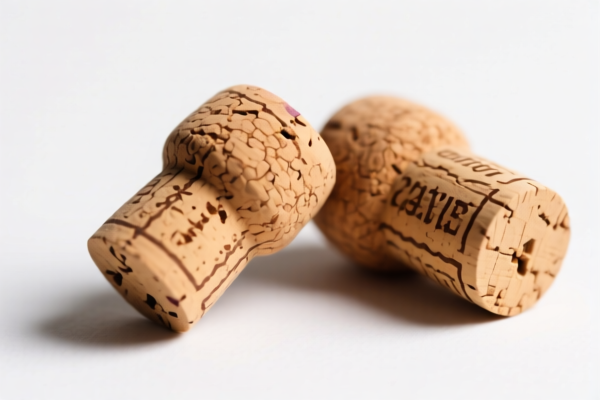
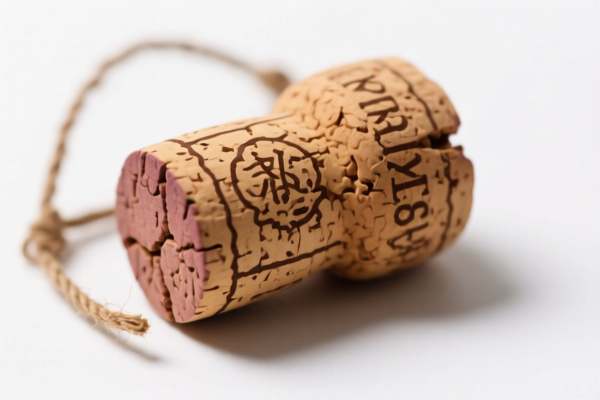
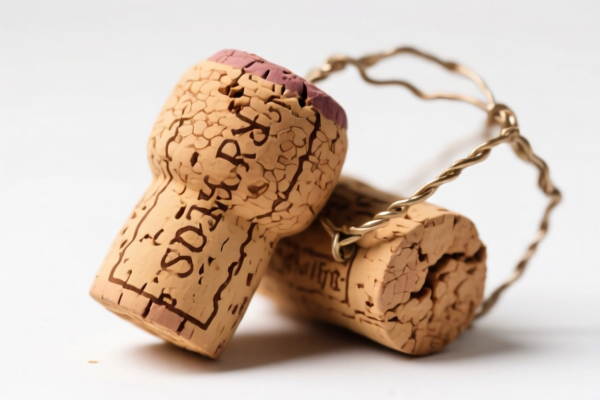
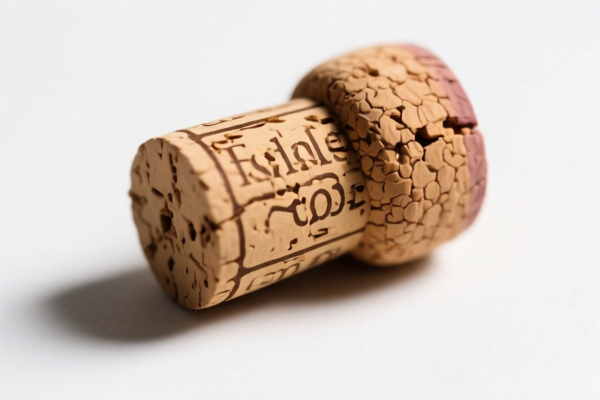
AI分析
🌳 Cork Waste Recycled Material (软木回收废料/再生软木颗粒)
🌐 HS Code Reference & Customs Clearance Guide | 2026 Latest Tariff Analysis | Professional Clearance Strategy
📌 I. Product Definition & Classification: What Exactly Is "Cork Waste"?
Cork Waste Recycled Material generally refers to by-products of cork production (such as sawdust, crumbs, or off-cuts) or post-consumer cork bottles that have been processed, granulated, or agglomerated. In international trade, its classification depends heavily on its form, origin, and intended use.
It is crucial to distinguish between: 1. Raw Waste/Off-cuts: Unprocessed waste from cork stopper manufacturing. 2. Agglomerated Cork: Cork granules bonded with natural binder (polyurethane or food-grade adhesives), often used for flooring, wall panels, or insulation. 3. Cork Building Materials: Finished boards, tiles, or insulation panels made from agglomerated cork.
⚠️ Key Distinction Point:
- If the material is raw waste, dust, or small granules without binding agents → It falls under Chapter 45 (Cork).
- If it is processed into boards, tiles, or insulation panels (agglomerated/bound) → It may be classified under Chapter 68 (Mineral Products) if viewed as composite building material, or specifically under 4504 if defined as agglomerated cork for specific uses.
- Crucial Note for US Imports: Both categories are heavily impacted by Section 301 and IEEPA tariffs.
📦 II. HS Code Classification Details (2026 Latest Tariff Authority Comparison)
| HS Code | Product Description | Application Scenario | Form State | Contains Binders? |
|---|---|---|---|---|
4504.10.40.00 |
Agglomerated cork; whether or not bonded with natural or synthetic substances | Flooring, wall tiles, insulation boards, acoustic panels | Processed Boards/Granules | ✅ Yes (Often) |
4504.10.30.00 |
Agglomerated cork; whether or not bonded with natural or synthetic substances | Similar to above, specific sub-category for certain granular forms | Granules/Blocks | ✅ Yes (Often) |
6808.00.00.00 |
Cork blocks, plates, sheets and similar articles (not honeycombed) | Often used for "Cork Building Materials" in customs declarations when viewed as composite building board | Sheets/Plates | ❓ Context Dependent |
🔍 Important Reminder:
- HS 4504 is the primary chapter for "Agglomerated Cork." This is the most accurate classification for recycled cork used in construction or manufacturing.
- HS 6808 is sometimes used for "Cork Building Materials" if the customs authority views it strictly as a mineral/composite building board rather than a natural cork product. However, 4504 is more technically accurate for pure cork agglomerates.
- Raw waste (unsifted, unbound) might fall under4502.00(Unprocessed cork), but the prompt specifically mentions "recycled material" which usually implies processing. The provided data points to 4504 and 6808.
💰 III. 2026 Latest Tariff Rate Breakdown (Including Surtaxes & Policy Add-ons)
✅ Applicable Country: United States (US)
✅ Country of Origin: China (CN)
✅ Effective Time: From November 10, 2025 (including subsequent imports)
🎯 1. 4504.10.40.00 & 4504.10.30.00 — Agglomerated Cork Products
| Item | Content |
|---|---|
| Base Duty Rate | 0% (ad valorem) |
| USITC Surcharge (Section 301) | +25% (Added tariffs on Chinese goods) |
| IEEPA Surcharge (Section 122/301 Variant) | +10% (Specific surcharge for Chinese imports, effective Nov 2025) |
| Total Effective Duty Rate | 35.0% |
| Tax Calculation | CIF Value × 35% |
| De Minimis Eligibility | ❌ No (deny_de_minimis) |
| Legal Basis Path | IEEPA:9903.01.24 → USITC:4504.10.40.00 → FOOTNOTE:9903.88.01 |
📌 Explanation:
- The Base Rate is 0%, reflecting that cork is a natural, renewable resource.
- However, due to US-China trade tensions, a 25% Section 301 tariff applies.
- Additionally, a 10% IEEPA/Section 122 surcharge applies to Chinese-origin cork products starting in late 2025.
- Total: 35%. This is a high tariff burden for low-margin recycled materials.
🎯 2. 6808.00.00.00 — Cork Building Materials (Composite/Board)
| Item | Content |
|---|---|
| Base Duty Rate | 0% (ad valorem) |
| USITC Surcharge (Section 301) | +25% |
| IEEPA Surcharge | +10% |
| Total Effective Duty Rate | 35.0% |
| Tax Calculation | CIF Value × 35% |
| De Minimis Eligibility | ❌ No (deny_de_minimis) |
| Legal Basis Path | IEEPA:9903.01.24 → USITC:6808.00.00.00 → FOOTNOTE:9903.88.01 |
📌 Note:
- Even if classified under Chapter 68 (Building Materials), the tariff rate remains 35% because the surcharges are applied based on the origin (China) and the trade policy framework, not just the chapter.
- This classification is often used when the product is marketed specifically as a "building board" rather than a raw cork material.
🛠️ IV. Customs Clearance Practical Advice (Combat Pitfalls)
✅ 1. Required Documentation Checklist (Non-negotiable)
| Document | Must Provide | Description |
|---|---|---|
| ✅ Product Specification Sheet | ✔️ | Detail the type (granules, boards, tiles), binder type (polyurethane, natural latex), density, and dimensions. |
| ✅ Composition Analysis | ✔️ | Proof that the material is >90% cork. If it's mixed with heavy resins, it might be reclassified as plastic/rubber, changing the HS code. |
| ✅ Product Photos (Clear Label) | ✔️ | Show the texture, packaging, and any labels indicating "Recycled Cork" or "Agglomerated Cork." |
| ✅ Commercial Invoice | ✔️ | Must explicitly state: "Agglomerated Cork Boards/Granules for Flooring/Insulation" (Avoid vague terms like "Cork Waste" without detail). |
| ✅ Certificate of Origin (CO) | ✔️ | Critical for verifying Chinese origin to apply the correct surcharges. |
| ✅ Packing List | ✔️ | Clearly list net/gross weight. Bulk shipments of granules vs. boxed boards may have different handling fees. |
✅ 2. Declaration Tips (Key Mantra)
🔥 "Specify Form, Binders, and End-Use! Vague 'Waste' = High Risk!"
| Scenario | Correct Declaration | Wrong Practice |
|---|---|---|
| Agglomerated Cork Boards | 4504.10.40.00 |
Declare as "Cork Waste" → Risk of reclassification & penalties. |
| Cork Granules for Insulation | 4504.10.30.00 |
Declare as "Plastic Granules" → Wrong chapter, 0% vs 35% trap. |
| Finished Cork Floor Tiles | 4504.10.40.00 |
Declare as "Wood Flooring" → Wood flooring has different rates & regulations. |
| Raw Cork Dust (Unbound) | Not in Data (Likely 4502.00) |
Use 6808.00.00.00 → If unbound, it's not a "board" or "agglomerate." |
✅ 3. Special Handling Cases
| Scenario | Handling Advice |
|---|---|
| OEM Custom Cork Boards | Provide customer order + design specs. Ensure the "End Use" (e.g., "for acoustic insulation") matches the HS code description. |
| Mixed Materials (Cork + Rubber) | If the product is a composite of cork and rubber, it may be classified under Chapter 40 (Rubber) or 45 (Cork) depending on essential character. Provide a detailed mix ratio. |
| Recycled vs. Virgin | "Recycled" does not change the HS code for cork. It affects the marketing but not the tariff rate. Focus on the physical form. |
| Small Packages (De Minimis) | ❌ No Exemption. The 35% duty applies even to small shipments if they exceed the $800 de minimis threshold and are subject to trade sanctions. Note: De minimis is generally denied for Section 301 goods from China. |
🌍 V. Global Market Clearance Comparison (2026 Latest)
| Country/Region | Recommended HS Code | Duty Rate | Certification Required | Notes |
|---|---|---|---|---|
| 🇺🇸 USA | 4504.10.40.00 / 6808.00.00.00 |
35% (China Origin) | None specific for cork, but general safety rules apply | Highest Duty. High risk of audit on "Waste" vs "Product". |
| 🇨🇳 China | 4504.10.40.00 |
5% | N/A | No surcharges. |
| 🇪🇺 EU | 4504.10 |
0% - 3% | CE (if sold as construction product) | No US-style surcharges. |
| 🇬🇧 UK | 4504.10 |
0% - 3% | UKCA (if construction) | Post-Brexit rules may vary. |
| 🇦🇺 Australia | 4504.10 |
5% | RCM (if electrical components involved, rare for cork) | No major surcharges. |
📌 Conclusion:
- The US is the only major market with a 35% duty on Chinese cork products.
- EU, UK, and Australia have much lower duties (0-5%), making them more attractive for high-volume recycled cork exports if supply chains allow.
- Risk in US: Customs may challenge "Recycled Cork" as "Waste" if not properly processed. Ensure you declare it as "Agglomerated Cork" or "Cork Building Material," not just "Waste."
📌 VI. Common Mistakes & Pitfalls Guide (Blood Lessons)
❌ Mistake 1: Declaring "Cork Waste" without specifying if it's agglomerated.
👉 Consequence: Customs may classify it as "Waste" (Chapter 37 or 4502) or reject it as hazardous waste if not clearly processed. Result: Delays & Fines.
❌ Mistake 2: Using "Cork" as the only description.
👉 Consequence: Ambiguity leads to arbitrary classification. If they think it's "Wood," they might apply different rules.
Result: Potential misclassification risk.
❌ Mistake 3: Ignoring the 35% Total Duty.
👉 Consequence: Profit margins are wiped out. Many exporters assume 0% base duty means 0% total duty.
Result: Significant unexpected costs.
❌ Mistake 4: Trying to use De Minimis ($800) for small shipments.
👉 Consequence: Section 301 goods from China are not eligible for de minimis exemption.
Result: Packages held at customs, duties collected + storage fees.
✅ Correct Action:
"Agglomerated Cork Boards, 2mm Thickness, Polyurethane Bonded, for Wall Insulation, Made from 100% Recycled Cork, Model XYZ"
🎯 VII. Conclusion: Professional Declaration Saves Money!
🎯 Remember the Mantra:
🔹 "Agglomerated is Key, Waste is Risk! 35% Duty Hits Hard, Clear Description is the Guard!"
🔹 "HS Code 4504 is King for Cork, 6808 is a Fallback, Don't Guess, Just Map!"
📌 Tips:
- If your cork material is not from China (e.g., Vietnam, Portugal, Spain), the 35% surcharge does NOT apply. The base duty is 0-5%.
- Always apply for a Binding Tariff Information (BTI) or Advance Ruling in the US before shipping large volumes.
- For recycled cork, ensure you have documentation proving it is "processed" (agglomerated) and not just "waste" to avoid environmental import restrictions.
📣 Immediate Action:
📞 Contact a Customs Broker + Provide Detailed Product Specs + Verify Origin
🚀 Let Your Recycled Cork Pass Through Smoothly, Maximize Profit, Minimize Duty!
✨ Professional Clearance Starts with Accurate Classification!
💼 Every Penny in Duty is a Penny You Can Save with the Right HS Code!
用户评价
关于 HS 编码归类
协调制度(HS)是由世界海关组织(WCO)制定的国际贸易商品分类标准。全球 200 多个国家采用 HS 系统作为海关关税、贸易统计和进出口监管的基础。
每个 HS 编码遵循以下层级结构:
- 章(2 位)——商品大类(例如:第 84 章:机器和机械设备)
- 品目(4 位)——章内的更具体分类
- 子目(6 位)——国际通用细分,所有 WCO 成员国统一使用
- 本国细分(8-10 位)——各国自行扩展的细分编码,如美国 HTSUS 10 位编码
正确的 HS 编码归类对于顺利通关、准确缴纳关税和遵守贸易法规至关重要。错误归类可能导致海关延误、多缴关税或罚款。
从CN进口到US时,适用的关税税率可能包括:
- 最惠国(MFN)税率——适用于 WTO 成员国的标准关税税率
- 普通税率——适用于无贸易协定国家
- 贸易救济关税——附加关税,如 301 条款(反倾销)、232 条款(国家安全)或反补贴税
本页内容仅供参考。如需正式归类,请咨询当地海关或持牌报关代理。