Cork Waste Recycled Material
CN → US| HS Code | Tariff Rate | Origin | Destination | Doc |
|---|---|---|---|---|
| 6808000000 | 35.0% | CN | US | Official Doc |
| 4504104000 | 35.0% | CN | US | Official Doc |
| 4504103000 | 35.0% | CN | US | Official Doc |
Product Images
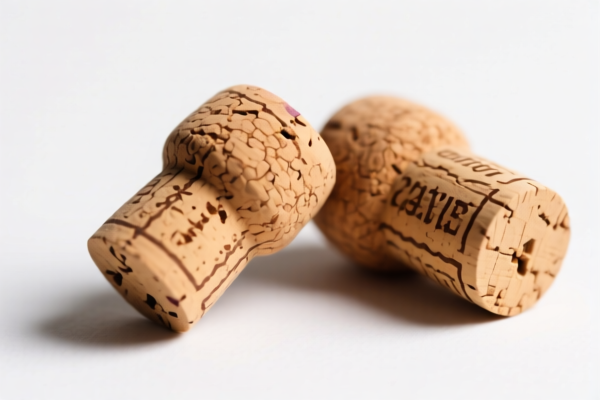
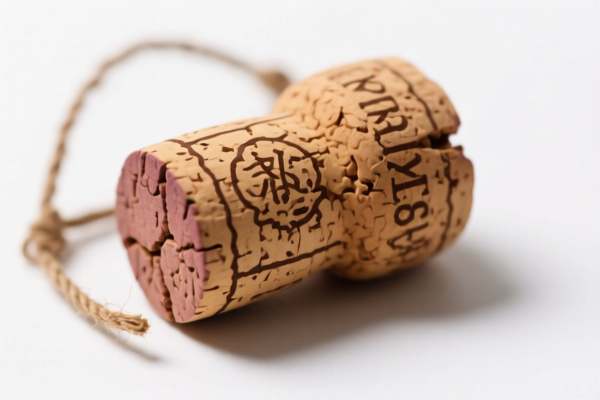
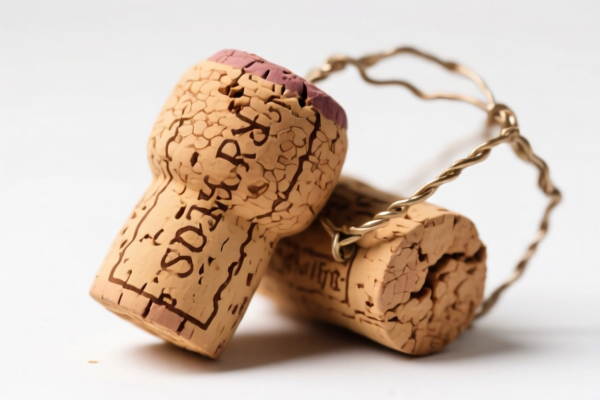
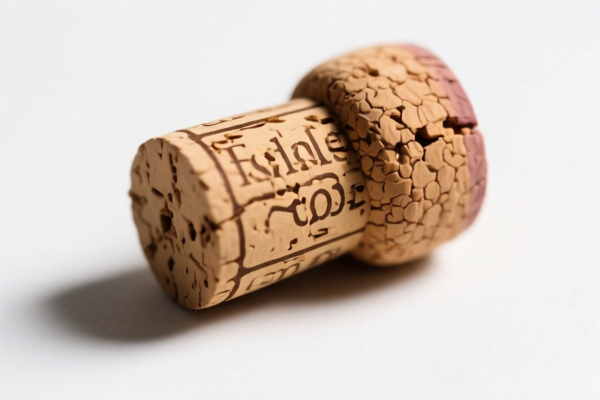
AI Analysis
🌳 Cork Waste Recycled Material (软木回收废料/再生软木颗粒)
🌐 HS Code Reference & Customs Clearance Guide | 2026 Latest Tariff Analysis | Professional Clearance Strategy
📌 I. Product Definition & Classification: What Exactly Is "Cork Waste"?
Cork Waste Recycled Material generally refers to by-products of cork production (such as sawdust, crumbs, or off-cuts) or post-consumer cork bottles that have been processed, granulated, or agglomerated. In international trade, its classification depends heavily on its form, origin, and intended use.
It is crucial to distinguish between: 1. Raw Waste/Off-cuts: Unprocessed waste from cork stopper manufacturing. 2. Agglomerated Cork: Cork granules bonded with natural binder (polyurethane or food-grade adhesives), often used for flooring, wall panels, or insulation. 3. Cork Building Materials: Finished boards, tiles, or insulation panels made from agglomerated cork.
⚠️ Key Distinction Point:
- If the material is raw waste, dust, or small granules without binding agents → It falls under Chapter 45 (Cork).
- If it is processed into boards, tiles, or insulation panels (agglomerated/bound) → It may be classified under Chapter 68 (Mineral Products) if viewed as composite building material, or specifically under 4504 if defined as agglomerated cork for specific uses.
- Crucial Note for US Imports: Both categories are heavily impacted by Section 301 and IEEPA tariffs.
📦 II. HS Code Classification Details (2026 Latest Tariff Authority Comparison)
| HS Code | Product Description | Application Scenario | Form State | Contains Binders? |
|---|---|---|---|---|
4504.10.40.00 |
Agglomerated cork; whether or not bonded with natural or synthetic substances | Flooring, wall tiles, insulation boards, acoustic panels | Processed Boards/Granules | ✅ Yes (Often) |
4504.10.30.00 |
Agglomerated cork; whether or not bonded with natural or synthetic substances | Similar to above, specific sub-category for certain granular forms | Granules/Blocks | ✅ Yes (Often) |
6808.00.00.00 |
Cork blocks, plates, sheets and similar articles (not honeycombed) | Often used for "Cork Building Materials" in customs declarations when viewed as composite building board | Sheets/Plates | ❓ Context Dependent |
🔍 Important Reminder:
- HS 4504 is the primary chapter for "Agglomerated Cork." This is the most accurate classification for recycled cork used in construction or manufacturing.
- HS 6808 is sometimes used for "Cork Building Materials" if the customs authority views it strictly as a mineral/composite building board rather than a natural cork product. However, 4504 is more technically accurate for pure cork agglomerates.
- Raw waste (unsifted, unbound) might fall under4502.00(Unprocessed cork), but the prompt specifically mentions "recycled material" which usually implies processing. The provided data points to 4504 and 6808.
💰 III. 2026 Latest Tariff Rate Breakdown (Including Surtaxes & Policy Add-ons)
✅ Applicable Country: United States (US)
✅ Country of Origin: China (CN)
✅ Effective Time: From November 10, 2025 (including subsequent imports)
🎯 1. 4504.10.40.00 & 4504.10.30.00 — Agglomerated Cork Products
| Item | Content |
|---|---|
| Base Duty Rate | 0% (ad valorem) |
| USITC Surcharge (Section 301) | +25% (Added tariffs on Chinese goods) |
| IEEPA Surcharge (Section 122/301 Variant) | +10% (Specific surcharge for Chinese imports, effective Nov 2025) |
| Total Effective Duty Rate | 35.0% |
| Tax Calculation | CIF Value × 35% |
| De Minimis Eligibility | ❌ No (deny_de_minimis) |
| Legal Basis Path | IEEPA:9903.01.24 → USITC:4504.10.40.00 → FOOTNOTE:9903.88.01 |
📌 Explanation:
- The Base Rate is 0%, reflecting that cork is a natural, renewable resource.
- However, due to US-China trade tensions, a 25% Section 301 tariff applies.
- Additionally, a 10% IEEPA/Section 122 surcharge applies to Chinese-origin cork products starting in late 2025.
- Total: 35%. This is a high tariff burden for low-margin recycled materials.
🎯 2. 6808.00.00.00 — Cork Building Materials (Composite/Board)
| Item | Content |
|---|---|
| Base Duty Rate | 0% (ad valorem) |
| USITC Surcharge (Section 301) | +25% |
| IEEPA Surcharge | +10% |
| Total Effective Duty Rate | 35.0% |
| Tax Calculation | CIF Value × 35% |
| De Minimis Eligibility | ❌ No (deny_de_minimis) |
| Legal Basis Path | IEEPA:9903.01.24 → USITC:6808.00.00.00 → FOOTNOTE:9903.88.01 |
📌 Note:
- Even if classified under Chapter 68 (Building Materials), the tariff rate remains 35% because the surcharges are applied based on the origin (China) and the trade policy framework, not just the chapter.
- This classification is often used when the product is marketed specifically as a "building board" rather than a raw cork material.
🛠️ IV. Customs Clearance Practical Advice (Combat Pitfalls)
✅ 1. Required Documentation Checklist (Non-negotiable)
| Document | Must Provide | Description |
|---|---|---|
| ✅ Product Specification Sheet | ✔️ | Detail the type (granules, boards, tiles), binder type (polyurethane, natural latex), density, and dimensions. |
| ✅ Composition Analysis | ✔️ | Proof that the material is >90% cork. If it's mixed with heavy resins, it might be reclassified as plastic/rubber, changing the HS code. |
| ✅ Product Photos (Clear Label) | ✔️ | Show the texture, packaging, and any labels indicating "Recycled Cork" or "Agglomerated Cork." |
| ✅ Commercial Invoice | ✔️ | Must explicitly state: "Agglomerated Cork Boards/Granules for Flooring/Insulation" (Avoid vague terms like "Cork Waste" without detail). |
| ✅ Certificate of Origin (CO) | ✔️ | Critical for verifying Chinese origin to apply the correct surcharges. |
| ✅ Packing List | ✔️ | Clearly list net/gross weight. Bulk shipments of granules vs. boxed boards may have different handling fees. |
✅ 2. Declaration Tips (Key Mantra)
🔥 "Specify Form, Binders, and End-Use! Vague 'Waste' = High Risk!"
| Scenario | Correct Declaration | Wrong Practice |
|---|---|---|
| Agglomerated Cork Boards | 4504.10.40.00 |
Declare as "Cork Waste" → Risk of reclassification & penalties. |
| Cork Granules for Insulation | 4504.10.30.00 |
Declare as "Plastic Granules" → Wrong chapter, 0% vs 35% trap. |
| Finished Cork Floor Tiles | 4504.10.40.00 |
Declare as "Wood Flooring" → Wood flooring has different rates & regulations. |
| Raw Cork Dust (Unbound) | Not in Data (Likely 4502.00) |
Use 6808.00.00.00 → If unbound, it's not a "board" or "agglomerate." |
✅ 3. Special Handling Cases
| Scenario | Handling Advice |
|---|---|
| OEM Custom Cork Boards | Provide customer order + design specs. Ensure the "End Use" (e.g., "for acoustic insulation") matches the HS code description. |
| Mixed Materials (Cork + Rubber) | If the product is a composite of cork and rubber, it may be classified under Chapter 40 (Rubber) or 45 (Cork) depending on essential character. Provide a detailed mix ratio. |
| Recycled vs. Virgin | "Recycled" does not change the HS code for cork. It affects the marketing but not the tariff rate. Focus on the physical form. |
| Small Packages (De Minimis) | ❌ No Exemption. The 35% duty applies even to small shipments if they exceed the $800 de minimis threshold and are subject to trade sanctions. Note: De minimis is generally denied for Section 301 goods from China. |
🌍 V. Global Market Clearance Comparison (2026 Latest)
| Country/Region | Recommended HS Code | Duty Rate | Certification Required | Notes |
|---|---|---|---|---|
| 🇺🇸 USA | 4504.10.40.00 / 6808.00.00.00 |
35% (China Origin) | None specific for cork, but general safety rules apply | Highest Duty. High risk of audit on "Waste" vs "Product". |
| 🇨🇳 China | 4504.10.40.00 |
5% | N/A | No surcharges. |
| 🇪🇺 EU | 4504.10 |
0% - 3% | CE (if sold as construction product) | No US-style surcharges. |
| 🇬🇧 UK | 4504.10 |
0% - 3% | UKCA (if construction) | Post-Brexit rules may vary. |
| 🇦🇺 Australia | 4504.10 |
5% | RCM (if electrical components involved, rare for cork) | No major surcharges. |
📌 Conclusion:
- The US is the only major market with a 35% duty on Chinese cork products.
- EU, UK, and Australia have much lower duties (0-5%), making them more attractive for high-volume recycled cork exports if supply chains allow.
- Risk in US: Customs may challenge "Recycled Cork" as "Waste" if not properly processed. Ensure you declare it as "Agglomerated Cork" or "Cork Building Material," not just "Waste."
📌 VI. Common Mistakes & Pitfalls Guide (Blood Lessons)
❌ Mistake 1: Declaring "Cork Waste" without specifying if it's agglomerated.
👉 Consequence: Customs may classify it as "Waste" (Chapter 37 or 4502) or reject it as hazardous waste if not clearly processed. Result: Delays & Fines.
❌ Mistake 2: Using "Cork" as the only description.
👉 Consequence: Ambiguity leads to arbitrary classification. If they think it's "Wood," they might apply different rules.
Result: Potential misclassification risk.
❌ Mistake 3: Ignoring the 35% Total Duty.
👉 Consequence: Profit margins are wiped out. Many exporters assume 0% base duty means 0% total duty.
Result: Significant unexpected costs.
❌ Mistake 4: Trying to use De Minimis ($800) for small shipments.
👉 Consequence: Section 301 goods from China are not eligible for de minimis exemption.
Result: Packages held at customs, duties collected + storage fees.
✅ Correct Action:
"Agglomerated Cork Boards, 2mm Thickness, Polyurethane Bonded, for Wall Insulation, Made from 100% Recycled Cork, Model XYZ"
🎯 VII. Conclusion: Professional Declaration Saves Money!
🎯 Remember the Mantra:
🔹 "Agglomerated is Key, Waste is Risk! 35% Duty Hits Hard, Clear Description is the Guard!"
🔹 "HS Code 4504 is King for Cork, 6808 is a Fallback, Don't Guess, Just Map!"
📌 Tips:
- If your cork material is not from China (e.g., Vietnam, Portugal, Spain), the 35% surcharge does NOT apply. The base duty is 0-5%.
- Always apply for a Binding Tariff Information (BTI) or Advance Ruling in the US before shipping large volumes.
- For recycled cork, ensure you have documentation proving it is "processed" (agglomerated) and not just "waste" to avoid environmental import restrictions.
📣 Immediate Action:
📞 Contact a Customs Broker + Provide Detailed Product Specs + Verify Origin
🚀 Let Your Recycled Cork Pass Through Smoothly, Maximize Profit, Minimize Duty!
✨ Professional Clearance Starts with Accurate Classification!
💼 Every Penny in Duty is a Penny You Can Save with the Right HS Code!
Customer Reviews
About HS Code Classification
The Harmonized System (HS) is an internationally standardized nomenclature developed by the World Customs Organization (WCO) to classify traded products. Over 200 countries use the HS system as the basis for customs tariffs, trade statistics, and import/export regulations.
Each HS code follows a hierarchical structure:
- Chapter (2 digits) — Broad category of goods (e.g., Chapter 84: Machinery and Mechanical Appliances)
- Heading (4 digits) — More specific grouping within the chapter
- Subheading (6 digits) — Internationally standardized breakdown, used by all WCO member countries
- National subdivisions (8-10 digits) — Country-specific extensions for further classification, such as US HTSUS 10-digit codes
Correct HS code classification is essential for smooth customs clearance, accurate duty payment, and compliance with trade regulations. Misclassification can lead to customs delays, overpayment of duties, or penalties.
When importing from CN to US, the applicable tariff rates may include:
- Most-Favored-Nation (MFN) rate — The standard duty rate applied to WTO members
- General rate — Applied to countries without trade agreements
- Trade remedy duties — Additional tariffs such as Section 301 (anti-dumping), Section 232 (national security), or countervailing duties
The information provided on this page is for reference purposes only. For official classification, please consult with your local customs authority or a licensed customs broker.