Corrugated Cardboard Box
CN → US| HS编码 | 关税税率 | 原产国 | 目的国 | 文档 |
|---|---|---|---|---|
| 4819100040 | 35.0% | CN | US | 官方文档 |
| 4805924010 | 35.0% | CN | US | 官方文档 |
| 4805934010 | 35.0% | CN | US | 官方文档 |
| 4805192000 | 35.0% | CN | US | 官方文档 |
| 4808100000 | 35.0% | CN | US | 官方文档 |
商品图片
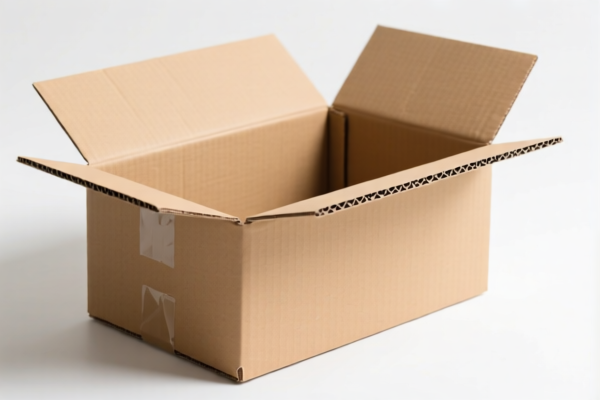
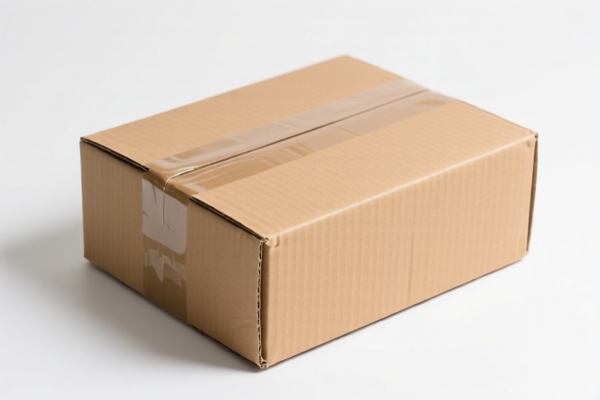
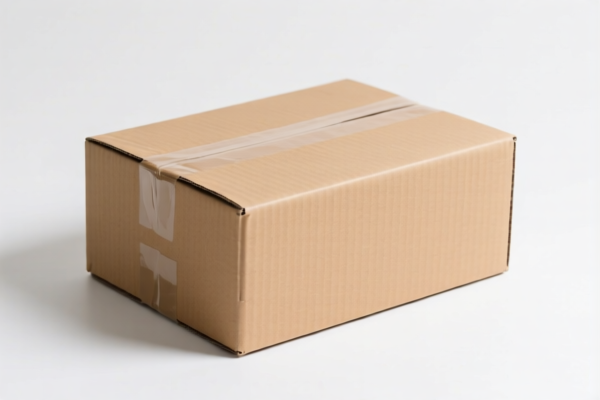
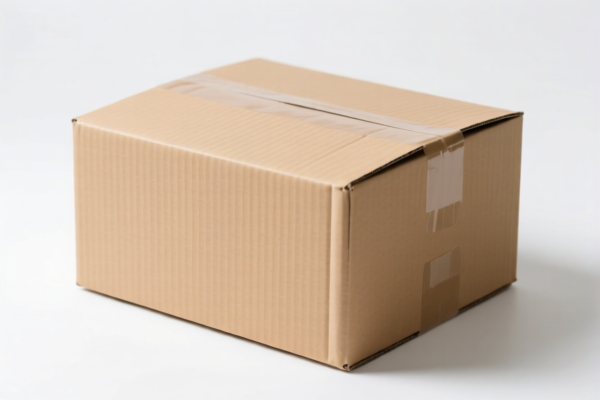
AI分析
📦 Corrugated Cardboard Box
🌐 HS Code Reference & Customs Clearance Guide | 2026 Updated Tariff Analysis | Professional Import Strategy
📌 One, Product Definition & Classification: Do You Really Know What a Corrugated Box Is?
A corrugated cardboard box is a rigid, foldable container made from corrugated paperboard (a fluted layer sandwiched between two flat liners), widely used for packaging, shipping, and storage in global trade. It's not just a "box" — it's a critical logistics component in e-commerce, manufacturing, and supply chain operations.
In international customs classification, corrugated cardboard boxes are not treated as general paper products. They are specifically classified based on material composition, structure, and intended use — especially whether they are pre-formed containers, flat-folded sheets, or raw packaging materials.
⚠️ Key Distinction: - If it’s a pre-assembled box (e.g., shipping box with flaps, ready to use) → HS Code: 4819.10.00.x0
- If it’s flat, folded cardboard (like a blank carton that needs to be assembled) → HS Code: 4805.92.40.10 / 4805.93.40.10
- If it’s corrugated paperboard in roll or sheet form (raw material) → HS Code: 4805.19.20.00 / 4808.10.00.00
📦 Two, HS Code Classification Details (2026 Updated Tariff Authority)
| HS Code | Product Description | Use Case | Material Form | Pre-Assembled? |
|---|---|---|---|---|
4819.10.00.40 |
Boxes made from paper or paperboard, including corrugated cardboard boxes | Ready-to-use shipping containers, retail packaging, industrial crates | Finished box form | ✅ Yes |
4805.92.40.10 |
Folding carton board (flexible, flat cardboard sheets) used for making boxes | Packaging blanks, display boxes, retail packaging components | Flat, folded sheets | ❌ No |
4805.93.40.10 |
Folding carton board (Folding carton board) — same as above | Custom-printed boxes, branded packaging, promotional boxes | Flat, foldable sheets | ❌ No |
4805.19.20.00 |
Corrugated paperboard in roll or sheet form (raw material) | Manufacturing input, box-making factories, industrial suppliers | Unassembled, sheet/roll | ❌ No |
4808.10.00.00 |
Corrugated paperboard with wave-like structure (classified as "corrugated paper") | Raw material for box production, industrial packaging | Flat sheets or rolls | ❌ No |
4819.10.00.20 |
Corrugated cardboard packaging material used as containers or boxes | Pre-formed boxes, shipping containers, bulk packaging | Ready-to-use box | ✅ Yes |
🔍 Critical Insight:
- All six HS Codes apply to corrugated cardboard boxes, but only one applies based on physical form and stage of assembly.
- Misclassification leads to overpayment, delays, or penalties.
💰 Three, 2026 Updated Tariff Breakdown (With Detailed Duty Clauses)
✅ Applicable Country: United States (US)
✅ Origin: China (CN)
✅ Effective Date: November 10, 2025 (and onward)
🎯 1. 4819.10.00.40 — Boxes made from paper/paperboard (ready-to-use)
| Item | Detail |
|---|---|
| Base Duty | 0% (ad valorem) |
| USITC Section 301 Tariff | +25% (from U.S. Trade Act 301) |
| Section 122 Tariff (IEEPA) | +10% (under International Emergency Economic Powers Act) |
| Total Duty | 35.0% |
| Tax Calculation | CIF Value × 35% |
| De Minimis Exemption? | ❌ No (denied under U.S. law) |
| Legal Basis Path | IEEPA:9903.01.25 → IEEPA:9903.01.24 → USITC:4819.10.00.40 → FOOTNOTE:9903.88.01 |
📌 Explanation:
- The 25% USITC tariff is part of the Section 301 China tariffs targeting Chinese-made goods deemed to have unfair trade practices.
- The 10% Section 122 tariff is under IEEPA, which allows the U.S. President to impose emergency tariffs on goods from countries posing national security risks — applied to China since 2025.
- Combined, they create a 35% total tariff — not optional, not negotiable.
🎯 2. 4805.92.40.10 — Folding carton board (flat, foldable sheets)
| Item | Detail |
|---|---|
| Base Duty | 0% |
| USITC Section 301 Tariff | +25% |
| Section 122 Tariff (IEEPA) | +10% |
| Total Duty | 35.0% |
| Tax Calculation | CIF × 35% |
| De Minimis Exemption? | ❌ No |
| Legal Basis Path | IEEPA:9903.01.25 → IEEPA:9903.01.24 → USITC:4805.92.40.10 → FOOTNOTE:9903.88.01 |
📌 Note:
- Even though this is not a finished box, it's still classified as "folding carton board" — a core component of corrugated packaging.
- Same 35% duty applies — no reduction just because it’s not pre-assembled.
🎯 3. 4805.93.40.10 — Folding carton board (same as above)
| Item | Detail |
|---|---|
| Base Duty | 0% |
| USITC Section 301 Tariff | +25% |
| Section 122 Tariff (IEEPA) | +10% |
| Total Duty | 35.0% |
| Tax Calculation | CIF × 35% |
| De Minimis Exemption? | ❌ No |
| Legal Basis Path | IEEPA:9903.01.25 → IEEPA:9903.01.24 → USITC:4805.93.40.10 → FOOTNOTE:9903.88.01 |
📌 Clarification:
-4805.92.40.10and4805.93.40.10are nearly identical in classification.
- Both are flat, foldable paperboard sheets used to make boxes.
- Same 35% duty applies — no distinction in tariff treatment.
🎯 4. 4805.19.20.00 — Corrugated paperboard (in roll or sheet form)
| Item | Detail |
|---|---|
| Base Duty | 0% |
| USITC Section 301 Tariff | +25% |
| Section 122 Tariff (IEEPA) | +10% |
| Total Duty | 35.0% |
| Tax Calculation | CIF × 35% |
| De Minimis Exemption? | ❌ No |
| Legal Basis Path | IEEPA:9903.01.25 → IEEPA:9903.01.24 → USITC:4805.19.20.00 → FOOTNOTE:9903.88.01 |
📌 Important:
- This is raw material — not a box, not a container.
- But still subject to 35% because it’s classified as "corrugated paperboard" under U.S. tariff rules.
🎯 5. 4808.10.00.00 — Corrugated paperboard (wave-shaped structure)
| Item | Detail |
|---|---|
| Base Duty | 0% |
| USITC Section 301 Tariff | +25% |
| Section 122 Tariff (IEEPA) | +10% |
| Total Duty | 35.0% |
| Tax Calculation | CIF × 35% |
| De Minimis Exemption? | ❌ No |
| Legal Basis Path | IEEPA:9903.01.25 → IEEPA:9903.01.24 → USITC:4808.10.00.00 → FOOTNOTE:9903.88.01 |
📌 Why This Matters:
- This HS Code covers corrugated paperboard with a wave-like (fluted) structure — the core material of all corrugated boxes.
- Even if you’re importing raw fluted paper, you’re still hit with 35% duty.
🎯 6. 4819.10.00.20 — Corrugated cardboard packaging material used as containers
| Item | Detail |
|---|---|
| Base Duty | 0% |
| USITC Section 301 Tariff | +25% |
| Section 122 Tariff (IEEPA) | +10% |
| Total Duty | 35.0% |
| Tax Calculation | CIF × 35% |
| De Minimis Exemption? | ❌ No |
| Legal Basis Path | IEEPA:9903.01.25 → IEEPA:9903.01.24 → USITC:4819.10.00.20 → FOOTNOTE:9903.88.01 |
📌 Final Note:
- This is the same 35% duty as4819.10.00.40, but different subheading — used when the box is intended as a container.
- No difference in tax — only in classification logic.
🛠️ Four, Customs Clearance Best Practices (Pro Tips to Avoid Penalties)
✅ 1. Required Documentation (Must-Have List)
| Document | Required? | Why It Matters |
|---|---|---|
| ✅ Commercial Invoice | ✔️ | Must clearly state HS Code, quantity, value, and product description |
| ✅ Packing List | ✔️ | Shows box type, dimensions, material, and whether assembled |
| ✅ Product Photos (with labels) | ✔️ | Helps customs verify material, structure, and form |
| ✅ Material Test Report | ✔️ | Proves corrugated paperboard composition (e.g., fluting type, liner weight) |
| ✅ Certificate of Origin (CO) | ✔️ | If from non-China origin, may qualify for lower duty |
| ✅ Customs Broker Filing | ✔️ | Must be done by a licensed broker in the U.S. |
✅ 2.申报技巧 (申报口诀)
🔥 “Form matters, material counts, box or blank, duty is 35% — no escape!”
| Scenario | Correct HS Code | Wrong Choice | Risk |
|---|---|---|---|
| Ready-to-use box | 4819.10.00.40 or 4819.10.00.20 |
4805.92.40.10 |
Overpay or delay |
| Flat folded box (blank) | 4805.92.40.10 or 4805.93.40.10 |
4819.10.00.40 |
Misclassification |
| Raw corrugated paper (roll) | 4805.19.20.00 or 4808.10.00.00 |
4819.10.00.40 |
Higher duty |
| Mixed shipment (boxes + raw material) | Declare separately | Combine into one line | Audit risk |
✅ 3. Special Cases & Solutions
| Situation | Recommended Action |
|---|---|
| Boxes from Vietnam/Mexico/Thailand | Apply for IEEPA exemption — duty may drop to 0%–5% |
| Custom-printed boxes with branding | Declare as "folding carton board" if flat; "container" if assembled |
| Boxes used in medical/electronics packaging | Still subject to 35% — no special exemption |
| Samples or low-value shipments | No de minimis — even $100 shipment pays 35% |
🌍 Five, Global Market Comparison (2026)
| Country | Recommended HS Code | Duty Rate | Certification | Notes |
|---|---|---|---|---|
| 🇺🇸 USA | 4819.10.00.x0 / 4805.92.40.10 |
35% | None | No de minimis |
| 🇨🇳 China | 4819.10.00.x0 |
5% | CCC | No extra tariffs |
| 🇪🇺 EU | 4819.10.00.00 |
0% (if CE) | CE | No IEEPA/301 |
| 🇦🇺 Australia | 4819.10.00.00 |
5% | RCM | No extra taxes |
| 🇯🇵 Japan | 4819.10.00.00 |
0% | PSE | No additional duties |
📌 Conclusion:
- The U.S. is the only market imposing 35% on corrugated boxes — regardless of form.
- China-origin boxes are hit hardest — no relief unless origin changes.
📌 Six, Common Mistakes & How to Avoid Them (Real-World Pitfalls)
❌ Mistake 1: Treating raw corrugated paper as "just paper" → 4805.19.20.00 → 35%
👉 Fix: Know it’s tariffed as corrugated board, not general paper.
❌ Mistake 2: Declaring flat boxes as "ready-made" → 4819.10.00.40 → wrong
👉 Fix: Use 4805.92.40.10 for flat, foldable sheets.
❌ Mistake 3: Combining boxes and raw material in one invoice
👉 Fix: Declare separately — risk of audit or penalty.
❌ Mistake 4: Not providing photos or test reports
👉 Fix: Always include clear visuals and material specs.
✅ Correct Declaration Example:
“Corrugated cardboard box, 12x10x8 in, pre-assembled, for shipping, made from fluted paperboard, HS Code: 4819.10.00.40, CIF: $5.20/unit, CO: China, FCC/CE certified”
🎯 Seven, Final Verdict: Precision Pays Off
🎯 Remember the Rule:
🔹 “Form defines code, code defines duty — 35% is the ceiling for China-origin corrugated boxes.”
🔹 “One wrong HS Code = 35% tax on every dollar.”
📌 Pro Tip:
✅ Apply for an Advance Ruling (Pre-Clearance) if you’re importing large volumes.
✅ Change origin to Vietnam, Mexico, or Thailand — can reduce duty to 0%–5%.
✅ Use a U.S.-licensed customs broker — they know the IEEPA & Section 301 nuances.
📣 Take Action Now:
📞 Contact a licensed customs broker + submit product photos + specs + invoice
🚀 Get your HS Code pre-confirmed — avoid delays, penalties, and surprise bills!
✨ Smart Importing Starts with Accurate Classification!
💼 Your profit margin depends on getting this right — once.
用户评价
关于 HS 编码归类
协调制度(HS)是由世界海关组织(WCO)制定的国际贸易商品分类标准。全球 200 多个国家采用 HS 系统作为海关关税、贸易统计和进出口监管的基础。
每个 HS 编码遵循以下层级结构:
- 章(2 位)——商品大类(例如:第 84 章:机器和机械设备)
- 品目(4 位)——章内的更具体分类
- 子目(6 位)——国际通用细分,所有 WCO 成员国统一使用
- 本国细分(8-10 位)——各国自行扩展的细分编码,如美国 HTSUS 10 位编码
正确的 HS 编码归类对于顺利通关、准确缴纳关税和遵守贸易法规至关重要。错误归类可能导致海关延误、多缴关税或罚款。
从CN进口到US时,适用的关税税率可能包括:
- 最惠国(MFN)税率——适用于 WTO 成员国的标准关税税率
- 普通税率——适用于无贸易协定国家
- 贸易救济关税——附加关税,如 301 条款(反倾销)、232 条款(国家安全)或反补贴税
本页内容仅供参考。如需正式归类,请咨询当地海关或持牌报关代理。