Corrugated Cardboard Box
CN → US| HS Code | Tariff Rate | Origin | Destination | Doc |
|---|---|---|---|---|
| 4819100040 | 35.0% | CN | US | Official Doc |
| 4805924010 | 35.0% | CN | US | Official Doc |
| 4805934010 | 35.0% | CN | US | Official Doc |
| 4805192000 | 35.0% | CN | US | Official Doc |
| 4808100000 | 35.0% | CN | US | Official Doc |
Product Images
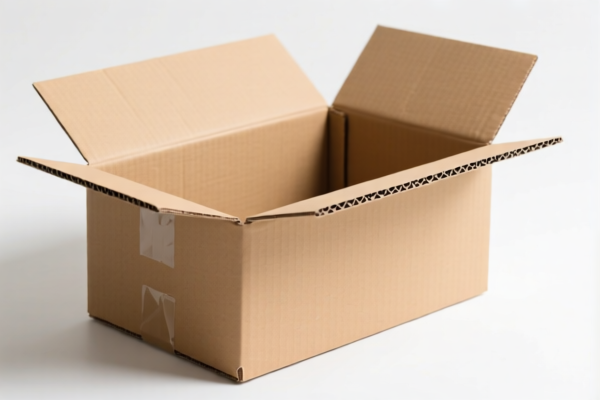
AI Analysis
📦 Corrugated Cardboard Box
🌐 HS Code Reference & Customs Clearance Guide | 2026 Updated Tariff Analysis | Professional Import Strategy
📌 One, Product Definition & Classification: Do You Really Know What a Corrugated Box Is?
A corrugated cardboard box is a rigid, foldable container made from corrugated paperboard (a fluted layer sandwiched between two flat liners), widely used for packaging, shipping, and storage in global trade. It's not just a "box" — it's a critical logistics component in e-commerce, manufacturing, and supply chain operations.
In international customs classification, corrugated cardboard boxes are not treated as general paper products. They are specifically classified based on material composition, structure, and intended use — especially whether they are pre-formed containers, flat-folded sheets, or raw packaging materials.
⚠️ Key Distinction: - If it’s a pre-assembled box (e.g., shipping box with flaps, ready to use) → HS Code: 4819.10.00.x0
- If it’s flat, folded cardboard (like a blank carton that needs to be assembled) → HS Code: 4805.92.40.10 / 4805.93.40.10
- If it’s corrugated paperboard in roll or sheet form (raw material) → HS Code: 4805.19.20.00 / 4808.10.00.00
📦 Two, HS Code Classification Details (2026 Updated Tariff Authority)
| HS Code | Product Description | Use Case | Material Form | Pre-Assembled? |
|---|---|---|---|---|
4819.10.00.40 |
Boxes made from paper or paperboard, including corrugated cardboard boxes | Ready-to-use shipping containers, retail packaging, industrial crates | Finished box form | ✅ Yes |
4805.92.40.10 |
Folding carton board (flexible, flat cardboard sheets) used for making boxes | Packaging blanks, display boxes, retail packaging components | Flat, folded sheets | ❌ No |
4805.93.40.10 |
Folding carton board (Folding carton board) — same as above | Custom-printed boxes, branded packaging, promotional boxes | Flat, foldable sheets | ❌ No |
4805.19.20.00 |
Corrugated paperboard in roll or sheet form (raw material) | Manufacturing input, box-making factories, industrial suppliers | Unassembled, sheet/roll | ❌ No |
4808.10.00.00 |
Corrugated paperboard with wave-like structure (classified as "corrugated paper") | Raw material for box production, industrial packaging | Flat sheets or rolls | ❌ No |
4819.10.00.20 |
Corrugated cardboard packaging material used as containers or boxes | Pre-formed boxes, shipping containers, bulk packaging | Ready-to-use box | ✅ Yes |
🔍 Critical Insight:
- All six HS Codes apply to corrugated cardboard boxes, but only one applies based on physical form and stage of assembly.
- Misclassification leads to overpayment, delays, or penalties.
💰 Three, 2026 Updated Tariff Breakdown (With Detailed Duty Clauses)
✅ Applicable Country: United States (US)
✅ Origin: China (CN)
✅ Effective Date: November 10, 2025 (and onward)
🎯 1. 4819.10.00.40 — Boxes made from paper/paperboard (ready-to-use)
| Item | Detail |
|---|---|
| Base Duty | 0% (ad valorem) |
| USITC Section 301 Tariff | +25% (from U.S. Trade Act 301) |
| Section 122 Tariff (IEEPA) | +10% (under International Emergency Economic Powers Act) |
| Total Duty | 35.0% |
| Tax Calculation | CIF Value × 35% |
| De Minimis Exemption? | ❌ No (denied under U.S. law) |
| Legal Basis Path | IEEPA:9903.01.25 → IEEPA:9903.01.24 → USITC:4819.10.00.40 → FOOTNOTE:9903.88.01 |
📌 Explanation:
- The 25% USITC tariff is part of the Section 301 China tariffs targeting Chinese-made goods deemed to have unfair trade practices.
- The 10% Section 122 tariff is under IEEPA, which allows the U.S. President to impose emergency tariffs on goods from countries posing national security risks — applied to China since 2025.
- Combined, they create a 35% total tariff — not optional, not negotiable.
🎯 2. 4805.92.40.10 — Folding carton board (flat, foldable sheets)
| Item | Detail |
|---|---|
| Base Duty | 0% |
| USITC Section 301 Tariff | +25% |
| Section 122 Tariff (IEEPA) | +10% |
| Total Duty | 35.0% |
| Tax Calculation | CIF × 35% |
| De Minimis Exemption? | ❌ No |
| Legal Basis Path | IEEPA:9903.01.25 → IEEPA:9903.01.24 → USITC:4805.92.40.10 → FOOTNOTE:9903.88.01 |
📌 Note:
- Even though this is not a finished box, it's still classified as "folding carton board" — a core component of corrugated packaging.
- Same 35% duty applies — no reduction just because it’s not pre-assembled.
🎯 3. 4805.93.40.10 — Folding carton board (same as above)
| Item | Detail |
|---|---|
| Base Duty | 0% |
| USITC Section 301 Tariff | +25% |
| Section 122 Tariff (IEEPA) | +10% |
| Total Duty | 35.0% |
| Tax Calculation | CIF × 35% |
| De Minimis Exemption? | ❌ No |
| Legal Basis Path | IEEPA:9903.01.25 → IEEPA:9903.01.24 → USITC:4805.93.40.10 → FOOTNOTE:9903.88.01 |
📌 Clarification:
-4805.92.40.10and4805.93.40.10are nearly identical in classification.
- Both are flat, foldable paperboard sheets used to make boxes.
- Same 35% duty applies — no distinction in tariff treatment.
🎯 4. 4805.19.20.00 — Corrugated paperboard (in roll or sheet form)
| Item | Detail |
|---|---|
| Base Duty | 0% |
| USITC Section 301 Tariff | +25% |
| Section 122 Tariff (IEEPA) | +10% |
| Total Duty | 35.0% |
| Tax Calculation | CIF × 35% |
| De Minimis Exemption? | ❌ No |
| Legal Basis Path | IEEPA:9903.01.25 → IEEPA:9903.01.24 → USITC:4805.19.20.00 → FOOTNOTE:9903.88.01 |
📌 Important:
- This is raw material — not a box, not a container.
- But still subject to 35% because it’s classified as "corrugated paperboard" under U.S. tariff rules.
🎯 5. 4808.10.00.00 — Corrugated paperboard (wave-shaped structure)
| Item | Detail |
|---|---|
| Base Duty | 0% |
| USITC Section 301 Tariff | +25% |
| Section 122 Tariff (IEEPA) | +10% |
| Total Duty | 35.0% |
| Tax Calculation | CIF × 35% |
| De Minimis Exemption? | ❌ No |
| Legal Basis Path | IEEPA:9903.01.25 → IEEPA:9903.01.24 → USITC:4808.10.00.00 → FOOTNOTE:9903.88.01 |
📌 Why This Matters:
- This HS Code covers corrugated paperboard with a wave-like (fluted) structure — the core material of all corrugated boxes.
- Even if you’re importing raw fluted paper, you’re still hit with 35% duty.
🎯 6. 4819.10.00.20 — Corrugated cardboard packaging material used as containers
| Item | Detail |
|---|---|
| Base Duty | 0% |
| USITC Section 301 Tariff | +25% |
| Section 122 Tariff (IEEPA) | +10% |
| Total Duty | 35.0% |
| Tax Calculation | CIF × 35% |
| De Minimis Exemption? | ❌ No |
| Legal Basis Path | IEEPA:9903.01.25 → IEEPA:9903.01.24 → USITC:4819.10.00.20 → FOOTNOTE:9903.88.01 |
📌 Final Note:
- This is the same 35% duty as4819.10.00.40, but different subheading — used when the box is intended as a container.
- No difference in tax — only in classification logic.
🛠️ Four, Customs Clearance Best Practices (Pro Tips to Avoid Penalties)
✅ 1. Required Documentation (Must-Have List)
| Document | Required? | Why It Matters |
|---|---|---|
| ✅ Commercial Invoice | ✔️ | Must clearly state HS Code, quantity, value, and product description |
| ✅ Packing List | ✔️ | Shows box type, dimensions, material, and whether assembled |
| ✅ Product Photos (with labels) | ✔️ | Helps customs verify material, structure, and form |
| ✅ Material Test Report | ✔️ | Proves corrugated paperboard composition (e.g., fluting type, liner weight) |
| ✅ Certificate of Origin (CO) | ✔️ | If from non-China origin, may qualify for lower duty |
| ✅ Customs Broker Filing | ✔️ | Must be done by a licensed broker in the U.S. |
✅ 2.申报技巧 (申报口诀)
🔥 “Form matters, material counts, box or blank, duty is 35% — no escape!”
| Scenario | Correct HS Code | Wrong Choice | Risk |
|---|---|---|---|
| Ready-to-use box | 4819.10.00.40 or 4819.10.00.20 |
4805.92.40.10 |
Overpay or delay |
| Flat folded box (blank) | 4805.92.40.10 or 4805.93.40.10 |
4819.10.00.40 |
Misclassification |
| Raw corrugated paper (roll) | 4805.19.20.00 or 4808.10.00.00 |
4819.10.00.40 |
Higher duty |
| Mixed shipment (boxes + raw material) | Declare separately | Combine into one line | Audit risk |
✅ 3. Special Cases & Solutions
| Situation | Recommended Action |
|---|---|
| Boxes from Vietnam/Mexico/Thailand | Apply for IEEPA exemption — duty may drop to 0%–5% |
| Custom-printed boxes with branding | Declare as "folding carton board" if flat; "container" if assembled |
| Boxes used in medical/electronics packaging | Still subject to 35% — no special exemption |
| Samples or low-value shipments | No de minimis — even $100 shipment pays 35% |
🌍 Five, Global Market Comparison (2026)
| Country | Recommended HS Code | Duty Rate | Certification | Notes |
|---|---|---|---|---|
| 🇺🇸 USA | 4819.10.00.x0 / 4805.92.40.10 |
35% | None | No de minimis |
| 🇨🇳 China | 4819.10.00.x0 |
5% | CCC | No extra tariffs |
| 🇪🇺 EU | 4819.10.00.00 |
0% (if CE) | CE | No IEEPA/301 |
| 🇦🇺 Australia | 4819.10.00.00 |
5% | RCM | No extra taxes |
| 🇯🇵 Japan | 4819.10.00.00 |
0% | PSE | No additional duties |
📌 Conclusion:
- The U.S. is the only market imposing 35% on corrugated boxes — regardless of form.
- China-origin boxes are hit hardest — no relief unless origin changes.
📌 Six, Common Mistakes & How to Avoid Them (Real-World Pitfalls)
❌ Mistake 1: Treating raw corrugated paper as "just paper" → 4805.19.20.00 → 35%
👉 Fix: Know it’s tariffed as corrugated board, not general paper.
❌ Mistake 2: Declaring flat boxes as "ready-made" → 4819.10.00.40 → wrong
👉 Fix: Use 4805.92.40.10 for flat, foldable sheets.
❌ Mistake 3: Combining boxes and raw material in one invoice
👉 Fix: Declare separately — risk of audit or penalty.
❌ Mistake 4: Not providing photos or test reports
👉 Fix: Always include clear visuals and material specs.
✅ Correct Declaration Example:
“Corrugated cardboard box, 12x10x8 in, pre-assembled, for shipping, made from fluted paperboard, HS Code: 4819.10.00.40, CIF: $5.20/unit, CO: China, FCC/CE certified”
🎯 Seven, Final Verdict: Precision Pays Off
🎯 Remember the Rule:
🔹 “Form defines code, code defines duty — 35% is the ceiling for China-origin corrugated boxes.”
🔹 “One wrong HS Code = 35% tax on every dollar.”
📌 Pro Tip:
✅ Apply for an Advance Ruling (Pre-Clearance) if you’re importing large volumes.
✅ Change origin to Vietnam, Mexico, or Thailand — can reduce duty to 0%–5%.
✅ Use a U.S.-licensed customs broker — they know the IEEPA & Section 301 nuances.
📣 Take Action Now:
📞 Contact a licensed customs broker + submit product photos + specs + invoice
🚀 Get your HS Code pre-confirmed — avoid delays, penalties, and surprise bills!
✨ Smart Importing Starts with Accurate Classification!
💼 Your profit margin depends on getting this right — once.
Customer Reviews
About HS Code Classification
The Harmonized System (HS) is an internationally standardized nomenclature developed by the World Customs Organization (WCO) to classify traded products. Over 200 countries use the HS system as the basis for customs tariffs, trade statistics, and import/export regulations.
Each HS code follows a hierarchical structure:
- Chapter (2 digits) — Broad category of goods (e.g., Chapter 84: Machinery and Mechanical Appliances)
- Heading (4 digits) — More specific grouping within the chapter
- Subheading (6 digits) — Internationally standardized breakdown, used by all WCO member countries
- National subdivisions (8-10 digits) — Country-specific extensions for further classification, such as US HTSUS 10-digit codes
Correct HS code classification is essential for smooth customs clearance, accurate duty payment, and compliance with trade regulations. Misclassification can lead to customs delays, overpayment of duties, or penalties.
When importing from CN to US, the applicable tariff rates may include:
- Most-Favored-Nation (MFN) rate — The standard duty rate applied to WTO members
- General rate — Applied to countries without trade agreements
- Trade remedy duties — Additional tariffs such as Section 301 (anti-dumping), Section 232 (national security), or countervailing duties
The information provided on this page is for reference purposes only. For official classification, please consult with your local customs authority or a licensed customs broker.