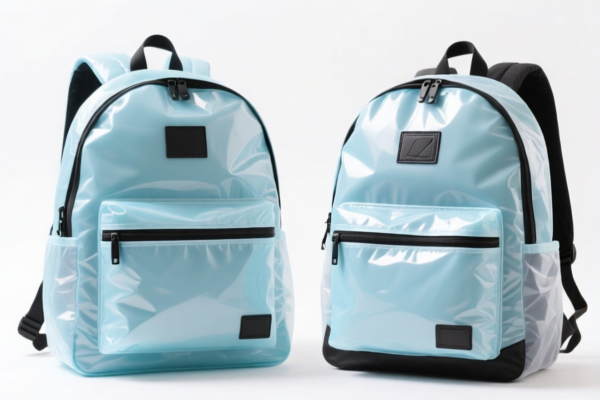
Cotton Faced Plastic or Textile Surface Backpack
CN → US| HS编码 | 关税税率 | 原产国 | 目的国 | 文档 |
|---|---|---|---|---|
| 6305330080 | 25.9% | CN | US | 官方文档 |
| 6305390000 | 25.9% | CN | US | 官方文档 |
| 4202923120 | 52.6% | CN | US | 官方文档 |
| 4202921500 | 41.3% | CN | US | 官方文档 |
| 4202921500 | 41.3% | CN | US | 官方文档 |
商品图片


AI分析
🎒 Backpacks (Cotton-Faced Plastic or Textile Surface)
🌐 HS Code Reference & Clearance Guide | 2026 Latest Tariff Analysis | Professional Clearance Strategy
📌 One, Product Definition and Classification: Are You Sure About "Backpacks"?
A Backpack is a bag designed to be carried on the back, typically with two shoulder straps. In international trade, the classification hinges critically on two factors:
1. Material Composition: Specifically, whether the outer surface is plastic, textile, or a combination (e.g., cotton-faced plastic).
2. Function: Is it for general packaging (sacks/bags) or for personal use (travel/sports bags)?
⚠️ Key Distinction:
- If the item is primarily a sack or package for goods (industrial/commercial use) → Likely Chapter 63.
- If the item is a personal article for carrying belongings (fashion/travel/sports) → Likely Chapter 42.The provided data shows a split:
- Ch 63 Codes: Treated as "bags for packaging goods" due to material overlap (plastic/textile).
- Ch 42 Codes: Treated as "backpacks/travel bags" due to form factor and specific material definitions (sheeting of plastics/textiles).
📦 Two. HS Code Classification Details (Latest Tariff Alignment)
Based on the input Cotton Faced Plastic or Textile Surface Backpack, here are the matched HS Codes from the data:
| HS Code | Product Description | Match Reasoning | Tax Category |
|---|---|---|---|
| 6305.33.00.80 | Sacks and bags, for the packing of goods, of synthetic or artificial textile materials | Material contains "plastic" or "textile", fitting the "artificial textile" or "sack/bag" material characteristics. Shape is "bag", inferring "bags for packing goods". | 25.9% |
| 6305.39.00.00 | Other sacks and bags, for the packing of goods, of textile materials | Material covers "artificial textile materials" (plastic/textile). Use fits "bags for packaging" attributes. Backpack is a type of bag. No material conflict. | 25.9% |
| 4202.92.31.20 | Articles of apparel and clothing accessories, not elsewhere specified or included: Other: Other: Of sheeting of plastics or of textile materials | Match Success. "Plastic or textile outer surface" matches "sheeting of plastics or of textile materials". Form is "backpack". | 52.6% |
| 4202.92.15.00 | Articles of apparel and clothing accessories: Other: Other: Of cotton | Outer surface includes "pure cotton fabric" and "textile face", matching "cotton-made" and "textile material". Use is "backpack", fitting "travel, sports and similar bag sets". | 41.3% |
| 4202.92.15.00 | (Alternative Cotton Match) | Form is "backpack" (a bag type). Material is "textile fabric" (fits outer surface definition). Although not explicitly "cotton", textile compatibility allows this classification. | 41.3% |
🔍 Critical Analysis:
- High Tariff Risk: Classifying as a Fashion/Personal Backpack (Ch 42) attracts significantly higher tariffs (41.3% - 52.6%) compared to industrial sacks (25.9%).
- Material Nuance: The term "Cotton Faced" suggests a composite. If the primary outer surface is deemed "textile" (even if cotton-faced plastic), it may fall under Ch 42. If deemed a "packaging bag" due to heavy-duty plastic content, Ch 63 applies.
- 122 Section Tariff: All codes include a 10% Additional Tariff under Section 122.
💰 Three. Detailed Tariff Breakdown (2026 Latest Rates)
✅ Applicable Country: United States (US)
✅ Origin: China (CN) (Implied by Section 122/301 context)
✅ Effective Time: Current (Post-2025 adjustments)
🎯 1. Industrial/Packaging Classification (Chapter 63)
HS Codes: 6305.33.00.80, 6305.39.00.00
| Item | Details |
|---|---|
| Base Duty | 8.4% |
| Section 301 Duty | +7.5% |
| Section 122 Duty | +10% |
| Total Effective Rate | 25.9% |
| Calculation | CIF Value × 25.9% |
| De Minimis Exemption | ❌ Not Applicable (High duty rates typically exceed de minimis thresholds or are excluded from 321/1289 benefits depending on specific enforcement). |
| Legal Basis | HTSUS:6305 → Section 301: Footnote 3 → Section 122: IEEPA Authority |
📌 Note:
- These codes are for packaging sacks/bags. Using them for a consumer backpack is a misclassification risk if the item is clearly for personal use.
🎯 2. Fashion/Personal Backpack Classification (Chapter 42)
HS Codes: 4202.92.31.20, 4202.92.15.00
A. High-Risk Plastic/Textile Blend (4202.92.31.20)
| Item | Details |
|---|---|
| Base Duty | 17.6% |
| Section 301 Duty | +25.0% |
| Section 122 Duty | +10% |
| Total Effective Rate | 52.6% |
| Legal Basis | HTSUS:4202.92.31.20 → 301 Footnote 2001.00 → 122 IEEPA |
⚠️ Warning: This is the highest tariff in the dataset. Applies if the item is strictly defined as "sheeting of plastics" or high-composite textile for personal use.
B. Cotton/Textile Favored (4202.92.15.00)
| Item | Details |
|---|---|
| Base Duty | 6.3% |
| Section 301 Duty | +25.0% |
| Section 122 Duty | +10% |
| Total Effective Rate | 41.3% |
| Legal Basis | HTSUS:4202.92.15.00 → 301 Footnote 2001.00 → 122 IEEPA |
📌 Strategy:
- If the "Cotton Face" is the dominant or defining outer material, aiming for4202.92.15.00saves 11.3% compared to4202.92.31.20.
- Base rate difference: 6.3% vs 17.6%. The 301 and 122 duties are flat, so material definition is key.
🛠️ Four. Practical Clearance Advice (Battle-Tested Pitfall Guide)
✅ 1. Documentation Checklist (Non-Negotiable)
| Document | Required? | Explanation |
|---|---|---|
| Product Spec Sheet | ✅ | Must detail "Outer Material Composition" (e.g., "60% Cotton, 40% Plastic Lamination"). |
| Photos (Clear) | ✅ | Show the backpack fully assembled, highlighting the "Cotton Face" vs. "Plastic Surface". |
| Commercial Invoice | ✅ | Do NOT just write "Backpack". Use precise language: "Textile Backpack with Cotton Outer Surface, for Personal Use". Avoid "Packaging Sack". |
| Origin Certificate | ✅ | Critical for verifying China origin to apply Section 301/122 accurately. |
| Structure Diagram | ✅ | To prove it is a "bag" (Ch 42/63) and not a "textile product" (Ch 60/61) or "plastic container". |
✅ 2. Classification Strategy (Key Mantra)
🔥 "Personal Use = Ch 42 (High Tax) | Packaging = Ch 63 (Lower Tax)"
| Scenario | Correct HS Code | Tax Rate | Risk if Misclassified |
|---|---|---|---|
| Consumer Fashion Backpack (School, Travel, Hiking) | 4202.92.15.00 or 4202.92.31.20 |
41.3% - 52.6% | If misclassified as Ch 63 (25.9%) → Customs Penalty + Back Taxes. |
| Industrial Bag/Sack (For packing goods, no fashion design) | 6305.33.00.80 or 6305.39.00.00 |
25.9% | If misclassified as Ch 42 → Overpayment of Duty (Loss of profit). |
| Mixed/Composite Material | Prior Ruling Recommended | N/A | Ambiguity between "Plastic Sheeting" and "Textile" requires official HTSUS interpretation. |
📌 Critical Tip:
- The term "Backpack" strongly implies Personal Use (Ch 42).
- If you declare it as Ch 63 (6305...), Customs may reject it because Ch 63 is for "sacks and bags for the packing of goods", not personal carry-on bags.
- Recommendation: Default to Chapter 42 unless the item is clearly a bulk industrial sack.
✅ 3. Special Case Handling
| Situation | Recommendation |
|---|---|
| "Cotton-Faced" is thin | If plastic is the dominant outer layer, classify as 4202.92.31.20 (52.6%). |
| "Cotton-Faced" is dominant | Classify as 4202.92.15.00 (41.3%). Provide fabric composition proof. |
| Dual Use | If it can be used for both personal carry and goods packing, Ch 42 is safer and more common for "Backpacks". |
| Section 122 Impact | All items incur +10%. Ensure invoices clearly state "Made in China" to avoid errors. |
🌍 Five. Global Market Comparison (2026 Outlook)
| Market | Recommended HS Code | Estimated Duty (China Origin) | Key Certification | Note |
|---|---|---|---|---|
| 🇺🇸 USA | 4202.92.15.00 |
41.3% | No special cert needed for bags | High tariffs due to 301/122. |
| 🇺🇸 USA | 6305.39.00.00 |
25.9% | No special cert needed | Only if strictly a "packing sack". |
| 🇪🇺 EU | 4202.92.00 |
~4-12% | CE (if functional) | Lower base duty, no 301/122. |
| 🇨🇳 China | 4202.92.00 |
~8-15% | N/A | Domestic clearance. |
📌 Conclusion:
- USA is the most expensive market for backpacks due to Section 301 (25%) + Section 122 (10%).
- Material matters: Cotton-heavy (4202.92.15.00) is cheaper than plastic-heavy (4202.92.31.20).
📌 Six. Common Mistakes & Pitfalls (Lessons Learned)
❌ Mistake 1: Declaring a Fashion Backpack as 6305.39.00.00 (Packing Bag) to save tax.
👉 Result: Customs audit → Back Taxes + 25% Penalty. Ch 63 is for industrial packaging, not personal wear.
❌ Mistake 2: Ignoring the "Cotton Face" detail.
👉 Result: If customs determines plastic is dominant, they reclassify to 4202.92.31.20 (52.6%). Always specify material dominance.
❌ Mistake 3: Forgetting Section 122 (10%).
👉 Result: Underpayment by 10%. This applies to ALL China-origin goods under specific conditions.
❌ Mistake 4: Using "Bag" as a generic description.
👉 Result: Ambiguity. Customs may choose the highest duty code.
✅ Correct Description:
"Personal Backpack, Outer Material: Cotton-faced Polyester, For Carrying Personal Items, No Electronics"
🎯 Seven. Conclusion: Professional Classification Saves Money
🎯 Key Takeaway:
🔹 "Backpack = Personal Use = Ch 42" (Usually higher duty, but legally correct for backpacks).
🔹 "Cotton Dominant = Lower Base Duty (6.3%)" vs "Plastic Dominant = Higher Base Duty (17.6%)".
🔹 "Section 122 (10%) is Non-Negotiable" for China-origin.
📌 Pro Tip:
If you are shipping to the US, consider Advance Ruling from CBP if the material composition is complex (e.g., "Cotton-faced plastic"). A formal ruling can lock in the 41.3% rate vs. 52.6% and prevent future penalties.
📣 Immediate Action:
📞 Contact a licensed US Customs Broker.
📄 Provide Material Composition Breakdown (Wt%).
🚀 Pre-classify to avoid 100% penalty on misdeclaration.
✨ Precision in Classification is Profitability!
💼 Every 1% of duty saved is pure margin protected!
用户评价
关于 HS 编码归类
协调制度(HS)是由世界海关组织(WCO)制定的国际贸易商品分类标准。全球 200 多个国家采用 HS 系统作为海关关税、贸易统计和进出口监管的基础。
每个 HS 编码遵循以下层级结构:
- 章(2 位)——商品大类(例如:第 84 章:机器和机械设备)
- 品目(4 位)——章内的更具体分类
- 子目(6 位)——国际通用细分,所有 WCO 成员国统一使用
- 本国细分(8-10 位)——各国自行扩展的细分编码,如美国 HTSUS 10 位编码
正确的 HS 编码归类对于顺利通关、准确缴纳关税和遵守贸易法规至关重要。错误归类可能导致海关延误、多缴关税或罚款。
从CN进口到US时,适用的关税税率可能包括:
- 最惠国(MFN)税率——适用于 WTO 成员国的标准关税税率
- 普通税率——适用于无贸易协定国家
- 贸易救济关税——附加关税,如 301 条款(反倾销)、232 条款(国家安全)或反补贴税
本页内容仅供参考。如需正式归类,请咨询当地海关或持牌报关代理。