Cotton Faced Plastic or Textile Surface Backpack
CN → US| HS Code | Tariff Rate | Origin | Destination | Doc |
|---|---|---|---|---|
| 6305330080 | 25.9% | CN | US | Official Doc |
| 6305390000 | 25.9% | CN | US | Official Doc |
| 4202923120 | 52.6% | CN | US | Official Doc |
| 4202921500 | 41.3% | CN | US | Official Doc |
| 4202921500 | 41.3% | CN | US | Official Doc |
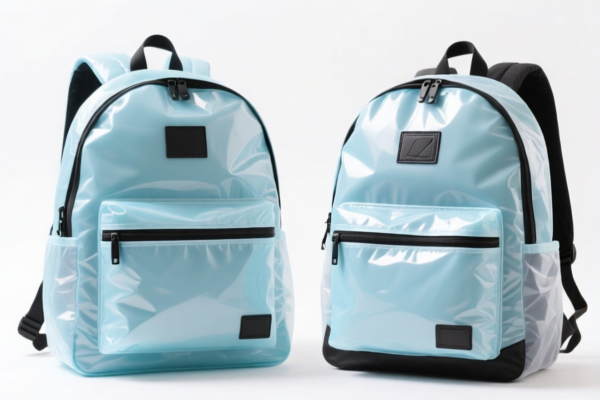
Product Images


AI Analysis
🎒 Backpacks (Cotton-Faced Plastic or Textile Surface)
🌐 HS Code Reference & Clearance Guide | 2026 Latest Tariff Analysis | Professional Clearance Strategy
📌 One, Product Definition and Classification: Are You Sure About "Backpacks"?
A Backpack is a bag designed to be carried on the back, typically with two shoulder straps. In international trade, the classification hinges critically on two factors:
1. Material Composition: Specifically, whether the outer surface is plastic, textile, or a combination (e.g., cotton-faced plastic).
2. Function: Is it for general packaging (sacks/bags) or for personal use (travel/sports bags)?
⚠️ Key Distinction:
- If the item is primarily a sack or package for goods (industrial/commercial use) → Likely Chapter 63.
- If the item is a personal article for carrying belongings (fashion/travel/sports) → Likely Chapter 42.The provided data shows a split:
- Ch 63 Codes: Treated as "bags for packaging goods" due to material overlap (plastic/textile).
- Ch 42 Codes: Treated as "backpacks/travel bags" due to form factor and specific material definitions (sheeting of plastics/textiles).
📦 Two. HS Code Classification Details (Latest Tariff Alignment)
Based on the input Cotton Faced Plastic or Textile Surface Backpack, here are the matched HS Codes from the data:
| HS Code | Product Description | Match Reasoning | Tax Category |
|---|---|---|---|
| 6305.33.00.80 | Sacks and bags, for the packing of goods, of synthetic or artificial textile materials | Material contains "plastic" or "textile", fitting the "artificial textile" or "sack/bag" material characteristics. Shape is "bag", inferring "bags for packing goods". | 25.9% |
| 6305.39.00.00 | Other sacks and bags, for the packing of goods, of textile materials | Material covers "artificial textile materials" (plastic/textile). Use fits "bags for packaging" attributes. Backpack is a type of bag. No material conflict. | 25.9% |
| 4202.92.31.20 | Articles of apparel and clothing accessories, not elsewhere specified or included: Other: Other: Of sheeting of plastics or of textile materials | Match Success. "Plastic or textile outer surface" matches "sheeting of plastics or of textile materials". Form is "backpack". | 52.6% |
| 4202.92.15.00 | Articles of apparel and clothing accessories: Other: Other: Of cotton | Outer surface includes "pure cotton fabric" and "textile face", matching "cotton-made" and "textile material". Use is "backpack", fitting "travel, sports and similar bag sets". | 41.3% |
| 4202.92.15.00 | (Alternative Cotton Match) | Form is "backpack" (a bag type). Material is "textile fabric" (fits outer surface definition). Although not explicitly "cotton", textile compatibility allows this classification. | 41.3% |
🔍 Critical Analysis:
- High Tariff Risk: Classifying as a Fashion/Personal Backpack (Ch 42) attracts significantly higher tariffs (41.3% - 52.6%) compared to industrial sacks (25.9%).
- Material Nuance: The term "Cotton Faced" suggests a composite. If the primary outer surface is deemed "textile" (even if cotton-faced plastic), it may fall under Ch 42. If deemed a "packaging bag" due to heavy-duty plastic content, Ch 63 applies.
- 122 Section Tariff: All codes include a 10% Additional Tariff under Section 122.
💰 Three. Detailed Tariff Breakdown (2026 Latest Rates)
✅ Applicable Country: United States (US)
✅ Origin: China (CN) (Implied by Section 122/301 context)
✅ Effective Time: Current (Post-2025 adjustments)
🎯 1. Industrial/Packaging Classification (Chapter 63)
HS Codes: 6305.33.00.80, 6305.39.00.00
| Item | Details |
|---|---|
| Base Duty | 8.4% |
| Section 301 Duty | +7.5% |
| Section 122 Duty | +10% |
| Total Effective Rate | 25.9% |
| Calculation | CIF Value × 25.9% |
| De Minimis Exemption | ❌ Not Applicable (High duty rates typically exceed de minimis thresholds or are excluded from 321/1289 benefits depending on specific enforcement). |
| Legal Basis | HTSUS:6305 → Section 301: Footnote 3 → Section 122: IEEPA Authority |
📌 Note:
- These codes are for packaging sacks/bags. Using them for a consumer backpack is a misclassification risk if the item is clearly for personal use.
🎯 2. Fashion/Personal Backpack Classification (Chapter 42)
HS Codes: 4202.92.31.20, 4202.92.15.00
A. High-Risk Plastic/Textile Blend (4202.92.31.20)
| Item | Details |
|---|---|
| Base Duty | 17.6% |
| Section 301 Duty | +25.0% |
| Section 122 Duty | +10% |
| Total Effective Rate | 52.6% |
| Legal Basis | HTSUS:4202.92.31.20 → 301 Footnote 2001.00 → 122 IEEPA |
⚠️ Warning: This is the highest tariff in the dataset. Applies if the item is strictly defined as "sheeting of plastics" or high-composite textile for personal use.
B. Cotton/Textile Favored (4202.92.15.00)
| Item | Details |
|---|---|
| Base Duty | 6.3% |
| Section 301 Duty | +25.0% |
| Section 122 Duty | +10% |
| Total Effective Rate | 41.3% |
| Legal Basis | HTSUS:4202.92.15.00 → 301 Footnote 2001.00 → 122 IEEPA |
📌 Strategy:
- If the "Cotton Face" is the dominant or defining outer material, aiming for4202.92.15.00saves 11.3% compared to4202.92.31.20.
- Base rate difference: 6.3% vs 17.6%. The 301 and 122 duties are flat, so material definition is key.
🛠️ Four. Practical Clearance Advice (Battle-Tested Pitfall Guide)
✅ 1. Documentation Checklist (Non-Negotiable)
| Document | Required? | Explanation |
|---|---|---|
| Product Spec Sheet | ✅ | Must detail "Outer Material Composition" (e.g., "60% Cotton, 40% Plastic Lamination"). |
| Photos (Clear) | ✅ | Show the backpack fully assembled, highlighting the "Cotton Face" vs. "Plastic Surface". |
| Commercial Invoice | ✅ | Do NOT just write "Backpack". Use precise language: "Textile Backpack with Cotton Outer Surface, for Personal Use". Avoid "Packaging Sack". |
| Origin Certificate | ✅ | Critical for verifying China origin to apply Section 301/122 accurately. |
| Structure Diagram | ✅ | To prove it is a "bag" (Ch 42/63) and not a "textile product" (Ch 60/61) or "plastic container". |
✅ 2. Classification Strategy (Key Mantra)
🔥 "Personal Use = Ch 42 (High Tax) | Packaging = Ch 63 (Lower Tax)"
| Scenario | Correct HS Code | Tax Rate | Risk if Misclassified |
|---|---|---|---|
| Consumer Fashion Backpack (School, Travel, Hiking) | 4202.92.15.00 or 4202.92.31.20 |
41.3% - 52.6% | If misclassified as Ch 63 (25.9%) → Customs Penalty + Back Taxes. |
| Industrial Bag/Sack (For packing goods, no fashion design) | 6305.33.00.80 or 6305.39.00.00 |
25.9% | If misclassified as Ch 42 → Overpayment of Duty (Loss of profit). |
| Mixed/Composite Material | Prior Ruling Recommended | N/A | Ambiguity between "Plastic Sheeting" and "Textile" requires official HTSUS interpretation. |
📌 Critical Tip:
- The term "Backpack" strongly implies Personal Use (Ch 42).
- If you declare it as Ch 63 (6305...), Customs may reject it because Ch 63 is for "sacks and bags for the packing of goods", not personal carry-on bags.
- Recommendation: Default to Chapter 42 unless the item is clearly a bulk industrial sack.
✅ 3. Special Case Handling
| Situation | Recommendation |
|---|---|
| "Cotton-Faced" is thin | If plastic is the dominant outer layer, classify as 4202.92.31.20 (52.6%). |
| "Cotton-Faced" is dominant | Classify as 4202.92.15.00 (41.3%). Provide fabric composition proof. |
| Dual Use | If it can be used for both personal carry and goods packing, Ch 42 is safer and more common for "Backpacks". |
| Section 122 Impact | All items incur +10%. Ensure invoices clearly state "Made in China" to avoid errors. |
🌍 Five. Global Market Comparison (2026 Outlook)
| Market | Recommended HS Code | Estimated Duty (China Origin) | Key Certification | Note |
|---|---|---|---|---|
| 🇺🇸 USA | 4202.92.15.00 |
41.3% | No special cert needed for bags | High tariffs due to 301/122. |
| 🇺🇸 USA | 6305.39.00.00 |
25.9% | No special cert needed | Only if strictly a "packing sack". |
| 🇪🇺 EU | 4202.92.00 |
~4-12% | CE (if functional) | Lower base duty, no 301/122. |
| 🇨🇳 China | 4202.92.00 |
~8-15% | N/A | Domestic clearance. |
📌 Conclusion:
- USA is the most expensive market for backpacks due to Section 301 (25%) + Section 122 (10%).
- Material matters: Cotton-heavy (4202.92.15.00) is cheaper than plastic-heavy (4202.92.31.20).
📌 Six. Common Mistakes & Pitfalls (Lessons Learned)
❌ Mistake 1: Declaring a Fashion Backpack as 6305.39.00.00 (Packing Bag) to save tax.
👉 Result: Customs audit → Back Taxes + 25% Penalty. Ch 63 is for industrial packaging, not personal wear.
❌ Mistake 2: Ignoring the "Cotton Face" detail.
👉 Result: If customs determines plastic is dominant, they reclassify to 4202.92.31.20 (52.6%). Always specify material dominance.
❌ Mistake 3: Forgetting Section 122 (10%).
👉 Result: Underpayment by 10%. This applies to ALL China-origin goods under specific conditions.
❌ Mistake 4: Using "Bag" as a generic description.
👉 Result: Ambiguity. Customs may choose the highest duty code.
✅ Correct Description:
"Personal Backpack, Outer Material: Cotton-faced Polyester, For Carrying Personal Items, No Electronics"
🎯 Seven. Conclusion: Professional Classification Saves Money
🎯 Key Takeaway:
🔹 "Backpack = Personal Use = Ch 42" (Usually higher duty, but legally correct for backpacks).
🔹 "Cotton Dominant = Lower Base Duty (6.3%)" vs "Plastic Dominant = Higher Base Duty (17.6%)".
🔹 "Section 122 (10%) is Non-Negotiable" for China-origin.
📌 Pro Tip:
If you are shipping to the US, consider Advance Ruling from CBP if the material composition is complex (e.g., "Cotton-faced plastic"). A formal ruling can lock in the 41.3% rate vs. 52.6% and prevent future penalties.
📣 Immediate Action:
📞 Contact a licensed US Customs Broker.
📄 Provide Material Composition Breakdown (Wt%).
🚀 Pre-classify to avoid 100% penalty on misdeclaration.
✨ Precision in Classification is Profitability!
💼 Every 1% of duty saved is pure margin protected!
Customer Reviews
About HS Code Classification
The Harmonized System (HS) is an internationally standardized nomenclature developed by the World Customs Organization (WCO) to classify traded products. Over 200 countries use the HS system as the basis for customs tariffs, trade statistics, and import/export regulations.
Each HS code follows a hierarchical structure:
- Chapter (2 digits) — Broad category of goods (e.g., Chapter 84: Machinery and Mechanical Appliances)
- Heading (4 digits) — More specific grouping within the chapter
- Subheading (6 digits) — Internationally standardized breakdown, used by all WCO member countries
- National subdivisions (8-10 digits) — Country-specific extensions for further classification, such as US HTSUS 10-digit codes
Correct HS code classification is essential for smooth customs clearance, accurate duty payment, and compliance with trade regulations. Misclassification can lead to customs delays, overpayment of duties, or penalties.
When importing from CN to US, the applicable tariff rates may include:
- Most-Favored-Nation (MFN) rate — The standard duty rate applied to WTO members
- General rate — Applied to countries without trade agreements
- Trade remedy duties — Additional tariffs such as Section 301 (anti-dumping), Section 232 (national security), or countervailing duties
The information provided on this page is for reference purposes only. For official classification, please consult with your local customs authority or a licensed customs broker.