Cotton Linters Pulp
CN → US| HS编码 | 关税税率 | 原产国 | 目的国 | 文档 |
|---|---|---|---|---|
| 4706100000 | 35.0% | CN | US | 官方文档 |
| 3912900090 | 40.2% | CN | US | 官方文档 |
| 3912900010 | 40.2% | CN | US | 官方文档 |
商品图片
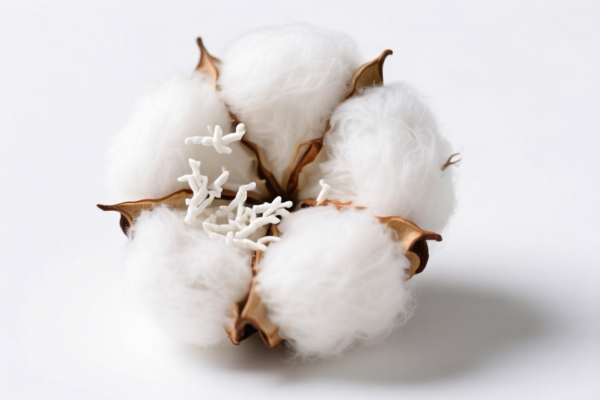
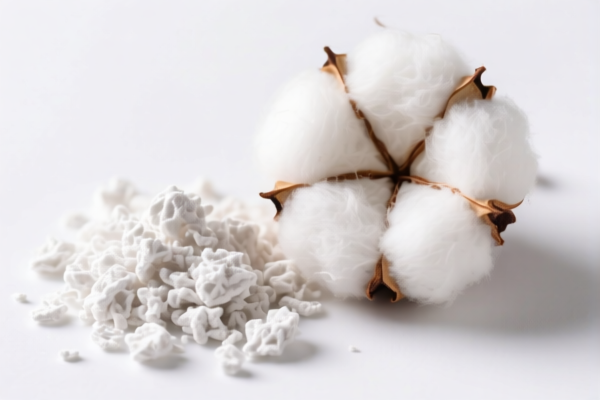
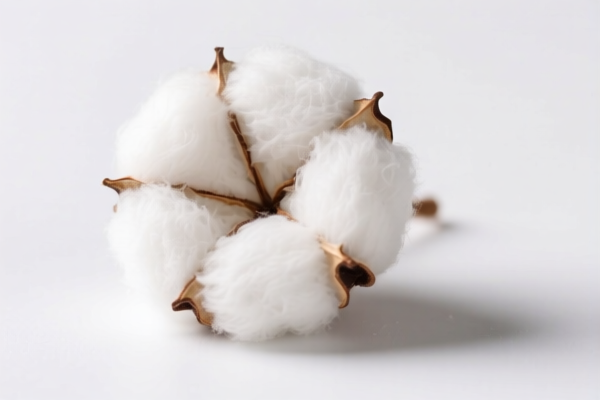
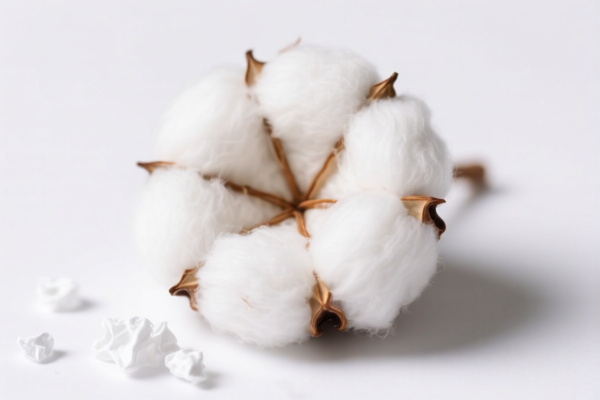
AI分析
🌿 Cotton Linters Pulp (棉短绒浆)
🌐 HS Code Reference & Customs Clearance Guide | 2026 Latest Tariff Analysis | Professional Entry Strategy
📌 Part 1: Product Definition & Classification: Do You Truly Understand "Cotton Linters Pulp"?
Cotton Linters Pulp is a raw material derived from cotton seeds after the long staple fibers are removed. It consists primarily of short cellulose fibers (linters) and is used as a precursor for producing viscose rayon, cellophane, and high-purity cellulose derivatives. In international trade, its classification hinges on whether it is classified as a vegetable fiber pulp (Chapter 47) or a refined cellulose derivative (Chapter 39).
The Critical Distinction:
Vegetable Pulp (Chapter 47): If the material is chemically processed but still retains the fundamental characteristics of vegetable fiber pulp (e.g., mechanically or chemically pulped linters intended for further processing into paper or viscose base).
* Cellulose Derivatives (Chapter 39)*: If the linters have been chemically modified, refined, or processed into a form that is no longer a "vegetable pulp" but rather a "primary form" of a cellulose derivative (e.g., powder, granules, or specialized refined cellulose).
⚠️ Key Classification Point:
- If it is standard pulped cotton linters used for viscose/paper production → Often classified under 4706 (Pulps from vegetable textile fibers).
- If it is highly refined, powdered, or specialized cellulose (non-fibrous/primary form) → Often classified under 3912 (Cellulose and its chemical derivatives).
📦 Part 2: HS Code Classification Details (2026 Latest Tariff Authority Comparison)
Based on the provided data, here are the two potential classifications and their rationales:
| HS Code | Product Description | Classification Logic | Material/Form Match |
|---|---|---|---|
4706.10.00.00 |
Cotton Linters Pulp (Vegetable Fiber Pulp) | Classified as pulps from vegetable textile fibers. Matches the material (cotton linters) and form (pulp) exactly. | ✅ Perfect Match: Material is cotton linters; Form is pulp. |
3912.90.00.90 |
Cotton Linters Pulp (Cellulose Derivative) | Classified as other cellulose and its derivatives. Cotton (cellulose derivative) in primary/original form. | ✅ Valid: Matches "primary/original form" of cellulose derivative. |
3912.90.00.10 |
Cotton Linters Pulp (Cellulose Derivative) | Classified as other cellulose derivatives. Pulp corresponds to powder/primary form; cotton as natural source, no material conflict. | ✅ Valid: Matches "powder/primary form" and natural cellulose source. |
🔍 Key Insight:
- The difference lies in the degree of processing and the physical form (fibrous pulp vs. powder/primary derivative). -4706.10.00.00is the most direct classification for standard "pulp." -3912.90.xx.xxapplies if the product is considered a refined cellulose derivative in primary form (e.g., powder).
💰 Part 3: 2026 Latest Tariff Rate Breakdown (Including Surtaxes & Policy Add-ons)
✅ Applicable Country: United States (US)
✅ Origin: China (CN)
✅ Effective Date: Includes subsequent imports under current trade policies
🎯 1. 4706.10.00.00 —— Cotton Linters Pulp (Vegetable Fiber Pulp)
| Item | Content |
|---|---|
| Base Tariff | 0.0% (ad valorem) |
| Section 301 Surtax | +25.0% (Additional duty under USITC Footnote 9903.88.01) |
| Section 122 Tariff | +10.0% (Additional duty under IEEPA for Chinese products) |
| Total Tariff Rate | 35.0% |
| Tax Calculation | CIF Value × 35% |
| De Minimis Eligibility | ❌ Not Eligible (deny_de_minimis) |
| Legal Basis Path | IEEPA:9903.01.25 → IEEPA:9903.01.24 → USITC:4706.10.00.00 → FOOTNOTE:9903.88.01 |
📌 Explanation:
- The 25% surtax is imposed under the U.S. Trade Act Section 301, targeting specific Chinese industrial inputs. - The 10% surtax is imposed under IEEPA Section 122, often applied to strategic materials or specific Chinese exports. - Total 35%: A significant cost factor. Must be factored into landed cost calculations.
🎯 2. 3912.90.00.90 —— Cotton Linters Pulp (Cellulose Derivative)
| Item | Content |
|---|---|
| Base Tariff | 5.2% (ad valorem) |
| Section 301 Surtax | +25.0% |
| Section 122 Tariff | +10.0% |
| Total Tariff Rate | 40.2% |
| Tax Calculation | CIF Value × 40.2% |
| De Minimis Eligibility | ❌ Not Eligible (deny_de_minimis) |
| Legal Basis Path | IEEPA:9901.25 → IEEPA:9903.01.24 → USITC:3912.90.00.90 → FOOTNOTE:9903.88.01 |
📌 Note:
- This classification applies if the linters are treated as a "cellulose derivative" in primary form. - The base rate is higher (5.2%) compared to Chapter 47 (0%), leading to a higher total tax burden (40.2% vs. 35.0%).
🎯 3. 3912.90.00.10 —— Cotton Linters Pulp (Cellulose Derivative)
| Item | Content |
|---|---|
| Base Tariff | 5.2% |
| Section 301 Surtax | +25.0% |
| Section 122 Tariff | +10.0% |
| Total Tariff Rate | 40.2% |
| Tax Calculation | CIF Value × 40.2% |
| De Minimis Eligibility | ❌ Not Eligible (deny_de_minimis) |
| Legal Basis Path | IEEPA:9901.25 → IEEPA:9903.01.24 → USITC:3912.90.00.10 → FOOTNOTE:9903.88.01 |
📌 Note:
- Similar to3912.90.00.90, this subheading is for other cellulose derivatives. - Identical tax burden to3912.90.00.90.
🛠️ Part 4: Customs Clearance Practical Advice (Battle-Tested Pitfall Avoidance Guide)
✅ 1. Required Documentation Checklist (All Mandatory)
| Document | Mandatory | Description |
|---|---|---|
| ✅ Product Specification Sheet | ✔️ | Details: Origin, chemical composition (cellulose content), physical form (fibrous/powder), intended use. |
| ✅ Certificate of Origin (CO) | ✔️ | Critical for confirming Chinese origin to apply surtaxes correctly; check for preferential rules if transshipped. |
| ✅ Commercial Invoice | ✔️ | Must clearly describe the product as "Cotton Linters Pulp" and specify HS Code. |
| ✅ Packing List | ✔️ | Net weight vs. Gross weight; crucial for duty calculation. |
| ✅ Test Report / Lab Analysis | ✔️ | Proves whether the product is "vegetable pulp" (Chapter 47) or "cellulose derivative" (Chapter 39). |
| ✅ Bill of Lading (B/L) | ✔️ | Standard shipping document. |
✅ 2. Declaration Tips (Key Mnemonic)
🔥 "Fibrous Pulp → 4706; Refined Powder → 3912. Lower Rate Wins!"
| Scenario | Correct Declaration | Wrong Approach |
|---|---|---|
| Standard fibrous cotton linters pulp for viscose production | 4706.10.00.00 |
Misdeclare as 3912 → 40.2% tax (higher) |
| Powdered or highly refined cellulose from linters | 3912.90.00.10 or 3912.90.00.90 |
Misdeclare as 4706 → Customs seizure/fine for incorrect classification |
| Mixed shipments (pulp + derivatives) | Split申报 | Consolidate into one HS code → Audit risk |
✅ 3. Special Case Handling
| Situation | Handling Advice |
|---|---|
| OEM Custom Pulp | Provide customer specs + lab reports to prove classification. Avoid vague terms like "textile raw material." |
| Powder vs. Fibrous | If the product is powdered, it strongly leans towards 3912. If fibrous, 4706 is safer. Use photos in documentation. |
| Hydrogenated Linters | If chemically modified beyond standard pulping, it may fall under 3912. Consult a customs broker. |
| Transshipment | If shipped from Vietnam/Malaysia with Chinese origin, the US origin rules still apply, and surtaxes remain. |
🌍 Part 5: Global Market Clearance Comparison (2026 Latest)
| Country/Region | Recommended HS Code | Tariff (China Origin) | Certification Requirements | Notes |
|---|---|---|---|---|
| 🇺🇸 USA | 4706.10.00.00 |
35.0% | No special certs | Highest duty among options. |
| 🇺🇸 USA | 3912.90.xx.xx |
40.2% | No special certs | Avoid if 4706 is applicable. |
| 🇨🇳 China | 4706.10.00.00 |
~6-10% | CCC (if applicable) | Lower domestic duty. |
| 🇪🇺 EU | 4706.10.00.00 |
0% (MFN) | REACH Registration | No surtaxes. |
| 🇦🇺 Australia | 4706.10.00.00 |
5% | None | Moderate duty. |
📌 Conclusion:
- USA is the most expensive market for Cotton Linters Pulp due to Section 301 and Section 122 surtaxes. - Choosing4706.10.00.00saves 5.2% in base tariff compared to Chapter 39, resulting in a 35.0% vs. 40.2% total duty difference. - EU and China offer significantly lower duty burdens.
📌 Part 6: Common Errors & Pitfall Guide (Lessons Learned)
❌ Error 1: Declaring powdered linters as 4706 (Fibrous Pulp)
👉 Consequence: Customs may reject, demand reclassification to 3912, or impose fines for misdeclaration.
❌ Error 2: Declaring fibrous pulp as 3912 (Cellulose Derivative)
👉 Consequence: Unnecessarily paying 40.2% instead of 35.0% → Cost increase!
❌ Error 3: Ignoring Section 122 (10%) surtax in cost calculations
👉 Consequence: Profit margin erosion; unexpected landed cost spikes.
❌ Error 4: Using vague descriptions like "Cotton Pulp" without specifying form (fibrous vs. powder)
👉 Consequence: Customs delays, requests for additional information, potential audits.
✅ Correct Practice:
“Cotton Linters Pulp, Fibrous Form, Cellulose Content >90%, For Viscose Production, HS Code: 4706.10.00.00”
🎯 Part 7: Conclusion: Precise Classification Saves Money!
🎯 Remember the Mnemonic:
🔹 “Fibrous Pulp → 4706 (35%); Powdered/Refined → 3912 (40.2%); Save 5.2% Base Tax!”
🔹 “HS Code determines tax destiny; a 5.2% base difference changes everything!”
📌 Pro Tip:
If your linters are partially refined or have a mixed form, provide detailed lab reports and photographs to support the 4706 classification.
Consider applying for an Advance Ruling from U.S. Customs to mitigate classification risk.
📣 Immediate Action:
📞 Engage a licensed customs broker + Provide product photos + Submit for HS Code Advance Ruling
🚀 Ensure smooth clearance, maximize profit margins, and stay compliant!
✨ Professional clearance starts with precise classification!
💼 Every cent of duty costs deserves precise calculation!
用户评价
关于 HS 编码归类
协调制度(HS)是由世界海关组织(WCO)制定的国际贸易商品分类标准。全球 200 多个国家采用 HS 系统作为海关关税、贸易统计和进出口监管的基础。
每个 HS 编码遵循以下层级结构:
- 章(2 位)——商品大类(例如:第 84 章:机器和机械设备)
- 品目(4 位)——章内的更具体分类
- 子目(6 位)——国际通用细分,所有 WCO 成员国统一使用
- 本国细分(8-10 位)——各国自行扩展的细分编码,如美国 HTSUS 10 位编码
正确的 HS 编码归类对于顺利通关、准确缴纳关税和遵守贸易法规至关重要。错误归类可能导致海关延误、多缴关税或罚款。
从CN进口到US时,适用的关税税率可能包括:
- 最惠国(MFN)税率——适用于 WTO 成员国的标准关税税率
- 普通税率——适用于无贸易协定国家
- 贸易救济关税——附加关税,如 301 条款(反倾销)、232 条款(国家安全)或反补贴税
本页内容仅供参考。如需正式归类,请咨询当地海关或持牌报关代理。