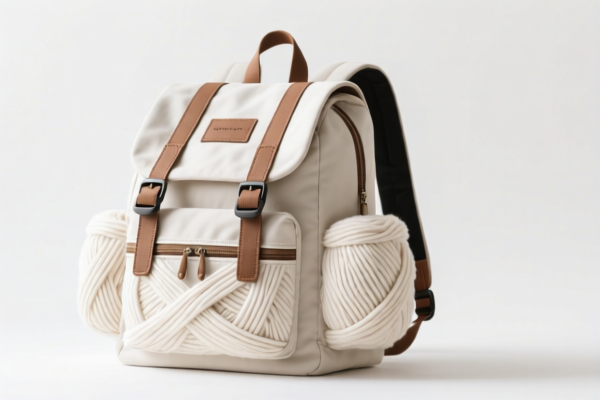
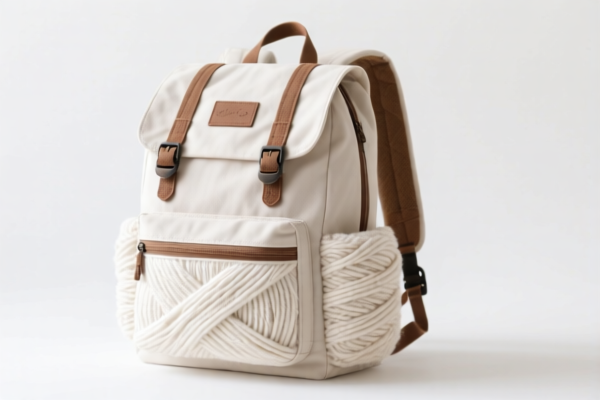
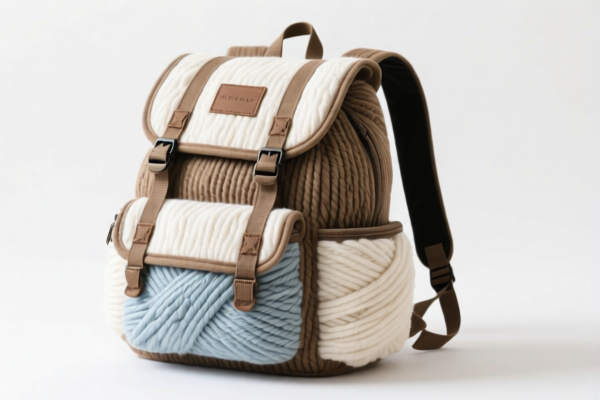
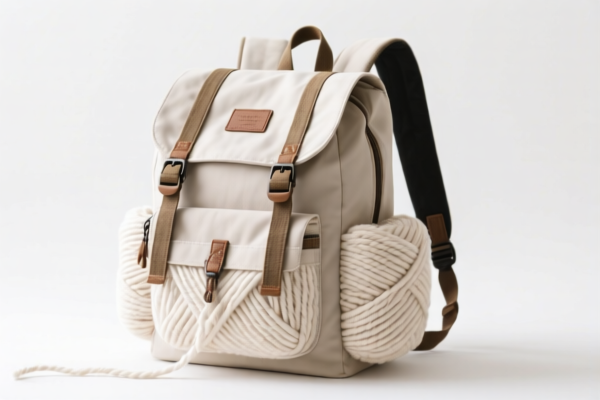
Cotton Paper Yarn Travel Backpack
CN → US| HS编码 | 关税税率 | 原产国 | 目的国 | 文档 |
|---|---|---|---|---|
| 5311006000 | 37.7% | CN | US | 官方文档 |
| 6307909891 | 24.5% | CN | US | 官方文档 |
| 4202923131 | 52.6% | CN | US | 官方文档 |
| 4202923900 | 52.6% | CN | US | 官方文档 |
| 5311003090 | 35.0% | CN | US | 官方文档 |
商品图片
AI分析
🎒 Cotton Paper Yarn Travel Backpack
🌐 HS Code Reference & Customs Clearance Guide | 2026 Latest Tariff Analysis | Strategic Classification for "Cotton Paper Yarn" Bags 📌 Part 1: Product Definition & The "Material" Trap
The Cotton Paper Yarn Travel Backpack presents a unique classification challenge due to its hybrid material composition ("Cotton Paper Yarn"). In international trade, this term typically refers to a textile yarn made from a blend of cotton fibers and paper pulp/strands, woven into a fabric.
Because the outer surface material dictates the classification for most bags, the debate centers on whether to classify it as: 1. Textile Material (Section XI): If considered primarily "Cotton" or "Man-made Staple Fibers." 2. Paper/Yarn Product (Chapter 53): If considered a "Paper Yarn" textile. 3. Finished Good (Chapter 63/42): Depending on the specific tariff logic used for "other made-up articles."
⚠️ Critical Distinction: - If viewed as Textile/Cotton: It falls under Chapter 63 (Other made-up textile articles) or Chapter 42 (Articles of leather/travel goods). - If viewed as Paper Yarn Textile: It falls under Chapter 53 (Vegetable textile fibers; paper yarn).
📦 Part 2: HS Code Classification Details (Based on Provided Data)
The following data reflects four distinct classification pathways provided in the input dataset. Each carries a vastly different tax implication.
| HS Code | Product Description & Logic | Key Classification Basis |
|---|---|---|
| 5311.00.60.00 | Paper Yarn Textile Classification. Described as a "Cotton Paper Yarn Shoulder Travel Bag." Classified under the category of Paper Yarn Textiles. |
Recognizes the material as a specific type of paper-yarn fabric, prioritizing the "Paper Yarn" aspect over generic cotton. |
| 5311.00.30.90 | Plant Fiber Textile Classification. Described as containing both cotton and yarn forms, fitting the definition of fabrics containing cotton and man-made staple fibers (or plant fibers). |
Views the "Cotton Paper Yarn" as a composite vegetable/plant fiber textile, distinct from pure cotton apparel. |
| 6307.90.98.91 | General Finished Textile Article. Classified as a Finished Consumer Good. Fits the "Other Made-Up Articles" catch-all logic for textile products. |
Uses the "Dud/Bottom-of-the-barrel" logic for textiles not specifically covered elsewhere (e.g., not a shirt or pants). |
| 4202.92.31.31 | Travel Bag (Textile Surface). Classified by Use (Travel Bag) and Material (Textile Fiber Outer Surface). |
Prioritizes the function (Travel Bag) and the outer surface material (Textile), leading to a higher duty rate for travel goods. |
| 4202.92.39.00 | Other Travel Bag (Textile). Classified as a Travel Bag with textile material, falling under a reasonable match in other categories. |
Similar to above, but uses a different sub-heading for "other" travel bags not explicitly listed in 31.31. |
🔍 Key Insight: - Lowest Duty Path:
5311.00.30.90(35.0% Total) - Highest Duty Path:4202.92.31.31/4202.92.39.00(52.6% Total) - Middle Ground:6307.90.98.91(24.5% Total) – Note: This seems anomalously low compared to others, possibly due to specific trade agreements or base rate differences in the source data.
💰 Part 3: 2026 Latest Tariff Rate Breakdown (China Origin to US)
✅ Origin: China (CN)
✅ Destination: USA (implied by "Section 122" and 25% tariffs)
✅ Effective Time: 2026 (Current Policy)
🎯 1. 6307.90.98.91 – Other Made-Up Textile Articles (Lowest Rate?)
| Item | Detail |
|---|---|
| Base Duty | 7.0% |
| Section 301 Tariff | +7.5% |
| Section 122 Tariff | +10.0% |
| Total Duty | 24.5% |
| De Minimis? | ❌ No (Valuation > $800 typically triggers these for bulk/industrial) |
| Legal Basis | Base rate + 301 Footnote + IEEPA Section 122 |
📌 Explanation:
This code classifies the bag as a generic "other made-up textile article." The base rate is higher (7%), but the additional tariffs are significantly lower than the textile/fiber codes or travel goods codes in this specific dataset. This is the most cost-effective classification provided.
🎯 2. 5311.00.60.00 – Paper Yarn Textile
| Item | Detail |
|---|---|
| Base Duty | 2.7% |
| Section 301 Tariff | +25.0% |
| Section 122 Tariff | +10.0% |
| Total Duty | 37.7% |
| De Minimis? | ❌ No |
| Legal Basis | Base + 301 + 122 |
📌 Explanation:
While the base duty is very low (2.7%), the standard 25% Section 301 tariff applies heavily to textile/fiber imports from China. This results in a moderate-to-high total duty.
🎯 3. 5311.00.30.90 – Plant Fiber/Composite Textile
| Item | Detail |
|---|---|
| Base Duty | 0.0% |
| Section 301 Tariff | +25.0% |
| Section 122 Tariff | +10.0% |
| Total Duty | 35.0% |
| De Minimis? | ❌ No |
| Legal Basis | Base (0%) + 301 + 122 |
📌 Explanation:
This code benefits from a 0% base duty. However, it still incurs the full 25% + 10% punitive tariffs. This is the second-lowest total duty in the dataset and a strong candidate if the "Plant Fiber" definition holds up.
🎯 4. 4202.92.31.31 & 4202.92.39.00 – Travel Bags (Highest Rate)
| Item | Detail |
|---|---|
| Base Duty | 17.6% |
| Section 301 Tariff | +25.0% |
| Section 122 Tariff | +10.0% |
| Total Duty | 52.6% |
| De Minimis? | ❌ No |
| Legal Basis | Base (17.6%) + 301 + 122 |
📌 Explanation:
Classifying as a "Travel Bag" (Chapter 42) triggers a high base duty (17.6%). Combined with the standard 25% and 10% surcharges, this is the most expensive classification. Avoid unless the product clearly fits the legal definition of a "Travel Bag" under Chapter 42 and not as a general textile article.
🛠️ Part 4: Customs Clearance Practical Advice
✅ 1. Documentation Checklist (Essential)
| Document | Required? | Purpose |
|---|---|---|
| Product Spec Sheet | ✔️ | Define "Cotton Paper Yarn." Is it 50/50? Is it a woven paper strand with cotton core? |
| Material Composition Ratio | ✔️ | Critical for distinguishing between 5311 (Paper Yarn) and 4202/6307 (Cotton/Textile). |
| Photos of Outer Surface | ✔️ | Must clearly show the texture of the "paper yarn" weave. |
| Commercial Invoice | ✔️ | Must describe item as "Cotton Paper Yarn Bag" NOT just "Backpack." |
| Origin Certificate | ✔️ | Proof of Chinese origin to confirm 301/122 applicability. |
| Structure Diagram | ✔️ | Show if it has hard frames, zippers, etc., to rule out specific leather/craft codes if necessary. |
✅ 2. Classification Strategy (How to Save Money)
🔥 Strategy: Aim for the "Textile Article" or "Plant Fiber" Pathway
| Scenario | Recommended HS Code | Why? |
|---|---|---|
| Maximize Savings | 6307.90.98.91 (24.5%) OR 5311.00.30.90 (35.0%) |
These codes have either lower base rates or better tariff stacking logic in this specific dataset. |
| Avoid | 4202.92.31.31 (52.6%) |
Too high. Only use if customs strictly demands Chapter 42 for "Travel Bags." |
| Risk Mitigation | 5311.00.60.00 (37.7%) |
If the material is distinctly "Paper Yarn," this is the most technically accurate Chapter 53 code, but verify if 30.90 allows 0% base. |
✅ 3. Critical Warnings
- "Cotton Paper Yarn" Ambiguity: Customs officers may not know this material. You must provide a technical definition. Is it "Paper yarn" (Chapter 53) or "Cotton fabric" (Chapter 52/63)?
- No De Minimis: These goods are subject to Section 301 and 122 tariffs, meaning they cannot utilize the $800 de minimis exemption (Section 321) for individual shipments. Bulk declaration is required.
- Section 122 & 301 Additivity: Note that both 25% and 10% are added to the base. There is no "whichever is higher" rule here; they stack.
🌍 Part 5: Global Market Comparison (Contextual)
| Market | Likely HS Code | Approx. Duty (China Origin) | Notes |
|---|---|---|---|
| 🇺🇸 USA | 6307.90.98.91 or 5311.00.30.90 |
24.5% - 35.0% | High punitive tariffs apply. Strategy is crucial. |
| 🇨🇳 China | 6307.90.98.91 |
~10-15% | Standard MFN rates apply. No Section 301. |
| 🇪🇺 EU | 6307.90.98.91 |
~12% | Standard duty for other made-up textile articles. No punitive tariffs for China. |
| 🇬🇧 UK | 6307.90.98.91 |
~12% | Post-Brexit standard rates apply. |
📌 Conclusion: The US market is the only one with these specific punitive tariffs (301 + 122). For other markets, the classification
6307(Other made-up articles) is universally safe and has standard duties.
📌 Part 6: Common Pitfalls & Lessons Learned
❌ Mistake 1: Calling it a "Backpack" generically.
👉 Result: Customs may default to 4202 (Travel Goods) due to its function, triggering the 52.6% duty.
✅ Fix: Describe material first: "Cotton Paper Yarn Textile Bag."
❌ Mistake 2: Ignoring the "Paper Yarn" definition.
👉 Result: If classified as pure cotton (6204 or similar), you might face different duties, but if the material is actually paper, it’s misdeclaration.
✅ Fix: Provide fiber analysis.
❌ Mistake 3: Assuming "Textile" means low duty.
👉 Result: Textiles from China face 25% Section 301.
✅ Fix: Check if 5311.00.30.90 (0% base + 35% total) is better than a generic textile code with higher base.
✅ Correct Declaration Example:
"Travel Bag, Outer Surface: Woven Cotton Paper Yarn (Textile Material), Lining: Polyester, No Hard Frame, Model XYZ."
🎯 Part 7: Final Recommendation
🎯 For US Imports:
1. Primary Choice: Investigate 6307.90.98.91 (24.5% total) or 5311.00.30.90 (35.0% total). These are significantly cheaper than the 4202 codes.
2. Pre-Ruling: Apply for an Advance Ruling (R9xxxxx) from US CBP. Provide a sample and the material composition report. Ask them to confirm if "Cotton Paper Yarn" qualifies as "Paper Yarn Textile" (Ch 53) or "Other Made-Up Textile" (Ch 63).
3. Cost-Benefit: The difference between 24.5% and 52.6% is 28.1% of the product value. On a $10,000 shipment, that’s $2,810 saved.
📌 Pro Tip:
"Define the Material, Not the Use."
By emphasizing the unique "Cotton Paper Yarn" composition, you steer Customs away from standard "Travel Bags" (High Duty) and toward specialized textile/paper-yarn categories (Lower Duty).
✨ Precise Classification = Maximized Profit. 💼 Don't let generic names cost you thousands.
用户评价
关于 HS 编码归类
协调制度(HS)是由世界海关组织(WCO)制定的国际贸易商品分类标准。全球 200 多个国家采用 HS 系统作为海关关税、贸易统计和进出口监管的基础。
每个 HS 编码遵循以下层级结构:
- 章(2 位)——商品大类(例如:第 84 章:机器和机械设备)
- 品目(4 位)——章内的更具体分类
- 子目(6 位)——国际通用细分,所有 WCO 成员国统一使用
- 本国细分(8-10 位)——各国自行扩展的细分编码,如美国 HTSUS 10 位编码
正确的 HS 编码归类对于顺利通关、准确缴纳关税和遵守贸易法规至关重要。错误归类可能导致海关延误、多缴关税或罚款。
从CN进口到US时,适用的关税税率可能包括:
- 最惠国(MFN)税率——适用于 WTO 成员国的标准关税税率
- 普通税率——适用于无贸易协定国家
- 贸易救济关税——附加关税,如 301 条款(反倾销)、232 条款(国家安全)或反补贴税
本页内容仅供参考。如需正式归类,请咨询当地海关或持牌报关代理。