Cotton Paper Yarn Travel Backpack
CN → US| HS Code | Tariff Rate | Origin | Destination | Doc |
|---|---|---|---|---|
| 5311006000 | 37.7% | CN | US | Official Doc |
| 6307909891 | 24.5% | CN | US | Official Doc |
| 4202923131 | 52.6% | CN | US | Official Doc |
| 4202923900 | 52.6% | CN | US | Official Doc |
| 5311003090 | 35.0% | CN | US | Official Doc |
Product Images
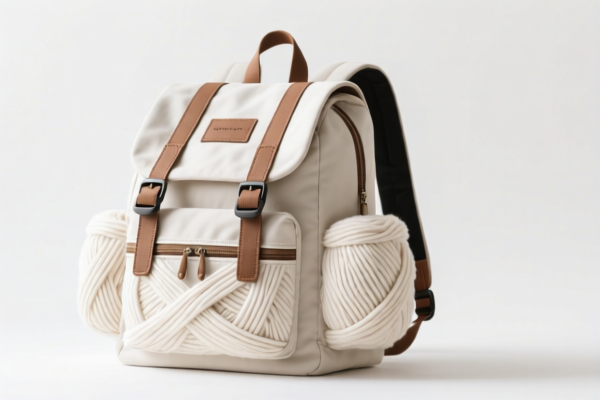
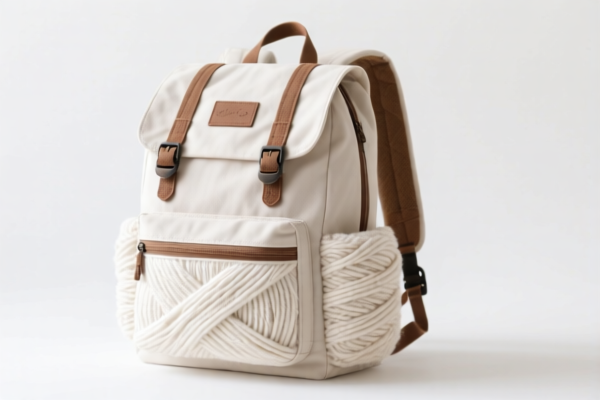
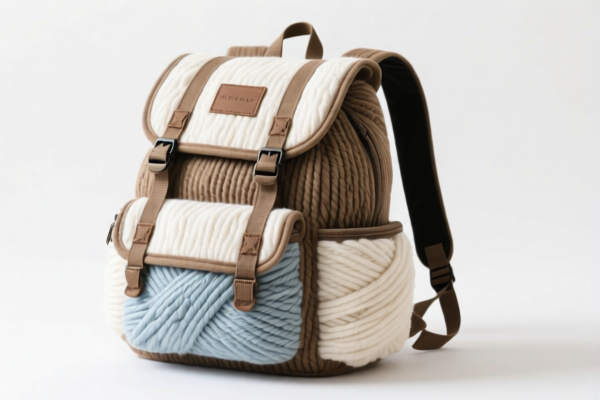
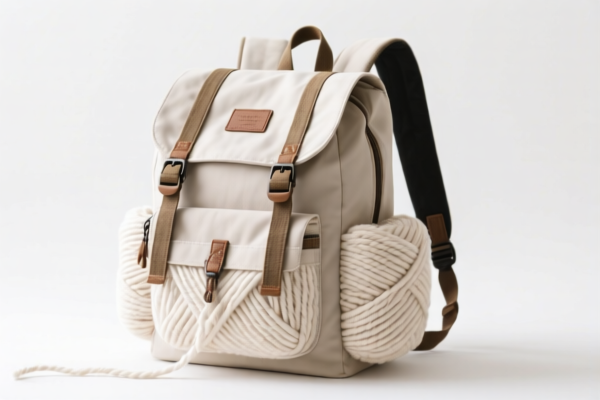
AI Analysis
🎒 Cotton Paper Yarn Travel Backpack
🌐 HS Code Reference & Customs Clearance Guide | 2026 Latest Tariff Analysis | Strategic Classification for "Cotton Paper Yarn" Bags 📌 Part 1: Product Definition & The "Material" Trap
The Cotton Paper Yarn Travel Backpack presents a unique classification challenge due to its hybrid material composition ("Cotton Paper Yarn"). In international trade, this term typically refers to a textile yarn made from a blend of cotton fibers and paper pulp/strands, woven into a fabric.
Because the outer surface material dictates the classification for most bags, the debate centers on whether to classify it as: 1. Textile Material (Section XI): If considered primarily "Cotton" or "Man-made Staple Fibers." 2. Paper/Yarn Product (Chapter 53): If considered a "Paper Yarn" textile. 3. Finished Good (Chapter 63/42): Depending on the specific tariff logic used for "other made-up articles."
⚠️ Critical Distinction: - If viewed as Textile/Cotton: It falls under Chapter 63 (Other made-up textile articles) or Chapter 42 (Articles of leather/travel goods). - If viewed as Paper Yarn Textile: It falls under Chapter 53 (Vegetable textile fibers; paper yarn).
📦 Part 2: HS Code Classification Details (Based on Provided Data)
The following data reflects four distinct classification pathways provided in the input dataset. Each carries a vastly different tax implication.
| HS Code | Product Description & Logic | Key Classification Basis |
|---|---|---|
| 5311.00.60.00 | Paper Yarn Textile Classification. Described as a "Cotton Paper Yarn Shoulder Travel Bag." Classified under the category of Paper Yarn Textiles. |
Recognizes the material as a specific type of paper-yarn fabric, prioritizing the "Paper Yarn" aspect over generic cotton. |
| 5311.00.30.90 | Plant Fiber Textile Classification. Described as containing both cotton and yarn forms, fitting the definition of fabrics containing cotton and man-made staple fibers (or plant fibers). |
Views the "Cotton Paper Yarn" as a composite vegetable/plant fiber textile, distinct from pure cotton apparel. |
| 6307.90.98.91 | General Finished Textile Article. Classified as a Finished Consumer Good. Fits the "Other Made-Up Articles" catch-all logic for textile products. |
Uses the "Dud/Bottom-of-the-barrel" logic for textiles not specifically covered elsewhere (e.g., not a shirt or pants). |
| 4202.92.31.31 | Travel Bag (Textile Surface). Classified by Use (Travel Bag) and Material (Textile Fiber Outer Surface). |
Prioritizes the function (Travel Bag) and the outer surface material (Textile), leading to a higher duty rate for travel goods. |
| 4202.92.39.00 | Other Travel Bag (Textile). Classified as a Travel Bag with textile material, falling under a reasonable match in other categories. |
Similar to above, but uses a different sub-heading for "other" travel bags not explicitly listed in 31.31. |
🔍 Key Insight: - Lowest Duty Path:
5311.00.30.90(35.0% Total) - Highest Duty Path:4202.92.31.31/4202.92.39.00(52.6% Total) - Middle Ground:6307.90.98.91(24.5% Total) – Note: This seems anomalously low compared to others, possibly due to specific trade agreements or base rate differences in the source data.
💰 Part 3: 2026 Latest Tariff Rate Breakdown (China Origin to US)
✅ Origin: China (CN)
✅ Destination: USA (implied by "Section 122" and 25% tariffs)
✅ Effective Time: 2026 (Current Policy)
🎯 1. 6307.90.98.91 – Other Made-Up Textile Articles (Lowest Rate?)
| Item | Detail |
|---|---|
| Base Duty | 7.0% |
| Section 301 Tariff | +7.5% |
| Section 122 Tariff | +10.0% |
| Total Duty | 24.5% |
| De Minimis? | ❌ No (Valuation > $800 typically triggers these for bulk/industrial) |
| Legal Basis | Base rate + 301 Footnote + IEEPA Section 122 |
📌 Explanation:
This code classifies the bag as a generic "other made-up textile article." The base rate is higher (7%), but the additional tariffs are significantly lower than the textile/fiber codes or travel goods codes in this specific dataset. This is the most cost-effective classification provided.
🎯 2. 5311.00.60.00 – Paper Yarn Textile
| Item | Detail |
|---|---|
| Base Duty | 2.7% |
| Section 301 Tariff | +25.0% |
| Section 122 Tariff | +10.0% |
| Total Duty | 37.7% |
| De Minimis? | ❌ No |
| Legal Basis | Base + 301 + 122 |
📌 Explanation:
While the base duty is very low (2.7%), the standard 25% Section 301 tariff applies heavily to textile/fiber imports from China. This results in a moderate-to-high total duty.
🎯 3. 5311.00.30.90 – Plant Fiber/Composite Textile
| Item | Detail |
|---|---|
| Base Duty | 0.0% |
| Section 301 Tariff | +25.0% |
| Section 122 Tariff | +10.0% |
| Total Duty | 35.0% |
| De Minimis? | ❌ No |
| Legal Basis | Base (0%) + 301 + 122 |
📌 Explanation:
This code benefits from a 0% base duty. However, it still incurs the full 25% + 10% punitive tariffs. This is the second-lowest total duty in the dataset and a strong candidate if the "Plant Fiber" definition holds up.
🎯 4. 4202.92.31.31 & 4202.92.39.00 – Travel Bags (Highest Rate)
| Item | Detail |
|---|---|
| Base Duty | 17.6% |
| Section 301 Tariff | +25.0% |
| Section 122 Tariff | +10.0% |
| Total Duty | 52.6% |
| De Minimis? | ❌ No |
| Legal Basis | Base (17.6%) + 301 + 122 |
📌 Explanation:
Classifying as a "Travel Bag" (Chapter 42) triggers a high base duty (17.6%). Combined with the standard 25% and 10% surcharges, this is the most expensive classification. Avoid unless the product clearly fits the legal definition of a "Travel Bag" under Chapter 42 and not as a general textile article.
🛠️ Part 4: Customs Clearance Practical Advice
✅ 1. Documentation Checklist (Essential)
| Document | Required? | Purpose |
|---|---|---|
| Product Spec Sheet | ✔️ | Define "Cotton Paper Yarn." Is it 50/50? Is it a woven paper strand with cotton core? |
| Material Composition Ratio | ✔️ | Critical for distinguishing between 5311 (Paper Yarn) and 4202/6307 (Cotton/Textile). |
| Photos of Outer Surface | ✔️ | Must clearly show the texture of the "paper yarn" weave. |
| Commercial Invoice | ✔️ | Must describe item as "Cotton Paper Yarn Bag" NOT just "Backpack." |
| Origin Certificate | ✔️ | Proof of Chinese origin to confirm 301/122 applicability. |
| Structure Diagram | ✔️ | Show if it has hard frames, zippers, etc., to rule out specific leather/craft codes if necessary. |
✅ 2. Classification Strategy (How to Save Money)
🔥 Strategy: Aim for the "Textile Article" or "Plant Fiber" Pathway
| Scenario | Recommended HS Code | Why? |
|---|---|---|
| Maximize Savings | 6307.90.98.91 (24.5%) OR 5311.00.30.90 (35.0%) |
These codes have either lower base rates or better tariff stacking logic in this specific dataset. |
| Avoid | 4202.92.31.31 (52.6%) |
Too high. Only use if customs strictly demands Chapter 42 for "Travel Bags." |
| Risk Mitigation | 5311.00.60.00 (37.7%) |
If the material is distinctly "Paper Yarn," this is the most technically accurate Chapter 53 code, but verify if 30.90 allows 0% base. |
✅ 3. Critical Warnings
- "Cotton Paper Yarn" Ambiguity: Customs officers may not know this material. You must provide a technical definition. Is it "Paper yarn" (Chapter 53) or "Cotton fabric" (Chapter 52/63)?
- No De Minimis: These goods are subject to Section 301 and 122 tariffs, meaning they cannot utilize the $800 de minimis exemption (Section 321) for individual shipments. Bulk declaration is required.
- Section 122 & 301 Additivity: Note that both 25% and 10% are added to the base. There is no "whichever is higher" rule here; they stack.
🌍 Part 5: Global Market Comparison (Contextual)
| Market | Likely HS Code | Approx. Duty (China Origin) | Notes |
|---|---|---|---|
| 🇺🇸 USA | 6307.90.98.91 or 5311.00.30.90 |
24.5% - 35.0% | High punitive tariffs apply. Strategy is crucial. |
| 🇨🇳 China | 6307.90.98.91 |
~10-15% | Standard MFN rates apply. No Section 301. |
| 🇪🇺 EU | 6307.90.98.91 |
~12% | Standard duty for other made-up textile articles. No punitive tariffs for China. |
| 🇬🇧 UK | 6307.90.98.91 |
~12% | Post-Brexit standard rates apply. |
📌 Conclusion: The US market is the only one with these specific punitive tariffs (301 + 122). For other markets, the classification
6307(Other made-up articles) is universally safe and has standard duties.
📌 Part 6: Common Pitfalls & Lessons Learned
❌ Mistake 1: Calling it a "Backpack" generically.
👉 Result: Customs may default to 4202 (Travel Goods) due to its function, triggering the 52.6% duty.
✅ Fix: Describe material first: "Cotton Paper Yarn Textile Bag."
❌ Mistake 2: Ignoring the "Paper Yarn" definition.
👉 Result: If classified as pure cotton (6204 or similar), you might face different duties, but if the material is actually paper, it’s misdeclaration.
✅ Fix: Provide fiber analysis.
❌ Mistake 3: Assuming "Textile" means low duty.
👉 Result: Textiles from China face 25% Section 301.
✅ Fix: Check if 5311.00.30.90 (0% base + 35% total) is better than a generic textile code with higher base.
✅ Correct Declaration Example:
"Travel Bag, Outer Surface: Woven Cotton Paper Yarn (Textile Material), Lining: Polyester, No Hard Frame, Model XYZ."
🎯 Part 7: Final Recommendation
🎯 For US Imports:
1. Primary Choice: Investigate 6307.90.98.91 (24.5% total) or 5311.00.30.90 (35.0% total). These are significantly cheaper than the 4202 codes.
2. Pre-Ruling: Apply for an Advance Ruling (R9xxxxx) from US CBP. Provide a sample and the material composition report. Ask them to confirm if "Cotton Paper Yarn" qualifies as "Paper Yarn Textile" (Ch 53) or "Other Made-Up Textile" (Ch 63).
3. Cost-Benefit: The difference between 24.5% and 52.6% is 28.1% of the product value. On a $10,000 shipment, that’s $2,810 saved.
📌 Pro Tip:
"Define the Material, Not the Use."
By emphasizing the unique "Cotton Paper Yarn" composition, you steer Customs away from standard "Travel Bags" (High Duty) and toward specialized textile/paper-yarn categories (Lower Duty).
✨ Precise Classification = Maximized Profit. 💼 Don't let generic names cost you thousands.
Customer Reviews
About HS Code Classification
The Harmonized System (HS) is an internationally standardized nomenclature developed by the World Customs Organization (WCO) to classify traded products. Over 200 countries use the HS system as the basis for customs tariffs, trade statistics, and import/export regulations.
Each HS code follows a hierarchical structure:
- Chapter (2 digits) — Broad category of goods (e.g., Chapter 84: Machinery and Mechanical Appliances)
- Heading (4 digits) — More specific grouping within the chapter
- Subheading (6 digits) — Internationally standardized breakdown, used by all WCO member countries
- National subdivisions (8-10 digits) — Country-specific extensions for further classification, such as US HTSUS 10-digit codes
Correct HS code classification is essential for smooth customs clearance, accurate duty payment, and compliance with trade regulations. Misclassification can lead to customs delays, overpayment of duties, or penalties.
When importing from CN to US, the applicable tariff rates may include:
- Most-Favored-Nation (MFN) rate — The standard duty rate applied to WTO members
- General rate — Applied to countries without trade agreements
- Trade remedy duties — Additional tariffs such as Section 301 (anti-dumping), Section 232 (national security), or countervailing duties
The information provided on this page is for reference purposes only. For official classification, please consult with your local customs authority or a licensed customs broker.