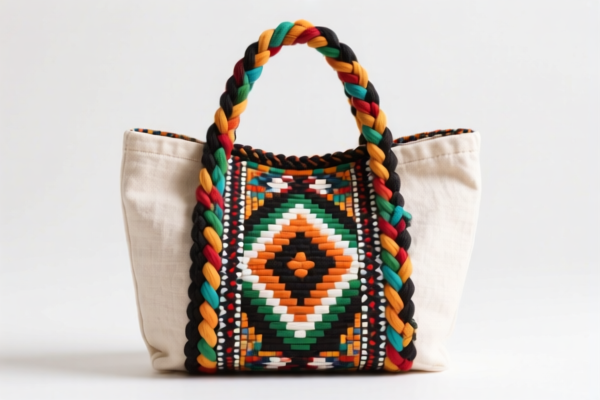
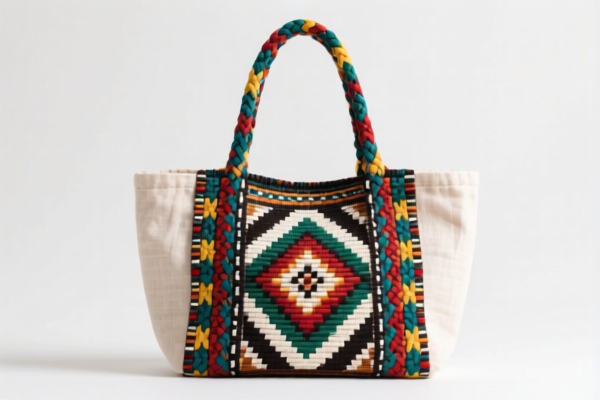
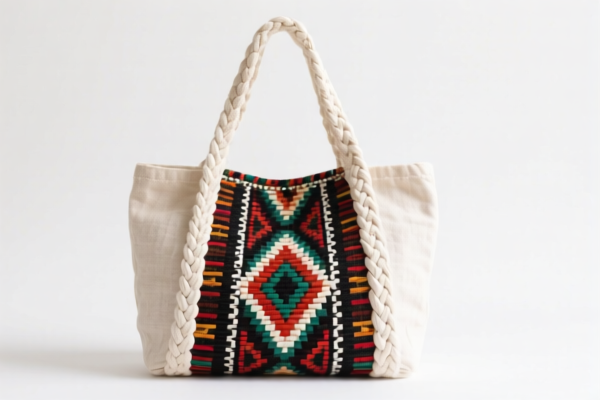
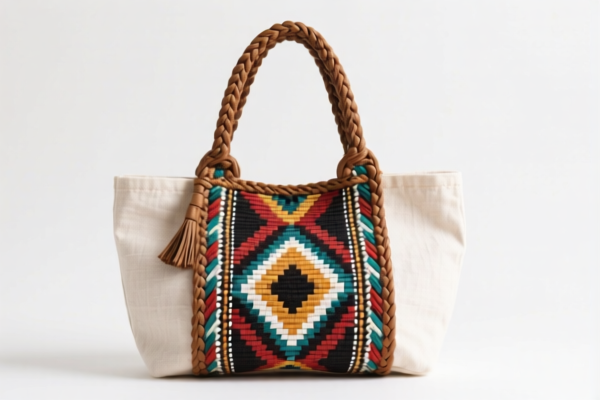
Cotton Woven Ethnic Style Handbag
CN → US| HS编码 | 关税税率 | 原产国 | 目的国 | 文档 |
|---|---|---|---|---|
| 4202224020 | 42.4% | CN | US | 官方文档 |
| 4202228930 | 52.6% | CN | US | 官方文档 |
商品图片
AI分析
👜 Cotton Woven Ethnic Style Handbag
🌐 HS Code Reference & Customs Clearance Guide | 2026 Latest Tariff Analysis | Professional Entry Strategy
📌 I. Product Definition & Classification: Do You Really Understand "Ethnic Handbags"?
A "Cotton Woven Ethnic Style Handbag" refers to a handheld container made primarily of textile materials, specifically woven cotton, featuring traditional, folk, or ethnic patterns/designs. In international trade, classification depends heavily on the outer surface material and the construction type.
The key distinction lies in whether the bag is classified under "Braid/Plaited" categories or general "Textile" categories, and whether it is a standard handbag or a specialized case (like spectacles or instruments). For general fashion handbags:
Woven Cotton Bags: Made from interlaced cotton yarns, often featuring intricate ethnic patterns (e.g., Navajo, Andean, or Asian folk motifs). Standard Handbags: Designed to be carried by hand or shoulder, excluding specific protective cases for instruments/glasses.
⚠️ Critical Distinction:
- If the outer surface is textile (cotton) and it is a handbag (not a case for specific items like cameras/glasses):
- If made of braid/plaited material: Falls under 4202.22.40
- If made of other textile materials (woven, knitted, etc., not braid): Falls under 4202.22.89
- If it were a "Camera Bag" or "Spectacle Case," it would go to a different heading, but for general fashion handbags, the above applies.
📦 II. HS Code Classification Details (2026 Latest Tariff Authority Comparison)
| HS Code | Product Description | Applicability | Material/Structure Key Factor |
|---|---|---|---|
4202.22.40.20 |
Handbags, outer surface textile: Wholly or in part of braid | Ethnic handbags made from woven braid/plaited cotton strips | ✅ Braid/Plaited |
4202.22.89.30 |
Handbags, outer surface textile: Other: Of cotton | Ethnic handbags made from woven/knitted cotton fabric (not braid) | ✅ Non-braid Textile |
🔍 Important Note:
- 4202.22.40.20 applies if the bag's appearance is dominated by braid or plaited materials (e.g., woven straw-like cotton strips).
- 4202.22.89.30 applies if the bag is made from standard cotton fabric (woven or knitted) with ethnic prints or embroidery.
- Both codes are under Chapter 42 (Articles of Leather; Travel Goods, Handbags...), specifically Heading 4202 (Travel Goods, Handbags, etc.).
💰 III. 2026 Latest Tariff Rate Details (Including Surcharge & Policy Additions)
✅ Applicable Country: United States (US)
✅ Country of Origin: China (CN)
✅ Effective Date: 2025-11-10 onwards (including subsequent imports)
🎯 1. 4202.22.40.20 —— Handbags, Braided/Plaited Cotton
| Item | Content |
|---|---|
| Base Tariff Rate | 0% (ad valorem) |
| USITC Surcharge | 0% |
| IEEPA Surcharge | 0% |
| Total Tariff Rate | 0.0% |
| Tax Calculation | CIF Value × 0.0% |
| De Minimis Eligibility | ✅ Yes (If value ≤ $800, subject to other regulations) |
| Legal Basis Path | USITC:4202.22.40.20 |
📌 Explanation:
- Cotton handbags (braided type) are exempt from current USITC 301 tariffs and IEEPA surcharges under this specific subheading.
- This is a low-risk, low-cost classification for customs.
🎯 2. 4202.22.89.30 —— Handbags, Other Cotton Textile
| Item | Content |
|---|---|
| Base Tariff Rate | 0% (ad valorem) |
| USITC Surcharge | 0% |
| IEEPA Surcharge | 0% |
| Total Tariff Rate | 0.0% |
| Tax Calculation | CIF Value × 0.0% |
| De Minimis Eligibility | ✅ Yes (If value ≤ $800, subject to other regulations) |
| Legal Basis Path | USITC:4202.22.89.30 |
📌 Explanation:
- Similar to the braided version, general cotton textile handbags also enjoy 0% total tariff.
- No additional surcharges apply to this category.
- Total Tax: 0.0% as per provided data.
🛠️ IV. Customs Clearance Practical Advice (Battle-Tested Pitfall Avoidance Guide)
✅ 1. Required Documentation Checklist (缺一不可)
| Document | Must Provide | Description |
|---|---|---|
| ✅ Product Specification Sheet | ✔️ | Material composition (100% Cotton?), weaving type (braid vs. fabric), dimensions |
| ✅ Product Photos (Front/Back/Label) | ✔️ | Clear image showing "ethnic style," material texture, and label |
| ✅ Commercial Invoice | ✔️ | Must clearly state: "Cotton Woven Ethnic Style Handbag" |
| ✅ Packing List | ✔️ | Include quantity, net weight, gross weight |
| ✅ Origin Certificate (if applicable) | ✔️ | For preferential treatment if shipped from non-China origins |
✅ 2. Declaration Tips (Key Mnemonics)
🔥 "Material First, Structure Second, Name Precise, Zero Tax!"
| Scenario | Correct Declaration | Incorrect Practice |
|---|---|---|
| Bag made of woven cotton fabric with prints | 4202.22.89.30 |
Claiming as "leather" or "plastic" |
| Bag made of braided cotton strips | 4202.22.40.20 |
Misclassifying as "backpack" (4202.92...) |
| Bag includes metal hardware (zippers, clasps) | Still 4202.22.x |
Splitting declaration into "bag + accessories" |
| Bag is a camera case with cotton exterior | 4202.30... (different chapter) |
Using handbag code → Misclassification Risk |
✅ 3. Special Situation Handling
| Situation | Handling Advice |
|---|---|
| OEM Ethnic Bags | Provide design drafts + material swatches to prove "cotton" content |
| Mixed Materials | If >50% by weight is cotton, can still use cotton code; otherwise, might shift to "textile mix" |
| Gift Sets | If sold with scarf/jewelry, ensure only the bag is declared under 4202 |
| De Minimis Shipments (<$800) | ✅ Eligible for exemption, but ensure accurate HS Code to avoid audits |
🌍 V. Global Major Market Customs Comparison (2026 Latest)
| Country/Region | Recommended HS Code | Tariff | Certification Required | Remarks |
|---|---|---|---|---|
| 🇺🇸 USA | 4202.22.40.20 / 4202.22.89.30 |
0.0% | None (generally) | Zero tariff, easy clearance |
| 🇨🇳 China | 4202.22.40.20 / 4202.22.89.30 |
0%–10% | N/A | Low tariff for domestic sales |
| 🇪🇺 EU | 4202.22.40 / 4202.22.89 |
4%–12% | CE (if cosmetic bags) | Varies by member state |
| 🇬🇧 UK | 4202.22.40 / 4202.22.89 |
12% | None | Post-Brexit standard rates |
| 🇯🇵 Japan | 4202.22.40 / 4202.22.89 |
8%–12% | None | Standard ASEAN-Japan EP if applicable |
📌 Conclusion:
- USA offers the best clearance conditions with 0% total tariffs for cotton handbags.
- Ensure material accuracy – if synthetic fibers are used, rates may change.
- No special licenses required for cotton handbags.
📌 VI. Common Mistakes & Pitfall Guide (Lessons Learned)
❌ Mistake 1: Declaring as "Leather Handbag"
👉 Consequence: Wrong HS Code → Tariff jumps to ~20% → Delayed clearance + fines!
❌ Mistake 2: Not specifying "Cotton" in description
👉 Consequence: Customs may classify as "Other Textile" → Potential audit or reassessment
❌ Mistake 3: Including "Camera Case" features (padded interior for lens)
👉 Consequence: If classified as camera case, it may fall under 4202.30 or 9002 → Different tariff & regulations
❌ Mistake 4: Using "Travel Bag" for small handbags
👉 Consequence: "Travel Bag" (4202.92) has different rates → Misclassification
✅ Correct Approach:
"Cotton Woven Ethnic Style Handbag, Outer Surface: Textile (Cotton), Type: Handbag, Model: XYZ, Pattern: Andean"
🎯 VII. Conclusion: Precision Declaration, Effortless Clearance, Cost Savings!
🎯 Remember the Mnemonics:
🔹 "Cotton Handbag, Zero Tariff in US!"
🔹 "Braided vs. Woven, Choose Right Code!"
🔹 "0.0% Tax, No Surcharge, Smooth Entry!"
📌 Tips:
- If your handbag is originating from Vietnam, Mexico, or Thailand, still 0.0% tariff under current data.
- Ensure accurate material labeling to avoid classification disputes.
- For large-volume shipments, consider Advance Ruling for peace of mind.
📣 Immediate Action:
📞 Contact professional customs broker + Provide product photos + Apply for HS Code Pre-Ruling
🚀 Let your ethnic handbags clear smoothly, efficiently, and profitably!
✨ Professional Customs Clearance Starts with Accurate Classification!
💼 Every cent of your cost deserves precise calculation!
用户评价
关于 HS 编码归类
协调制度(HS)是由世界海关组织(WCO)制定的国际贸易商品分类标准。全球 200 多个国家采用 HS 系统作为海关关税、贸易统计和进出口监管的基础。
每个 HS 编码遵循以下层级结构:
- 章(2 位)——商品大类(例如:第 84 章:机器和机械设备)
- 品目(4 位)——章内的更具体分类
- 子目(6 位)——国际通用细分,所有 WCO 成员国统一使用
- 本国细分(8-10 位)——各国自行扩展的细分编码,如美国 HTSUS 10 位编码
正确的 HS 编码归类对于顺利通关、准确缴纳关税和遵守贸易法规至关重要。错误归类可能导致海关延误、多缴关税或罚款。
从CN进口到US时,适用的关税税率可能包括:
- 最惠国(MFN)税率——适用于 WTO 成员国的标准关税税率
- 普通税率——适用于无贸易协定国家
- 贸易救济关税——附加关税,如 301 条款(反倾销)、232 条款(国家安全)或反补贴税
本页内容仅供参考。如需正式归类,请咨询当地海关或持牌报关代理。