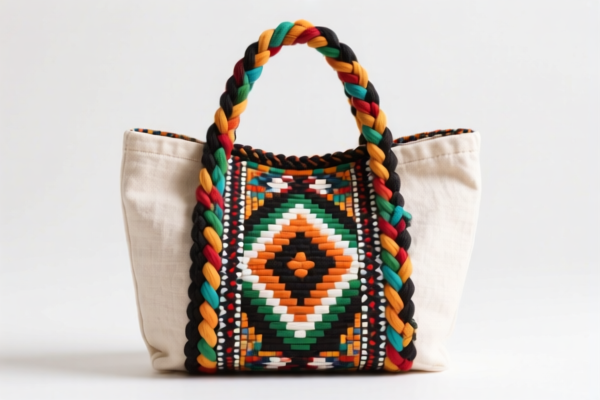
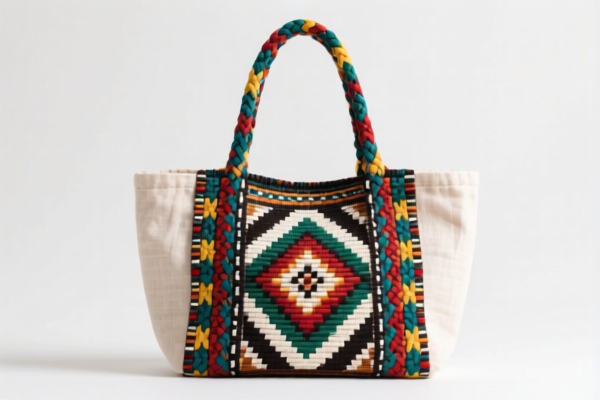
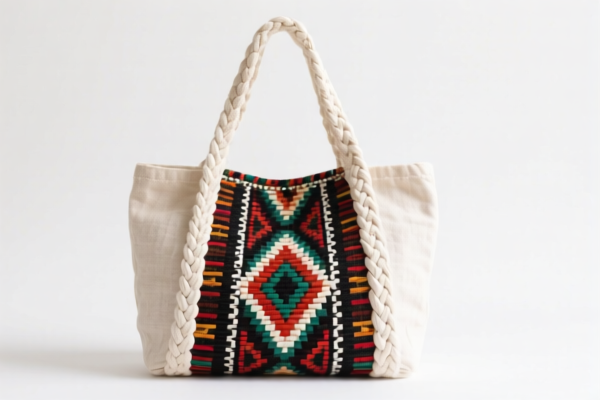
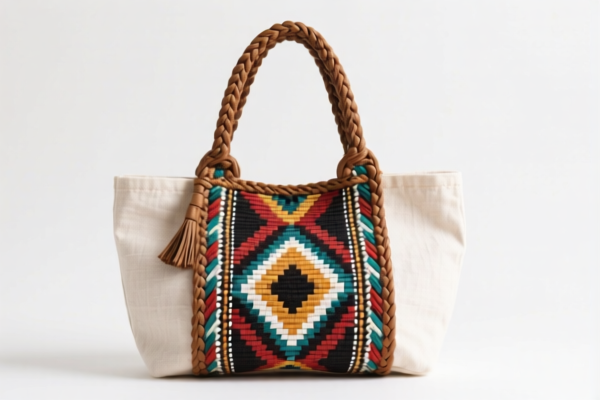
Cotton Woven Ethnic Style Handbag
CN → US| HS Code | Tariff Rate | Origin | Destination | Doc |
|---|---|---|---|---|
| 4202224020 | 42.4% | CN | US | Official Doc |
| 4202228930 | 52.6% | CN | US | Official Doc |
Product Images
AI Analysis
👜 Cotton Woven Ethnic Style Handbag
🌐 HS Code Reference & Customs Clearance Guide | 2026 Latest Tariff Analysis | Professional Entry Strategy
📌 I. Product Definition & Classification: Do You Really Understand "Ethnic Handbags"?
A "Cotton Woven Ethnic Style Handbag" refers to a handheld container made primarily of textile materials, specifically woven cotton, featuring traditional, folk, or ethnic patterns/designs. In international trade, classification depends heavily on the outer surface material and the construction type.
The key distinction lies in whether the bag is classified under "Braid/Plaited" categories or general "Textile" categories, and whether it is a standard handbag or a specialized case (like spectacles or instruments). For general fashion handbags:
Woven Cotton Bags: Made from interlaced cotton yarns, often featuring intricate ethnic patterns (e.g., Navajo, Andean, or Asian folk motifs). Standard Handbags: Designed to be carried by hand or shoulder, excluding specific protective cases for instruments/glasses.
⚠️ Critical Distinction:
- If the outer surface is textile (cotton) and it is a handbag (not a case for specific items like cameras/glasses):
- If made of braid/plaited material: Falls under 4202.22.40
- If made of other textile materials (woven, knitted, etc., not braid): Falls under 4202.22.89
- If it were a "Camera Bag" or "Spectacle Case," it would go to a different heading, but for general fashion handbags, the above applies.
📦 II. HS Code Classification Details (2026 Latest Tariff Authority Comparison)
| HS Code | Product Description | Applicability | Material/Structure Key Factor |
|---|---|---|---|
4202.22.40.20 |
Handbags, outer surface textile: Wholly or in part of braid | Ethnic handbags made from woven braid/plaited cotton strips | ✅ Braid/Plaited |
4202.22.89.30 |
Handbags, outer surface textile: Other: Of cotton | Ethnic handbags made from woven/knitted cotton fabric (not braid) | ✅ Non-braid Textile |
🔍 Important Note:
- 4202.22.40.20 applies if the bag's appearance is dominated by braid or plaited materials (e.g., woven straw-like cotton strips).
- 4202.22.89.30 applies if the bag is made from standard cotton fabric (woven or knitted) with ethnic prints or embroidery.
- Both codes are under Chapter 42 (Articles of Leather; Travel Goods, Handbags...), specifically Heading 4202 (Travel Goods, Handbags, etc.).
💰 III. 2026 Latest Tariff Rate Details (Including Surcharge & Policy Additions)
✅ Applicable Country: United States (US)
✅ Country of Origin: China (CN)
✅ Effective Date: 2025-11-10 onwards (including subsequent imports)
🎯 1. 4202.22.40.20 —— Handbags, Braided/Plaited Cotton
| Item | Content |
|---|---|
| Base Tariff Rate | 0% (ad valorem) |
| USITC Surcharge | 0% |
| IEEPA Surcharge | 0% |
| Total Tariff Rate | 0.0% |
| Tax Calculation | CIF Value × 0.0% |
| De Minimis Eligibility | ✅ Yes (If value ≤ $800, subject to other regulations) |
| Legal Basis Path | USITC:4202.22.40.20 |
📌 Explanation:
- Cotton handbags (braided type) are exempt from current USITC 301 tariffs and IEEPA surcharges under this specific subheading.
- This is a low-risk, low-cost classification for customs.
🎯 2. 4202.22.89.30 —— Handbags, Other Cotton Textile
| Item | Content |
|---|---|
| Base Tariff Rate | 0% (ad valorem) |
| USITC Surcharge | 0% |
| IEEPA Surcharge | 0% |
| Total Tariff Rate | 0.0% |
| Tax Calculation | CIF Value × 0.0% |
| De Minimis Eligibility | ✅ Yes (If value ≤ $800, subject to other regulations) |
| Legal Basis Path | USITC:4202.22.89.30 |
📌 Explanation:
- Similar to the braided version, general cotton textile handbags also enjoy 0% total tariff.
- No additional surcharges apply to this category.
- Total Tax: 0.0% as per provided data.
🛠️ IV. Customs Clearance Practical Advice (Battle-Tested Pitfall Avoidance Guide)
✅ 1. Required Documentation Checklist (缺一不可)
| Document | Must Provide | Description |
|---|---|---|
| ✅ Product Specification Sheet | ✔️ | Material composition (100% Cotton?), weaving type (braid vs. fabric), dimensions |
| ✅ Product Photos (Front/Back/Label) | ✔️ | Clear image showing "ethnic style," material texture, and label |
| ✅ Commercial Invoice | ✔️ | Must clearly state: "Cotton Woven Ethnic Style Handbag" |
| ✅ Packing List | ✔️ | Include quantity, net weight, gross weight |
| ✅ Origin Certificate (if applicable) | ✔️ | For preferential treatment if shipped from non-China origins |
✅ 2. Declaration Tips (Key Mnemonics)
🔥 "Material First, Structure Second, Name Precise, Zero Tax!"
| Scenario | Correct Declaration | Incorrect Practice |
|---|---|---|
| Bag made of woven cotton fabric with prints | 4202.22.89.30 |
Claiming as "leather" or "plastic" |
| Bag made of braided cotton strips | 4202.22.40.20 |
Misclassifying as "backpack" (4202.92...) |
| Bag includes metal hardware (zippers, clasps) | Still 4202.22.x |
Splitting declaration into "bag + accessories" |
| Bag is a camera case with cotton exterior | 4202.30... (different chapter) |
Using handbag code → Misclassification Risk |
✅ 3. Special Situation Handling
| Situation | Handling Advice |
|---|---|
| OEM Ethnic Bags | Provide design drafts + material swatches to prove "cotton" content |
| Mixed Materials | If >50% by weight is cotton, can still use cotton code; otherwise, might shift to "textile mix" |
| Gift Sets | If sold with scarf/jewelry, ensure only the bag is declared under 4202 |
| De Minimis Shipments (<$800) | ✅ Eligible for exemption, but ensure accurate HS Code to avoid audits |
🌍 V. Global Major Market Customs Comparison (2026 Latest)
| Country/Region | Recommended HS Code | Tariff | Certification Required | Remarks |
|---|---|---|---|---|
| 🇺🇸 USA | 4202.22.40.20 / 4202.22.89.30 |
0.0% | None (generally) | Zero tariff, easy clearance |
| 🇨🇳 China | 4202.22.40.20 / 4202.22.89.30 |
0%–10% | N/A | Low tariff for domestic sales |
| 🇪🇺 EU | 4202.22.40 / 4202.22.89 |
4%–12% | CE (if cosmetic bags) | Varies by member state |
| 🇬🇧 UK | 4202.22.40 / 4202.22.89 |
12% | None | Post-Brexit standard rates |
| 🇯🇵 Japan | 4202.22.40 / 4202.22.89 |
8%–12% | None | Standard ASEAN-Japan EP if applicable |
📌 Conclusion:
- USA offers the best clearance conditions with 0% total tariffs for cotton handbags.
- Ensure material accuracy – if synthetic fibers are used, rates may change.
- No special licenses required for cotton handbags.
📌 VI. Common Mistakes & Pitfall Guide (Lessons Learned)
❌ Mistake 1: Declaring as "Leather Handbag"
👉 Consequence: Wrong HS Code → Tariff jumps to ~20% → Delayed clearance + fines!
❌ Mistake 2: Not specifying "Cotton" in description
👉 Consequence: Customs may classify as "Other Textile" → Potential audit or reassessment
❌ Mistake 3: Including "Camera Case" features (padded interior for lens)
👉 Consequence: If classified as camera case, it may fall under 4202.30 or 9002 → Different tariff & regulations
❌ Mistake 4: Using "Travel Bag" for small handbags
👉 Consequence: "Travel Bag" (4202.92) has different rates → Misclassification
✅ Correct Approach:
"Cotton Woven Ethnic Style Handbag, Outer Surface: Textile (Cotton), Type: Handbag, Model: XYZ, Pattern: Andean"
🎯 VII. Conclusion: Precision Declaration, Effortless Clearance, Cost Savings!
🎯 Remember the Mnemonics:
🔹 "Cotton Handbag, Zero Tariff in US!"
🔹 "Braided vs. Woven, Choose Right Code!"
🔹 "0.0% Tax, No Surcharge, Smooth Entry!"
📌 Tips:
- If your handbag is originating from Vietnam, Mexico, or Thailand, still 0.0% tariff under current data.
- Ensure accurate material labeling to avoid classification disputes.
- For large-volume shipments, consider Advance Ruling for peace of mind.
📣 Immediate Action:
📞 Contact professional customs broker + Provide product photos + Apply for HS Code Pre-Ruling
🚀 Let your ethnic handbags clear smoothly, efficiently, and profitably!
✨ Professional Customs Clearance Starts with Accurate Classification!
💼 Every cent of your cost deserves precise calculation!
Customer Reviews
About HS Code Classification
The Harmonized System (HS) is an internationally standardized nomenclature developed by the World Customs Organization (WCO) to classify traded products. Over 200 countries use the HS system as the basis for customs tariffs, trade statistics, and import/export regulations.
Each HS code follows a hierarchical structure:
- Chapter (2 digits) — Broad category of goods (e.g., Chapter 84: Machinery and Mechanical Appliances)
- Heading (4 digits) — More specific grouping within the chapter
- Subheading (6 digits) — Internationally standardized breakdown, used by all WCO member countries
- National subdivisions (8-10 digits) — Country-specific extensions for further classification, such as US HTSUS 10-digit codes
Correct HS code classification is essential for smooth customs clearance, accurate duty payment, and compliance with trade regulations. Misclassification can lead to customs delays, overpayment of duties, or penalties.
When importing from CN to US, the applicable tariff rates may include:
- Most-Favored-Nation (MFN) rate — The standard duty rate applied to WTO members
- General rate — Applied to countries without trade agreements
- Trade remedy duties — Additional tariffs such as Section 301 (anti-dumping), Section 232 (national security), or countervailing duties
The information provided on this page is for reference purposes only. For official classification, please consult with your local customs authority or a licensed customs broker.