Cowhide for Suitcases
CN → US| HS编码 | 关税税率 | 原产国 | 目的国 | 文档 |
|---|---|---|---|---|
| 4202110090 | 43.0% | CN | US | 官方文档 |
| 4202110030 | 43.0% | CN | US | 官方文档 |
| 4107117050 | 15.0% | CN | US | 官方文档 |
| 4107127050 | 15.0% | CN | US | 官方文档 |
商品图片
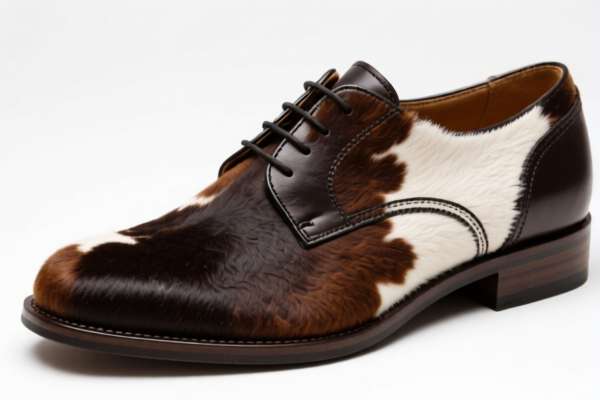
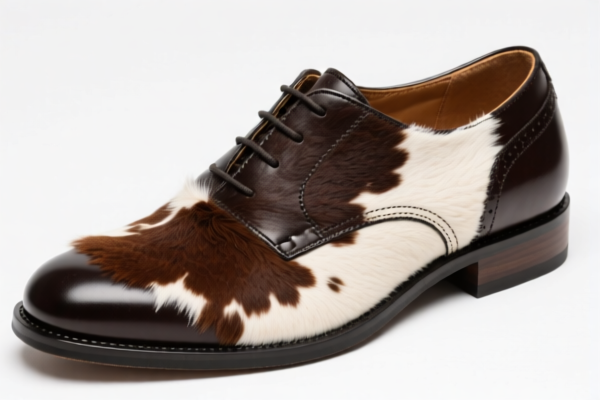
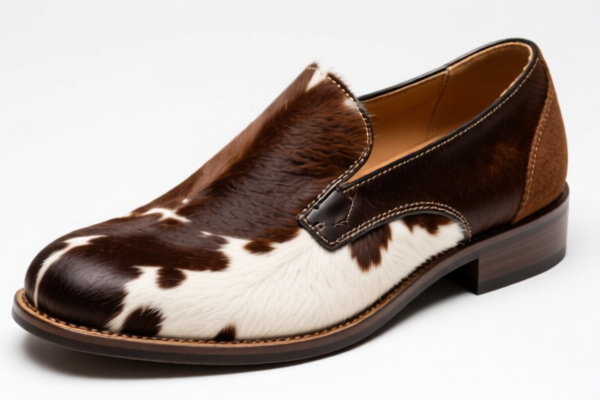

AI分析
🧳 Cowhide for Suitcases (Leather Goods & Raw Materials)
🌐 HS Code Reference & Customs Clearance Guide | 2026 Latest Tariff Analysis | Professional Compliance Strategy
📌 I. Product Definition & Classification: Understanding "Cowhide for Suitcases"
In international trade, "cowhide for suitcases" is not a single unified commodity. It is strictly divided based on processing level and final form:
- Finished Leather Goods (H.S. 4202): Ready-to-use luggage, handbags, or briefcases made from leather. These are complete containers with hardware, lining, and structure.
- Raw/Processed Leather Materials (H.S. 4107): Untanned or partially tanned cowhide, specifically "full-grain" or split leather, intended only as raw material for manufacturing bags, belts, or collars. These are not finished products.
⚠️ Critical Distinction:
- If the item is a finished suitcase, handbag, or briefcase → Classify under 4202
- If the item is raw leather hide (even if labeled "for suitcases") → Classify under 4107
- Misclassification leads to drastic tax differences and customs delays.
📦 II. HS Code Classification Details (2026 Latest Tariff Reference)
Based on the provided data, here are the exact HS codes and their descriptions:
| HS Code | Product Description | Application Scenario | Classification Basis |
|---|---|---|---|
4202.11.00.90 |
Cowhide luggage; material: leather; purpose: bag/container | Finished suitcases, travel bags, duffel bags | ✅ Finished Goods |
4202.11.00.30 |
Cowhide luggage; material: leather; includes handbags, briefcases, etc. | Commercial briefcases, professional handbags, laptop cases | ✅ Finished Goods |
4107.11.70.50 |
Full-grain cowhide; used for bags, boxes, belts, collars | Raw leather sheets, full-grain hides, semi-finished leather | ❌ Raw Material |
4107.12.70.50 |
Cowhide material; purpose: bags/boxes | Split leather, corrected grain leather for bag manufacturing | ❌ Raw Material |
🔍 Key Reminder:
- Finished products (with shape, handles, zippers) go to 4202.
- Raw/semi-finished leather (flat hides, no structure) goes to 4107.
- Even if the supplier says "for suitcases," if it’s not a finished bag, it’s 4107.
💰 III. 2026 Latest Tariff Rate Breakdown (Including Surtaxes & Policy Add-ons)
✅ Applicable Country: United States (US)
✅ Origin: China (CN)
✅ Effective Date: Current rates apply as per 2025-2026 trade policies
🎯 1. 4202.11.00.90 & 4202.11.00.30 —— Finished Cowhide Luggage
| Item | Detail |
|---|---|
| Basic Tariff | 8.0% |
| Section 301 Surtax | 25.0% |
| 122-Clause Tariff | 10.0% |
| Total Tariff Rate | 43.0% |
| Tax Calculation | CIF Value × 43% |
| De Minimis Exemption | ❌ Not Eligible (Deny De Minimis for Chinese-origin leather goods under these codes) |
| Legal Basis Path | HTSUS:4202.11.00 → Section 301: Footnote 9903.88.01 → IEEPA:9903.01.25 |
📌 Explanation:
- Finished leather luggage from China is heavily taxed.
- The 43% total rate includes base duty (8%) + Section 301 (25%) + 122-Clause (10%).
- This is a high-cost category; importers must factor this into pricing.
🎯 2. 4107.11.70.50 & 4107.12.70.50 —— Raw/Processed Cowhide
| Item | Detail |
|---|---|
| Basic Tariff | 5.0% |
| Section 301 Surtax | 0.0% |
| 122-Clause Tariff | 10.0% |
| Total Tariff Rate | 15.0% |
| Tax Calculation | CIF Value × 15% |
| De Minimis Exemption | ❌ Not Eligible (Though lower, still subject to 122-Clause) |
| Legal Basis Path | HTSUS:4107.11/12 → IEEPA:9903.01.24 → 122-Clause: Footnote 9903.22.01 |
📌 Explanation:
- Raw leather hides have a significantly lower tariff (15%) compared to finished goods.
- No Section 301 surtax applies to raw hides.
- However, the 122-Clause 10% still applies, making it cheaper but not tax-free.
- Strategy Tip: If possible, import raw hides (4107) and manufacture finished goods abroad to avoid the 25% Section 301 tax on finished products (4202).
🛠️ IV. Customs Clearance Practical Advice (Best Practices & Pitfalls)
✅ 1. Documentation Checklist (Mandatory)
| Document | Required? | Notes |
|---|---|---|
| ✅ Commercial Invoice | ✔️ | Must specify: "Leather" or "Finished Luggage," not vague terms like "Goods" |
| ✅ Packing List | ✔️ | Detail weight, dimensions, and quantity per HS code |
| ✅ Certificate of Origin (CO) | ✔️ | Confirm Chinese origin for surtax calculation |
| ✅ Product Photos | ✔️ | Show finished structure (for 4202) or raw hide texture (for 4107) |
| ✅ Material Declaration | ✔️ | Specify "Full-grain Cowhide" or "Split Leather" |
| ✅ 122-Clause Compliance Statement | ✔️ | Confirm if goods fall under Section 122 (if applicable) |
✅ 2. Classification Strategy (Critical Tips)
🔥 "Finished vs. Raw: One Step Determines Tax!"
| Scenario | Correct HS Code | Tariff | Common Mistake |
|---|---|---|---|
| Finished suitcase with handles, zipper, lining | 4202.11.00.90 / .30 |
43% | Declaring as "leather material" → 4107 (15%) → Penalty for misclassification! |
| Raw cowhide sheets, no structure | 4107.11.70.50 / .12.70.50 |
15% | Declaring as "luggage" → 4202 (43%) → Overpayment |
| Partially assembled bag (no hardware) | Case-by-case | Usually 4202 | If it has basic shape but no handles → Still likely 4202 |
📌 Warning:
- Do not attempt to classify finished goods as raw material to save 28% in tax. Customs will inspect and reclassify, leading to duties owed + penalties + delays.
- For raw hides, ensure no "finished" features (e.g., stitching, pockets) are present.
✅ 3. Special Considerations
| Situation | Advice |
|---|---|
| OEM Luggage | Provide design specs and bill of materials. Clarify if components are shipped separately. |
| Raw Hides with Embossing | If only embossed (no cutting/sewing), still 4107. If cut to shape, likely 4202. |
| 122-Clause Applicability | Confirm if the specific hide type falls under Section 122. Most general leather goods do. |
| De Minimis (Section 321) | Not available for Chinese-origin goods under these HS codes. All shipments subject to full duty. |
🌍 V. Global Market Comparison (2026 Latest)
| Country/Region | Recommended HS Code | Tariff (China Origin) | Certification | Notes |
|---|---|---|---|---|
| 🇺🇸 USA | 4202.11.00.90 |
43% | None required for import | High due to 301 + 122-Clause |
| 🇺🇸 USA | 4107.11.70.50 |
15% | None required for import | Lower, but raw material only |
| 🇨🇳 China | 4202.11.00.90 |
10-15% (import duty) | CCC (if applicable) | Lower than US; good for export market |
| 🇪🇺 EU | 4202.11.00 |
4.7% (MFN) | None | No Section 301 equivalent |
| 🇬🇧 UK | 4202.11.00 |
4.7% (MFN) | None | Post-Brexit tariff structure |
📌 Conclusion:
- USA has the highest tariffs for Chinese leather goods due to trade policies.
- Importing raw hides (4107) to the US is significantly cheaper than finished goods.
- Diversify supply chain: Consider manufacturing finished goods in Vietnam, Mexico, or Thailand to avoid US surtaxes.
📌 VI. Common Mistakes & Pitfalls (Lessons Learned)
❌ Mistake 1: Declaring finished suitcases as "leather material" to pay 15% instead of 43%
👉 Consequence: Customs audit → Back duties + 25% penalty + shipment held
❌ Mistake 2: Assuming "122-Clause" applies to all leather
👉 Consequence: Underpayment if 122-Clause does not apply, or overpayment if it does. Verify specific HS footnotes.
❌ Mistake 3: Ignoring Section 301 for finished goods
👉 Consequence: Unexpected 25% surtax at border → Cash flow crisis
❌ Mistake 4: Using vague descriptions like "Leather Bag"
👉 Consequence: Customs may classify under highest possible rate → Delays
✅ Best Practice:
"Specify 'Finished Luggage' or 'Raw Leather Hide' clearly. Provide photos. Verify 122-Clause applicability. Do not mix codes in one shipment."
🎯 VII. Conclusion: Precision Classification Saves Money
🎯 Key Takeaway:
🔹 Finished Luggage (4202) = 43% Total Tax (High cost)
🔹 Raw Hide (4107) = 15% Total Tax (Lower cost)
🔹 Strategy: Import raw hides, manufacture locally or in third countries, then export finished goods to avoid US surtaxes.
📌 Pro Tip:
If you are a US importer, request an Advance Ruling from CBP for ambiguous cases (e.g., partially assembled bags). This provides legal certainty and prevents post-clearance audits.
📣 Immediate Action:
📞 Consult a licensed customs broker
📋 Prepare detailed product specifications
🚀 Optimize supply chain to mitigate tariff impact
✨ Professional Compliance Starts with Accurate Classification!
💼 Every Percent Saved is Pure Profit!
用户评价
关于 HS 编码归类
协调制度(HS)是由世界海关组织(WCO)制定的国际贸易商品分类标准。全球 200 多个国家采用 HS 系统作为海关关税、贸易统计和进出口监管的基础。
每个 HS 编码遵循以下层级结构:
- 章(2 位)——商品大类(例如:第 84 章:机器和机械设备)
- 品目(4 位)——章内的更具体分类
- 子目(6 位)——国际通用细分,所有 WCO 成员国统一使用
- 本国细分(8-10 位)——各国自行扩展的细分编码,如美国 HTSUS 10 位编码
正确的 HS 编码归类对于顺利通关、准确缴纳关税和遵守贸易法规至关重要。错误归类可能导致海关延误、多缴关税或罚款。
从CN进口到US时,适用的关税税率可能包括:
- 最惠国(MFN)税率——适用于 WTO 成员国的标准关税税率
- 普通税率——适用于无贸易协定国家
- 贸易救济关税——附加关税,如 301 条款(反倾销)、232 条款(国家安全)或反补贴税
本页内容仅供参考。如需正式归类,请咨询当地海关或持牌报关代理。