Cowhide for Suitcases
CN → US| HS Code | Tariff Rate | Origin | Destination | Doc |
|---|---|---|---|---|
| 4202110090 | 43.0% | CN | US | Official Doc |
| 4202110030 | 43.0% | CN | US | Official Doc |
| 4107117050 | 15.0% | CN | US | Official Doc |
| 4107127050 | 15.0% | CN | US | Official Doc |
Product Images
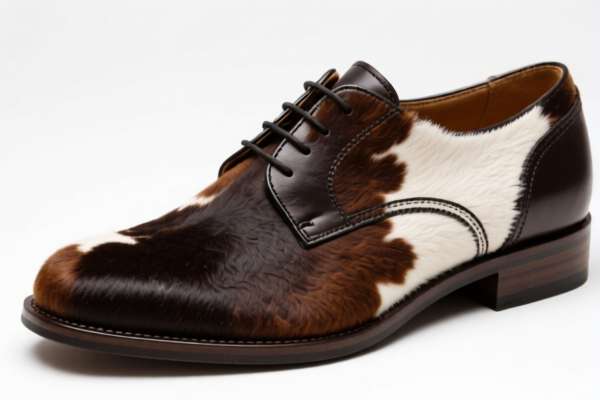
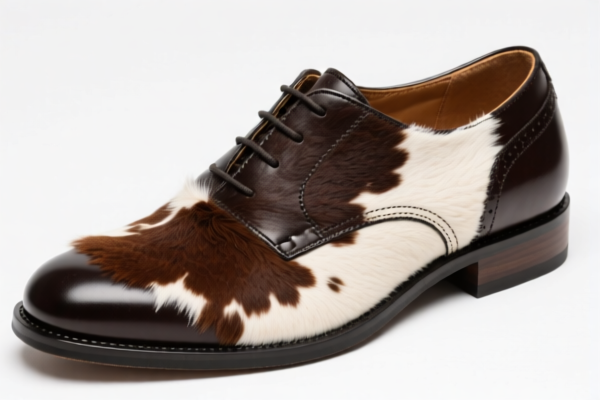
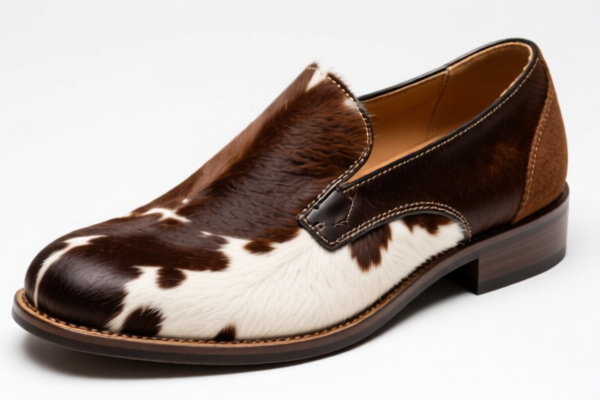

AI Analysis
🧳 Cowhide for Suitcases (Leather Goods & Raw Materials)
🌐 HS Code Reference & Customs Clearance Guide | 2026 Latest Tariff Analysis | Professional Compliance Strategy
📌 I. Product Definition & Classification: Understanding "Cowhide for Suitcases"
In international trade, "cowhide for suitcases" is not a single unified commodity. It is strictly divided based on processing level and final form:
- Finished Leather Goods (H.S. 4202): Ready-to-use luggage, handbags, or briefcases made from leather. These are complete containers with hardware, lining, and structure.
- Raw/Processed Leather Materials (H.S. 4107): Untanned or partially tanned cowhide, specifically "full-grain" or split leather, intended only as raw material for manufacturing bags, belts, or collars. These are not finished products.
⚠️ Critical Distinction:
- If the item is a finished suitcase, handbag, or briefcase → Classify under 4202
- If the item is raw leather hide (even if labeled "for suitcases") → Classify under 4107
- Misclassification leads to drastic tax differences and customs delays.
📦 II. HS Code Classification Details (2026 Latest Tariff Reference)
Based on the provided data, here are the exact HS codes and their descriptions:
| HS Code | Product Description | Application Scenario | Classification Basis |
|---|---|---|---|
4202.11.00.90 |
Cowhide luggage; material: leather; purpose: bag/container | Finished suitcases, travel bags, duffel bags | ✅ Finished Goods |
4202.11.00.30 |
Cowhide luggage; material: leather; includes handbags, briefcases, etc. | Commercial briefcases, professional handbags, laptop cases | ✅ Finished Goods |
4107.11.70.50 |
Full-grain cowhide; used for bags, boxes, belts, collars | Raw leather sheets, full-grain hides, semi-finished leather | ❌ Raw Material |
4107.12.70.50 |
Cowhide material; purpose: bags/boxes | Split leather, corrected grain leather for bag manufacturing | ❌ Raw Material |
🔍 Key Reminder:
- Finished products (with shape, handles, zippers) go to 4202.
- Raw/semi-finished leather (flat hides, no structure) goes to 4107.
- Even if the supplier says "for suitcases," if it’s not a finished bag, it’s 4107.
💰 III. 2026 Latest Tariff Rate Breakdown (Including Surtaxes & Policy Add-ons)
✅ Applicable Country: United States (US)
✅ Origin: China (CN)
✅ Effective Date: Current rates apply as per 2025-2026 trade policies
🎯 1. 4202.11.00.90 & 4202.11.00.30 —— Finished Cowhide Luggage
| Item | Detail |
|---|---|
| Basic Tariff | 8.0% |
| Section 301 Surtax | 25.0% |
| 122-Clause Tariff | 10.0% |
| Total Tariff Rate | 43.0% |
| Tax Calculation | CIF Value × 43% |
| De Minimis Exemption | ❌ Not Eligible (Deny De Minimis for Chinese-origin leather goods under these codes) |
| Legal Basis Path | HTSUS:4202.11.00 → Section 301: Footnote 9903.88.01 → IEEPA:9903.01.25 |
📌 Explanation:
- Finished leather luggage from China is heavily taxed.
- The 43% total rate includes base duty (8%) + Section 301 (25%) + 122-Clause (10%).
- This is a high-cost category; importers must factor this into pricing.
🎯 2. 4107.11.70.50 & 4107.12.70.50 —— Raw/Processed Cowhide
| Item | Detail |
|---|---|
| Basic Tariff | 5.0% |
| Section 301 Surtax | 0.0% |
| 122-Clause Tariff | 10.0% |
| Total Tariff Rate | 15.0% |
| Tax Calculation | CIF Value × 15% |
| De Minimis Exemption | ❌ Not Eligible (Though lower, still subject to 122-Clause) |
| Legal Basis Path | HTSUS:4107.11/12 → IEEPA:9903.01.24 → 122-Clause: Footnote 9903.22.01 |
📌 Explanation:
- Raw leather hides have a significantly lower tariff (15%) compared to finished goods.
- No Section 301 surtax applies to raw hides.
- However, the 122-Clause 10% still applies, making it cheaper but not tax-free.
- Strategy Tip: If possible, import raw hides (4107) and manufacture finished goods abroad to avoid the 25% Section 301 tax on finished products (4202).
🛠️ IV. Customs Clearance Practical Advice (Best Practices & Pitfalls)
✅ 1. Documentation Checklist (Mandatory)
| Document | Required? | Notes |
|---|---|---|
| ✅ Commercial Invoice | ✔️ | Must specify: "Leather" or "Finished Luggage," not vague terms like "Goods" |
| ✅ Packing List | ✔️ | Detail weight, dimensions, and quantity per HS code |
| ✅ Certificate of Origin (CO) | ✔️ | Confirm Chinese origin for surtax calculation |
| ✅ Product Photos | ✔️ | Show finished structure (for 4202) or raw hide texture (for 4107) |
| ✅ Material Declaration | ✔️ | Specify "Full-grain Cowhide" or "Split Leather" |
| ✅ 122-Clause Compliance Statement | ✔️ | Confirm if goods fall under Section 122 (if applicable) |
✅ 2. Classification Strategy (Critical Tips)
🔥 "Finished vs. Raw: One Step Determines Tax!"
| Scenario | Correct HS Code | Tariff | Common Mistake |
|---|---|---|---|
| Finished suitcase with handles, zipper, lining | 4202.11.00.90 / .30 |
43% | Declaring as "leather material" → 4107 (15%) → Penalty for misclassification! |
| Raw cowhide sheets, no structure | 4107.11.70.50 / .12.70.50 |
15% | Declaring as "luggage" → 4202 (43%) → Overpayment |
| Partially assembled bag (no hardware) | Case-by-case | Usually 4202 | If it has basic shape but no handles → Still likely 4202 |
📌 Warning:
- Do not attempt to classify finished goods as raw material to save 28% in tax. Customs will inspect and reclassify, leading to duties owed + penalties + delays.
- For raw hides, ensure no "finished" features (e.g., stitching, pockets) are present.
✅ 3. Special Considerations
| Situation | Advice |
|---|---|
| OEM Luggage | Provide design specs and bill of materials. Clarify if components are shipped separately. |
| Raw Hides with Embossing | If only embossed (no cutting/sewing), still 4107. If cut to shape, likely 4202. |
| 122-Clause Applicability | Confirm if the specific hide type falls under Section 122. Most general leather goods do. |
| De Minimis (Section 321) | Not available for Chinese-origin goods under these HS codes. All shipments subject to full duty. |
🌍 V. Global Market Comparison (2026 Latest)
| Country/Region | Recommended HS Code | Tariff (China Origin) | Certification | Notes |
|---|---|---|---|---|
| 🇺🇸 USA | 4202.11.00.90 |
43% | None required for import | High due to 301 + 122-Clause |
| 🇺🇸 USA | 4107.11.70.50 |
15% | None required for import | Lower, but raw material only |
| 🇨🇳 China | 4202.11.00.90 |
10-15% (import duty) | CCC (if applicable) | Lower than US; good for export market |
| 🇪🇺 EU | 4202.11.00 |
4.7% (MFN) | None | No Section 301 equivalent |
| 🇬🇧 UK | 4202.11.00 |
4.7% (MFN) | None | Post-Brexit tariff structure |
📌 Conclusion:
- USA has the highest tariffs for Chinese leather goods due to trade policies.
- Importing raw hides (4107) to the US is significantly cheaper than finished goods.
- Diversify supply chain: Consider manufacturing finished goods in Vietnam, Mexico, or Thailand to avoid US surtaxes.
📌 VI. Common Mistakes & Pitfalls (Lessons Learned)
❌ Mistake 1: Declaring finished suitcases as "leather material" to pay 15% instead of 43%
👉 Consequence: Customs audit → Back duties + 25% penalty + shipment held
❌ Mistake 2: Assuming "122-Clause" applies to all leather
👉 Consequence: Underpayment if 122-Clause does not apply, or overpayment if it does. Verify specific HS footnotes.
❌ Mistake 3: Ignoring Section 301 for finished goods
👉 Consequence: Unexpected 25% surtax at border → Cash flow crisis
❌ Mistake 4: Using vague descriptions like "Leather Bag"
👉 Consequence: Customs may classify under highest possible rate → Delays
✅ Best Practice:
"Specify 'Finished Luggage' or 'Raw Leather Hide' clearly. Provide photos. Verify 122-Clause applicability. Do not mix codes in one shipment."
🎯 VII. Conclusion: Precision Classification Saves Money
🎯 Key Takeaway:
🔹 Finished Luggage (4202) = 43% Total Tax (High cost)
🔹 Raw Hide (4107) = 15% Total Tax (Lower cost)
🔹 Strategy: Import raw hides, manufacture locally or in third countries, then export finished goods to avoid US surtaxes.
📌 Pro Tip:
If you are a US importer, request an Advance Ruling from CBP for ambiguous cases (e.g., partially assembled bags). This provides legal certainty and prevents post-clearance audits.
📣 Immediate Action:
📞 Consult a licensed customs broker
📋 Prepare detailed product specifications
🚀 Optimize supply chain to mitigate tariff impact
✨ Professional Compliance Starts with Accurate Classification!
💼 Every Percent Saved is Pure Profit!
Customer Reviews
About HS Code Classification
The Harmonized System (HS) is an internationally standardized nomenclature developed by the World Customs Organization (WCO) to classify traded products. Over 200 countries use the HS system as the basis for customs tariffs, trade statistics, and import/export regulations.
Each HS code follows a hierarchical structure:
- Chapter (2 digits) — Broad category of goods (e.g., Chapter 84: Machinery and Mechanical Appliances)
- Heading (4 digits) — More specific grouping within the chapter
- Subheading (6 digits) — Internationally standardized breakdown, used by all WCO member countries
- National subdivisions (8-10 digits) — Country-specific extensions for further classification, such as US HTSUS 10-digit codes
Correct HS code classification is essential for smooth customs clearance, accurate duty payment, and compliance with trade regulations. Misclassification can lead to customs delays, overpayment of duties, or penalties.
When importing from CN to US, the applicable tariff rates may include:
- Most-Favored-Nation (MFN) rate — The standard duty rate applied to WTO members
- General rate — Applied to countries without trade agreements
- Trade remedy duties — Additional tariffs such as Section 301 (anti-dumping), Section 232 (national security), or countervailing duties
The information provided on this page is for reference purposes only. For official classification, please consult with your local customs authority or a licensed customs broker.