Creosote Treated Non Coniferous Wood
CN → US| HS编码 | 关税税率 | 原产国 | 目的国 | 文档 |
|---|---|---|---|---|
| 4407990295 | 35.0% | CN | US | 官方文档 |
| 3208900000 | 38.2% | CN | US | 官方文档 |
| 3208100000 | 38.7% | CN | US | 官方文档 |
商品图片
AI分析
🪵 Creosote Treated Non-Coniferous Wood: The HS Code Dilemma & 2026 Clearance Strategy
🌐 HS Code Reference & Customs Clearance Guide | 2026 Latest Tariff Analysis | Professional Compliance Strategy
📌 I. Product Definition: What is "Creosote Treated Non-Coniferous Wood"?
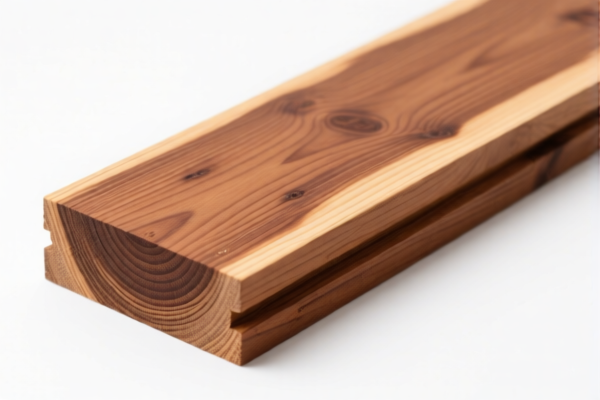
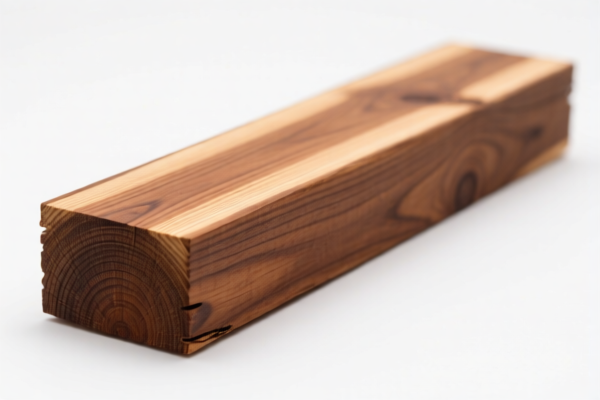
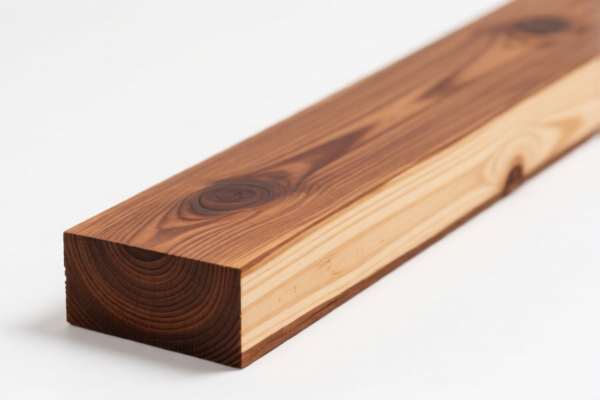
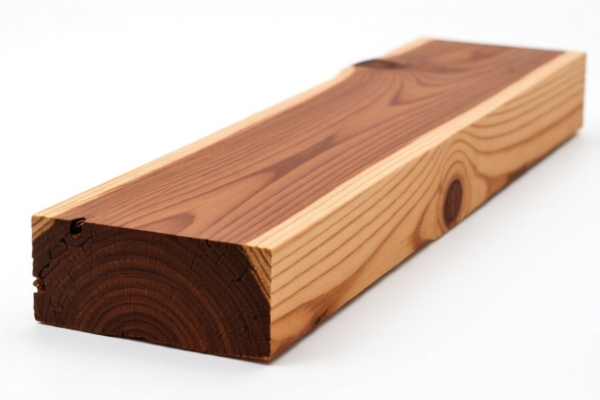
Creosote-treated non-coniferous wood refers to hardwood (deciduous) timber that has been impregnated with creosote, a distillation product of coal tar or wood tar, primarily used as a preservative against rot, fungi, and insects.
Key Characteristics: * Material: Non-coniferous (hardwoods like oak, beech, mahogany, etc., not pine, spruce, or fir). * Treatment: Chemical impregnation with creosote (a type of paint/coating/preservative). * Form: Typically planed, sawn, or roughly shaped wood, but heavily modified by the chemical treatment.
⚠️ Critical Classification Conflict:
The product sits at the intersection of Chapter 44 (Wood) and Chapter 32 (Extracts/Tanning/Dyestuffs/Paints).
- Is it Wood (Chapter 44) because the substrate is wood?
- Or is it a Chemical Product/Paint (Chapter 32) because the defining feature is the creosote treatment?
This ambiguity leads to multiple possible HS Codes with significantly different tax implications.
📦 II. HS Code Classification Details (2026 Latest Tariff Authority Comparison)
Based on the provided data, three primary HS Codes are viable candidates. Each has a distinct legal rationale and tax burden.
| HS Code | Product Description | Rationale for Inclusion | Key Differentiator |
|---|---|---|---|
4407.99.02.95 |
Wood sawn or chipped lengthwise, sliced or peeled, whether or not planed, sanded or finger-jointed, of a thickness exceeding 6 mm, of other non-coniferous wood | Material-Based: The core substance is non-coniferous wood. The treatment is viewed as a secondary process. | Classifies as Wood. Lower base tax (0%), but high duties. |
3208.90.00.00 |
Paints and varnishes based on synthetic polymers or chemical derivatives of cellulose, dispersed or dissolved in a non-aqueous medium; other | Composition-Based: Creosote is a chemical coating. The "treatment" implies the use of a paint-like substance. | Classifies as Paint/Coating. Higher base tax (3.2%). |
3208.10.00.00 |
Paints and varnishes based on polyester resins | Assumed Composition: Based on common industry inference that creosote treatments may share functional properties with polyester-based coatings. | Classifies as Polyester Paint. Highest base tax (3.7%). |
🔍 重点提醒 (Key Warning):
-4407.99.02.95is the most material-accurate if the wood structure remains dominant.
-3208.90.00.00is the most treatment-accurate if the chemical preservation is the primary commercial feature.
-3208.10.00.00is a risky assumption based on "polyester" inference and should be avoided unless technical data sheets confirm polyester content.
💰 III. 2026 Latest Tariff Rate Breakdown (Including Additional Duties & Policy Surcharges)
✅ Applicable Country: United States (US)
✅ Origin: China (CN)
✅ Effective Date: November 10, 2025 (and subsequent imports)
🎯 1. 4407.99.02.95 —— Non-Coniferous Wood (Treated)
| Item | Content |
|---|---|
| Base Tariff | 0.0% (ad valorem) |
| USITC Additional Duty | +25.0% (Under USITC Footnote for Section 301) |
| IEEPA Additional Duty | +10.0% (China/HK specific, effective Nov 10, 2025) |
| Total Effective Rate | 35.0% |
| Tax Calculation | CIF Value × 35% |
| De Minimis Exemption | ❌ Not Eligible (deny_de_minimis) |
| Legal Authority Path | IEEPA:9903.01.25 → USITC:4407.99.02.95 → FOOTNOTE:301 |
📌 Explanation:
- This code benefits from a 0% base rate, making it the "cheapest" option on paper.
- However, the 25% Section 301 duty and 10% IEEPA duty push the total to 35%.
- Risk: Customs may reclassify this as a chemical product (3208) if the creosote penetrates deeply, altering the wood's fundamental character.
🎯 2. 3208.90.00.00 —— Other Paints/Varnishes (Synthetic Polymer Based)
| Item | Content |
|---|---|
| Base Tariff | 3.2% |
| USITC Additional Duty | +25.0% |
| IEEPA Additional Duty | +10.0% |
| Total Effective Rate | 38.2% |
| Tax Calculation | CIF Value × 38.2% |
| De Minimis Exemption | ❌ Not Eligible (deny_de_minimis) |
| Legal Authority Path | IEEPA:9903.01.24 → USITC:3208.90.00.00 → FOOTNOTE:301 |
📌 Explanation:
- This code classifies the wood as a "painted/coated" good.
- The base rate is 3.2%, which is higher than wood (0%).
- Total Tax: 38.2%, which is 3.2% higher than the wood classification.
- Justification: If the product is primarily sold as a "preservative-treated wood" where the chemical treatment is the key value driver, this classification may be more defensible.
🎯 3. 3208.10.00.00 —— Paints/Varnishes Based on Polyester Resins
| Item | Content |
|---|---|
| Base Tariff | 3.7% |
| USITC Additional Duty | +25.0% |
| IEEPA Additional Duty | +10.0% |
| Total Effective Rate | 38.7% |
| Tax Calculation | CIF Value × 38.7% |
| De Minimis Exemption | ❌ Not Eligible (deny_de_minimis) |
| Legal Authority Path | IEEPA:9901.25 → USITC:3208.10.00.00 → FOOTNOTE:301 |
📌 Explanation:
- This is the most expensive option at 38.7%.
- Caution: The summary notes that the product name "does not directly note polyester material." Using this code relies on an assumption ("based on common sense") that the paint is polyester-based.
- Risk: High risk of customs rejection if technical data sheets do not confirm polyester content. Avoid unless proven.
🛠️ IV. Customs Clearance Practical Advice (Battle-Tested Pitfall Guide)
✅ 1. Required Documentation Checklist (No Exceptions)
| Document | Mandatory? | Description |
|---|---|---|
| ✅ Technical Data Sheet (TDS) | ✔️ | Must specify the exact chemical composition of the "creosote." Is it coal-tar based? Does it contain synthetic polymers? |
| ✅ Material Safety Data Sheet (MSDS/SDS) | ✔️ | Required for chemical compliance. |
| ✅ Product Photos | ✔️ | Show the wood surface, labeling, and any treatment markings. |
| ✅ Commercial Invoice | ✔️ | Clearly state: "Creosote Treated Non-Coniferous Wood" + HS Code. |
| ✅ Packing List | ✔️ | Detail weight, volume, and treatment type. |
| ✅ Third-Party Test Report | ✔️ | Certificate of Analysis (COA) for the treatment chemicals. |
✅ 2. Declaration Strategy (Key Mnemonic)
🔥 "Wood Base, 0% Tax, But Watch the 35%! Chemical Base, 38% Tax, But Safer for Chemicals!"
| Scenario | Correct Declaration | Wrong Practice |
|---|---|---|
| Hardwood poles for landscaping | 4407.99.02.95 (35%) |
Declaring as "Paint" → 38.2% (Overpay) |
| Railway ties (heavily treated) | 4407.99.02.95 (35%) |
Declaring as "Other" → Risk of reclassification |
| Wood with surface coating only | 4407.99.02.95 (35%) |
Declaring as 3208 → Unnecessary 3.2% base tax increase |
| Creosote canisters (not wood) | 3208.90.00.00 (38.2%) |
Declaring as "Wood" → Illegal |
📌 Crucial Insight:
- If the wood is structurally sound and the treatment is penetrative,4407.99.02.95is generally preferred for cost savings (35% vs 38.2%).
- If the product is primarily a chemical container or the wood is sacrificial,3208.90.00.00might be more accurate.
- Never use3208.10.00.00unless you have proof of polyester content.
✅ 3. Special Case Handling
| Situation | Handling Advice |
|---|---|
| OEM Custom Treated Wood | Provide client order + treatment certificate. Avoid "generic" descriptions. |
| Wood with Multiple Treatments | Declare the primary treatment. If creosote is main, use 4407 or 3208.90. |
| Used vs. New Wood | Both fall under similar HS codes, but "Used" may require additional fumigation certificates. |
| Wood for Railway Sleepers | Often classified under 4407.99.02.95. Ensure treatment compliance with EPA/FHWA standards. |
🌍 V. Global Market Clearance Comparison (2026 Latest)
| Country/Region | Recommended HS Code | Tariff (China Origin) | Certification Required | Notes |
|---|---|---|---|---|
| 🇺🇸 USA | 4407.99.02.95 |
35% | EPA Compliance, Fumigation | 38.2% if classified as paint. |
| 🇨🇳 China | 4407.99.02.95 |
5% | CCC (if applicable) | Low tariff, high volume. |
| 🇪🇺 EU | 4407.99.00.90 |
0-4% | REACH, FSC | Creosote is heavily restricted; may require special permits. |
| 🇦🇺 Australia | 4407.99.00.00 |
5% | Biosecurity Clearance | Strict quarantine rules for wood. |
| 🇯🇵 Japan | 4407.99.00.00 |
0-3.2% | Phytosanitary Certificate | Check ISPM 15 compliance. |
📌 Conclusion:
- USA is the most challenging market due to Section 301 + IEEPA duties.
- EU has strict environmental regulations on creosote (carcinogenic). Export to EU may require additional permits beyond just HS classification.
- China/Asia markets have lower tariffs but may require fumigation certificates.
📌 VI. Common Mistakes & Pitfall Guide (Blood & Tears Lessons)
❌ Mistake 1: Declaring treated wood as "Untreated Wood"
👉 Consequence: Customs penalty for misdeclaration. Creosote is a regulated chemical.
❌ Mistake 2: Using 3208.10.00.00 without Polyester Proof
👉 Consequence: Customs rejection, reclassification to 3208.90.00.00 (38.2%) or 4407 (35%), plus delays.
❌ Mistake 3: Ignoring IEEPA 10% Surcharge
👉 Consequence: Underpayment by 10%. Retroactive tax + interest upon audit.
❌ Mistake 4: Splitting "Wood + Paint" into two lines
👉 Consequence: If declared as separate items, each may be taxed separately, leading to higher total duty or suspicion of undervaluation.
✅ Correct Practice:
"Creosote-Treated Hardwood Timber, Non-Coniferous, for Landscaping Use, HS Code 4407.99.02.95, Treated in accordance with EPA Guidelines"
🎯 VII. Conclusion: Professional Declaration, Save Time, Save Money!
🎯 Remember the Mnemonic:
🔹 "Wood Base, 0% Tax, Plus 35% Total!"
🔹 "Paint Base, 3% Tax, Plus 38% Total!"
🔹 "Polyester Guess, 3.7% Tax, 38.7% Total, Avoid Risk!"
🔹 "HS Code Determines Life, 3% Difference, Declaration Determines Profit!"
📌 Pro Tip:
If your wood is originating from Vietnam, Mexico, Thailand, or Malaysia, you may apply for IEEPA Exemption (if eligible under USMCA or other FTAs), potentially reducing the tariff to 0-5%.
Recommend Advance Ruling (Pre-classification) with US Customs (CBP) to avoid post-clearance audits.
📣 Take Action Now:
📞 Contact a Professional Customs Broker + Provide Product TDS + Apply for HS Code Pre-Ruling
🚀 Ensure Your Creosote Wood Passes Customs Smoothly, Exports Efficiently, and Maximizes Profit!
✨ Professional Clearance Starts with Precise Classification!
💼 Every Dollar of Cost Deserves Exact Calculation!
用户评价
关于 HS 编码归类
协调制度(HS)是由世界海关组织(WCO)制定的国际贸易商品分类标准。全球 200 多个国家采用 HS 系统作为海关关税、贸易统计和进出口监管的基础。
每个 HS 编码遵循以下层级结构:
- 章(2 位)——商品大类(例如:第 84 章:机器和机械设备)
- 品目(4 位)——章内的更具体分类
- 子目(6 位)——国际通用细分,所有 WCO 成员国统一使用
- 本国细分(8-10 位)——各国自行扩展的细分编码,如美国 HTSUS 10 位编码
正确的 HS 编码归类对于顺利通关、准确缴纳关税和遵守贸易法规至关重要。错误归类可能导致海关延误、多缴关税或罚款。
从CN进口到US时,适用的关税税率可能包括:
- 最惠国(MFN)税率——适用于 WTO 成员国的标准关税税率
- 普通税率——适用于无贸易协定国家
- 贸易救济关税——附加关税,如 301 条款(反倾销)、232 条款(国家安全)或反补贴税
本页内容仅供参考。如需正式归类,请咨询当地海关或持牌报关代理。