Creosote Treated Non Coniferous Wood
CN → US| HS Code | Tariff Rate | Origin | Destination | Doc |
|---|---|---|---|---|
| 4407990295 | 35.0% | CN | US | Official Doc |
| 3208900000 | 38.2% | CN | US | Official Doc |
| 3208100000 | 38.7% | CN | US | Official Doc |
Product Images
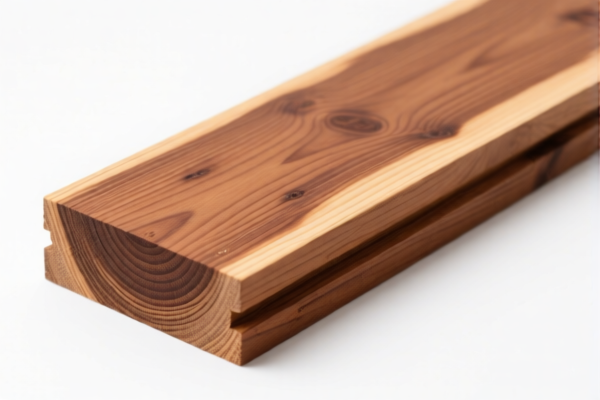
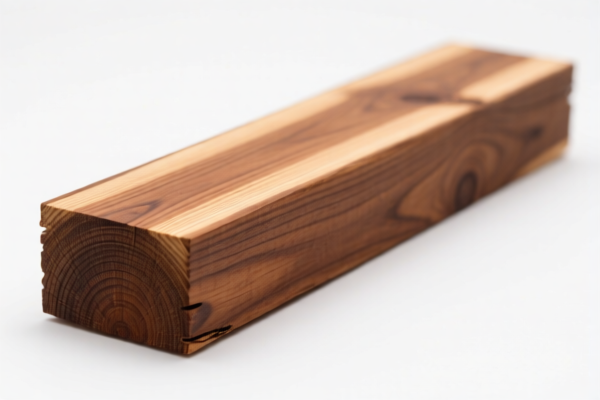
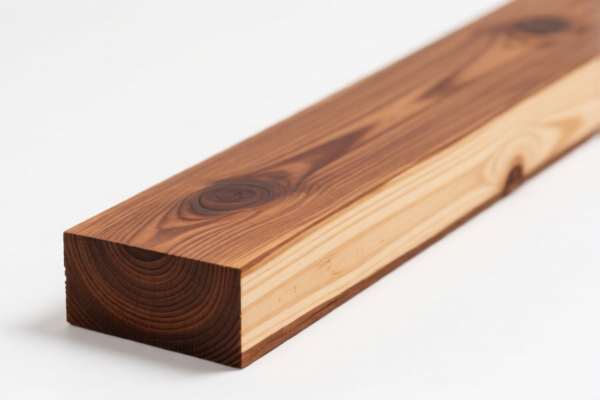
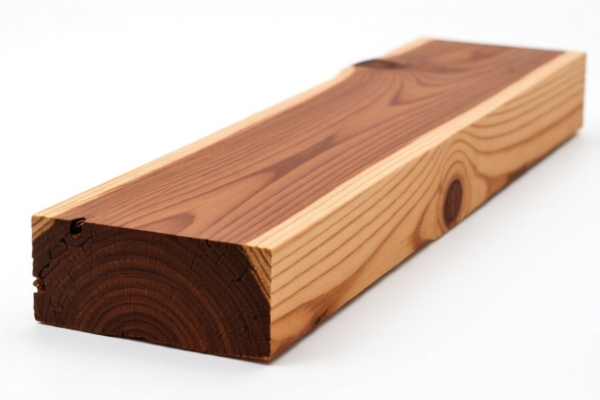
AI Analysis
🪵 Creosote Treated Non-Coniferous Wood: The HS Code Dilemma & 2026 Clearance Strategy
🌐 HS Code Reference & Customs Clearance Guide | 2026 Latest Tariff Analysis | Professional Compliance Strategy
📌 I. Product Definition: What is "Creosote Treated Non-Coniferous Wood"?
Creosote-treated non-coniferous wood refers to hardwood (deciduous) timber that has been impregnated with creosote, a distillation product of coal tar or wood tar, primarily used as a preservative against rot, fungi, and insects.
Key Characteristics: * Material: Non-coniferous (hardwoods like oak, beech, mahogany, etc., not pine, spruce, or fir). * Treatment: Chemical impregnation with creosote (a type of paint/coating/preservative). * Form: Typically planed, sawn, or roughly shaped wood, but heavily modified by the chemical treatment.
⚠️ Critical Classification Conflict:
The product sits at the intersection of Chapter 44 (Wood) and Chapter 32 (Extracts/Tanning/Dyestuffs/Paints).
- Is it Wood (Chapter 44) because the substrate is wood?
- Or is it a Chemical Product/Paint (Chapter 32) because the defining feature is the creosote treatment?
This ambiguity leads to multiple possible HS Codes with significantly different tax implications.
📦 II. HS Code Classification Details (2026 Latest Tariff Authority Comparison)
Based on the provided data, three primary HS Codes are viable candidates. Each has a distinct legal rationale and tax burden.
| HS Code | Product Description | Rationale for Inclusion | Key Differentiator |
|---|---|---|---|
4407.99.02.95 |
Wood sawn or chipped lengthwise, sliced or peeled, whether or not planed, sanded or finger-jointed, of a thickness exceeding 6 mm, of other non-coniferous wood | Material-Based: The core substance is non-coniferous wood. The treatment is viewed as a secondary process. | Classifies as Wood. Lower base tax (0%), but high duties. |
3208.90.00.00 |
Paints and varnishes based on synthetic polymers or chemical derivatives of cellulose, dispersed or dissolved in a non-aqueous medium; other | Composition-Based: Creosote is a chemical coating. The "treatment" implies the use of a paint-like substance. | Classifies as Paint/Coating. Higher base tax (3.2%). |
3208.10.00.00 |
Paints and varnishes based on polyester resins | Assumed Composition: Based on common industry inference that creosote treatments may share functional properties with polyester-based coatings. | Classifies as Polyester Paint. Highest base tax (3.7%). |
🔍 重点提醒 (Key Warning):
-4407.99.02.95is the most material-accurate if the wood structure remains dominant.
-3208.90.00.00is the most treatment-accurate if the chemical preservation is the primary commercial feature.
-3208.10.00.00is a risky assumption based on "polyester" inference and should be avoided unless technical data sheets confirm polyester content.
💰 III. 2026 Latest Tariff Rate Breakdown (Including Additional Duties & Policy Surcharges)
✅ Applicable Country: United States (US)
✅ Origin: China (CN)
✅ Effective Date: November 10, 2025 (and subsequent imports)
🎯 1. 4407.99.02.95 —— Non-Coniferous Wood (Treated)
| Item | Content |
|---|---|
| Base Tariff | 0.0% (ad valorem) |
| USITC Additional Duty | +25.0% (Under USITC Footnote for Section 301) |
| IEEPA Additional Duty | +10.0% (China/HK specific, effective Nov 10, 2025) |
| Total Effective Rate | 35.0% |
| Tax Calculation | CIF Value × 35% |
| De Minimis Exemption | ❌ Not Eligible (deny_de_minimis) |
| Legal Authority Path | IEEPA:9903.01.25 → USITC:4407.99.02.95 → FOOTNOTE:301 |
📌 Explanation:
- This code benefits from a 0% base rate, making it the "cheapest" option on paper.
- However, the 25% Section 301 duty and 10% IEEPA duty push the total to 35%.
- Risk: Customs may reclassify this as a chemical product (3208) if the creosote penetrates deeply, altering the wood's fundamental character.
🎯 2. 3208.90.00.00 —— Other Paints/Varnishes (Synthetic Polymer Based)
| Item | Content |
|---|---|
| Base Tariff | 3.2% |
| USITC Additional Duty | +25.0% |
| IEEPA Additional Duty | +10.0% |
| Total Effective Rate | 38.2% |
| Tax Calculation | CIF Value × 38.2% |
| De Minimis Exemption | ❌ Not Eligible (deny_de_minimis) |
| Legal Authority Path | IEEPA:9903.01.24 → USITC:3208.90.00.00 → FOOTNOTE:301 |
📌 Explanation:
- This code classifies the wood as a "painted/coated" good.
- The base rate is 3.2%, which is higher than wood (0%).
- Total Tax: 38.2%, which is 3.2% higher than the wood classification.
- Justification: If the product is primarily sold as a "preservative-treated wood" where the chemical treatment is the key value driver, this classification may be more defensible.
🎯 3. 3208.10.00.00 —— Paints/Varnishes Based on Polyester Resins
| Item | Content |
|---|---|
| Base Tariff | 3.7% |
| USITC Additional Duty | +25.0% |
| IEEPA Additional Duty | +10.0% |
| Total Effective Rate | 38.7% |
| Tax Calculation | CIF Value × 38.7% |
| De Minimis Exemption | ❌ Not Eligible (deny_de_minimis) |
| Legal Authority Path | IEEPA:9901.25 → USITC:3208.10.00.00 → FOOTNOTE:301 |
📌 Explanation:
- This is the most expensive option at 38.7%.
- Caution: The summary notes that the product name "does not directly note polyester material." Using this code relies on an assumption ("based on common sense") that the paint is polyester-based.
- Risk: High risk of customs rejection if technical data sheets do not confirm polyester content. Avoid unless proven.
🛠️ IV. Customs Clearance Practical Advice (Battle-Tested Pitfall Guide)
✅ 1. Required Documentation Checklist (No Exceptions)
| Document | Mandatory? | Description |
|---|---|---|
| ✅ Technical Data Sheet (TDS) | ✔️ | Must specify the exact chemical composition of the "creosote." Is it coal-tar based? Does it contain synthetic polymers? |
| ✅ Material Safety Data Sheet (MSDS/SDS) | ✔️ | Required for chemical compliance. |
| ✅ Product Photos | ✔️ | Show the wood surface, labeling, and any treatment markings. |
| ✅ Commercial Invoice | ✔️ | Clearly state: "Creosote Treated Non-Coniferous Wood" + HS Code. |
| ✅ Packing List | ✔️ | Detail weight, volume, and treatment type. |
| ✅ Third-Party Test Report | ✔️ | Certificate of Analysis (COA) for the treatment chemicals. |
✅ 2. Declaration Strategy (Key Mnemonic)
🔥 "Wood Base, 0% Tax, But Watch the 35%! Chemical Base, 38% Tax, But Safer for Chemicals!"
| Scenario | Correct Declaration | Wrong Practice |
|---|---|---|
| Hardwood poles for landscaping | 4407.99.02.95 (35%) |
Declaring as "Paint" → 38.2% (Overpay) |
| Railway ties (heavily treated) | 4407.99.02.95 (35%) |
Declaring as "Other" → Risk of reclassification |
| Wood with surface coating only | 4407.99.02.95 (35%) |
Declaring as 3208 → Unnecessary 3.2% base tax increase |
| Creosote canisters (not wood) | 3208.90.00.00 (38.2%) |
Declaring as "Wood" → Illegal |
📌 Crucial Insight:
- If the wood is structurally sound and the treatment is penetrative,4407.99.02.95is generally preferred for cost savings (35% vs 38.2%).
- If the product is primarily a chemical container or the wood is sacrificial,3208.90.00.00might be more accurate.
- Never use3208.10.00.00unless you have proof of polyester content.
✅ 3. Special Case Handling
| Situation | Handling Advice |
|---|---|
| OEM Custom Treated Wood | Provide client order + treatment certificate. Avoid "generic" descriptions. |
| Wood with Multiple Treatments | Declare the primary treatment. If creosote is main, use 4407 or 3208.90. |
| Used vs. New Wood | Both fall under similar HS codes, but "Used" may require additional fumigation certificates. |
| Wood for Railway Sleepers | Often classified under 4407.99.02.95. Ensure treatment compliance with EPA/FHWA standards. |
🌍 V. Global Market Clearance Comparison (2026 Latest)
| Country/Region | Recommended HS Code | Tariff (China Origin) | Certification Required | Notes |
|---|---|---|---|---|
| 🇺🇸 USA | 4407.99.02.95 |
35% | EPA Compliance, Fumigation | 38.2% if classified as paint. |
| 🇨🇳 China | 4407.99.02.95 |
5% | CCC (if applicable) | Low tariff, high volume. |
| 🇪🇺 EU | 4407.99.00.90 |
0-4% | REACH, FSC | Creosote is heavily restricted; may require special permits. |
| 🇦🇺 Australia | 4407.99.00.00 |
5% | Biosecurity Clearance | Strict quarantine rules for wood. |
| 🇯🇵 Japan | 4407.99.00.00 |
0-3.2% | Phytosanitary Certificate | Check ISPM 15 compliance. |
📌 Conclusion:
- USA is the most challenging market due to Section 301 + IEEPA duties.
- EU has strict environmental regulations on creosote (carcinogenic). Export to EU may require additional permits beyond just HS classification.
- China/Asia markets have lower tariffs but may require fumigation certificates.
📌 VI. Common Mistakes & Pitfall Guide (Blood & Tears Lessons)
❌ Mistake 1: Declaring treated wood as "Untreated Wood"
👉 Consequence: Customs penalty for misdeclaration. Creosote is a regulated chemical.
❌ Mistake 2: Using 3208.10.00.00 without Polyester Proof
👉 Consequence: Customs rejection, reclassification to 3208.90.00.00 (38.2%) or 4407 (35%), plus delays.
❌ Mistake 3: Ignoring IEEPA 10% Surcharge
👉 Consequence: Underpayment by 10%. Retroactive tax + interest upon audit.
❌ Mistake 4: Splitting "Wood + Paint" into two lines
👉 Consequence: If declared as separate items, each may be taxed separately, leading to higher total duty or suspicion of undervaluation.
✅ Correct Practice:
"Creosote-Treated Hardwood Timber, Non-Coniferous, for Landscaping Use, HS Code 4407.99.02.95, Treated in accordance with EPA Guidelines"
🎯 VII. Conclusion: Professional Declaration, Save Time, Save Money!
🎯 Remember the Mnemonic:
🔹 "Wood Base, 0% Tax, Plus 35% Total!"
🔹 "Paint Base, 3% Tax, Plus 38% Total!"
🔹 "Polyester Guess, 3.7% Tax, 38.7% Total, Avoid Risk!"
🔹 "HS Code Determines Life, 3% Difference, Declaration Determines Profit!"
📌 Pro Tip:
If your wood is originating from Vietnam, Mexico, Thailand, or Malaysia, you may apply for IEEPA Exemption (if eligible under USMCA or other FTAs), potentially reducing the tariff to 0-5%.
Recommend Advance Ruling (Pre-classification) with US Customs (CBP) to avoid post-clearance audits.
📣 Take Action Now:
📞 Contact a Professional Customs Broker + Provide Product TDS + Apply for HS Code Pre-Ruling
🚀 Ensure Your Creosote Wood Passes Customs Smoothly, Exports Efficiently, and Maximizes Profit!
✨ Professional Clearance Starts with Precise Classification!
💼 Every Dollar of Cost Deserves Exact Calculation!
Customer Reviews
About HS Code Classification
The Harmonized System (HS) is an internationally standardized nomenclature developed by the World Customs Organization (WCO) to classify traded products. Over 200 countries use the HS system as the basis for customs tariffs, trade statistics, and import/export regulations.
Each HS code follows a hierarchical structure:
- Chapter (2 digits) — Broad category of goods (e.g., Chapter 84: Machinery and Mechanical Appliances)
- Heading (4 digits) — More specific grouping within the chapter
- Subheading (6 digits) — Internationally standardized breakdown, used by all WCO member countries
- National subdivisions (8-10 digits) — Country-specific extensions for further classification, such as US HTSUS 10-digit codes
Correct HS code classification is essential for smooth customs clearance, accurate duty payment, and compliance with trade regulations. Misclassification can lead to customs delays, overpayment of duties, or penalties.
When importing from CN to US, the applicable tariff rates may include:
- Most-Favored-Nation (MFN) rate — The standard duty rate applied to WTO members
- General rate — Applied to countries without trade agreements
- Trade remedy duties — Additional tariffs such as Section 301 (anti-dumping), Section 232 (national security), or countervailing duties
The information provided on this page is for reference purposes only. For official classification, please consult with your local customs authority or a licensed customs broker.