Crinkled, Embossed, Perforated Paper and Paperboard
CN → US| HS编码 | 关税税率 | 原产国 | 目的国 | 文档 |
|---|---|---|---|---|
| 4823908680 | 35.0% | CN | US | 官方文档 |
| 4823908620 | 35.0% | CN | US | 官方文档 |
| 4803004000 | 35.0% | CN | US | 官方文档 |
| 4803004000 | 35.0% | CN | US | 官方文档 |
| 4823908680 | 35.0% | CN | US | 官方文档 |
商品图片
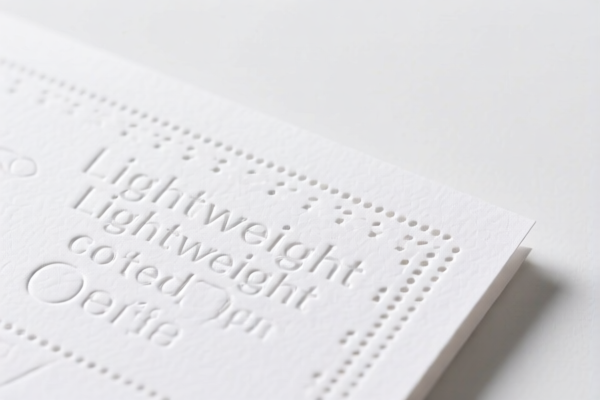
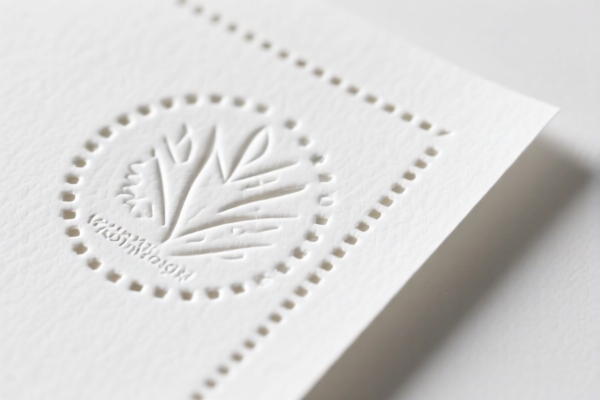
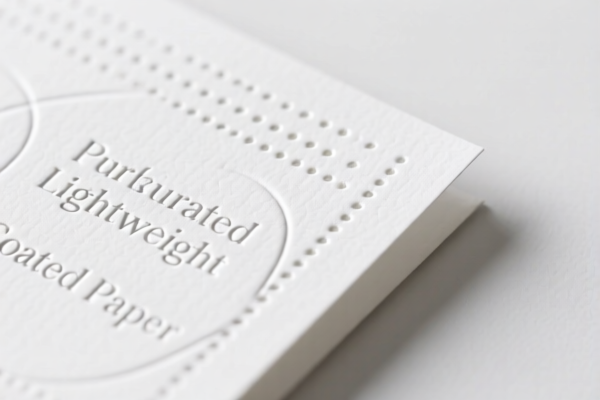
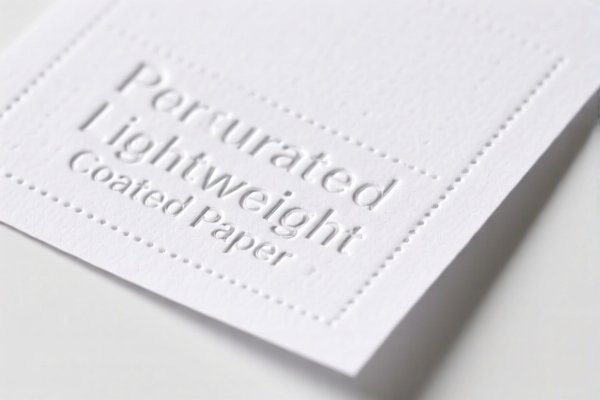
AI分析
📄 Crinkled, Embossed, Perforated Paper and Paperboard (Paper Products)
🌐 HS Code Reference & Customs Clearance Guide | 2026 Latest Tariff Analysis | Professional Clearance Strategy
📌 I. Product Definition & Classification: Do You Really Understand "Processed Paper"?
Paper that has been crinkled (creped), embossed, or perforated sits in a unique intersection of raw material and finished goods. In international trade, the classification depends heavily on whether the product is considered a "raw/semi-finished substrate" or a "finished/processed product."
Core Paper/Substrate (Crinkled/Embossed/Perforated): Raw paper or paperboard that has undergone surface treatment (crinkling, embossing, perforating) but retains its primary identity as a sheet for further processing (e.g., for making tissue, packaging, or industrial wipes). Processed Paper Products: Paper items that have been cut, shaped, or finished into a specific usable form (e.g., napkins, toilet paper rolls, specific packaging forms) where the crinkling/embossing is part of the final utility.
⚠️ Key Distinction Point: - If the product is a sheet/roll primarily intended for further conversion (like a blank substrate) with texture/perforation added for mechanical or surface reasons → Likely Chapter 4803 (Crinkled/Embossed/Perforated Paper). - If the product is a finished good or a specific "other" paper article without a more specific heading → Likely Chapter 4823 (Other paper articles). - Crucial Nuance: Even if "Perforated," if it is not yet in a final consumer-ready shape (like a specific napkin size), it often stays in 4803. If it is cut/finished, it moves to 4823.
📦 II. HS Code Classification Details (2026 Latest Tariff Authority Comparison)
| HS Code | Product Description | Application Scenario | Status (Raw vs. Finished) |
|---|---|---|---|
4803.00.40.00 |
Paper & Paperboard, creped, crinkled, embossed, or perforated | Raw substrate, industrial rolls, base material for tissue/packaging | 🔄 Semi-finished / Substrate |
4803.00.4000 |
Paper & Paperboard, creped, crinkled, embossed, or perforated | Generic classification for textured paper rolls/sheets | 🔄 Semi-finished / Substrate |
4823.90.86.20 |
Paper products, embossed/perforated, raw material or semi-finished | Specific embossed/perforated raw materials for further manufacturing | 🔄 Raw Material / Semi-finished |
4823.90.86.80 |
Paper products, embossed/perforated, processed articles | Finished paper items (e.g., specific wipes, napkins, decorative paper) where no other heading fits | ✅ Finished Product |
🔍 Key Reminder: - Chapter 4803 is for paper that is specifically crinkled, embossed, or perforated as a primary characteristic of the sheet itself. - Chapter 4823 is a "catch-all" for paper articles. However,
4823.90.86specifically targets embossed/perforated items. - Overlap Alert: If the product is a simple roll of embossed paper,4803is often more accurate. If it is a cut, folded, or specific shaped item (like a wipe or a shaped napkin),4823is correct. - Do not split shipment: If you have both raw substrate and finished goods, declare them separately to avoid misclassification penalties.
💰 III. 2026 Latest Tariff Rate Breakdown (Including Surcharges & Policy Add-ons)
✅ Applicable Country: United States (US)
✅ Country of Origin: China (CN)
✅ Effective Date: From November 10, 2025 (and subsequent imports)
🎯 1. 4803.00.40.00 & 4803.00.4000 —— Crinkled, Embossed, or Perforated Paper (Substrate)
| Item | Detail |
|---|---|
| Base Duty Rate | 0% (ad valorem) |
| USITC Additional Duty | +25% (Under USITC Footnote 9903.88.01 / Section 301) |
| IEEPA Additional Duty | +10% (Targeting China/HK products, effective from Nov 10, 2025) |
| Total Duty Rate | 35.0% |
| Tax Calculation | CIF Value × 35% |
| De Minimis Exemption Available? | ❌ No (deny_de_minimis applies to these codes under current IEEPA rules) |
| Legal Basis Path | IEEPA:9903.01.25 → IEEPA:9903.01.24 → USITC:4803.00.40.00 → FOOTNOTE:9903.88.01 |
📌 Explanation: - "USITC 25%": Standard Section 301 additional duty for Chinese goods. - "IEEPA 10%": New surcharge for specific Chinese-origin paper products under IEEPA. - Total 35%: High cost. Even though base duty is 0%, the surcharges are significant.
🎯 2. 4823.90.86.20 & 4823.90.86.80 —— Other Paper Products (Embossed/Perforated/Processed)
| Item | Detail |
|---|---|
| Base Duty Rate | 0% (ad valorem) |
| USITC Additional Duty | +25% (Section 301) |
| IEEPA Additional Duty | +10% (Targeting China/HK products) |
| Total Duty Rate | 35.0% |
| Tax Calculation | CIF Value × 35% |
| De Minimis Exemption Available? | ❌ No (deny_de_minimis applies) |
| Legal Basis Path | IEEPA:9903.01.25 → IEEPA:9903.01.24 → USITC:4823.90.86.xx → FOOTNOTE:9903.88.01 |
📌 Note: - Whether classified as a semi-finished raw material (
4823.90.86.20) or a finished article (4823.90.86.80), the tariff structure is identical. - Both Crinkled/Embossed/Perforated characteristics trigger the same surcharge framework. - Do not assume "finished goods" get a lower rate; in this specific 301/IEEPA context, they are taxed equally.
🛠️ IV. Customs Clearance Practical Advice (Battle-Tested Pitfall Avoidance)
✅ 1. Required Documentation Checklist (Non-Negotiable)
| Document | Mandatory? | Description |
|---|---|---|
| ✅ Product Specification Sheet | ✔️ | Must detail: Weight, GSM, Sheet Size, Type of Embossing/Perforation, Material Composition (100% Paper). |
| ✅ Product Photos (Front, Side, Close-up) | ✔️ | Must clearly show the crinkled/embossed/perforated texture. If perforated, show the hole pattern. |
| ✅ Commercial Invoice | ✔️ | Must clearly state: "Crinkled, Embossed, or Perforated Paper/Paperboard." Do not use generic "Paper." |
| ✅ Packing List | ✔️ | Specify if items are rolls or sheets. Clearly distinguish between Raw Material vs. Finished Good. |
| ✅ Bill of Lading / Air Waybill | ✔️ | Ensure HS Codes are pre-agreed with freight forwarder. |
| ✅ Origin Certificate (if applicable) | ✔️ | For IEEPA tracking. If not Chinese origin, this helps, but this data assumes CN origin. |
✅ 2. Declaration Tips (Key Mantras)
🔥 "Be Specific on Texture! Don't Just Say 'Paper'!"
| Scenario | Correct Declaration | Incorrect Practice |
|---|---|---|
| Embossed Paper Rolls | 4803.00.40.00 + "Embossed Paper Roll" |
Generic "Paper Rolls" → Risk of Audit |
| Perforated Tissue Base | 4803.00.40.00 + "Perforated Tissue Substrate" |
"Tissue Paper" → Misclassification |
| Cut Embossed Napkins | 4823.90.86.80 + "Embossed Paper Napkins" |
"Paper" → Wrong Heading |
| Semi-finished Embossed Sheets | 4823.90.86.20 + "Embossed Paper Sheets (Raw)" |
"Finished Goods" → Over-declaring value/duty risk |
✅ 3. Special Situation Handling
| Situation | Handling Advice |
|---|---|
| Mixed Container (Raw + Finished) | Declare Separately! Do not lump all "Paper" into one line item. Use 4803 for substrate and 4823 for finished goods. |
| "122 Clause" Tariff Mention | The data provided lists "122 Clause 10%". In current US trade policy, this often refers to Section 301 additional duties. Ensure your broker is applying the 301 Footnote correctly. |
| De Minimis (Section 321) | ❌ Do Not Use. Paper products with these textures from China are excluded from the $800 de minimis exemption. You must file formal entry (Type 01 or 02). |
| OEM Custom Packaging | If the paper is custom-printed/embossed for a specific brand, still classify by physical characteristics (embossed/perforated), not by brand. |
🌍 V. Global Main Market Clearance Comparison (2026 Latest)
| Country/Region | Recommended HS Code | Duty Rate | Certification | Remarks |
|---|---|---|---|---|
| 🇺🇸 USA | 4803.00.40.00 / 4823.90.86.xx |
35% | No specific, but accurate description is key | High Tax. 0% Base + 25% 301 + 10% IEEPA. |
| 🇨🇳 China | 4803.00.40.00 |
5-10% | Standard | Import duty varies by specific type. |
| 🇪🇺 EU | 4803.00.40.00 |
~0-2% | CE (if for specific use) | Generally low duty, but strict environmental regulations. |
| 🇦🇺 Australia | 4803.00.40.00 |
5% | Standard | No major surcharges like US. |
| 🇯🇵 Japan | 4803.00.40.00 |
0-3% | Standard | Low duty, FTA benefits possible with China-Japan EPA. |
📌 Conclusion: - The US is the most expensive market for these paper products due to the 35% combined surcharge. - China Origin Impact: If your product is made in China, expect the full 35%. If sourced from Vietnam/Mexico/India, check for IEEPA exemptions or Section 301 exclusions, which could drop the rate to 0-5%. - Strategy: Consider supply chain diversification if targeting the US market to avoid the 35% hit.
📌 VI. Common Errors & Pitfalls (Lessons Learned)
❌ Error 1: Declaring "Embossed Paper" simply as "Paper" (4801-4805)
👉 Consequence: CBP may reclassify to 4803 or 4823 and assess back-duties + penalties.
✅ Fix: Always specify "Crinkled," "Embossed," or "Perforated" in the description.
❌ Error 2: Assuming "Perforated" means it's a finished good (e.g., ticket stubs)
👉 Consequence: If it's a roll of perforated sheet, it belongs in 4803, not 4823. Misclassification leads to audit flags.
✅ Fix: Determine if the perforation is for further processing (4803) or final use (4823).
❌ Error 3: Trying to use De Minimis ($800) for small shipments
👉 Consequence: Rejected Entry. CBP strictly denies de minimis for paper products from China under IEEPA/301.
✅ Fix: File formal entry regardless of value.
❌ Error 4: Ignoring the "122 Clause" / IEEPA component
👉 Consequence: Under-paying by 10%.
✅ Fix: Ensure your broker applies the IEEPA 10% surcharge on top of the 25% 301 duty.
🎯 VII. Conclusion: Precision in Description Saves Money!
🎯 Remember the Mantra:
🔹 "Texture Defines the Code!"
🔹 "Crinkled/Embossed/Perforated = Chapter 4803 or 4823!"
🔹 "China Origin = 35% Total Duty!"
🔹 "No De Minimis!"
📌 Pro Tip:
If your paper is sourced from non-China origins (e.g., Vietnam, Thailand), you MAY be eligible for 0%–5% duty by avoiding the IEEPA/301 surcharges.
Recommendation:
📞 Consult a licensed US Customs Broker
📋 Provide Detailed Product Specs (Texture, Form, Origin)
🚀 Get an Advance Ruling (Pre-classification) to avoid post-entry audits.
✨ Professional Clearance Starts with Accurate Classification!
💼 Your Cost Control Depends on the Decimal Point in HS Code!
用户评价
关于 HS 编码归类
协调制度(HS)是由世界海关组织(WCO)制定的国际贸易商品分类标准。全球 200 多个国家采用 HS 系统作为海关关税、贸易统计和进出口监管的基础。
每个 HS 编码遵循以下层级结构:
- 章(2 位)——商品大类(例如:第 84 章:机器和机械设备)
- 品目(4 位)——章内的更具体分类
- 子目(6 位)——国际通用细分,所有 WCO 成员国统一使用
- 本国细分(8-10 位)——各国自行扩展的细分编码,如美国 HTSUS 10 位编码
正确的 HS 编码归类对于顺利通关、准确缴纳关税和遵守贸易法规至关重要。错误归类可能导致海关延误、多缴关税或罚款。
从CN进口到US时,适用的关税税率可能包括:
- 最惠国(MFN)税率——适用于 WTO 成员国的标准关税税率
- 普通税率——适用于无贸易协定国家
- 贸易救济关税——附加关税,如 301 条款(反倾销)、232 条款(国家安全)或反补贴税
本页内容仅供参考。如需正式归类,请咨询当地海关或持牌报关代理。