Crinkled, Embossed, Perforated Paper and Paperboard
CN → US| HS Code | Tariff Rate | Origin | Destination | Doc |
|---|---|---|---|---|
| 4823908680 | 35.0% | CN | US | Official Doc |
| 4823908620 | 35.0% | CN | US | Official Doc |
| 4803004000 | 35.0% | CN | US | Official Doc |
| 4803004000 | 35.0% | CN | US | Official Doc |
| 4823908680 | 35.0% | CN | US | Official Doc |
Product Images
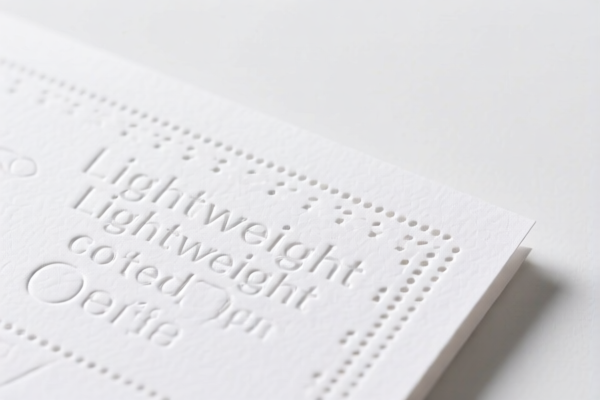
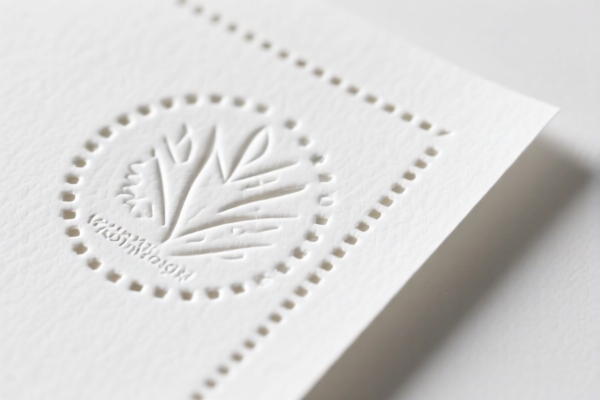
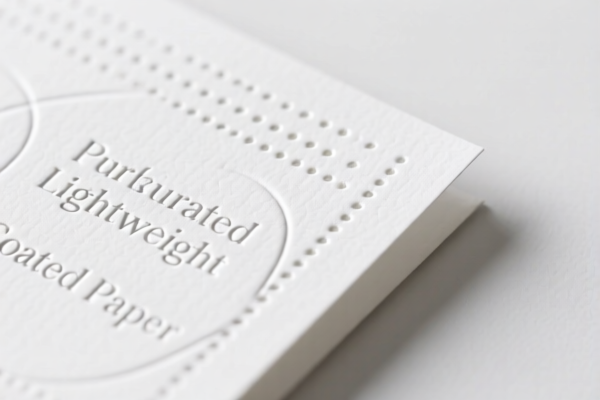
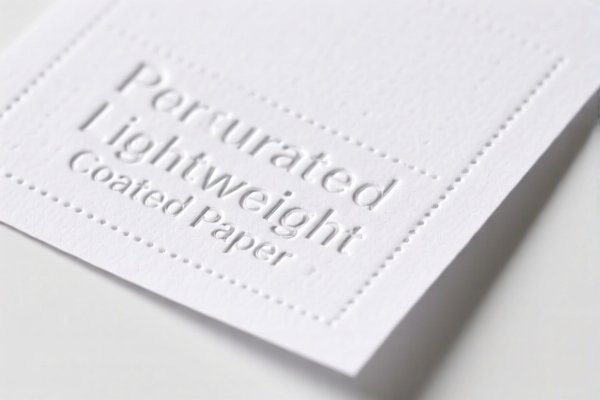
AI Analysis
📄 Crinkled, Embossed, Perforated Paper and Paperboard (Paper Products)
🌐 HS Code Reference & Customs Clearance Guide | 2026 Latest Tariff Analysis | Professional Clearance Strategy
📌 I. Product Definition & Classification: Do You Really Understand "Processed Paper"?
Paper that has been crinkled (creped), embossed, or perforated sits in a unique intersection of raw material and finished goods. In international trade, the classification depends heavily on whether the product is considered a "raw/semi-finished substrate" or a "finished/processed product."
Core Paper/Substrate (Crinkled/Embossed/Perforated): Raw paper or paperboard that has undergone surface treatment (crinkling, embossing, perforating) but retains its primary identity as a sheet for further processing (e.g., for making tissue, packaging, or industrial wipes). Processed Paper Products: Paper items that have been cut, shaped, or finished into a specific usable form (e.g., napkins, toilet paper rolls, specific packaging forms) where the crinkling/embossing is part of the final utility.
⚠️ Key Distinction Point: - If the product is a sheet/roll primarily intended for further conversion (like a blank substrate) with texture/perforation added for mechanical or surface reasons → Likely Chapter 4803 (Crinkled/Embossed/Perforated Paper). - If the product is a finished good or a specific "other" paper article without a more specific heading → Likely Chapter 4823 (Other paper articles). - Crucial Nuance: Even if "Perforated," if it is not yet in a final consumer-ready shape (like a specific napkin size), it often stays in 4803. If it is cut/finished, it moves to 4823.
📦 II. HS Code Classification Details (2026 Latest Tariff Authority Comparison)
| HS Code | Product Description | Application Scenario | Status (Raw vs. Finished) |
|---|---|---|---|
4803.00.40.00 |
Paper & Paperboard, creped, crinkled, embossed, or perforated | Raw substrate, industrial rolls, base material for tissue/packaging | 🔄 Semi-finished / Substrate |
4803.00.4000 |
Paper & Paperboard, creped, crinkled, embossed, or perforated | Generic classification for textured paper rolls/sheets | 🔄 Semi-finished / Substrate |
4823.90.86.20 |
Paper products, embossed/perforated, raw material or semi-finished | Specific embossed/perforated raw materials for further manufacturing | 🔄 Raw Material / Semi-finished |
4823.90.86.80 |
Paper products, embossed/perforated, processed articles | Finished paper items (e.g., specific wipes, napkins, decorative paper) where no other heading fits | ✅ Finished Product |
🔍 Key Reminder: - Chapter 4803 is for paper that is specifically crinkled, embossed, or perforated as a primary characteristic of the sheet itself. - Chapter 4823 is a "catch-all" for paper articles. However,
4823.90.86specifically targets embossed/perforated items. - Overlap Alert: If the product is a simple roll of embossed paper,4803is often more accurate. If it is a cut, folded, or specific shaped item (like a wipe or a shaped napkin),4823is correct. - Do not split shipment: If you have both raw substrate and finished goods, declare them separately to avoid misclassification penalties.
💰 III. 2026 Latest Tariff Rate Breakdown (Including Surcharges & Policy Add-ons)
✅ Applicable Country: United States (US)
✅ Country of Origin: China (CN)
✅ Effective Date: From November 10, 2025 (and subsequent imports)
🎯 1. 4803.00.40.00 & 4803.00.4000 —— Crinkled, Embossed, or Perforated Paper (Substrate)
| Item | Detail |
|---|---|
| Base Duty Rate | 0% (ad valorem) |
| USITC Additional Duty | +25% (Under USITC Footnote 9903.88.01 / Section 301) |
| IEEPA Additional Duty | +10% (Targeting China/HK products, effective from Nov 10, 2025) |
| Total Duty Rate | 35.0% |
| Tax Calculation | CIF Value × 35% |
| De Minimis Exemption Available? | ❌ No (deny_de_minimis applies to these codes under current IEEPA rules) |
| Legal Basis Path | IEEPA:9903.01.25 → IEEPA:9903.01.24 → USITC:4803.00.40.00 → FOOTNOTE:9903.88.01 |
📌 Explanation: - "USITC 25%": Standard Section 301 additional duty for Chinese goods. - "IEEPA 10%": New surcharge for specific Chinese-origin paper products under IEEPA. - Total 35%: High cost. Even though base duty is 0%, the surcharges are significant.
🎯 2. 4823.90.86.20 & 4823.90.86.80 —— Other Paper Products (Embossed/Perforated/Processed)
| Item | Detail |
|---|---|
| Base Duty Rate | 0% (ad valorem) |
| USITC Additional Duty | +25% (Section 301) |
| IEEPA Additional Duty | +10% (Targeting China/HK products) |
| Total Duty Rate | 35.0% |
| Tax Calculation | CIF Value × 35% |
| De Minimis Exemption Available? | ❌ No (deny_de_minimis applies) |
| Legal Basis Path | IEEPA:9903.01.25 → IEEPA:9903.01.24 → USITC:4823.90.86.xx → FOOTNOTE:9903.88.01 |
📌 Note: - Whether classified as a semi-finished raw material (
4823.90.86.20) or a finished article (4823.90.86.80), the tariff structure is identical. - Both Crinkled/Embossed/Perforated characteristics trigger the same surcharge framework. - Do not assume "finished goods" get a lower rate; in this specific 301/IEEPA context, they are taxed equally.
🛠️ IV. Customs Clearance Practical Advice (Battle-Tested Pitfall Avoidance)
✅ 1. Required Documentation Checklist (Non-Negotiable)
| Document | Mandatory? | Description |
|---|---|---|
| ✅ Product Specification Sheet | ✔️ | Must detail: Weight, GSM, Sheet Size, Type of Embossing/Perforation, Material Composition (100% Paper). |
| ✅ Product Photos (Front, Side, Close-up) | ✔️ | Must clearly show the crinkled/embossed/perforated texture. If perforated, show the hole pattern. |
| ✅ Commercial Invoice | ✔️ | Must clearly state: "Crinkled, Embossed, or Perforated Paper/Paperboard." Do not use generic "Paper." |
| ✅ Packing List | ✔️ | Specify if items are rolls or sheets. Clearly distinguish between Raw Material vs. Finished Good. |
| ✅ Bill of Lading / Air Waybill | ✔️ | Ensure HS Codes are pre-agreed with freight forwarder. |
| ✅ Origin Certificate (if applicable) | ✔️ | For IEEPA tracking. If not Chinese origin, this helps, but this data assumes CN origin. |
✅ 2. Declaration Tips (Key Mantras)
🔥 "Be Specific on Texture! Don't Just Say 'Paper'!"
| Scenario | Correct Declaration | Incorrect Practice |
|---|---|---|
| Embossed Paper Rolls | 4803.00.40.00 + "Embossed Paper Roll" |
Generic "Paper Rolls" → Risk of Audit |
| Perforated Tissue Base | 4803.00.40.00 + "Perforated Tissue Substrate" |
"Tissue Paper" → Misclassification |
| Cut Embossed Napkins | 4823.90.86.80 + "Embossed Paper Napkins" |
"Paper" → Wrong Heading |
| Semi-finished Embossed Sheets | 4823.90.86.20 + "Embossed Paper Sheets (Raw)" |
"Finished Goods" → Over-declaring value/duty risk |
✅ 3. Special Situation Handling
| Situation | Handling Advice |
|---|---|
| Mixed Container (Raw + Finished) | Declare Separately! Do not lump all "Paper" into one line item. Use 4803 for substrate and 4823 for finished goods. |
| "122 Clause" Tariff Mention | The data provided lists "122 Clause 10%". In current US trade policy, this often refers to Section 301 additional duties. Ensure your broker is applying the 301 Footnote correctly. |
| De Minimis (Section 321) | ❌ Do Not Use. Paper products with these textures from China are excluded from the $800 de minimis exemption. You must file formal entry (Type 01 or 02). |
| OEM Custom Packaging | If the paper is custom-printed/embossed for a specific brand, still classify by physical characteristics (embossed/perforated), not by brand. |
🌍 V. Global Main Market Clearance Comparison (2026 Latest)
| Country/Region | Recommended HS Code | Duty Rate | Certification | Remarks |
|---|---|---|---|---|
| 🇺🇸 USA | 4803.00.40.00 / 4823.90.86.xx |
35% | No specific, but accurate description is key | High Tax. 0% Base + 25% 301 + 10% IEEPA. |
| 🇨🇳 China | 4803.00.40.00 |
5-10% | Standard | Import duty varies by specific type. |
| 🇪🇺 EU | 4803.00.40.00 |
~0-2% | CE (if for specific use) | Generally low duty, but strict environmental regulations. |
| 🇦🇺 Australia | 4803.00.40.00 |
5% | Standard | No major surcharges like US. |
| 🇯🇵 Japan | 4803.00.40.00 |
0-3% | Standard | Low duty, FTA benefits possible with China-Japan EPA. |
📌 Conclusion: - The US is the most expensive market for these paper products due to the 35% combined surcharge. - China Origin Impact: If your product is made in China, expect the full 35%. If sourced from Vietnam/Mexico/India, check for IEEPA exemptions or Section 301 exclusions, which could drop the rate to 0-5%. - Strategy: Consider supply chain diversification if targeting the US market to avoid the 35% hit.
📌 VI. Common Errors & Pitfalls (Lessons Learned)
❌ Error 1: Declaring "Embossed Paper" simply as "Paper" (4801-4805)
👉 Consequence: CBP may reclassify to 4803 or 4823 and assess back-duties + penalties.
✅ Fix: Always specify "Crinkled," "Embossed," or "Perforated" in the description.
❌ Error 2: Assuming "Perforated" means it's a finished good (e.g., ticket stubs)
👉 Consequence: If it's a roll of perforated sheet, it belongs in 4803, not 4823. Misclassification leads to audit flags.
✅ Fix: Determine if the perforation is for further processing (4803) or final use (4823).
❌ Error 3: Trying to use De Minimis ($800) for small shipments
👉 Consequence: Rejected Entry. CBP strictly denies de minimis for paper products from China under IEEPA/301.
✅ Fix: File formal entry regardless of value.
❌ Error 4: Ignoring the "122 Clause" / IEEPA component
👉 Consequence: Under-paying by 10%.
✅ Fix: Ensure your broker applies the IEEPA 10% surcharge on top of the 25% 301 duty.
🎯 VII. Conclusion: Precision in Description Saves Money!
🎯 Remember the Mantra:
🔹 "Texture Defines the Code!"
🔹 "Crinkled/Embossed/Perforated = Chapter 4803 or 4823!"
🔹 "China Origin = 35% Total Duty!"
🔹 "No De Minimis!"
📌 Pro Tip:
If your paper is sourced from non-China origins (e.g., Vietnam, Thailand), you MAY be eligible for 0%–5% duty by avoiding the IEEPA/301 surcharges.
Recommendation:
📞 Consult a licensed US Customs Broker
📋 Provide Detailed Product Specs (Texture, Form, Origin)
🚀 Get an Advance Ruling (Pre-classification) to avoid post-entry audits.
✨ Professional Clearance Starts with Accurate Classification!
💼 Your Cost Control Depends on the Decimal Point in HS Code!
Customer Reviews
About HS Code Classification
The Harmonized System (HS) is an internationally standardized nomenclature developed by the World Customs Organization (WCO) to classify traded products. Over 200 countries use the HS system as the basis for customs tariffs, trade statistics, and import/export regulations.
Each HS code follows a hierarchical structure:
- Chapter (2 digits) — Broad category of goods (e.g., Chapter 84: Machinery and Mechanical Appliances)
- Heading (4 digits) — More specific grouping within the chapter
- Subheading (6 digits) — Internationally standardized breakdown, used by all WCO member countries
- National subdivisions (8-10 digits) — Country-specific extensions for further classification, such as US HTSUS 10-digit codes
Correct HS code classification is essential for smooth customs clearance, accurate duty payment, and compliance with trade regulations. Misclassification can lead to customs delays, overpayment of duties, or penalties.
When importing from CN to US, the applicable tariff rates may include:
- Most-Favored-Nation (MFN) rate — The standard duty rate applied to WTO members
- General rate — Applied to countries without trade agreements
- Trade remedy duties — Additional tariffs such as Section 301 (anti-dumping), Section 232 (national security), or countervailing duties
The information provided on this page is for reference purposes only. For official classification, please consult with your local customs authority or a licensed customs broker.