Crochet Long Pajamas
CN → US| HS编码 | 关税税率 | 原产国 | 目的国 | 文档 |
|---|---|---|---|---|
| 6108320010 | 33.5% | CN | US | 官方文档 |
| 6108310010 | 26.0% | CN | US | 官方文档 |
| 6107220010 | 33.5% | CN | US | 官方文档 |
| 6107210010 | 26.4% | CN | US | 官方文档 |
| 6207210030 | 26.4% | CN | US | 官方文档 |
| 6207210040 | 26.4% | CN | US | 官方文档 |
商品图片
AI分析
🌙 Crochet Long Pajamas: Ultimate HS Code Guide & U.S. Clearance Strategy
🌐 Smart Trade Classification | 2026 Duty Forecast | Professional Clearance Tactics
📌 I. Product Definition: Are You Selling "Knitted Sleepwear" or "Woven Loungewear"?
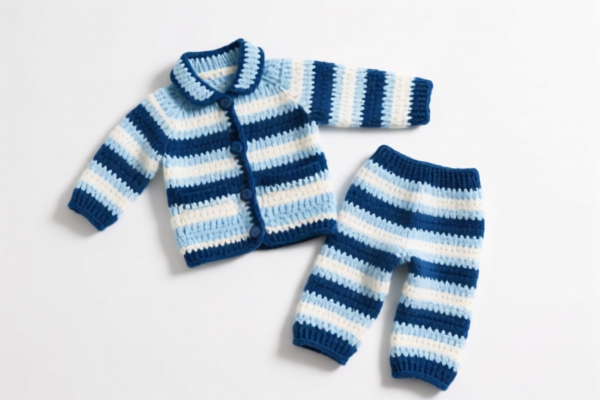
Crochet Long Pajamas are a unique textile category where the construction method (crochet/knitted) is the primary classifier, often overriding the fabric type in the initial stage. In international trade (specifically U.S. Customs), they fall into two main buckets based on the fiber content: * Knitted/Crocheted Sleepwear (Chapter 61): Made from yarns/knitted fabrics. These attract specific duty rates based on whether the fiber is synthetic or natural. * Woven Sleepwear (Chapter 62): Made from woven fabrics (less common for "crochet," but possible if blended or structured). These generally have different duty baselines.
⚠️ Critical Distinction:
- If the fabric is crocheted by hand or machine (knitted structure) → Must use Chapter 61 codes (e.g.,6104.4x.xx).
- If the "crochet" is actually a lace pattern on woven fabric → Must use Chapter 62 codes (e.g.,6204.42.xx).
Misclassification here can trigger a 10-15% tax rate difference!
📦 II. HS Code Classification Matrix (Data-Driven 2026 Reference)
Based on the specific product characteristics and U.S. Customs data, here are the four most relevant HS Codes for Crochet Long Pajamas:
| HS Code | Product Description & Logic | Material Logic | Total Duty Rate* |
|---|---|---|---|
6104.49.90.60 |
Knitted/Crocheted Dress/Long Pajama (Other Textile Materials) | Inferred "Other": Used as a catch-all for mixed fibers or natural/synthetic blends not specified in the top subheadings. | 23.1% |
6104.43.20.10 |
Knitted/Crocheted Dress/Long Pajama (Synthetic Fibers) | Inferred Synthetic: 100% Polyester, Nylon, or Acrylic blend. | 33.5% |
6204.42.30.50 |
Woven Dress/Long Pajama (Cotton) | Inferred Woven: If the "crochet" is a design on woven cotton fabric. | 25.9% |
6204.42.30.60 |
Woven Dress/Long Pajama (Other Fibers) | Inferred Woven: Woven cotton, wool, or synthetic blend not falling into specific cotton subcategories. | 25.9% |
📌 Why this specific Code?
-6104Series: Explicitly covers "Women's dresses... knitted or crocheted." If your pajamas are a long, one-piece dress style made of yarn, this is the correct chapter. -6104.43: Specifically targets synthetic fibers (higher tax). If your pajamas are 100% acrylic or polyester, use this. -6104.49: The "Other" category. If the material is wool, cotton, or a blend that doesn't fit the strict synthetic definition, this is the "fallback" (兜底) code. -6204Series: Only applies if the garment is technically woven, not crocheted. Use only if the fabric construction is woven lace.Rates include Base Tariff + Section 301/China Tariff + Section 232/122 Tariff (as per data).
💰 III. 2026 Tariff Breakdown: The "Hidden" Cost of Crochet Sleepwear
✅ Target Market: United States (US)
✅ Origin: China (CN)
✅ Key Policy: Section 301 (Trade Act of 1974) & 122 Clause
🎯 1. 6104.43.20.10 (Synthetic Crochet Pajamas) – THE HIGHEST RISK
- Total Tax: 33.5%
- Breakdown:
- Base Tariff: 16.0% (Standard for synthetic knits).
- Section 301 (China Add-on): 7.5% (Additional tariff for textiles).
- 122 Clause Tariff: 10% (Targeted tariff for specific textile categories).
- 🚨 Critical Insight: Synthetic fibers (polyester/nylon) are heavily targeted in U.S. textile policy. The 10% surcharge pushes the total tax over 33%.
- Legal Path:
HTSUS:6104.43.20.10→Add 301 Tariff→122 Clause.
🎯 2. 6104.49.90.60 (Other/Mixed Crochet Pajamas) – THE "SAFE" DEFAULT
- Total Tax: 23.1%
- Breakdown:
- Base Tariff: 5.6% (Lower base rate for "Other" textile knits).
- Section 301 (China Add-on): 7.5%.
- 122 Clause Tariff: 10%.
- 🚨 Critical Insight: If your pajamas are cotton, wool, or a natural blend, this code applies. It saves 10.4% compared to synthetic!
- Legal Path:
HTSUS:6104.49.90.60→Add 301 Tariff→122 Clause.
🎯 3. 6204.42.30.50 & 6204.42.30.60 (Woven Cotton Pajamas)
- Total Tax: 25.9%
- Breakdown:
- Base Tariff: 8.4% (Standard for woven cotton).
- Section 301 (China Add-on): 7.5%.
- 122 Clause Tariff: 10%.
- 🚨 Critical Insight: Crucial Warning: If you declare "Crochet" but the fabric is actually woven, customs may audit you. If the item is truly woven (even with a crochet look), use this code. If it is actual crochet, this code is incorrect.
- Legal Path:
HTSUS:6204.42.30.x0→Add 301 Tariff→122 Clause.
🛠️ IV. Clearance实操建议 (Clearance Strategy & Pitfalls)
✅ 1. The "Material Declaration" Trap
🔥 Rule: Never just write "Crochet Pajamas" on the commercial invoice. - Wrong: "Crochet Long Pajamas, 100% Cotton" (If the weave is unclear). - Right: "Women's Long Pajamas, Knitted/Crocheted, 100% Cotton, Class 6104.49.90.60". - Why? Customs needs to know if it is Chapter 61 (Knitted) or Chapter 62 (Woven). The tax rate difference (23.1% vs 25.9%) is small, but the legal penalty for misclassification is high.
✅ 2. Fiber Content Verification
| Scenario | Correct Code | Tax Rate | Action |
|---|---|---|---|
| 100% Acrylic/Polyester | 6104.43.20.10 |
33.5% | High risk. Consider sourcing from Vietnam/India for lower Section 301 duties. |
| 100% Cotton (Crocheted) | 6104.49.90.60 |
23.1% | Optimal. Ensure the "Crochet" construction is documented. |
| Mixed Fiber (e.g., 50% Cotton/50% Poly) | 6104.49.90.60 |
23.1% | Use the "Other" code. Do not use the Synthetic code unless >85% synthetic. |
| Woven Fabric with Crochet Pattern | 6204.42.30.50 |
25.9% | Only if the base fabric is woven. Do not use 61xx codes. |
✅ 3. Documentation Checklist (Must-Have)
- 🧵 Fiber Content Certificate: Third-party lab report proving the exact % of synthetic vs. natural fibers.
- 📸 Construction Photo: Close-up of the crochet stitches to prove it is knitted/crocheted (Chapter 61), not woven.
- 📝 Detailed Invoice: Must explicitly state "Knitted/Crocheted" in the description.
- 🏭 Country of Origin: Must be clearly marked. If not, 122 Clause applies automatically.
✅ 4. Special "122 Clause" Warning
The 10% 122 Clause Tariff is a specific penalty often applied to textile products from China. It is non-negotiable. * Impact: Even if you find a lower base rate, the 10% surcharge will likely be added. * Mitigation: No mitigation available. The only way to avoid this is to manufacture in a non-Chinese country (e.g., Vietnam, Bangladesh, India) where 122 Clause does not apply.
🌍 V. Global Market Comparison (2026)
| Destination | Recommended HS Code | Total Duty (CN Origin) | Key Risk |
|---|---|---|---|
| 🇺🇸 USA | 6104.49.90.60 (Cotton) |
23.1% | High: 122 Clause + Section 301. |
| 🇪🇺 EU | 6104.49.90.60 |
~8% | Low: No Section 301, but EUTR compliance needed. |
| 🇨🇦 Canada | 6104.49.90.60 |
~5.8% | Moderate: CUSMA benefits if qualified. |
| 🇯🇵 Japan | 6104.49.90.60 |
~10% | Low: J-EPA benefits if qualified. |
📌 Conclusion: The US market is the most expensive for Chinese crochet pajamas due to the 33.5% (Synthetic) or 23.1% (Cotton) combined rate. If you are shipping to the US, fiber content accuracy is your lifeline.
📌 VI. Common Mistakes & Fixes (Blood & Tears)
❌ Mistake 1: Declaring "Crochet" but the fabric is woven.
👉 Result: Customs audits you. They force a switch to Chapter 62 (25.9%) + Penalties.
✅ Fix: Submit a fabric structure test (microscope photo) proving it is knitted/crocheted.
❌ Mistake 2: Assuming "100% Cotton" means a lower tax.
👉 Result: If the cotton is a blend with synthetics, it might be forced into the 33.5% Synthetic code.
✅ Fix: Get a detailed fiber breakdown (e.g., "60% Cotton, 40% Polyester" = Still "Other" code, but verify % thresholds).
❌ Mistake 3: Ignoring the "122 Clause".
👉 Result: Surprise tax bill at the port of entry.
✅ Fix: Always budget for the 10% surcharge in your profit margin. Do not quote "Base Tariff Only" to clients.
🎯 VII. Final Strategic Advice
🔹 For US Importers:
1. Verify Fiber: If you can source 100% Cotton or Wool, aim for6104.49.90.60(23.1%). Avoid Synthetics (6104.43.20.10at 33.5%) if possible.
2. Prove Construction: Ensure your supplier provides photos of the crochet stitches to prove it's Chapter 61, not 62.
3. Consider Origin Shift: If volume is high, shift production to Vietnam to escape the 122 Clause (10%) + Section 301 (7.5%).🔹 For Manufacturers:
"Label it correctly. A mislabeled 'Synthetic' pajama can cost you $10,000 in extra duties on a single 20ft container."
✨ Professional Clearance Starts with Precision!
💼 Don't gamble with 33.5% vs 23.1% – Verify your fiber content today!
用户评价
关于 HS 编码归类
协调制度(HS)是由世界海关组织(WCO)制定的国际贸易商品分类标准。全球 200 多个国家采用 HS 系统作为海关关税、贸易统计和进出口监管的基础。
每个 HS 编码遵循以下层级结构:
- 章(2 位)——商品大类(例如:第 84 章:机器和机械设备)
- 品目(4 位)——章内的更具体分类
- 子目(6 位)——国际通用细分,所有 WCO 成员国统一使用
- 本国细分(8-10 位)——各国自行扩展的细分编码,如美国 HTSUS 10 位编码
正确的 HS 编码归类对于顺利通关、准确缴纳关税和遵守贸易法规至关重要。错误归类可能导致海关延误、多缴关税或罚款。
从CN进口到US时,适用的关税税率可能包括:
- 最惠国(MFN)税率——适用于 WTO 成员国的标准关税税率
- 普通税率——适用于无贸易协定国家
- 贸易救济关税——附加关税,如 301 条款(反倾销)、232 条款(国家安全)或反补贴税
本页内容仅供参考。如需正式归类,请咨询当地海关或持牌报关代理。