Crocodile Skin Handbag
CN → US| HS编码 | 关税税率 | 原产国 | 目的国 | 文档 |
|---|---|---|---|---|
| 4205006000 | 39.9% | CN | US | 官方文档 |
| 4203300000 | 37.7% | CN | US | 官方文档 |
| 4203403000 | 39.9% | CN | US | 官方文档 |
| 4205008000 | 35.0% | CN | US | 官方文档 |
| 4205006000 | 39.9% | CN | US | 官方文档 |
商品图片
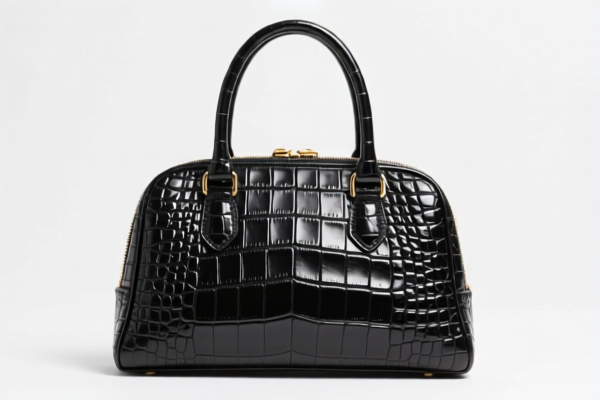
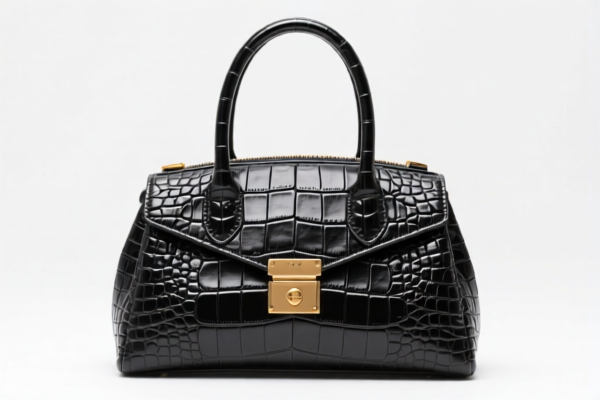
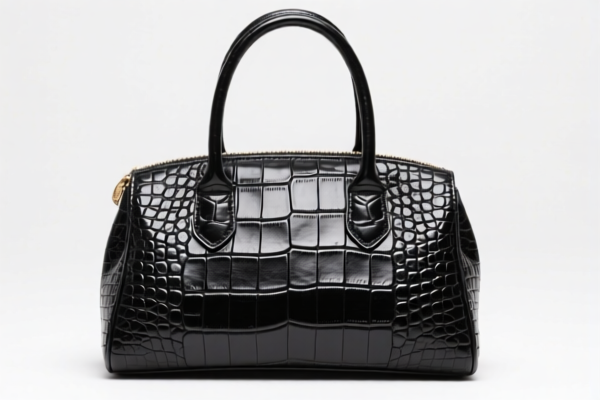
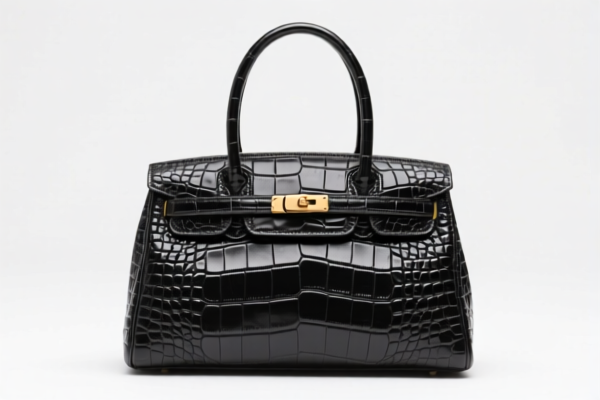
AI分析
👜 Crocodile Skin Handbag (Exotic Leather Goods)
🌐 HS Code Reference & Customs Clearance Guide | 2026 Latest Tariff Analysis | Professional Compliance Strategy
📌 I. Product Definition & Classification: Are You Sure About "Crocodile Skin"?
A "Crocodile Skin Handbag" is a high-value fashion accessory made from the hide of reptiles (specifically crocodilians, alligators, or caimans). In international trade, the classification hinges on two critical factors: 1. Material Origin: Is it explicitly classified as "Reptile Skin" or general "Leather"? 2. End Use: Is it a finished handbag (Article 42.02) or an accessory/other leather good?
⚠️ Key Distinction:
- If the customs authority strictly views crocodile skin as "Reptile Skin" distinct from general bovine/sheep leather → It may fall under Chapter 42.05 (Other articles of leather) or specific reptile sub-headings if available (often grouped under "Other leather").
- If viewed as "Leather Goods" generally → It may fall under Chapter 42.03 (Articles of apparel and clothing accessories) or 42.02 (Trunks, suitcases, handbags). Note: The provided data suggests ambiguity in classification between 42.03 (Apparel Accessories/Leather Articles) and 42.05 (Other Leather Articles).
📦 II. HS Code Classification Details (Based on Provided Data)
| HS Code | Summary / Classification Logic | Total Tax Rate | Tax Breakdown |
|---|---|---|---|
| 4205.00.60.00 | Material: Crocodile skin (classified as Reptile Leather). Form: Handbag (Leather Article). Fits "Reptile Leather" & "Other Leather Articles". | 39.9% | Base: 4.9% Add'l: 25.0% Section 122: 10% |
| 4203.30.00.00 | Material: Crocodile skin (classified as Leather). Form: Handbag (Leather Article). Fits "Leather" & "Other Leather Articles". | 37.7% | Base: 2.7% Add'l: 25.0% Section 122: 10% |
| 4203.40.30.00 | Material: Crocodile skin (Reptile Leather). Form: Handbag (Garment Accessory/Article). Fits material & use requirements. | 39.9% | Base: 4.9% Add'l: 25.0% Section 122: 10% |
| 4205.00.80.00 | Material: Crocodile skin (Leather Category). Form: Handbag (Article). Fits "Other Leather or Synthetic Leather Articles" with no material conflict. | 35.0% | Base: 0.0% Add'l: 25.0% Section 122: 10% |
| 4205.00.60.00 | Name "Crocodile Skin" implies "Reptile Leather" category. Form is "Leather Article" in the "Other" category. | 39.9% | Base: 4.9% Add'l: 25.0% Section 122: 10% |
🔍 Important Note on Variance:
- The classification varies between 35.0% and 39.9% depending on whether the specific subheading for "Reptile Skin" (leading to 4.9% base) or "Other Leather" (leading to 0% or 2.7% base) is applied.
- Section 122 Tariff (10%) and Additional Tariff (25%) are consistent across all options.
- Lowest Tax Option:4205.00.80.00at 35.0%.
- Highest Tax Options:4205.00.60.00and4203.40.30.00at 39.9%.
💰 III. 2026 Latest Tariff Rate Breakdown (Including Surcharges)
✅ Applicable Country: USA (US)
✅ Origin: China (CN)
✅ Effective Date: Post-November 10, 2025 Imports
🎯 1. 4205.00.60.00 & 4203.40.30.00 —— Reptile Skin / Garment Accessories
| Item | Content |
|---|---|
| Base Duty | 4.9% |
| Section 301 / Add'l Duty | +25.0% |
| Section 122 Duty | +10.0% |
| Total Rate | 39.9% |
| Calculation | CIF Value × 39.9% |
| De Minimis Exemption? | ❌ No (High risk of scrutiny) |
| Legal Path | Base Tariff → 301 Section → Section 122 |
📌 Explanation:
- The 4.9% base reflects the higher duty for specific reptile leather categories.
- The 25% additional tariff is standard for Chinese origin goods under Section 301.
- The 10% Section 122 tariff applies to specific trade remedy cases (likely anti-dumping/countervailing or national security-related duties depending on current enforcement).
- Total: 39.9% is a significant cost driver.
🎯 2. 4203.30.00.00 —— General Leather Accessories
| Item | Content |
|---|---|
| Base Duty | 2.7% |
| Section 301 / Add'l Duty | +25.0% |
| Section 122 Duty | +10.0% |
| Total Rate | 37.7% |
| Calculation | CIF Value × 37.7% |
| De Minimis Exemption? | ❌ No |
📌 Explanation:
- Slightly lower base rate (2.7%) compared to reptile-specific codes.
- Still subject to full surcharges.
🎯 3. 4205.00.80.00 —— Other Leather Articles (Lowest Tax)
| Item | Content |
|---|---|
| Base Duty | 0.0% |
| Section 301 / Add'l Duty | +25.0% |
| Section 122 Duty | +10.0% |
| Total Rate | 35.0% |
| Calculation | CIF Value × 35.0% |
| De Minimis Exemption? | ❌ No |
📌 Explanation:
- This code has 0% Base Duty, making it the most tax-efficient option if the product description allows "Other Leather Articles" classification without triggering the reptile-specific higher base rates.
- Total: 35.0% is the minimum liability under this data set.
🛠️ IV. Customs Clearance Practical Advice (Avoiding Pitfalls)
✅ 1. Required Documentation (Mandatory)
| Document | Must Provide | Explanation |
|---|---|---|
| ✅ Material Certificate | ✔️ | Must specify Crocodile Alligator Caiman and CITES documentation. |
| ✅ CITES Permit | ✔️ | Critical! Exotic skins require CITES Export/Import permits. Without it, shipment will be seized. |
| ✅ Product Photos | ✔️ | Clear images showing texture, stitching, brand, and hardware. |
| ✅ Commercial Invoice | ✔️ | Detailed description: "Women's Handbag, Crocodile Skin, Model XYZ". |
| ✅ Packing List | ✔️ | Weight, dimensions, and contents. |
✅ 2. Declaration Strategy
🔥 "Declare Material Precisely, Use CITES, Choose the Lowest Base Rate!"
| Scenario | Recommended HS Code | Tax Rate | Reason |
|---|---|---|---|
| General Handbag (Broad Classification) | 4205.00.80.00 |
35.0% | Lowest base duty (0%). Use if classification allows "Other Leather". |
| Strict Reptile Classification | 4205.00.60.00 |
39.9% | Higher base (4.9%) due to specific reptile leather rules. |
| Accessory Classification | 4203.30.00.00 |
37.7% | Middle ground. |
| Garment Accessory | 4203.40.30.00 |
39.9% | Same as reptile-specific. |
📌 Key Tip:
- If possible, argue for4205.00.80.00("Other Leather Articles") to save 4.9% on the base duty.
- However, ensure your product does not strictly fall under "Trunks, Suitcases, Handbags" (Chapter 42.02) if that code has different duties (not listed in data). Note: The provided data only lists 42.03 and 42.05 codes.
✅ 3. Special Considerations for Exotic Skins
| Issue | Handling Advice |
|---|---|
| CITES Compliance | Ensure CITES Permit is presented before arrival. Customs will hold cargo until verified. |
| Species Identification | Must specify Species (e.g., Cuvier’s Alligator, Nile Crocodile). Vague terms like "Exotic Leather" may lead to audits. |
| Valuation | High-value items may trigger additional valuation reviews. Provide proof of purchase (invoice from supplier). |
| Country of Origin | Ensure Country of Origin is correctly declared. China origin triggers 25% + 10% surcharges. |
🌍 V. Global Market Comparison (2026)
| Country/Region | Recommended HS Code | Estimated Total Duty | CITES Required? | Notes |
|---|---|---|---|---|
| 🇺🇸 USA | 4205.00.80.00 |
35.0% | ✅ Yes | Highest total duty due to Surcharges. |
| 🇨🇳 China | Varies | ~10-15% | ✅ Yes | Lower base duties, no Section 122. |
| 🇪🇺 EU | 4202.21/22 | ~4-12% | ✅ Yes | CITES strictly enforced. |
| 🇬🇧 UK | Varies | ~5-15% | ✅ Yes | Post-Brexit rules apply. |
| 🇯🇵 Japan | 4202.21/22 | ~5-10% | ✅ Yes | No major surcharges. |
📌 Conclusion:
- USA is the most expensive market due to Section 301 (25%) and Section 122 (10%) surcharges.
- CITES Compliance is non-negotiable globally.
- Consider transshipment or origin change (if legal) to mitigate US tariffs.
📌 VI. Common Mistakes & Pitfalls (Lessons Learned)
❌ Mistake 1: Using "Leather Handbag" without specifying "Crocodile Skin"
👉 Consequence: Customs may classify as general leather, then audit for exotic status → Seizure & Fines.
❌ Mistake 2: Missing CITES Permit
👉 Consequence: Immediate seizure and destruction of goods. No exceptions.
❌ Mistake 3: Declaring as "Fashion Accessory" (Chapter 61/62)
👉 Consequence: Incorrect classification → Retrospective duty assessment + Penalties.
❌ Mistake 4: Not specifying Species
👉 Consequence: Customs delays while requesting proof of non-threatened species.
✅ Correct Practice:
"Women's Handbag, Made from Crocodile Skin (CITES Permit No. XXXXX), Model ABC, Origin: China, CIF Value: $XXX"
🎯 VII. Conclusion: Professional Declaration Saves Money!
🎯 Remember the Key Rule:
🔹 "CITES First, HS Code Second, Tax Third!"
🔹 "4205.00.80.00saves 4.9% if applicable!"
🔹 "35% vs 39.9% depends on precise classification!"
📌 Pro Tip:
If your handbag is made from cultured crocodile skin, ensure the CITES permit specifies "Farmed" to avoid stricter scrutiny.
For USA imports, calculate the 35% vs 39.9% difference on high-value items — it can be thousands of dollars.
Consult a licensed customs broker to confirm if4205.00.80.00is applicable for your specific product design.
📣 Immediate Action:
📞 Verify CITES Permit → 📄 Confirm HS Code (
4205.00.80.00preferred) → 📦 Declare Accurately
🚀 Clear Customs Smoothly, Maximize Profit, Avoid Seizures!
✨ Professional Compliance from Accurate Classification!
💼 Every Dollar Saved in Duty is Pure Profit!
用户评价
关于 HS 编码归类
协调制度(HS)是由世界海关组织(WCO)制定的国际贸易商品分类标准。全球 200 多个国家采用 HS 系统作为海关关税、贸易统计和进出口监管的基础。
每个 HS 编码遵循以下层级结构:
- 章(2 位)——商品大类(例如:第 84 章:机器和机械设备)
- 品目(4 位)——章内的更具体分类
- 子目(6 位)——国际通用细分,所有 WCO 成员国统一使用
- 本国细分(8-10 位)——各国自行扩展的细分编码,如美国 HTSUS 10 位编码
正确的 HS 编码归类对于顺利通关、准确缴纳关税和遵守贸易法规至关重要。错误归类可能导致海关延误、多缴关税或罚款。
从CN进口到US时,适用的关税税率可能包括:
- 最惠国(MFN)税率——适用于 WTO 成员国的标准关税税率
- 普通税率——适用于无贸易协定国家
- 贸易救济关税——附加关税,如 301 条款(反倾销)、232 条款(国家安全)或反补贴税
本页内容仅供参考。如需正式归类,请咨询当地海关或持牌报关代理。