Custom Sample Book
CN → US| HS编码 | 关税税率 | 原产国 | 目的国 | 文档 |
|---|---|---|---|---|
| 3926904800 | 13.4% | CN | US | 官方文档 |
| 4820500000 | 35.0% | CN | US | 官方文档 |
| 4820900000 | 35.0% | CN | US | 官方文档 |
| 4911100020 | 17.5% | CN | US | 官方文档 |
| 4911100080 | 17.5% | CN | US | 官方文档 |
商品图片
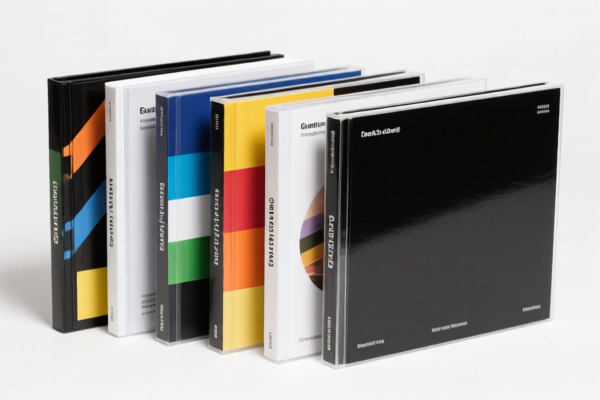
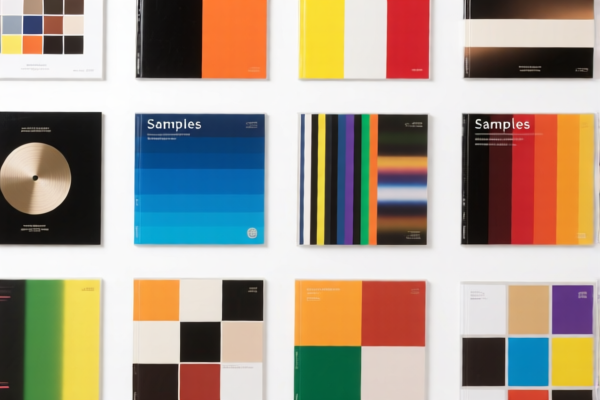
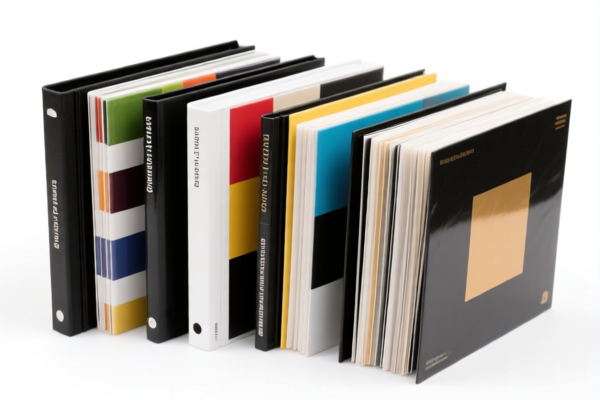
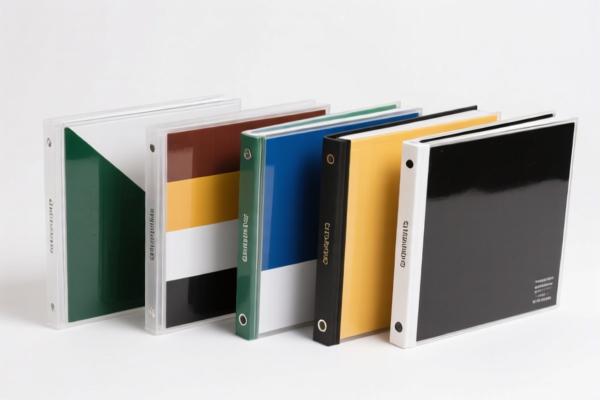
AI分析
📚 Custom Sample Book (Commercial Catalogs & Display Folders)
🌐 HS Code Reference & Customs Clearance Guide | 2026 Latest Tariff Analysis | Professional-Level Entry Strategy
📌 I. Product Definition & Classification: Do You Really Understand "Sample Books"?
A Custom Sample Book (often referred to as a Catalog, Portfolio, or Trade Directory) is a critical marketing tool in international trade. It serves as a physical or hybrid medium to showcase product specifications, images, and pricing to potential B2B clients.
In customs classification, these items are split based on two key factors:
1. Material Composition: Is it primarily Paper/Cardboard or Plastic/Composite?
2. Function & Form: Is it a Printed Advertising Material (Informational) or a Binder/Album (Storage/Display)?
⚠️ Key Distinction Points:
- Plastic/Composite Materials: If the structure, cover, or pockets are made of plastic or non-paper composites →归入 Chapter 39 (Plastics)
- Paper/Cardboard Materials: If the structure is purely paper-based →归入 Chapter 48 (Paper)
- Printed Content Focus: If the primary value is the printed marketing info →归入 Chapter 49 (Printed Matter)
- Binding/Storage Focus: If the primary value is the binding mechanism (ring binders, plastic sleeves) →归入 Chapter 48 (Paper Products) or 39 (Plastic Products)
📦 II. HS Code Classification Details (2026 Latest Tariff Authority Comparison)
Based on the provided data, here are the 6 most likely HS Codes for "Custom Sample Books," categorized by material and function:
| HS Code | Product Description | Primary Material | Classification Logic |
|---|---|---|---|
3926.90.48.00 |
Other articles of plastics and articles of other materials of heading 3901 to 3914: Other (Sample Books/Albums) | Plastic / Composite | Structure is plastic; function matches "Albums" in the summary. |
3926.90.87.00 |
Other articles of plastics: Other (Document Binding/Flexible Plastic) | Flexible Plastic / Paper Composite | Structure is file-binding type; material may be flexible plastic. |
4820.50.00.00 |
Notebooks, account books, diaries and similar articles; other stationery of paper or paperboard: Sample Books | Paper / Cardboard | Name "Sample Book" matches exactly; material is paper. |
4820.90.00.00 |
Other written or printed matter of paper or paperboard: Sample/Collection Albums | Paper / Cardboard | Belongs to "Albums for samples/collection"; material is paper. |
4911.10.00.20 |
Other printed matter: Trade advertising material / Commercial Directories | Printed Paper | Form is printed; purpose is trade advertising or commercial catalog. |
4911.10.00.80 |
Other printed matter: Trade advertising material / Commercial Directories (Other) | Printed Paper | Form is printed; purpose is trade advertising or commercial catalog. |
🔍 Critical Analysis:
- Paper vs. Plastic: This is the biggest divergence point. If your sample book has plastic sleeves, plastic covers, or plastic binding rings, it generally falls under HS 3926. If it is cardstock, spiral-bound paper, or stapled, it falls under HS 4820/4820.90.
- Advert vs. Product: If the item is just the printed catalog (no binding mechanism beyond standard binding), it may be seen as Advertising Material (HS 4911). If it is a reusable folder/binder holding samples, it is more likely Stationery/Album (HS 4820/4820.90) or Plastic Article (HS 3926).
💰 III. 2026 Latest Tariff Rate Details (Including Surtaxes & Policy Add-ons)
✅ Applicable Country: United States (US)
✅ Origin: China (CN)
✅ Effective Date: Post-November 2025 (Current Trade War Context)
🎯 1. 3926.90.48.00 — Plastic Sample Book / Album
| Item | Detail |
|---|---|
| Base Tariff | 3.4% |
| Additional Tariff (Section 301) | 0.0% |
| 122 Clause Tariff (IEEPA/Retorsion) | 10.0% |
| Total Tariff Rate | 13.4% |
| Tax Calculation | CIF Value × 13.4% |
| De Minimis Exemption | ❌ Not Eligible (Subject to full duty assessment) |
| Legal Basis Path | Base: 3.4% + Section 301: 0% + 122 Clause: 10% |
📌 Explanation:
- This is the lowest tariff option among all classifications for Sample Books.
- However, it strictly requires the item to be classified as a Plastic Article. If customs officers determine the item is >50% paper by weight or value, they may reject this code.
🎯 2. 4820.50.00.00 — Paper Sample Book (Exact Name Match)
| Item | Detail |
|---|---|
| Base Tariff | 0.0% |
| Additional Tariff (Section 301) | 25.0% |
| 122 Clause Tariff (IEEPA/Retorsion) | 10.0% |
| Total Tariff Rate | 35.0% |
| Tax Calculation | CIF Value × 35.0% |
| De Minimis Exemption | ❌ Not Eligible |
| Legal Basis Path | Base: 0.0% + Section 301: 25% + 122 Clause: 10% |
📌 Explanation:
- The base rate is 0%, which sounds good, but the Section 301 tariff (25%) is high.
- This code applies if the book is purely paper/cardboard and fits the definition of "Stationery/Notebooks."
- Risk: If the book contains significant printed marketing content, customs may argue it should be 4911 (17.5%), but 35% is the default for this paper stationery code.
🎯 3. 4820.90.00.00 — Paper Sample/Collection Album
| Item | Detail |
|---|---|
| Base Tariff | 0.0% |
| Additional Tariff (Section 301) | 25.0% |
| 122 Clause Tariff (IEEPA/Retorsion) | 10.0% |
| Total Tariff Rate | 35.0% |
| Tax Calculation | CIF Value × 35.0% |
| De Minimis Exemption | ❌ Not Eligible |
| Legal Basis Path | Base: 0.0% + Section 301: 25% + 122 Clause: 10% |
📌 Explanation:
- Similar to4820.50.00.00, this is for paper-based albums.
- The key difference is the sub-heading:50is for notebooks/stationery,90is for "Other" paper articles like albums.
- Tax Impact: Identical to4820.50at 35%.
🎯 4. 4911.10.00.20 — Printed Trade Advertising / Commercial Catalog
| Item | Detail |
|---|---|
| Base Tariff | 0.0% |
| Additional Tariff (Section 301) | 7.5% |
| 122 Clause Tariff (IEEPA/Retorsion) | 10.0% |
| Total Tariff Rate | 17.5% |
| Tax Calculation | CIF Value × 17.5% |
| De Minimis Exemption | ❌ Not Eligible |
| Legal Basis Path | Base: 0.0% + Section 301: 7.5% + 122 Clause: 10% |
📌 Explanation:
- Highly Competitive Option. If your sample book is primarily a printed catalog (even if bound), it might be viewed as "Printed Matter" rather than "Stationery."
- The Section 301 rate is only 7.5% (vs 25% for paper stationery).
- Total Rate: 17.5% — Significantly lower than paper album codes (35%).
- Requirement: Must be clearly defined as "Advertising Material" or "Commercial Directory" in documentation.
🎯 5. 4911.10.00.80 — Other Printed Trade Advertising Material
| Item | Detail |
|---|---|
| Base Tariff | 0.0% |
| Additional Tariff (Section 301) | 7.5% |
| 122 Clause Tariff (IEEPA/Retorsion) | 10.0% |
| Total Tariff Rate | 17.5% |
| Tax Calculation | CIF Value × 17.5% |
| De Minimis Exemption | ❌ Not Eligible |
| Legal Basis Path | Base: 0.0% + Section 301: 7.5% + 122 Clause: 10% |
📌 Explanation:
- Same tax rate as4911.10.00.20(17.5%).
- Used for printed advertising materials that do not fit other specific printed matter categories.
- Strategy: Use this if the book is purely informational/promotional.
🎯 6. 3926.90.87.00 — Plastic Document Binding / Flexible Plastic Article
| Item | Detail |
|---|---|
| Base Tariff | 5.3% |
| Additional Tariff (Section 301) | 25.0% |
| 122 Clause Tariff (IEEPA/Retorsion) | 10.0% |
| Total Tariff Rate | 40.3% |
| Tax Calculation | CIF Value × 40.3% |
| De Minimis Exemption | ❌ Not Eligible |
| Legal Basis Path | Base: 5.3% + Section 301: 25% + 122 Clause: 10% |
📌 Explanation:
- Highest Tariff Option.
- Applies if the sample book is a plastic binding mechanism (e.g., plastic sleeve folders, plastic ring binders) that doesn't fit the "Album" definition of3926.90.48.
- Avoid if possible due to the high combined rate of 40.3%.
🛠️ IV. Customs Clearance Practical Advice (Pitfall Avoidance Guide)
✅ 1. Material & Structure Verification
| Component | Recommendation | Reason |
|---|---|---|
| Cover | If using Plastic, aim for HS 3926.90.48 (13.4%). If Paper, aim for HS 4911 (17.5%) or HS 4820 (35%). | Material determines the Chapter (39 vs 48 vs 49). |
| Pockets/Sleeves | Plastic sleeves push classification toward HS 3926. Paper inserts push toward HS 4820/4911. | Substantive part definition. |
| Binding | Spiral wire + Paper = HS 4820. Plastic comb/spiral + Plastic = HS 3926. | Binding material consistency. |
✅ 2. Declaration Strategy (Key Mnemonics)
🔥 “Printed Ads Win (17.5%), Plastic Albums Low (13.4%), Paper Stationery High (35-40%)!”
| Scenario | Recommended HS Code | Total Tax | Key Description for Customs |
|---|---|---|---|
| Plastic Cover + Plastic Sleeves | 3926.90.48.00 |
13.4% | "Plastic Sample Book / Album for Trade" |
| Purely Printed Catalog (Bound) | 4911.10.00.20/80 |
17.5% | "Printed Trade Catalog / Commercial Directory" |
| Paper Notebook-Style Sample Book | 4820.50.00.00 |
35.0% | "Paper Sample Book / Stationery" |
| Plastic Binding Folders | 3926.90.87.00 |
40.3% | "Plastic Document Binder" (Avoid if possible) |
✅ 3. Critical Documentation Requirements
| Document | Requirement | Explanation |
|---|---|---|
| Commercial Invoice | Must specify Material Composition (e.g., "100% Plastic Cover, PP Inner Sleeves") | Customs need to verify Chapter 39 vs 48/49. |
| Product Photos | Clear shots of Cover, Interior Sleeves, Binding Mechanism | Proves whether it's an "Album" or "Printing." |
| Material Declaration | Statement of % Plastic vs % Paper | Crucial for distinguishing between 3926 and 4820. |
| Purpose Statement | "For B2B Marketing / Product Display" | Supports classification as 4911 (Advertising) if applicable. |
🌍 V. Global Market Comparison (2026 Context)
| Country/Region | Recommended HS Code | Est. Total Tax (China Origin) | Notes |
|---|---|---|---|
| 🇺🇸 USA | 3926.90.48.00 |
13.4% | Best option for Plastic. |
| 🇺🇸 USA | 4911.10.00.20 |
17.5% | Best option for Printed Paper. |
| 🇺🇸 USA | 4820.50.00.00 |
35.0% | High tax for Paper Stationery. |
| 🇨🇳 China (Export) | N/A | Varies | Check local export tax rebates. |
| 🇪🇺 EU | 4820.50.00 |
0% (Typically) | EU often has 0% for paper catalogs, but check VAT. |
| 🇬🇧 UK | 4820.50.00 |
0% | Post-Brexit, check specific trade agreements. |
📌 Conclusion:
- For US Imports, Plastic-based Sample Books (HS 3926.90.48) have the lowest duty at 13.4%.
- Printed Paper Catalogs (HS 4911) are second best at 17.5%.
- Paper Stationery-style Sample Books (HS 4820) are expensive at 35% due to Section 301 tariffs.
📌 VI. Common Errors & Pitfall Guide (Lessons Learned)
❌ Error 1: Declaring a Plastic Sample Book as Paper Stationery (HS 4820).
👉 Consequence: Customs may accept it at 35%, but if audited, you might face penalties for misclassification. However, if you can justify it as Plastic, you save 21.6%!
❌ Error 2: Declaring a Heavy Plastic Book as Printed Matter (HS 4911).
👉 Consequence: Customs will reject 4911 because the primary material is not paper. They will reclassify to 3926 or 4820, causing delays.
❌ Error 3: Ignoring the 122 Clause (10%).
👉 Consequence: All these goods are subject to the additional 10% tariff. Failing to include it in your landed cost calculation leads to profit erosion.
❌ Error 4: Using "Sample Book" without material specs.
👉 Consequence: Customs officer uses discretion, likely picking the higher tax bracket (35% or 40%) to be safe.
✅ Correct Approach:
"Plastic Sample Book, with PP inner pockets, for displaying hardware products. Material: 100% Plastic Cover/Sleeves. HS Code: 3926.90.48.00."
🎯 VII. Conclusion: Professional Declaration for Cost Savings
🎯 Remember the Strategy:
🔹 "Plastic Albums = 13.4% (Best)"
🔹 "Printed Catalogs = 17.5% (Good)"
🔹 "Paper Stationery = 35.0% (Avoid)"
🔹 "Plastic Binders = 40.3% (Avoid)"
📌 Tips:
- If your sample book is hybrid (Paper inserts in Plastic cover), argue for Plastic classification (3926) as the outer structure defines the article in many cases.
- If your sample book is just printed paper, argue for Advertising Material (4911) to get 17.5% instead of 35%.
- Always provide clear photos and material breakdowns to prevent customs from choosing the highest tax code.
📣 Action Item:
📞 Contact your customs broker with material specs
📄 Request HS Code Pre-ruling if shipment value is high
🚀 Optimize your packaging material to target the 13.4% or 17.5% bracket!
✨ Professional Clearance, Precise Classification, Maximized Margins!
💼 Every percentage point of tariff is a direct hit to your profit!
用户评价
关于 HS 编码归类
协调制度(HS)是由世界海关组织(WCO)制定的国际贸易商品分类标准。全球 200 多个国家采用 HS 系统作为海关关税、贸易统计和进出口监管的基础。
每个 HS 编码遵循以下层级结构:
- 章(2 位)——商品大类(例如:第 84 章:机器和机械设备)
- 品目(4 位)——章内的更具体分类
- 子目(6 位)——国际通用细分,所有 WCO 成员国统一使用
- 本国细分(8-10 位)——各国自行扩展的细分编码,如美国 HTSUS 10 位编码
正确的 HS 编码归类对于顺利通关、准确缴纳关税和遵守贸易法规至关重要。错误归类可能导致海关延误、多缴关税或罚款。
从CN进口到US时,适用的关税税率可能包括:
- 最惠国(MFN)税率——适用于 WTO 成员国的标准关税税率
- 普通税率——适用于无贸易协定国家
- 贸易救济关税——附加关税,如 301 条款(反倾销)、232 条款(国家安全)或反补贴税
本页内容仅供参考。如需正式归类,请咨询当地海关或持牌报关代理。