Custom Sample Book
CN → US| HS Code | Tariff Rate | Origin | Destination | Doc |
|---|---|---|---|---|
| 3926904800 | 13.4% | CN | US | Official Doc |
| 4820500000 | 35.0% | CN | US | Official Doc |
| 4820900000 | 35.0% | CN | US | Official Doc |
| 4911100020 | 17.5% | CN | US | Official Doc |
| 4911100080 | 17.5% | CN | US | Official Doc |
Product Images
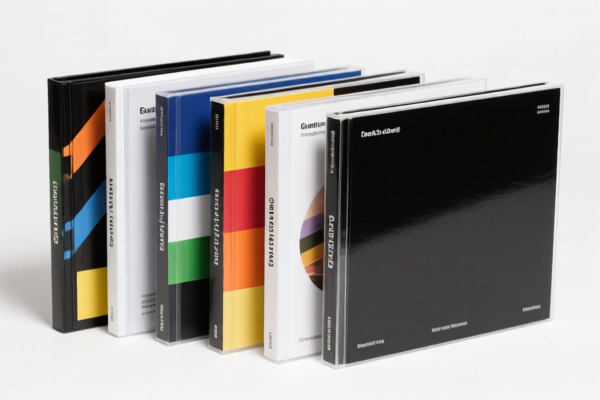
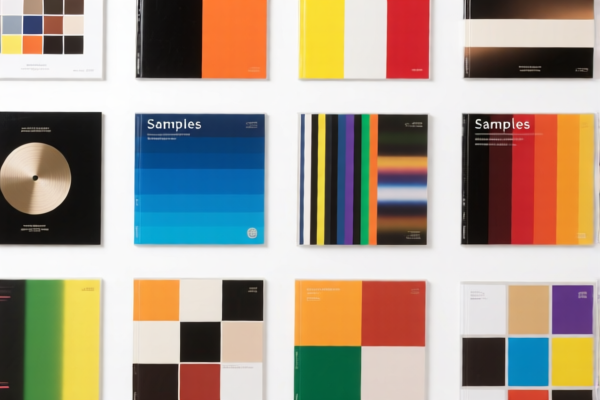
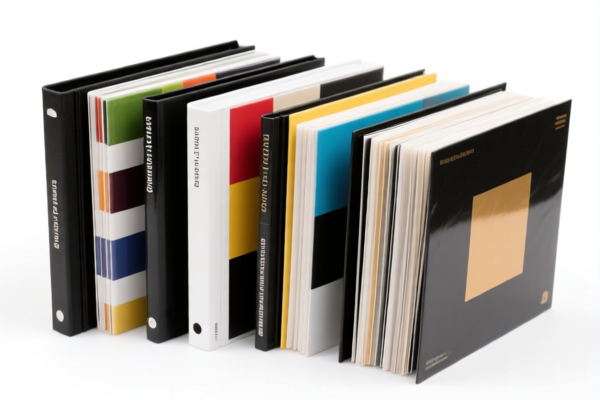
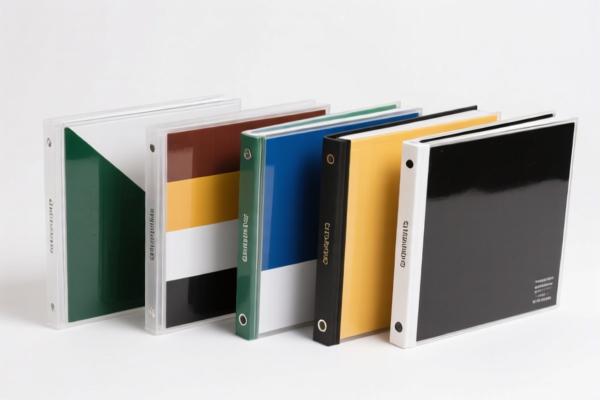
AI Analysis
📚 Custom Sample Book (Commercial Catalogs & Display Folders)
🌐 HS Code Reference & Customs Clearance Guide | 2026 Latest Tariff Analysis | Professional-Level Entry Strategy
📌 I. Product Definition & Classification: Do You Really Understand "Sample Books"?
A Custom Sample Book (often referred to as a Catalog, Portfolio, or Trade Directory) is a critical marketing tool in international trade. It serves as a physical or hybrid medium to showcase product specifications, images, and pricing to potential B2B clients.
In customs classification, these items are split based on two key factors:
1. Material Composition: Is it primarily Paper/Cardboard or Plastic/Composite?
2. Function & Form: Is it a Printed Advertising Material (Informational) or a Binder/Album (Storage/Display)?
⚠️ Key Distinction Points:
- Plastic/Composite Materials: If the structure, cover, or pockets are made of plastic or non-paper composites →归入 Chapter 39 (Plastics)
- Paper/Cardboard Materials: If the structure is purely paper-based →归入 Chapter 48 (Paper)
- Printed Content Focus: If the primary value is the printed marketing info →归入 Chapter 49 (Printed Matter)
- Binding/Storage Focus: If the primary value is the binding mechanism (ring binders, plastic sleeves) →归入 Chapter 48 (Paper Products) or 39 (Plastic Products)
📦 II. HS Code Classification Details (2026 Latest Tariff Authority Comparison)
Based on the provided data, here are the 6 most likely HS Codes for "Custom Sample Books," categorized by material and function:
| HS Code | Product Description | Primary Material | Classification Logic |
|---|---|---|---|
3926.90.48.00 |
Other articles of plastics and articles of other materials of heading 3901 to 3914: Other (Sample Books/Albums) | Plastic / Composite | Structure is plastic; function matches "Albums" in the summary. |
3926.90.87.00 |
Other articles of plastics: Other (Document Binding/Flexible Plastic) | Flexible Plastic / Paper Composite | Structure is file-binding type; material may be flexible plastic. |
4820.50.00.00 |
Notebooks, account books, diaries and similar articles; other stationery of paper or paperboard: Sample Books | Paper / Cardboard | Name "Sample Book" matches exactly; material is paper. |
4820.90.00.00 |
Other written or printed matter of paper or paperboard: Sample/Collection Albums | Paper / Cardboard | Belongs to "Albums for samples/collection"; material is paper. |
4911.10.00.20 |
Other printed matter: Trade advertising material / Commercial Directories | Printed Paper | Form is printed; purpose is trade advertising or commercial catalog. |
4911.10.00.80 |
Other printed matter: Trade advertising material / Commercial Directories (Other) | Printed Paper | Form is printed; purpose is trade advertising or commercial catalog. |
🔍 Critical Analysis:
- Paper vs. Plastic: This is the biggest divergence point. If your sample book has plastic sleeves, plastic covers, or plastic binding rings, it generally falls under HS 3926. If it is cardstock, spiral-bound paper, or stapled, it falls under HS 4820/4820.90.
- Advert vs. Product: If the item is just the printed catalog (no binding mechanism beyond standard binding), it may be seen as Advertising Material (HS 4911). If it is a reusable folder/binder holding samples, it is more likely Stationery/Album (HS 4820/4820.90) or Plastic Article (HS 3926).
💰 III. 2026 Latest Tariff Rate Details (Including Surtaxes & Policy Add-ons)
✅ Applicable Country: United States (US)
✅ Origin: China (CN)
✅ Effective Date: Post-November 2025 (Current Trade War Context)
🎯 1. 3926.90.48.00 — Plastic Sample Book / Album
| Item | Detail |
|---|---|
| Base Tariff | 3.4% |
| Additional Tariff (Section 301) | 0.0% |
| 122 Clause Tariff (IEEPA/Retorsion) | 10.0% |
| Total Tariff Rate | 13.4% |
| Tax Calculation | CIF Value × 13.4% |
| De Minimis Exemption | ❌ Not Eligible (Subject to full duty assessment) |
| Legal Basis Path | Base: 3.4% + Section 301: 0% + 122 Clause: 10% |
📌 Explanation:
- This is the lowest tariff option among all classifications for Sample Books.
- However, it strictly requires the item to be classified as a Plastic Article. If customs officers determine the item is >50% paper by weight or value, they may reject this code.
🎯 2. 4820.50.00.00 — Paper Sample Book (Exact Name Match)
| Item | Detail |
|---|---|
| Base Tariff | 0.0% |
| Additional Tariff (Section 301) | 25.0% |
| 122 Clause Tariff (IEEPA/Retorsion) | 10.0% |
| Total Tariff Rate | 35.0% |
| Tax Calculation | CIF Value × 35.0% |
| De Minimis Exemption | ❌ Not Eligible |
| Legal Basis Path | Base: 0.0% + Section 301: 25% + 122 Clause: 10% |
📌 Explanation:
- The base rate is 0%, which sounds good, but the Section 301 tariff (25%) is high.
- This code applies if the book is purely paper/cardboard and fits the definition of "Stationery/Notebooks."
- Risk: If the book contains significant printed marketing content, customs may argue it should be 4911 (17.5%), but 35% is the default for this paper stationery code.
🎯 3. 4820.90.00.00 — Paper Sample/Collection Album
| Item | Detail |
|---|---|
| Base Tariff | 0.0% |
| Additional Tariff (Section 301) | 25.0% |
| 122 Clause Tariff (IEEPA/Retorsion) | 10.0% |
| Total Tariff Rate | 35.0% |
| Tax Calculation | CIF Value × 35.0% |
| De Minimis Exemption | ❌ Not Eligible |
| Legal Basis Path | Base: 0.0% + Section 301: 25% + 122 Clause: 10% |
📌 Explanation:
- Similar to4820.50.00.00, this is for paper-based albums.
- The key difference is the sub-heading:50is for notebooks/stationery,90is for "Other" paper articles like albums.
- Tax Impact: Identical to4820.50at 35%.
🎯 4. 4911.10.00.20 — Printed Trade Advertising / Commercial Catalog
| Item | Detail |
|---|---|
| Base Tariff | 0.0% |
| Additional Tariff (Section 301) | 7.5% |
| 122 Clause Tariff (IEEPA/Retorsion) | 10.0% |
| Total Tariff Rate | 17.5% |
| Tax Calculation | CIF Value × 17.5% |
| De Minimis Exemption | ❌ Not Eligible |
| Legal Basis Path | Base: 0.0% + Section 301: 7.5% + 122 Clause: 10% |
📌 Explanation:
- Highly Competitive Option. If your sample book is primarily a printed catalog (even if bound), it might be viewed as "Printed Matter" rather than "Stationery."
- The Section 301 rate is only 7.5% (vs 25% for paper stationery).
- Total Rate: 17.5% — Significantly lower than paper album codes (35%).
- Requirement: Must be clearly defined as "Advertising Material" or "Commercial Directory" in documentation.
🎯 5. 4911.10.00.80 — Other Printed Trade Advertising Material
| Item | Detail |
|---|---|
| Base Tariff | 0.0% |
| Additional Tariff (Section 301) | 7.5% |
| 122 Clause Tariff (IEEPA/Retorsion) | 10.0% |
| Total Tariff Rate | 17.5% |
| Tax Calculation | CIF Value × 17.5% |
| De Minimis Exemption | ❌ Not Eligible |
| Legal Basis Path | Base: 0.0% + Section 301: 7.5% + 122 Clause: 10% |
📌 Explanation:
- Same tax rate as4911.10.00.20(17.5%).
- Used for printed advertising materials that do not fit other specific printed matter categories.
- Strategy: Use this if the book is purely informational/promotional.
🎯 6. 3926.90.87.00 — Plastic Document Binding / Flexible Plastic Article
| Item | Detail |
|---|---|
| Base Tariff | 5.3% |
| Additional Tariff (Section 301) | 25.0% |
| 122 Clause Tariff (IEEPA/Retorsion) | 10.0% |
| Total Tariff Rate | 40.3% |
| Tax Calculation | CIF Value × 40.3% |
| De Minimis Exemption | ❌ Not Eligible |
| Legal Basis Path | Base: 5.3% + Section 301: 25% + 122 Clause: 10% |
📌 Explanation:
- Highest Tariff Option.
- Applies if the sample book is a plastic binding mechanism (e.g., plastic sleeve folders, plastic ring binders) that doesn't fit the "Album" definition of3926.90.48.
- Avoid if possible due to the high combined rate of 40.3%.
🛠️ IV. Customs Clearance Practical Advice (Pitfall Avoidance Guide)
✅ 1. Material & Structure Verification
| Component | Recommendation | Reason |
|---|---|---|
| Cover | If using Plastic, aim for HS 3926.90.48 (13.4%). If Paper, aim for HS 4911 (17.5%) or HS 4820 (35%). | Material determines the Chapter (39 vs 48 vs 49). |
| Pockets/Sleeves | Plastic sleeves push classification toward HS 3926. Paper inserts push toward HS 4820/4911. | Substantive part definition. |
| Binding | Spiral wire + Paper = HS 4820. Plastic comb/spiral + Plastic = HS 3926. | Binding material consistency. |
✅ 2. Declaration Strategy (Key Mnemonics)
🔥 “Printed Ads Win (17.5%), Plastic Albums Low (13.4%), Paper Stationery High (35-40%)!”
| Scenario | Recommended HS Code | Total Tax | Key Description for Customs |
|---|---|---|---|
| Plastic Cover + Plastic Sleeves | 3926.90.48.00 |
13.4% | "Plastic Sample Book / Album for Trade" |
| Purely Printed Catalog (Bound) | 4911.10.00.20/80 |
17.5% | "Printed Trade Catalog / Commercial Directory" |
| Paper Notebook-Style Sample Book | 4820.50.00.00 |
35.0% | "Paper Sample Book / Stationery" |
| Plastic Binding Folders | 3926.90.87.00 |
40.3% | "Plastic Document Binder" (Avoid if possible) |
✅ 3. Critical Documentation Requirements
| Document | Requirement | Explanation |
|---|---|---|
| Commercial Invoice | Must specify Material Composition (e.g., "100% Plastic Cover, PP Inner Sleeves") | Customs need to verify Chapter 39 vs 48/49. |
| Product Photos | Clear shots of Cover, Interior Sleeves, Binding Mechanism | Proves whether it's an "Album" or "Printing." |
| Material Declaration | Statement of % Plastic vs % Paper | Crucial for distinguishing between 3926 and 4820. |
| Purpose Statement | "For B2B Marketing / Product Display" | Supports classification as 4911 (Advertising) if applicable. |
🌍 V. Global Market Comparison (2026 Context)
| Country/Region | Recommended HS Code | Est. Total Tax (China Origin) | Notes |
|---|---|---|---|
| 🇺🇸 USA | 3926.90.48.00 |
13.4% | Best option for Plastic. |
| 🇺🇸 USA | 4911.10.00.20 |
17.5% | Best option for Printed Paper. |
| 🇺🇸 USA | 4820.50.00.00 |
35.0% | High tax for Paper Stationery. |
| 🇨🇳 China (Export) | N/A | Varies | Check local export tax rebates. |
| 🇪🇺 EU | 4820.50.00 |
0% (Typically) | EU often has 0% for paper catalogs, but check VAT. |
| 🇬🇧 UK | 4820.50.00 |
0% | Post-Brexit, check specific trade agreements. |
📌 Conclusion:
- For US Imports, Plastic-based Sample Books (HS 3926.90.48) have the lowest duty at 13.4%.
- Printed Paper Catalogs (HS 4911) are second best at 17.5%.
- Paper Stationery-style Sample Books (HS 4820) are expensive at 35% due to Section 301 tariffs.
📌 VI. Common Errors & Pitfall Guide (Lessons Learned)
❌ Error 1: Declaring a Plastic Sample Book as Paper Stationery (HS 4820).
👉 Consequence: Customs may accept it at 35%, but if audited, you might face penalties for misclassification. However, if you can justify it as Plastic, you save 21.6%!
❌ Error 2: Declaring a Heavy Plastic Book as Printed Matter (HS 4911).
👉 Consequence: Customs will reject 4911 because the primary material is not paper. They will reclassify to 3926 or 4820, causing delays.
❌ Error 3: Ignoring the 122 Clause (10%).
👉 Consequence: All these goods are subject to the additional 10% tariff. Failing to include it in your landed cost calculation leads to profit erosion.
❌ Error 4: Using "Sample Book" without material specs.
👉 Consequence: Customs officer uses discretion, likely picking the higher tax bracket (35% or 40%) to be safe.
✅ Correct Approach:
"Plastic Sample Book, with PP inner pockets, for displaying hardware products. Material: 100% Plastic Cover/Sleeves. HS Code: 3926.90.48.00."
🎯 VII. Conclusion: Professional Declaration for Cost Savings
🎯 Remember the Strategy:
🔹 "Plastic Albums = 13.4% (Best)"
🔹 "Printed Catalogs = 17.5% (Good)"
🔹 "Paper Stationery = 35.0% (Avoid)"
🔹 "Plastic Binders = 40.3% (Avoid)"
📌 Tips:
- If your sample book is hybrid (Paper inserts in Plastic cover), argue for Plastic classification (3926) as the outer structure defines the article in many cases.
- If your sample book is just printed paper, argue for Advertising Material (4911) to get 17.5% instead of 35%.
- Always provide clear photos and material breakdowns to prevent customs from choosing the highest tax code.
📣 Action Item:
📞 Contact your customs broker with material specs
📄 Request HS Code Pre-ruling if shipment value is high
🚀 Optimize your packaging material to target the 13.4% or 17.5% bracket!
✨ Professional Clearance, Precise Classification, Maximized Margins!
💼 Every percentage point of tariff is a direct hit to your profit!
Customer Reviews
About HS Code Classification
The Harmonized System (HS) is an internationally standardized nomenclature developed by the World Customs Organization (WCO) to classify traded products. Over 200 countries use the HS system as the basis for customs tariffs, trade statistics, and import/export regulations.
Each HS code follows a hierarchical structure:
- Chapter (2 digits) — Broad category of goods (e.g., Chapter 84: Machinery and Mechanical Appliances)
- Heading (4 digits) — More specific grouping within the chapter
- Subheading (6 digits) — Internationally standardized breakdown, used by all WCO member countries
- National subdivisions (8-10 digits) — Country-specific extensions for further classification, such as US HTSUS 10-digit codes
Correct HS code classification is essential for smooth customs clearance, accurate duty payment, and compliance with trade regulations. Misclassification can lead to customs delays, overpayment of duties, or penalties.
When importing from CN to US, the applicable tariff rates may include:
- Most-Favored-Nation (MFN) rate — The standard duty rate applied to WTO members
- General rate — Applied to countries without trade agreements
- Trade remedy duties — Additional tariffs such as Section 301 (anti-dumping), Section 232 (national security), or countervailing duties
The information provided on this page is for reference purposes only. For official classification, please consult with your local customs authority or a licensed customs broker.