Custom Silk Fabric Handbag
CN → US| HS编码 | 关税税率 | 原产国 | 目的国 | 文档 |
|---|---|---|---|---|
| 6305900000 | 23.7% | CN | US | 官方文档 |
| 4202228930 | 52.6% | CN | US | 官方文档 |
| 6305200000 | 23.7% | CN | US | 官方文档 |
| 4202224020 | 42.4% | CN | US | 官方文档 |
商品图片
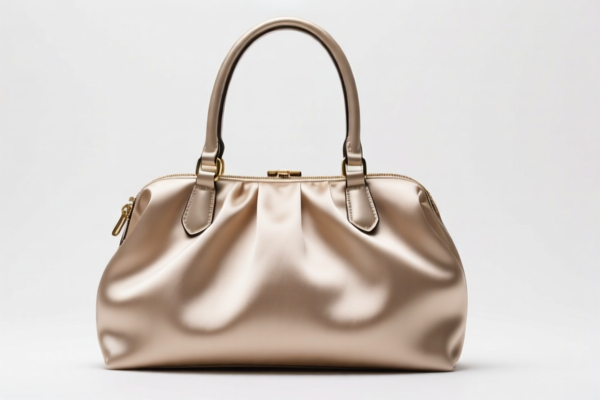
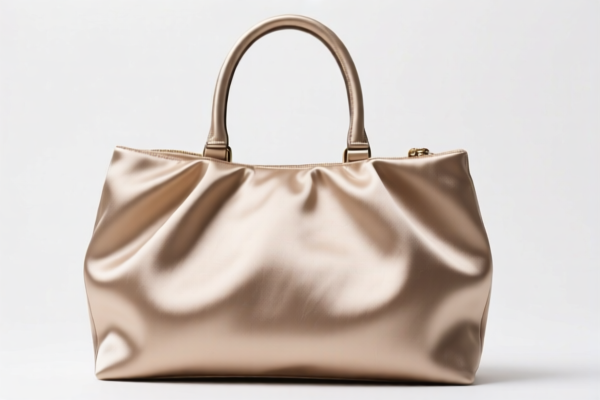
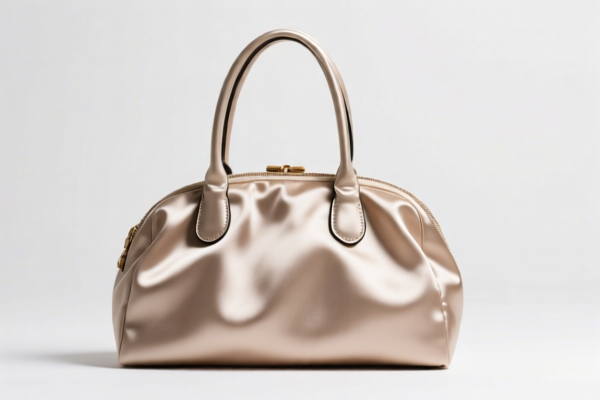

AI分析
👜 Silk Fabric Handbag (Custom)
🌐 HS Code Reference & Customs Clearance Guide | 2026 Latest Tariff Analysis | Professional Entry Strategy
📌 I. Product Definition & Classification: Do You Truly Understand the "Silk Handbag"?
A Custom Silk Fabric Handbag is a luxury accessory primarily valued for its aesthetic and material quality. In international trade, the classification hinges strictly on two factors: Material Composition and Function.
Key Distinction: - Handbag (Personal Use): Intended to carry personal items (phones, wallets, cosmetics). Classified under Chapter 42 (Articles of Leather; Saddle Harness) or Chapter 63 (Other Made-up Textile Articles) depending on surface material. - Shopping Bag/Tote (General Use): Often classified under Chapter 63 if made entirely of textile materials, even if used as a handbag.
⚠️ Critical Classification Point:
- If the outer surface is primarily Textile Material (Silk, Cotton, Polyester) → Likely Chapter 42 (4202) or Chapter 63 (6305).
- Silk is a Textile Fiber. Therefore, it falls under 4202.22 (Handbags with outer surface of textile materials) or potentially 6305 (Sacks and bags) if considered a generic "bag" rather than a "handbag."
📦 II. HS Code Classification Details (Latest 2026 Tariff Alignment)
Based on the provided data, here are the four possible HS Codes for a Silk Fabric Handbag, ranked by classification logic:
| HS Code | Product Description | Match Logic / Summary | Total Tax Rate |
|---|---|---|---|
4202.22.89.30 |
Handbags with outer surface of textile materials (Other) | Strongest Match: Explicitly defines "Handbag" + "Textile Surface." Silk is a textile. Fits the standard definition of a fashion handbag. | 52.6% |
4202.22.40.20 |
Handbags with outer surface of textile materials (Cotton) | Partial Match: Product is "Silk," but customs may broadly categorize natural fibers under "Cotton" or similar textile headings in some jurisdictions if not specified. Note: Silk ≠ Cotton, but this code applies to "textile" handbags. | 42.4% |
6305.90.00.00 |
Sacks and bags, of textile materials (Other) | Alternative Match: If the item is deemed a "generic bag" rather than a structured "handbag." Logic: "Handbag shape + Textile material = Bag." | 23.7% |
6305.20.00.00 |
Sacks and bags, of cotton (or textile) | Specific Material Match: Explicitly mentions "Cotton" in summary, but the logic holds for "Textile + Bag." If silk is deemed negligible or misclassified as cotton, this applies. | 23.7% |
🔍 Key Takeaway:
-4202.22.89.30is the most accurate for a fashion handbag with a textile (silk) exterior.
-6305.90.00.00is a lower-tax alternative if the item is classified as a generic "bag" (e.g., a tote or shopping bag) rather than a structured handbag.
- Silk is a textile fiber. It does NOT fall under Chapter 41 (Leather) or Chapter 50 (Silk Yarn). It falls under Chapter 63 (Made-up Textiles) or Chapter 42 (Articles of Leather, with textile surfaces).
💰 III. 2026 Latest Tariff Rate Breakdown (Including Additional Duties)
✅ Applicable Country: United States (US)
✅ Origin: China (CN)
✅ Effective Date: November 10, 2025 (and subsequent imports)
🎯 1. 4202.22.89.30 — Handbags (Textile Surface, Other)
| Item | Detail |
|---|---|
| Base Duty | 17.6% |
| Section 301 Additional Duty | +25.0% (USITC Footnote) |
| IEEPA Additional Duty | +10.0% (China-specific tariff) |
| Total Tax Rate | 52.6% |
| Tax Calculation | CIF Value × 52.6% |
| De Minimis Exemption? | ❌ NO (Not eligible for $800 de minimis exemption) |
| Legal Path | IEEPA:9903.01.25 → USITC:4202.22.89.30 → FOOTNOTE:301 |
📌 Explanation:
- This is the highest tax bracket for handbags.
- Why? Because it is classified as a luxury/personal article (Chapter 42) rather than a generic sack (Chapter 63).
- Risk: High. If Customs inspects and agrees it’s a handbag, you pay 52.6%.
🎯 2. 4202.22.40.20 — Handbags (Textile Surface, Cotton/Silk)
| Item | Detail |
|---|---|
| Base Duty | 7.4% |
| Section 301 Additional Duty | +25.0% |
| IEEPA Additional Duty | +10.0% |
| Total Tax Rate | 42.4% |
| Tax Calculation | CIF Value × 42.4% |
| De Minimis Exemption? | ❌ NO |
| Legal Path | IEEPA:9903.01.24 → USITC:4202.22.40.20 |
📌 Note:
- Lower base duty (7.4%) than 89.30, but still high due to 301/IEEPA.
- Use this if you can justify the material as "Cotton" or "General Textile" rather than "Other Textile."
🎯 3. 6305.90.00.00 — Sacks/Bags (Textile, Other)
| Item | Detail |
|---|---|
| Base Duty | 6.2% |
| Section 301 Additional Duty | +7.5% |
| IEEPA Additional Duty | +10.0% |
| Total Tax Rate | 23.7% |
| Tax Calculation | CIF Value × 23.7% |
| De Minimis Exemption? | ❌ NO (Note: Some low-value shipments may still be exempt, but high-value silk bags are likely subject to inspection) |
| Legal Path | IEEPA:9903.01.24 → USITC:6305.90.00.00 |
📌 Strategy:
- Lowest Tax Rate: 23.7%.
- How to Justify? Market the item as a "Silk Tote Bag" or "Shopping Bag" rather than a structured "Handbag." Emphasize utility over fashion.
- Risk: Medium. If Customs deems it a handbag, they may reassess to 4202.22.89.30.
🎯 4. 6305.20.00.00 — Sacks/Bags (Cotton)
| Item | Detail |
|---|---|
| Base Duty | 6.2% |
| Section 301 Additional Duty | +7.5% |
| IEEPA Additional Duty | +10.0% |
| Total Tax Rate | 23.7% |
| Tax Calculation | CIF Value × 23.7% |
| De Minimis Exemption? | ❌ NO |
| Legal Path | IEEPA:9901.25 → USITC:6305.20.00.00 |
📌 Caution:
- Silk ≠ Cotton. Using this code for 100% Silk is risky and may lead to penalties for misclassification.
- Only use if the bag is blended with significant cotton content or if you can prove it’s primarily a "cotton-style" textile bag.
🛠️ IV. Customs Clearance Practical Advice (Real-World Pitfall Guide)
✅ 1. Document Checklist (Non-Negotiable)
| Document | Required | Purpose |
|---|---|---|
| ✅ Product Photos | ✔️ | Show shape, structure, handles. Prove it’s a handbag or bag. |
| ✅ Material Composition Label | ✔️ | Must state "100% Silk" or "Silk Blend." Do not lie. |
| ✅ Commercial Invoice | ✔️ | Describe as "Silk Fabric Tote Bag" (if aiming for 6305) or "Silk Handbag" (if aiming for 4202). |
| ✅ Origin Certificate | ✔️ | Prove China origin for 301/IEEPA calculation. |
| ✅ Usage Statement | ✔️ | "Intended for casual shopping" (for 6305) vs. "Luxury fashion accessory" (for 4202). |
✅ 2. Declaration Strategy (Key Formulas)
🔥 “Shape Dictates Code, Material Dictates Chapter, Name Dictates Tax!”
| Scenario | Recommended HS Code | Reasoning | Risk Level |
|---|---|---|---|
| Structured Handbag (Handles, Zipper, Interior Pocket) | 4202.22.89.30 |
Fits "Handbag" definition perfectly. | 🟢 Low (Accurate) but High Tax |
| Soft Tote/Shopping Bag (No stiff structure, open top) | 6305.90.00.00 |
Fits "Bag" definition. Lower tax. | 🟡 Medium (May be reclassified) |
| Silk Scarf + Bag Combo | 6305.90.00.00 |
If bag is secondary, focus on textile sack. | 🟡 Medium |
| Misclassified as Cotton | 6305.20.00.00 |
Dangerous if 100% silk. | 🔴 High (Penalty Risk) |
✅ 3. Special Handling for "Custom Silk"
| Situation | Advice |
|---|---|
| OEM Custom Design | Provide design files to prove it’s a custom textile bag, not a mass-produced handbag. |
| High-Value Luxury | Expect higher scrutiny. Ensure invoice value matches market price. |
| Sample Shipments | Use DDP (Delivered Duty Paid) if possible, to avoid customs delays. |
| De Minimis ($800) | Not Eligible for silk bags from China due to 301/IEEPA tariffs. Plan for full duty payment. |
🌍 V. Global Market Comparison (2026)
| Country/Region | Recommended HS Code | Tariff Rate (China Origin) | Certification | Notes |
|---|---|---|---|---|
| 🇺🇸 USA | 4202.22.89.30 |
52.6% | No specific certs | High tax due to 301/IEEPA. |
| 🇺🇸 USA | 6305.90.00.00 |
23.7% | No specific certs | Lower tax if classified as "Bag." |
| 🇪🇺 EU | 4202.22.00 |
~4.5% + VAT | CE/RoHS not needed for fashion | No 301/IEEPA equivalent. |
| 🇨🇳 China | 4202.22.00 |
20% + VAT | N/A | Domestic consumption tax may apply. |
| 🇬🇧 UK | 4202.22.00 |
~4.5% + VAT | N/A | Post-Brexit rules apply. |
📌 Conclusion:
- USA is the most challenging market for silk handbags due to 52.6% total tax.
- EU/UK offer significantly lower duties (~4.5%), making them more attractive for luxury textile goods.
- Strategy: Consider re-routing through third countries (e.g., Vietnam, Mexico) if eligible for Free Trade Agreements (FTAs) to avoid 301/IEEPA tariffs.
📌 VI. Common Errors & Pitfalls (Lessons Learned)
❌ Error 1: Declaring Silk Handbag as "Leather Handbag"
👉 Consequence: Fraud. Penalty + Reimport. Silk is NOT leather.
❌ Error 2: Declaring Silk Handbag as "Cotton Bag" (6305.20)
👉 Consequence: Misclassification. If inspected, Customs will demand 23.7% (if correct) or 52.6% (if reclassified as handbag), plus penalties.
❌ Error 3: Splitting Shipment into Multiple Small Packages to Avoid Tax
👉 Consequence: "De Minimis Abuse." CBP now scrutinizes fragmented shipments. High risk of seizure.
❌ Error 4: Using "Gift" to Avoid Duty
👉 Consequence: Commercial shipments labeled as gifts are still subject to duty. No exemption for silk bags.
✅ Correct Approach:
"Silk Fabric Tote Bag, 100% Silk, Open Top, No Zipper, Model XYZ"
(Use "Tote Bag" to aim for 6305.90.00.00 → 23.7%)
🎯 VII. Conclusion: Smart Classification, Cost Savings!
🎯 Remember:
🔹 "Handbag = 52.6%, Tote Bag = 23.7%"
🔹 "Silk is Textile, Not Leather. Don’t Lie!"
🔹 "Structure Defines Code, Name Defines Tax."
📌 Pro Tip:
If your silk bags are shipped from Vietnam, Mexico, or Thailand, you may qualify for 0%~5% tariff under USMCA or ASEAN FTAs.
Recommendation: Apply for Advance Ruling from CBP to confirm HS Code before shipment.
📣 Immediate Action:
📞 Consult a Customs Broker + Provide Product Photos + Apply for HS Code Pre-Ruling
🚀 Ensure Smooth Clearance, Efficient Export, and Maximized Profit!
✨ Professional Customs Clearance Starts with Accurate Classification!
💼 Every Dollar Saved is a Dollar Earned!
用户评价
关于 HS 编码归类
协调制度(HS)是由世界海关组织(WCO)制定的国际贸易商品分类标准。全球 200 多个国家采用 HS 系统作为海关关税、贸易统计和进出口监管的基础。
每个 HS 编码遵循以下层级结构:
- 章(2 位)——商品大类(例如:第 84 章:机器和机械设备)
- 品目(4 位)——章内的更具体分类
- 子目(6 位)——国际通用细分,所有 WCO 成员国统一使用
- 本国细分(8-10 位)——各国自行扩展的细分编码,如美国 HTSUS 10 位编码
正确的 HS 编码归类对于顺利通关、准确缴纳关税和遵守贸易法规至关重要。错误归类可能导致海关延误、多缴关税或罚款。
从CN进口到US时,适用的关税税率可能包括:
- 最惠国(MFN)税率——适用于 WTO 成员国的标准关税税率
- 普通税率——适用于无贸易协定国家
- 贸易救济关税——附加关税,如 301 条款(反倾销)、232 条款(国家安全)或反补贴税
本页内容仅供参考。如需正式归类,请咨询当地海关或持牌报关代理。