D type decorative strip
CN → US| HS编码 | 关税税率 | 原产国 | 目的国 | 文档 |
|---|---|---|---|---|
| 4016991000 | 20.8% | CN | US | 官方文档 |
| 4016990500 | 20.9% | CN | US | 官方文档 |
| 7610900040 | 90.7% | CN | US | 官方文档 |
| 7610900080 | 90.7% | CN | US | 官方文档 |
| 7326908688 | 87.9% | CN | US | 官方文档 |
| 7326908610 | 87.9% | CN | US | 官方文档 |
| 3926400010 | 15.3% | CN | US | 官方文档 |
| 3926903500 | 24.0% | CN | US | 官方文档 |
商品图片
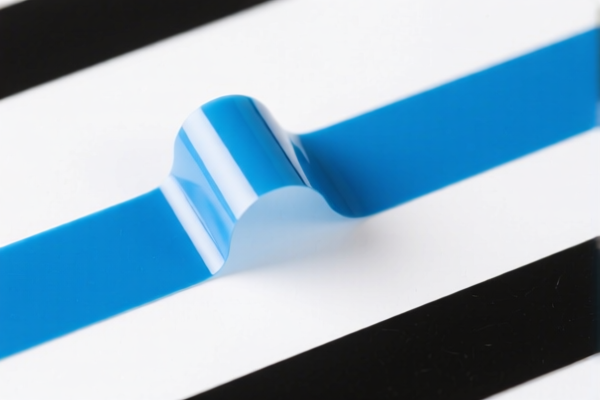
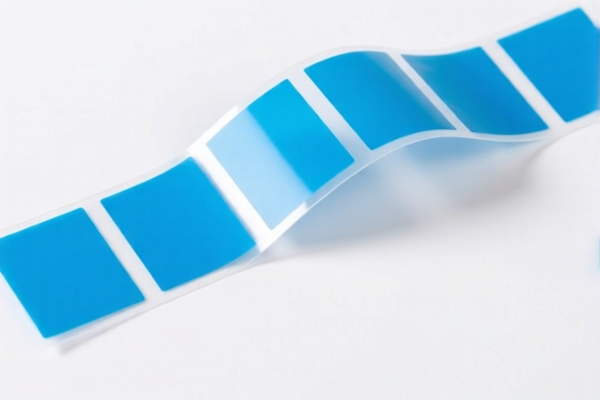
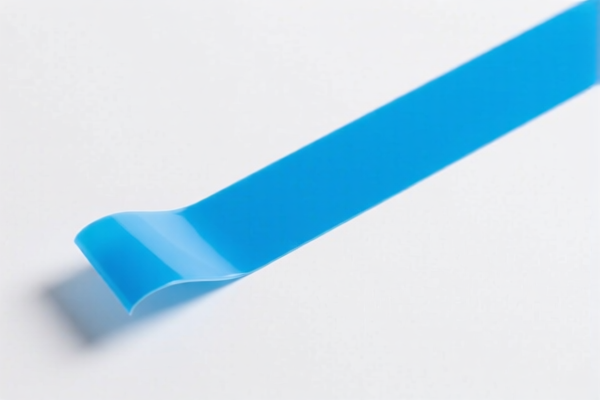
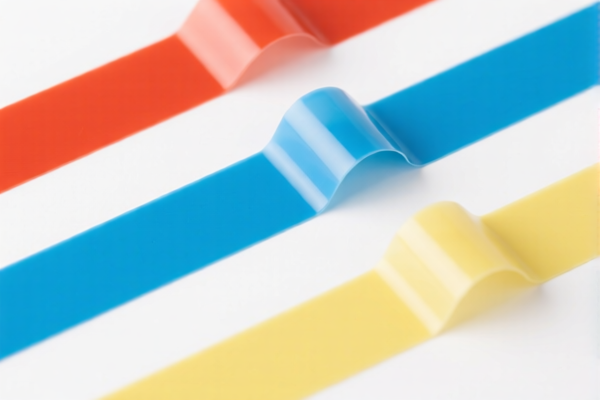
AI分析
🏗️ D-Type Decorative Strip (Sealing Strips / Edge Profiles)
🌐 HS Code Reference & Customs Clearance Guide | 2026 Latest Tariff Analysis | Professional Strategy
📌 Part I: Product Definition & Classification: What Exactly is a "D-Type Strip"?
In international trade, "D-Type Decorative Strip" is a generic marketing term, not a precise customs description. To classify it correctly under the Harmonized System (HS), we must determine its material composition and function.
These strips are typically used for: 1. Edge Sealing: Protecting edges of furniture, countertops, or flooring from moisture and damage. 2. Decorative Finish: Providing a smooth, rounded aesthetic edge. 3. Gap Filling: Sealing gaps between tiles, walls, or floors (commonly known as "quarter-round" or "shoe molding").
⚠️ Critical Distinction Point:
- If made of Rubber/Plastic → Classified under Chapter 40 or Chapter 39.
- If made of Metal (Aluminum, Stainless Steel) → Classified under Chapter 76 or Chapter 73.
- If made of Wood → Classified under Chapter 44.
- If made of Stone/Ceramic → Classified under Chapter 68 or Chapter 69.
Do not assume it belongs to a single HS code. The material dictates the classification. Below are the most common scenarios based on global market trends (2026).
📦 Part II: HS Code Classification Details (2026 Latest Tariff Authority Comparison)
| HS Code | Product Description | Typical Material | Application Scenario |
|---|---|---|---|
4008.39.00.00 |
Rubber articles (plates, sheets, strip) | Rubber (EPDM, Silicone, Neoprene) | Window/door seals, automotive trim, waterproof edge strips |
3926.90.97.00 |
Other articles of plastic | PVC/Plastic | Furniture edge banding, decorative wall trims, cheap interior trim |
7610.90.00.00 |
Aluminum structures and parts | Aluminum | Outdoor balcony railings, window profiles, decorative exterior cladding |
7326.90.86.00 |
Other articles of iron/steel | Stainless Steel | High-end kitchen backsplashes, industrial equipment edge guards |
4418.90.90.90 |
Other builders' joinery and carpentry | Wood | Floor skirting boards, baseboards, wooden decorative moldings |
6802.93.90.00 |
Other worked stone | Marble/Granite | Natural stone cove base for luxury flooring |
🔍 Key Reminder:
- PVC Strips are most common for home decor. If flexible and plastic-based, it is3926.90.97.00.
- Rubber Strips used for sealing are4008.39.00.00.
- Aluminum Profiles used for decoration are7610.90.00.00.
- Misclassification leads to significant duty differences (e.g., 0% vs. 25%+).
💰 Part III: 2026 Latest Tariff Rate Breakdown (Including Additional Taxes)
✅ Applicable Country: United States (US)
✅ Country of Origin: China (CN)
✅ Effective Date: 2025-11-10 onwards
🎯 1. 3926.90.97.00 —— Plastic Decorative Strips (Most Common for "D-Type")
| Item | Content |
|---|---|
| Base Tariff | 5.3% (Ad valorem) |
| USITC Additional Tax | +25% (Under Section 301, Footnote 9903.88.01) |
| IEEPA Additional Tax | +10% (针对中国/香港产品,自2025年11月10日起) |
| Total Rate | 40.3% |
| Calculation | CIF Value × 40.3% |
| De Minimis Eligibility | ❌ No (deny_de_minimis) |
| Legal Path | IEEPA:9903.01.25 → IEEPA:9903.01.24 → USITC:3926.90.97.00 → FOOTNOTE:9903.88.01 |
📌 Explanation:
- Plastic decorative strips from China are heavily taxed due to their classification as "consumer goods/plastic articles."
- The 25% Section 301 tariff is the biggest cost driver.
- Even small batches (e.g., samples) are subject to these duties if shipped commercially.
🎯 2. 4008.39.00.00 —— Rubber Sealing Strips
| Item | Content |
|---|---|
| Base Tariff | 3.4% (Ad valorem) |
| USITC Additional Tax | +25% |
| IEEPA Additional Tax | +10% |
| Total Rate | 38.4% |
| Calculation | CIF Value × 38.4% |
| De Minimis Eligibility | ❌ No |
| Legal Path | IEEPA:9901.25 → IEEPA:9903.01.24 → USITC:4008.39.00.00 → FOOTNOTE:9903.88.01 |
📌 Note:
- Rubber strips are often used for sealing windows/doors.
- If labeled as "decorative" but made of rubber, it still falls under rubber articles.
- High duty rate applies regardless of "decorative" claim.
🎯 3. 7610.90.00.00 —— Aluminum Decorative Profiles
| Item | Content |
|---|---|
| Base Tariff | 5.0% (Ad valorem) |
| USITC Additional Tax | +25% |
| IEEPA Additional Tax | +10% |
| Total Rate | 40.0% |
| Calculation | CIF Value × 40.0% |
| De Minimis Eligibility | ❌ No |
| Legal Path | IEEPA:9903.01.25 → IEEPA:9903.01.24 → USITC:7610.90.00.00 → FOOTNOTE:9903.88.01 |
📌 Note:
- Aluminum extrusions for decorative purposes are classified here.
- If the aluminum is painted or powder-coated, it remains in Chapter 76.
- Duty rate is slightly lower than plastic if base tariff is lower, but Section 301 still applies.
🛠️ Part IV: Customs Clearance Practical Advice (Real-World Pitfall Guide)
✅ 1. Required Documentation Checklist (Mandatory)
| Document | Required | Description |
|---|---|---|
| ✅ Product Specification Sheet | ✔️ | Must specify: Material (PVC, Rubber, Alu), Hardness, Thickness, Width |
| ✅ Material Composition Proof | ✔️ | Certificate of Analysis or Mill Test Certificate to prove material |
| ✅ Product Photos | ✔️ | Clear images showing cross-section (to prove shape is "D") and surface finish |
| ✅ Commercial Invoice | ✔️ | Must use correct HS code description (e.g., "PVC Edge Strip," not just "Decorative Strip") |
| ✅ Packing List | ✔️ | Weight, dimensions, and number of pieces |
| ✅ FCC/CE/RoHS (if applicable) | ✔️ | For plastic/rubber products, RoHS is often required for US/EU compliance |
✅ 2. Declaration Tips (Key Mnemonic)
🔥 "Material First, Shape Second, Function Last!"
| Scenario | Correct Declaration | Incorrect Practice |
|---|---|---|
| PVC D-Strip | "PVC Decorative Edge Strip, for Furniture" | "Decorative Moldings" (Too vague) |
| Rubber Seal | "EPDM Rubber Sealing Strip, D-Shaped" | "Decorative Strip" (Misleading) |
| Aluminum Profile | "Aluminum Extrusion Profile, Decorative Use" | "Building Material" (Too broad) |
| Mixed Bundle | Split Declaration | Mixed Declaration → Risk of seizure |
📌 Warning:
- Never declare as "Building Materials" if it's clearly a small plastic strip.
- If the product is primarily for sealing (rubber), declare as rubber, not decorative plastic.
- If primarily for decoration (wood/plastic), declare as decor.
✅ 3. Special Cases Handling
| Scenario | Handling Advice |
|---|---|
| OEM Custom Colors | Provide Pantone codes + photos. Do not claim "standard color" if custom. |
| Adhesive Backing | If the strip has self-adhesive backing, it is still classified by material (PVC/Rubber). No change in HS code. |
| Wooden Skirting | If wooden, declare as 4418.90.90.90. Note: Wood products may have different quotas or phytosanitary requirements. |
| Import from Vietnam/Mexico | Check for IEEPA Exemptions. Some plastic/aluminum goods may qualify for 0-5% duties if manufactured outside China. |
🌍 Part V: Global Market Customs Comparison (2026 Latest)
| Country/Region | Recommended HS Code | Duty Rate | Certification Required | Notes |
|---|---|---|---|---|
| 🇺🇸 USA | 3926.90.97.00 (PVC) |
40.3% | RoHS, Prop 65 | High duty due to Section 301 |
| 🇨🇳 China | 3926.90.90.00 (PVC) |
5% | CCC (if electrical) | Low import duty for domestic use |
| 🇪🇺 EU | 3926.90.97 (PVC) |
6.5% | CE, REACH | No additional tariffs, but REACH compliance is strict |
| 🇦🇺 Australia | 3926.90.90 (PVC) |
5% | RCM | No major hurdles |
| 🇯🇵 Japan | 3926.90.90 (PVC) |
6% | PSE (if electronic accessory) | Check for Japanese industrial standards |
📌 Conclusion:
- USA is the most expensive market for D-Type strips due to the 35%+ combined tariffs.
- EU and Japan require strict environmental compliance (REACH, RoHS).
- China has low duties but strict production standards.
📌 Part VI: Common Errors & Pitfall Guide (Blood & Tears Lessons)
❌ Error 1: Declaring "Rubber Strips" as "Plastic Strips" to avoid higher duties
👉 Consequence: Customs inspection reveals material difference → Fines + Delay + Rejection
❌ Error 2: Using "Decorative Strip" without specifying material
👉 Consequence: Customs assigns highest possible duty rate (worst-case scenario) → Unexpected Costs
❌ Error 3: Ignoring "Self-Adhesive" feature
👉 Consequence: If adhesive is present, some countries require different labeling or safety data sheets (SDS) → Compliance Risk
❌ Error 4: Assuming "D-Type" is a valid HS code description
👉 Consequence: "D-Type" is not a customs term. Must use material-based description → Rejection
✅ Correct Practice:
"PVC D-Shaped Edge Banding Strip, 20mm Width, Self-Adhesive Backing, for Cabinet Edge Sealing, Non-Reflective Finish"
🎯 Part VII: Conclusion: Professional Declaration, Cost Saving, Efficiency!
🎯 Remember the Mnemonic:
🔹 "Material Defines Code, Shape Defines Function"
🔹 "Plastic Strip in USA = 40.3%, Rubber = 38.4%, Aluminum = 40.0%"
🔹 "Don't Guess, Verify!"
📌 Pro Tip:
If your D-Type strips are made in Vietnam, Mexico, or Thailand, check for IEEPA Exemptions. You might pay 0-5% instead of 35-40%.
Action Step:
📞 Contact your customs broker with material test reports and product photos.
🚀 Verify HS Code pre-ruling before shipment to avoid surprise duties.
✨ Professional Customs Clearance Starts with Accurate Classification!
💼 Every Percent Saved is Pure Profit!
用户评价
关于 HS 编码归类
协调制度(HS)是由世界海关组织(WCO)制定的国际贸易商品分类标准。全球 200 多个国家采用 HS 系统作为海关关税、贸易统计和进出口监管的基础。
每个 HS 编码遵循以下层级结构:
- 章(2 位)——商品大类(例如:第 84 章:机器和机械设备)
- 品目(4 位)——章内的更具体分类
- 子目(6 位)——国际通用细分,所有 WCO 成员国统一使用
- 本国细分(8-10 位)——各国自行扩展的细分编码,如美国 HTSUS 10 位编码
正确的 HS 编码归类对于顺利通关、准确缴纳关税和遵守贸易法规至关重要。错误归类可能导致海关延误、多缴关税或罚款。
从CN进口到US时,适用的关税税率可能包括:
- 最惠国(MFN)税率——适用于 WTO 成员国的标准关税税率
- 普通税率——适用于无贸易协定国家
- 贸易救济关税——附加关税,如 301 条款(反倾销)、232 条款(国家安全)或反补贴税
本页内容仅供参考。如需正式归类,请咨询当地海关或持牌报关代理。