D type decorative strip
CN → US| HS Code | Tariff Rate | Origin | Destination | Doc |
|---|---|---|---|---|
| 4016991000 | 20.8% | CN | US | Official Doc |
| 4016990500 | 20.9% | CN | US | Official Doc |
| 7610900040 | 90.7% | CN | US | Official Doc |
| 7610900080 | 90.7% | CN | US | Official Doc |
| 7326908688 | 87.9% | CN | US | Official Doc |
| 7326908610 | 87.9% | CN | US | Official Doc |
| 3926400010 | 15.3% | CN | US | Official Doc |
| 3926903500 | 24.0% | CN | US | Official Doc |
Product Images

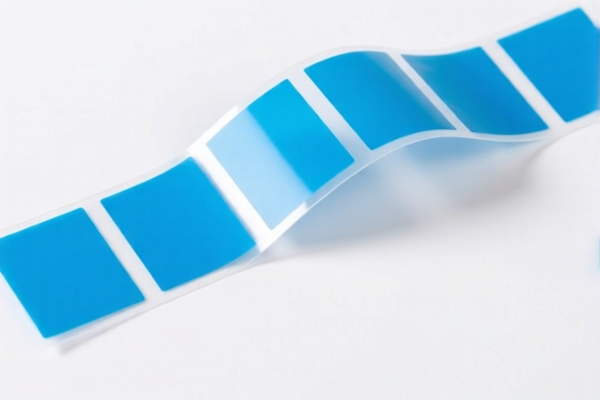
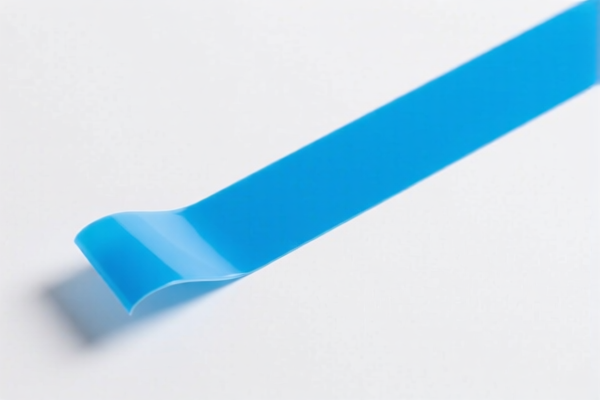

AI Analysis
🏗️ D-Type Decorative Strip (Sealing Strips / Edge Profiles)
🌐 HS Code Reference & Customs Clearance Guide | 2026 Latest Tariff Analysis | Professional Strategy
📌 Part I: Product Definition & Classification: What Exactly is a "D-Type Strip"?
In international trade, "D-Type Decorative Strip" is a generic marketing term, not a precise customs description. To classify it correctly under the Harmonized System (HS), we must determine its material composition and function.
These strips are typically used for: 1. Edge Sealing: Protecting edges of furniture, countertops, or flooring from moisture and damage. 2. Decorative Finish: Providing a smooth, rounded aesthetic edge. 3. Gap Filling: Sealing gaps between tiles, walls, or floors (commonly known as "quarter-round" or "shoe molding").
⚠️ Critical Distinction Point:
- If made of Rubber/Plastic → Classified under Chapter 40 or Chapter 39.
- If made of Metal (Aluminum, Stainless Steel) → Classified under Chapter 76 or Chapter 73.
- If made of Wood → Classified under Chapter 44.
- If made of Stone/Ceramic → Classified under Chapter 68 or Chapter 69.
Do not assume it belongs to a single HS code. The material dictates the classification. Below are the most common scenarios based on global market trends (2026).
📦 Part II: HS Code Classification Details (2026 Latest Tariff Authority Comparison)
| HS Code | Product Description | Typical Material | Application Scenario |
|---|---|---|---|
4008.39.00.00 |
Rubber articles (plates, sheets, strip) | Rubber (EPDM, Silicone, Neoprene) | Window/door seals, automotive trim, waterproof edge strips |
3926.90.97.00 |
Other articles of plastic | PVC/Plastic | Furniture edge banding, decorative wall trims, cheap interior trim |
7610.90.00.00 |
Aluminum structures and parts | Aluminum | Outdoor balcony railings, window profiles, decorative exterior cladding |
7326.90.86.00 |
Other articles of iron/steel | Stainless Steel | High-end kitchen backsplashes, industrial equipment edge guards |
4418.90.90.90 |
Other builders' joinery and carpentry | Wood | Floor skirting boards, baseboards, wooden decorative moldings |
6802.93.90.00 |
Other worked stone | Marble/Granite | Natural stone cove base for luxury flooring |
🔍 Key Reminder:
- PVC Strips are most common for home decor. If flexible and plastic-based, it is3926.90.97.00.
- Rubber Strips used for sealing are4008.39.00.00.
- Aluminum Profiles used for decoration are7610.90.00.00.
- Misclassification leads to significant duty differences (e.g., 0% vs. 25%+).
💰 Part III: 2026 Latest Tariff Rate Breakdown (Including Additional Taxes)
✅ Applicable Country: United States (US)
✅ Country of Origin: China (CN)
✅ Effective Date: 2025-11-10 onwards
🎯 1. 3926.90.97.00 —— Plastic Decorative Strips (Most Common for "D-Type")
| Item | Content |
|---|---|
| Base Tariff | 5.3% (Ad valorem) |
| USITC Additional Tax | +25% (Under Section 301, Footnote 9903.88.01) |
| IEEPA Additional Tax | +10% (针对中国/香港产品,自2025年11月10日起) |
| Total Rate | 40.3% |
| Calculation | CIF Value × 40.3% |
| De Minimis Eligibility | ❌ No (deny_de_minimis) |
| Legal Path | IEEPA:9903.01.25 → IEEPA:9903.01.24 → USITC:3926.90.97.00 → FOOTNOTE:9903.88.01 |
📌 Explanation:
- Plastic decorative strips from China are heavily taxed due to their classification as "consumer goods/plastic articles."
- The 25% Section 301 tariff is the biggest cost driver.
- Even small batches (e.g., samples) are subject to these duties if shipped commercially.
🎯 2. 4008.39.00.00 —— Rubber Sealing Strips
| Item | Content |
|---|---|
| Base Tariff | 3.4% (Ad valorem) |
| USITC Additional Tax | +25% |
| IEEPA Additional Tax | +10% |
| Total Rate | 38.4% |
| Calculation | CIF Value × 38.4% |
| De Minimis Eligibility | ❌ No |
| Legal Path | IEEPA:9901.25 → IEEPA:9903.01.24 → USITC:4008.39.00.00 → FOOTNOTE:9903.88.01 |
📌 Note:
- Rubber strips are often used for sealing windows/doors.
- If labeled as "decorative" but made of rubber, it still falls under rubber articles.
- High duty rate applies regardless of "decorative" claim.
🎯 3. 7610.90.00.00 —— Aluminum Decorative Profiles
| Item | Content |
|---|---|
| Base Tariff | 5.0% (Ad valorem) |
| USITC Additional Tax | +25% |
| IEEPA Additional Tax | +10% |
| Total Rate | 40.0% |
| Calculation | CIF Value × 40.0% |
| De Minimis Eligibility | ❌ No |
| Legal Path | IEEPA:9903.01.25 → IEEPA:9903.01.24 → USITC:7610.90.00.00 → FOOTNOTE:9903.88.01 |
📌 Note:
- Aluminum extrusions for decorative purposes are classified here.
- If the aluminum is painted or powder-coated, it remains in Chapter 76.
- Duty rate is slightly lower than plastic if base tariff is lower, but Section 301 still applies.
🛠️ Part IV: Customs Clearance Practical Advice (Real-World Pitfall Guide)
✅ 1. Required Documentation Checklist (Mandatory)
| Document | Required | Description |
|---|---|---|
| ✅ Product Specification Sheet | ✔️ | Must specify: Material (PVC, Rubber, Alu), Hardness, Thickness, Width |
| ✅ Material Composition Proof | ✔️ | Certificate of Analysis or Mill Test Certificate to prove material |
| ✅ Product Photos | ✔️ | Clear images showing cross-section (to prove shape is "D") and surface finish |
| ✅ Commercial Invoice | ✔️ | Must use correct HS code description (e.g., "PVC Edge Strip," not just "Decorative Strip") |
| ✅ Packing List | ✔️ | Weight, dimensions, and number of pieces |
| ✅ FCC/CE/RoHS (if applicable) | ✔️ | For plastic/rubber products, RoHS is often required for US/EU compliance |
✅ 2. Declaration Tips (Key Mnemonic)
🔥 "Material First, Shape Second, Function Last!"
| Scenario | Correct Declaration | Incorrect Practice |
|---|---|---|
| PVC D-Strip | "PVC Decorative Edge Strip, for Furniture" | "Decorative Moldings" (Too vague) |
| Rubber Seal | "EPDM Rubber Sealing Strip, D-Shaped" | "Decorative Strip" (Misleading) |
| Aluminum Profile | "Aluminum Extrusion Profile, Decorative Use" | "Building Material" (Too broad) |
| Mixed Bundle | Split Declaration | Mixed Declaration → Risk of seizure |
📌 Warning:
- Never declare as "Building Materials" if it's clearly a small plastic strip.
- If the product is primarily for sealing (rubber), declare as rubber, not decorative plastic.
- If primarily for decoration (wood/plastic), declare as decor.
✅ 3. Special Cases Handling
| Scenario | Handling Advice |
|---|---|
| OEM Custom Colors | Provide Pantone codes + photos. Do not claim "standard color" if custom. |
| Adhesive Backing | If the strip has self-adhesive backing, it is still classified by material (PVC/Rubber). No change in HS code. |
| Wooden Skirting | If wooden, declare as 4418.90.90.90. Note: Wood products may have different quotas or phytosanitary requirements. |
| Import from Vietnam/Mexico | Check for IEEPA Exemptions. Some plastic/aluminum goods may qualify for 0-5% duties if manufactured outside China. |
🌍 Part V: Global Market Customs Comparison (2026 Latest)
| Country/Region | Recommended HS Code | Duty Rate | Certification Required | Notes |
|---|---|---|---|---|
| 🇺🇸 USA | 3926.90.97.00 (PVC) |
40.3% | RoHS, Prop 65 | High duty due to Section 301 |
| 🇨🇳 China | 3926.90.90.00 (PVC) |
5% | CCC (if electrical) | Low import duty for domestic use |
| 🇪🇺 EU | 3926.90.97 (PVC) |
6.5% | CE, REACH | No additional tariffs, but REACH compliance is strict |
| 🇦🇺 Australia | 3926.90.90 (PVC) |
5% | RCM | No major hurdles |
| 🇯🇵 Japan | 3926.90.90 (PVC) |
6% | PSE (if electronic accessory) | Check for Japanese industrial standards |
📌 Conclusion:
- USA is the most expensive market for D-Type strips due to the 35%+ combined tariffs.
- EU and Japan require strict environmental compliance (REACH, RoHS).
- China has low duties but strict production standards.
📌 Part VI: Common Errors & Pitfall Guide (Blood & Tears Lessons)
❌ Error 1: Declaring "Rubber Strips" as "Plastic Strips" to avoid higher duties
👉 Consequence: Customs inspection reveals material difference → Fines + Delay + Rejection
❌ Error 2: Using "Decorative Strip" without specifying material
👉 Consequence: Customs assigns highest possible duty rate (worst-case scenario) → Unexpected Costs
❌ Error 3: Ignoring "Self-Adhesive" feature
👉 Consequence: If adhesive is present, some countries require different labeling or safety data sheets (SDS) → Compliance Risk
❌ Error 4: Assuming "D-Type" is a valid HS code description
👉 Consequence: "D-Type" is not a customs term. Must use material-based description → Rejection
✅ Correct Practice:
"PVC D-Shaped Edge Banding Strip, 20mm Width, Self-Adhesive Backing, for Cabinet Edge Sealing, Non-Reflective Finish"
🎯 Part VII: Conclusion: Professional Declaration, Cost Saving, Efficiency!
🎯 Remember the Mnemonic:
🔹 "Material Defines Code, Shape Defines Function"
🔹 "Plastic Strip in USA = 40.3%, Rubber = 38.4%, Aluminum = 40.0%"
🔹 "Don't Guess, Verify!"
📌 Pro Tip:
If your D-Type strips are made in Vietnam, Mexico, or Thailand, check for IEEPA Exemptions. You might pay 0-5% instead of 35-40%.
Action Step:
📞 Contact your customs broker with material test reports and product photos.
🚀 Verify HS Code pre-ruling before shipment to avoid surprise duties.
✨ Professional Customs Clearance Starts with Accurate Classification!
💼 Every Percent Saved is Pure Profit!
Customer Reviews
About HS Code Classification
The Harmonized System (HS) is an internationally standardized nomenclature developed by the World Customs Organization (WCO) to classify traded products. Over 200 countries use the HS system as the basis for customs tariffs, trade statistics, and import/export regulations.
Each HS code follows a hierarchical structure:
- Chapter (2 digits) — Broad category of goods (e.g., Chapter 84: Machinery and Mechanical Appliances)
- Heading (4 digits) — More specific grouping within the chapter
- Subheading (6 digits) — Internationally standardized breakdown, used by all WCO member countries
- National subdivisions (8-10 digits) — Country-specific extensions for further classification, such as US HTSUS 10-digit codes
Correct HS code classification is essential for smooth customs clearance, accurate duty payment, and compliance with trade regulations. Misclassification can lead to customs delays, overpayment of duties, or penalties.
When importing from CN to US, the applicable tariff rates may include:
- Most-Favored-Nation (MFN) rate — The standard duty rate applied to WTO members
- General rate — Applied to countries without trade agreements
- Trade remedy duties — Additional tariffs such as Section 301 (anti-dumping), Section 232 (national security), or countervailing duties
The information provided on this page is for reference purposes only. For official classification, please consult with your local customs authority or a licensed customs broker.