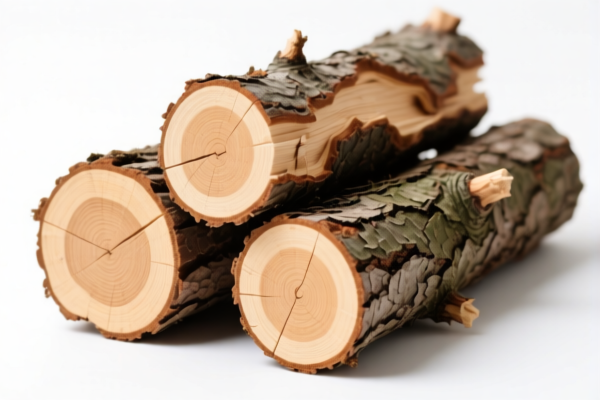
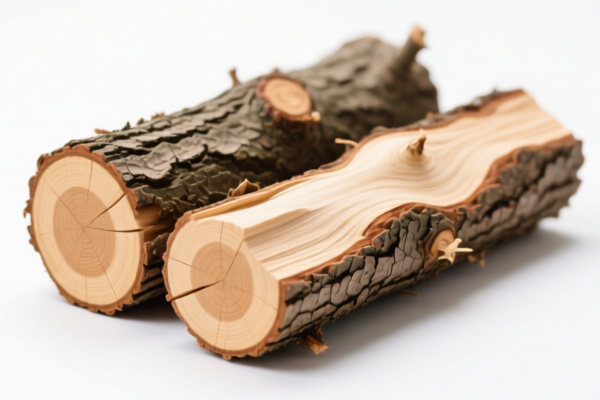
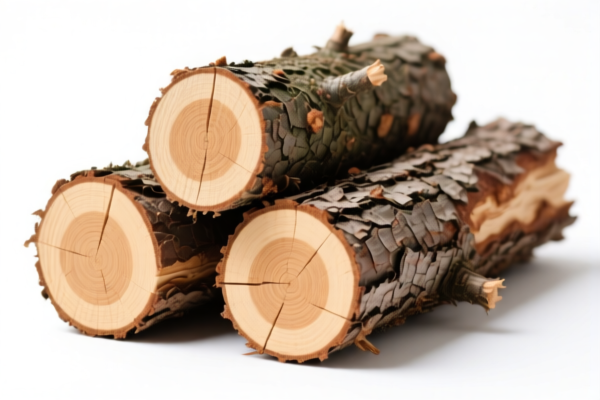
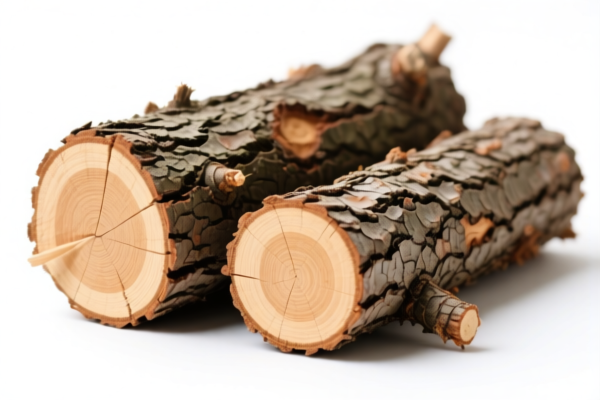
Debarked Fir Logs
CN → US| HS编码 | 关税税率 | 原产国 | 目的国 | 文档 |
|---|---|---|---|---|
| 4407120058 | 35.0% | CN | US | 官方文档 |
| 4407120059 | 35.0% | CN | US | 官方文档 |
商品图片
AI分析
🌲 Debarked Fir Logs (Wood Industry Grade)
🌐 HS Code Reference & Customs Clearance Guide | 2026 Latest Tariff Analysis | Professional Clearance Strategy
📌 I. Product Definition & Classification: Do You Really Know "Debarked Fir Logs"?
Debarked Fir Logs refer to wood that has been sawn, chipped, sliced, or peeled lengthwise, with a thickness exceeding 6 mm. Specifically, these are coniferous woods from the genus Abies (Fir) and Picea (Spruce), but the classification below focuses strictly on Fir (Abies spp.) as per the provided data.
⚠️ Critical Distinction:
- If the wood is Rough (not planed/sanded further than standard sawing): It falls under specific rough timber codes.
- If the wood is Other (e.g., planed, sanded, or end-joined): It falls under the general "Other" category.
- Thickness Rule: Must exceed 6 mm. If ≤ 6 mm, it would be classified differently (e.g., as veneer sheets or plywood).
- Treatment Rule: The data specifies "Not treated" (no preservatives, fire retardants, etc.).
📦 II. HS Code Classification Details (2026 Latest Tariff Authority Match)
Based on the provided <DATA>, Debarked Fir Logs of thickness >6mm are classified into two main subcategories under HS Chapter 44 (Wood and articles of wood).
| HS Code | Product Description | Key Characteristics | Treatment Status |
|---|---|---|---|
4407.12.00.58 |
Fir (Abies spp.): Rough | Sawn, sliced, or peeled lengthwise; rough surface (no planing/sanding beyond initial cut); thickness >6mm. | Not treated |
4407.12.00.59 |
Fir (Abies spp.): Other | Sawn, sliced, or peeled lengthwise; includes planed, sanded, or end-joined timber; thickness >6mm. | Not treated |
🔍 Key Reminder:
- Both codes fall under Heading 44.07: "Wood sawn or chipped lengthwise, sliced or peeled, whether or not planed, sanded or end-jointed, of a thickness exceeding 6 mm."
- Species Specificity: Must be confirmed as Abies (Fir). Spruce (Picea) has different sub-codes not listed here.
- "Not Treated": This is a strict requirement. If treated with preservatives, the HS Code changes to Chapter 44.09 or 44.11 depending on processing.
💰 III. 2026 Latest Tariff Rate Breakdown (Detailed Tax Clauses)
✅ Applicable Country: United States (US)
✅ Origin: China (CN) (Implied by the "Additional Tariff" context in the source data)
✅ Effective Date: Current trade policies (2026)
🎯 1. 4407.12.00.58 —— Fir (Abies spp.): Rough
| Item | Content |
|---|---|
| Base Tariff Rate | 0.0% (Ad valorem) |
| Section 301 Additional Tariff | +25.0% |
| Total Tax Rate | 25.0% |
| Tax Calculation | CIF Value × 25% |
| Legal Basis Path | HTSUS: 4407.12.00.58 → Section 301 Tariff List |
📌 Explanation:
- The Base Tariff for many softwood lumber products under HTS 44.07 is often 0% or low, reflecting free trade principles for raw materials.
- However, the 25% Additional Tariff is imposed under Section 301 of the Trade Act of 1974 targeting Chinese goods.
- Total Effective Rate: 25%. This is a significant cost factor for exporters.
🎯 2. 4407.12.00.59 —— Fir (Abies spp.): Other
| Item | Content |
|---|---|
| Base Tariff Rate | 0.0% (Ad valorem) |
| Section 301 Additional Tariff | +25.0% |
| Total Tax Rate | 25.0% |
| Tax Calculation | CIF Value × 25% |
| Legal Basis Path | HTSUS: 4407.12.00.59 → Section 301 Tariff List |
📌 Note:
- Identical tax structure to the "Rough" category.
- "Other" includes any further processing like planing or sanding, which may increase value but does not reduce the tariff rate.
- The 25% surcharge applies regardless of the finishing level, as long as it remains under 44.07 (sawn wood) and not further manufactured (e.g., into furniture or structures).
🛠️ IV. Customs Clearance Practical Advice (Real-World Pitfall Avoidance)
✅ 1. Documentation Checklist (Non-Negotiable)
| Document | Required | Explanation |
|---|---|---|
| ✅ Phytosanitary Certificate | ✔️ | Mandatory to prove freedom from pests (especially bark beetles). Essential for wood imports. |
| ✅ Commercial Invoice | ✔️ | Must clearly state: "Wood, Sawn Lengthwise, Fir (Abies spp.), Thickness >6mm, Not Treated." |
| ✅ Packing List | ✔️ | Detail gross/net weight, number of pieces, and dimensions. |
| ✅ Wood Species Declaration | ✔️ | Confirm species is Abies (Fir), not Picea (Spruce) or hardwoods. Misdeclaration leads to penalties. |
| ✅ Treaty Declaration (if applicable) | ✔️ | If originating from a FTA partner, declare country of origin to claim potential exemptions (though US-China Section 301 usually overrides). |
✅ 2. Declaration Strategy (Key Mantras)
🔥 "Rough vs. Other: Define Finish, Avoid Penalty!"
| Scenario | Correct HS Code | Incorrect Practice |
|---|---|---|
| Freshly sawn, no sanding | 4407.12.00.58 (Rough) |
Calling it "Other" → May trigger extra scrutiny for value add |
| Planed, sanded, or end-joined | 4407.12.00.59 (Other) |
Calling it "Rough" → Under-declaration of value/processing |
| Thickness ≤ 6 mm | Not 44.07 (Likely 44.09 or 44.11) | Declaring as 44.07 → Rejection or Penalty |
| Treated with Preservatives | Not 44.07 (Likely 44.09/44.11) | Declaring as "Not Treated" → Smuggling/Fraud |
✅ 3. Special Considerations
| Situation | Handling Advice |
|---|---|
| Mixed Species (Fir + Spruce) | If mixed, the entry may be classified under the predominant species or split. Best to separate shipments for Abies (Fir) if targeting the codes above. |
| End-Jointed Boards | Falls under 4407.12.00.59 ("Other"). Ensure description includes "End-Jointed." |
| Packaging | Wooden pallets/crates must comply with ISPM 15 (heat-treated/ fumigated). Otherwise, entire shipment may be held. |
| Value Declaration | Use transaction value (CIF). Since tax is 25%, accurate valuation is critical to avoid under-valuation audits. |
🌍 V. Global Market Comparison (2026 Overview)
| Country/Region | Recommended HS Code | Tariff Rate (US Origin) | Notes |
|---|---|---|---|
| 🇺🇸 United States | 4407.12.00.58 / .59 |
25% (Total) | Subject to Section 301 duties for CN origin. |
| 🇨🇳 China | 4407.12.00.58 / .59 |
~5-10% | Varies by import policy; no Section 301 equivalent. |
| 🇪🇺 European Union | 4407.12.00 |
0% | Generalized System of Preferences (GSP) may apply depending on origin. |
| 🇨🇦 Canada | 4407.12.00 |
0% | USMCA/CUSMA benefits may apply for North American origin. |
📌 Conclusion:
- US Market is the most tariff-sensitive for Chinese-origin fir wood due to the 25% additional duty.
- Diversify sourcing or consider third-country processing (e.g., slight transformation in Canada/Mexico) to mitigate duties, subject to rules of origin.
📌 VI. Common Mistakes & Pitfalls (Lessons Learned)
❌ Mistake 1: Declaring "Fir" without specifying "Rough" or "Other"
👉 Consequence: CBP may ask for clarification, causing delays. Always specify processing level.
❌ Mistake 2: Ignoring thickness (<6mm)
👉 Consequence: Misclassification. Thin wood falls under different headings (e.g., veneer). Check measurements!
❌ Mistake 3: Claiming "Not Treated" for preservative-soaked wood
👉 Consequence: Severe penalty for false declaration. Phytosanitary risks.
❌ Mistake 4: Mixing Fir and Spruce in one container
👉 Consequence: Complex customs inspection. Separate shipments for accurate HS coding.
✅ Correct Approach:
"Sawn Wood, Fir (Abies spp.), Rough, Thickness >6mm, Not Treated, HS 4407.12.00.58, Origin: China"
🎯 VII. Conclusion: Precision in Wood Classification Saves Money!
🎯 Remember the Mantra:
🔹 "Rough is .58, Other is .59, Thickness >6mm, Treatments Change Everything!"
🔹 "25% Duty Hits Hard, Separate Fir from Spruce, Keep Pallets ISPM 15!"
📌 Pro Tip:
- If your fir logs are destined for the US, budget for a 25% total duty.
- Consider pre-classification rulings from CBP if your processing (e.g., planing vs. rough sawing) is ambiguous.
- Always verify phytosanitary requirements to avoid quarantine holds.
📣 Act Now:
📞 Consult a licensed customs broker + Provide product specs + Obtain Phytosanitary Certificate
🚀 Ensure compliant, timely, and cost-effective clearance for your Debarked Fir Logs!
✨ Professional Classification Starts Here!
💼 Every millimeter and species matters in global trade!
用户评价
关于 HS 编码归类
协调制度(HS)是由世界海关组织(WCO)制定的国际贸易商品分类标准。全球 200 多个国家采用 HS 系统作为海关关税、贸易统计和进出口监管的基础。
每个 HS 编码遵循以下层级结构:
- 章(2 位)——商品大类(例如:第 84 章:机器和机械设备)
- 品目(4 位)——章内的更具体分类
- 子目(6 位)——国际通用细分,所有 WCO 成员国统一使用
- 本国细分(8-10 位)——各国自行扩展的细分编码,如美国 HTSUS 10 位编码
正确的 HS 编码归类对于顺利通关、准确缴纳关税和遵守贸易法规至关重要。错误归类可能导致海关延误、多缴关税或罚款。
从CN进口到US时,适用的关税税率可能包括:
- 最惠国(MFN)税率——适用于 WTO 成员国的标准关税税率
- 普通税率——适用于无贸易协定国家
- 贸易救济关税——附加关税,如 301 条款(反倾销)、232 条款(国家安全)或反补贴税
本页内容仅供参考。如需正式归类,请咨询当地海关或持牌报关代理。