Debarked Fir Logs
CN → US| HS Code | Tariff Rate | Origin | Destination | Doc |
|---|---|---|---|---|
| 4407120058 | 35.0% | CN | US | Official Doc |
| 4407120059 | 35.0% | CN | US | Official Doc |
Product Images
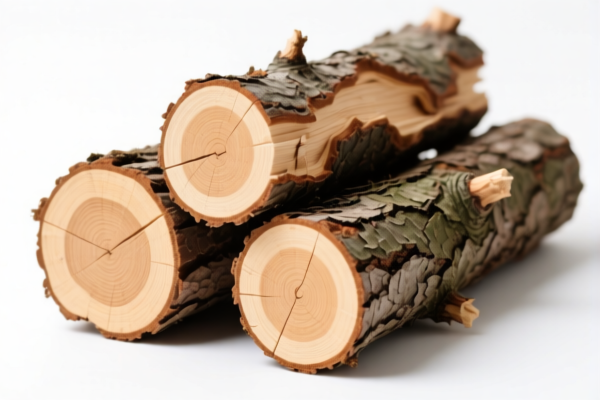
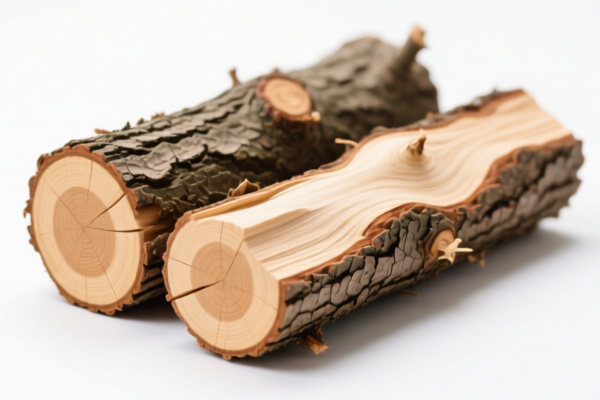
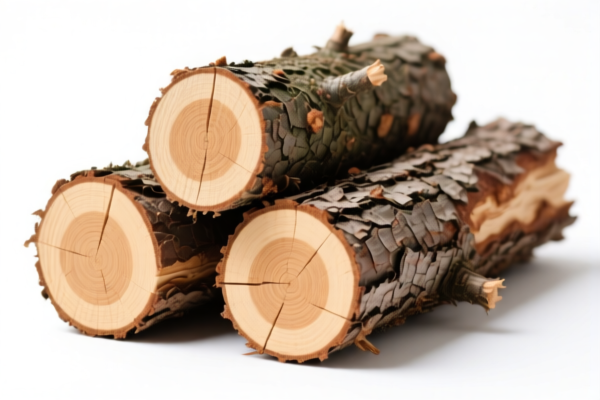
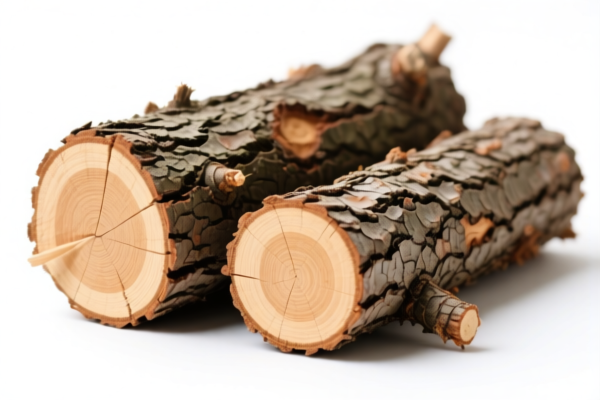
AI Analysis
🌲 Debarked Fir Logs (Wood Industry Grade)
🌐 HS Code Reference & Customs Clearance Guide | 2026 Latest Tariff Analysis | Professional Clearance Strategy
📌 I. Product Definition & Classification: Do You Really Know "Debarked Fir Logs"?
Debarked Fir Logs refer to wood that has been sawn, chipped, sliced, or peeled lengthwise, with a thickness exceeding 6 mm. Specifically, these are coniferous woods from the genus Abies (Fir) and Picea (Spruce), but the classification below focuses strictly on Fir (Abies spp.) as per the provided data.
⚠️ Critical Distinction:
- If the wood is Rough (not planed/sanded further than standard sawing): It falls under specific rough timber codes.
- If the wood is Other (e.g., planed, sanded, or end-joined): It falls under the general "Other" category.
- Thickness Rule: Must exceed 6 mm. If ≤ 6 mm, it would be classified differently (e.g., as veneer sheets or plywood).
- Treatment Rule: The data specifies "Not treated" (no preservatives, fire retardants, etc.).
📦 II. HS Code Classification Details (2026 Latest Tariff Authority Match)
Based on the provided <DATA>, Debarked Fir Logs of thickness >6mm are classified into two main subcategories under HS Chapter 44 (Wood and articles of wood).
| HS Code | Product Description | Key Characteristics | Treatment Status |
|---|---|---|---|
4407.12.00.58 |
Fir (Abies spp.): Rough | Sawn, sliced, or peeled lengthwise; rough surface (no planing/sanding beyond initial cut); thickness >6mm. | Not treated |
4407.12.00.59 |
Fir (Abies spp.): Other | Sawn, sliced, or peeled lengthwise; includes planed, sanded, or end-joined timber; thickness >6mm. | Not treated |
🔍 Key Reminder:
- Both codes fall under Heading 44.07: "Wood sawn or chipped lengthwise, sliced or peeled, whether or not planed, sanded or end-jointed, of a thickness exceeding 6 mm."
- Species Specificity: Must be confirmed as Abies (Fir). Spruce (Picea) has different sub-codes not listed here.
- "Not Treated": This is a strict requirement. If treated with preservatives, the HS Code changes to Chapter 44.09 or 44.11 depending on processing.
💰 III. 2026 Latest Tariff Rate Breakdown (Detailed Tax Clauses)
✅ Applicable Country: United States (US)
✅ Origin: China (CN) (Implied by the "Additional Tariff" context in the source data)
✅ Effective Date: Current trade policies (2026)
🎯 1. 4407.12.00.58 —— Fir (Abies spp.): Rough
| Item | Content |
|---|---|
| Base Tariff Rate | 0.0% (Ad valorem) |
| Section 301 Additional Tariff | +25.0% |
| Total Tax Rate | 25.0% |
| Tax Calculation | CIF Value × 25% |
| Legal Basis Path | HTSUS: 4407.12.00.58 → Section 301 Tariff List |
📌 Explanation:
- The Base Tariff for many softwood lumber products under HTS 44.07 is often 0% or low, reflecting free trade principles for raw materials.
- However, the 25% Additional Tariff is imposed under Section 301 of the Trade Act of 1974 targeting Chinese goods.
- Total Effective Rate: 25%. This is a significant cost factor for exporters.
🎯 2. 4407.12.00.59 —— Fir (Abies spp.): Other
| Item | Content |
|---|---|
| Base Tariff Rate | 0.0% (Ad valorem) |
| Section 301 Additional Tariff | +25.0% |
| Total Tax Rate | 25.0% |
| Tax Calculation | CIF Value × 25% |
| Legal Basis Path | HTSUS: 4407.12.00.59 → Section 301 Tariff List |
📌 Note:
- Identical tax structure to the "Rough" category.
- "Other" includes any further processing like planing or sanding, which may increase value but does not reduce the tariff rate.
- The 25% surcharge applies regardless of the finishing level, as long as it remains under 44.07 (sawn wood) and not further manufactured (e.g., into furniture or structures).
🛠️ IV. Customs Clearance Practical Advice (Real-World Pitfall Avoidance)
✅ 1. Documentation Checklist (Non-Negotiable)
| Document | Required | Explanation |
|---|---|---|
| ✅ Phytosanitary Certificate | ✔️ | Mandatory to prove freedom from pests (especially bark beetles). Essential for wood imports. |
| ✅ Commercial Invoice | ✔️ | Must clearly state: "Wood, Sawn Lengthwise, Fir (Abies spp.), Thickness >6mm, Not Treated." |
| ✅ Packing List | ✔️ | Detail gross/net weight, number of pieces, and dimensions. |
| ✅ Wood Species Declaration | ✔️ | Confirm species is Abies (Fir), not Picea (Spruce) or hardwoods. Misdeclaration leads to penalties. |
| ✅ Treaty Declaration (if applicable) | ✔️ | If originating from a FTA partner, declare country of origin to claim potential exemptions (though US-China Section 301 usually overrides). |
✅ 2. Declaration Strategy (Key Mantras)
🔥 "Rough vs. Other: Define Finish, Avoid Penalty!"
| Scenario | Correct HS Code | Incorrect Practice |
|---|---|---|
| Freshly sawn, no sanding | 4407.12.00.58 (Rough) |
Calling it "Other" → May trigger extra scrutiny for value add |
| Planed, sanded, or end-joined | 4407.12.00.59 (Other) |
Calling it "Rough" → Under-declaration of value/processing |
| Thickness ≤ 6 mm | Not 44.07 (Likely 44.09 or 44.11) | Declaring as 44.07 → Rejection or Penalty |
| Treated with Preservatives | Not 44.07 (Likely 44.09/44.11) | Declaring as "Not Treated" → Smuggling/Fraud |
✅ 3. Special Considerations
| Situation | Handling Advice |
|---|---|
| Mixed Species (Fir + Spruce) | If mixed, the entry may be classified under the predominant species or split. Best to separate shipments for Abies (Fir) if targeting the codes above. |
| End-Jointed Boards | Falls under 4407.12.00.59 ("Other"). Ensure description includes "End-Jointed." |
| Packaging | Wooden pallets/crates must comply with ISPM 15 (heat-treated/ fumigated). Otherwise, entire shipment may be held. |
| Value Declaration | Use transaction value (CIF). Since tax is 25%, accurate valuation is critical to avoid under-valuation audits. |
🌍 V. Global Market Comparison (2026 Overview)
| Country/Region | Recommended HS Code | Tariff Rate (US Origin) | Notes |
|---|---|---|---|
| 🇺🇸 United States | 4407.12.00.58 / .59 |
25% (Total) | Subject to Section 301 duties for CN origin. |
| 🇨🇳 China | 4407.12.00.58 / .59 |
~5-10% | Varies by import policy; no Section 301 equivalent. |
| 🇪🇺 European Union | 4407.12.00 |
0% | Generalized System of Preferences (GSP) may apply depending on origin. |
| 🇨🇦 Canada | 4407.12.00 |
0% | USMCA/CUSMA benefits may apply for North American origin. |
📌 Conclusion:
- US Market is the most tariff-sensitive for Chinese-origin fir wood due to the 25% additional duty.
- Diversify sourcing or consider third-country processing (e.g., slight transformation in Canada/Mexico) to mitigate duties, subject to rules of origin.
📌 VI. Common Mistakes & Pitfalls (Lessons Learned)
❌ Mistake 1: Declaring "Fir" without specifying "Rough" or "Other"
👉 Consequence: CBP may ask for clarification, causing delays. Always specify processing level.
❌ Mistake 2: Ignoring thickness (<6mm)
👉 Consequence: Misclassification. Thin wood falls under different headings (e.g., veneer). Check measurements!
❌ Mistake 3: Claiming "Not Treated" for preservative-soaked wood
👉 Consequence: Severe penalty for false declaration. Phytosanitary risks.
❌ Mistake 4: Mixing Fir and Spruce in one container
👉 Consequence: Complex customs inspection. Separate shipments for accurate HS coding.
✅ Correct Approach:
"Sawn Wood, Fir (Abies spp.), Rough, Thickness >6mm, Not Treated, HS 4407.12.00.58, Origin: China"
🎯 VII. Conclusion: Precision in Wood Classification Saves Money!
🎯 Remember the Mantra:
🔹 "Rough is .58, Other is .59, Thickness >6mm, Treatments Change Everything!"
🔹 "25% Duty Hits Hard, Separate Fir from Spruce, Keep Pallets ISPM 15!"
📌 Pro Tip:
- If your fir logs are destined for the US, budget for a 25% total duty.
- Consider pre-classification rulings from CBP if your processing (e.g., planing vs. rough sawing) is ambiguous.
- Always verify phytosanitary requirements to avoid quarantine holds.
📣 Act Now:
📞 Consult a licensed customs broker + Provide product specs + Obtain Phytosanitary Certificate
🚀 Ensure compliant, timely, and cost-effective clearance for your Debarked Fir Logs!
✨ Professional Classification Starts Here!
💼 Every millimeter and species matters in global trade!
Customer Reviews
About HS Code Classification
The Harmonized System (HS) is an internationally standardized nomenclature developed by the World Customs Organization (WCO) to classify traded products. Over 200 countries use the HS system as the basis for customs tariffs, trade statistics, and import/export regulations.
Each HS code follows a hierarchical structure:
- Chapter (2 digits) — Broad category of goods (e.g., Chapter 84: Machinery and Mechanical Appliances)
- Heading (4 digits) — More specific grouping within the chapter
- Subheading (6 digits) — Internationally standardized breakdown, used by all WCO member countries
- National subdivisions (8-10 digits) — Country-specific extensions for further classification, such as US HTSUS 10-digit codes
Correct HS code classification is essential for smooth customs clearance, accurate duty payment, and compliance with trade regulations. Misclassification can lead to customs delays, overpayment of duties, or penalties.
When importing from CN to US, the applicable tariff rates may include:
- Most-Favored-Nation (MFN) rate — The standard duty rate applied to WTO members
- General rate — Applied to countries without trade agreements
- Trade remedy duties — Additional tariffs such as Section 301 (anti-dumping), Section 232 (national security), or countervailing duties
The information provided on this page is for reference purposes only. For official classification, please consult with your local customs authority or a licensed customs broker.