Decontamination Cotton
CN → US| HS编码 | 关税税率 | 原产国 | 目的国 | 文档 |
|---|---|---|---|---|
| 5601290090 | 39.0% | CN | US | 官方文档 |
| 5601210090 | 38.6% | CN | US | 官方文档 |
| 3926903500 | 24.0% | CN | US | 官方文档 |
| 3005905090 | 10.0% | CN | US | 官方文档 |
| 3810905000 | 40.0% | CN | US | 官方文档 |
商品图片
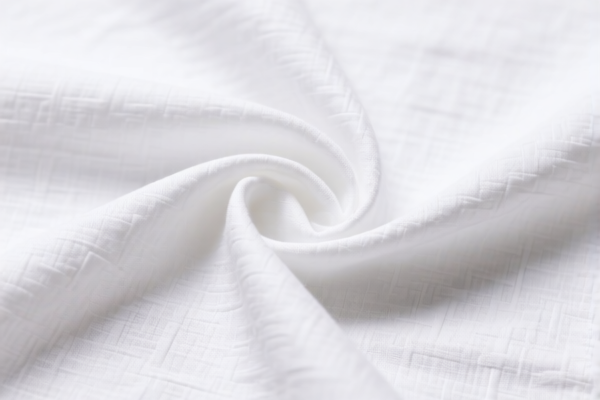
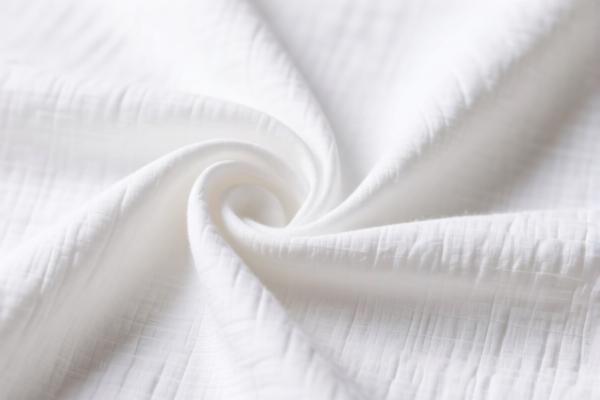
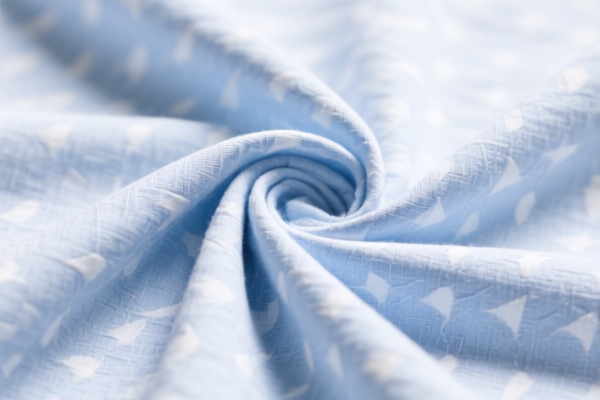
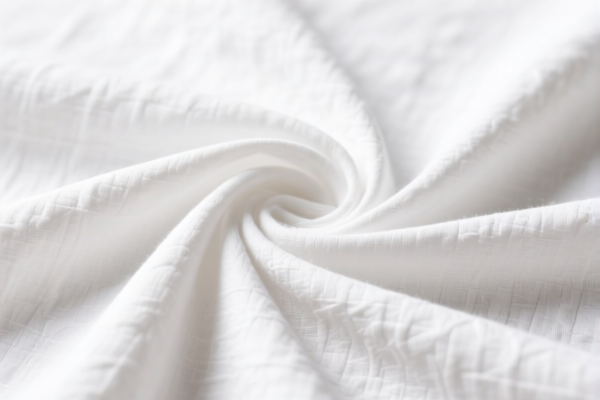
AI分析
🧼 Decontamination Cotton (Chemical Cleaning Pads)
🌐 HS Code Reference & Customs Clearance Guide | 2026 Latest Tariff Analysis | Professional Clearance Strategy
📌 1. Product Definition & Classification: What is "Decontamination Cotton"?
Decontamination Cotton is a versatile cleaning tool used for removing stains, grease, dust, or chemical residues. In international trade, it is often misunderstood. Is it medical gauze? Is it a chemical solvent? Or is it a raw textile material? The classification depends entirely on its material composition and state of processing.
⚠️ Key Distinction Point:
- If it is medical-grade (sterile, for wound care) → 3005.90.50.90
- If it is textile-based (cotton/polyester fibers for industrial wiping) → 5601.21.00.90 or 5601.29.00.90
- If it is foam/polyurethane-based (sponge-like structure) → 3926.90.35.00
- ⚠️ Warning: Do NOT confuse it with liquid/chemical cleaners (HS 3810.90.50.00). This HS Code is for metal surface treatment agents, not solid cotton pads.
📦 2. HS Code Classification Details (2026 Latest Tariff Authority)
| HS Code | Product Description | Material Attribute | Application Scenario | Tax Risk Level |
|---|---|---|---|---|
3005.90.50.90 |
Wadding, gauze, bandages and similar articles for medical purposes | Cotton/Fibers | Medical decontamination, sterile pads | 🟢 Lowest Risk |
5601.21.00.90 |
Cotton wadding and articles thereof | Pure Cotton | Industrial wiping, textile padding | 🟡 Medium Risk |
5601.29.00.90 |
Other textile wadding and articles thereof | Synthetic/Mixed Fibers | General industrial cleaning, sponge-like pads | 🟡 Medium Risk |
3926.90.35.00 |
Other articles of plastics and articles of other materials of heading 3921 | Polyurethane (PU)/Plastic Foam | Chemical-resistant foam pads, non-woven synthetic | 🟠 High Risk |
3810.90.50.00 |
Other auxiliary preparations for metal surface treatment | Liquid/Paste Chemical | MISCLASSIFICATION ALERT | 🔴 Critical Error |
🔍 Key Insight:
- The summary data suggests 3810.90.50.00 is a possibility, but the description explicitly links it to "Descaling Agent" (chemical). If your product is a solid cotton pad, this is likely an incorrect inference based on a misinterpretation of the name "Decontamination." Use only if the product is a chemical-soaked wipe intended for metal surface treatment. - 3005.90.50.90 offers the lowest tariff base (0%) but is strict on "medical" definitions.
💰 3. 2026 Latest Tariff Rate Breakdown (Including Additional Duties)
✅ Applicable Country: United States (US)
✅ Country of Origin: China (CN)
✅ Effective Date: November 10, 2025 (and subsequent imports)
🎯 1. 3005.90.50.90 —— Medical Wadding/Gauze (Cotton)
| Item | Content |
|---|---|
| Base Duty Rate | 0.0% |
| Section 301 Surcharge | 0.0% |
| IEEPA Surcharge | +10% (List 4A, China-specific) |
| Total Tax Rate | 10.0% |
| Tax Calculation | CIF Value × 10% |
| De Minimis Exemption | ❌ Not Applicable (Commercial Import) |
| Legal Basis Path | IEEPA:9903.01.25 → USITC:3005.90.50.90 |
📌 Explanation:
- The base duty for medical wadding is 0%.
- However, the IEEPA 10% surcharge applies to most Chinese-origin goods under List 4A.
- Total Cost Impact: Only 10%, making this the most tax-efficient option IF the product can be legally classified as a medical/health article.
🎯 2. 5601.21.00.90 —— Cotton Wadding and Articles Thereof
| Item | Content |
|---|---|
| Base Duty Rate | 3.6% |
| Section 301 Surcharge | +25.0% |
| IEEPA Surcharge | +10.0% |
| Total Tax Rate | 38.6% |
| Tax Calculation | CIF Value × 38.6% |
| De Minimis Exemption | ❌ Not Applicable |
| Legal Basis Path | IEEPA:9901.25 → USITC:5601.21.00.90 |
📌 Explanation:
- If the cotton pad is not medical (e.g., for cleaning car engines or furniture), it falls under textile wadding.
- The 35% additional duty (25% + 10%) makes this significantly more expensive.
- Material Conflict Check: Ensure the product is indeed cotton. If it is polyester, use 5601.29.00.90.
🎯 3. 5601.29.00.90 —— Other Textile Wadding (Non-Cotton)
| Item | Content |
|---|---|
| Base Duty Rate | 4.0% |
| Section 301 Surcharge | +25.0% |
| IEEPA Surcharge | +10.0% |
| Total Tax Rate | 39.0% |
| Tax Calculation | CIF Value × 39.0% |
| De Minimis Exemption | ❌ Not Applicable |
| Legal Basis Path | IEEPA:9903.01.24 → USITC:5601.29.00.90 |
📌 Explanation:
- Applies if the "cotton" is actually a synthetic fiber (polyester, viscose) or a blend.
- Slightly higher than cotton wadding due to a higher base rate (4.0% vs 3.6%).
🎯 4. 3926.90.35.00 —— Other Articles of Plastics (PU Foam)
| Item | Content |
|---|---|
| Base Duty Rate | 6.5% |
| Section 301 Surcharge | +7.5% |
| IEEPA Surcharge | +10.0% |
| Total Tax Rate | 24.0% |
| Tax Calculation | CIF Value × 24.0% |
| De Minimis Exemption | ❌ Not Applicable |
| Legal Basis Path | IEEPA:9901.25 → USITC:3926.90.35.00 |
📌 Explanation:
- If the "decontamination cotton" is actually a polyurethane (PU) foam sponge (common in industrial cleaning), this is the correct classification.
- Lower total duty (24%) compared to textile wadding, but the base duty is higher.
- Crucial: Must prove the material is plastic/foam, not fiber.
🎯 5. 3810.90.50.00 —— Auxiliary Preparations for Metal Surface Treatment
| Item | Content |
|---|---|
| Base Duty Rate | 5.0% |
| Section 301 Surcharge | +25.0% |
| IEEPA Surcharge | +10.0% |
| Total Tax Rate | 40.0% |
| Tax Calculation | CIF Value × 40.0% |
| De Minimis Exemption | ❌ Not Applicable |
| Legal Basis Path | IEEPA:9903.01.25 → USITC:3810.90.50.00 |
📌 WARNING:
- This HS Code is for chemical solutions (descalers, pickling pastes), NOT solid cotton pads.
- The summary data mentions "Descaling Agent," which is a mismatch for "Cotton."
- Do not use this unless you are importing a liquid chemical in a container. Using this for cotton pads will lead to customs seizure or heavy penalties for misdeclaration.
🛠️ 4. Customs Clearance Practical Advice (Pitfall Avoidance Guide)
✅ 1. Required Documentation List (All Must Provide)
| Document | Mandatory | Description |
|---|---|---|
| ✅ Product Specification Sheet | ✔️ | Must specify: Material (Cotton/PU/Synthetic), Dimensions, Usage (Medical/Industrial). |
| ✅ Material Composition Certificate | ✔️ | Lab report proving % Cotton vs. Polyester vs. PU Foam. |
| ✅ Product Photos (Clear Label) | ✔️ | Show texture, packaging, and any medical certifications (if claiming 3005.90.50.90). |
| ✅ Certificate of Origin (CO) | ✔️ | Required for US customs origin verification. |
| ✅ Commercial Invoice | ✔️ | Must accurately describe the item as "Decontamination Cotton Pad" or "Cleaning Wadding," NOT "Chemical Descaler." |
| ✅ Packing List | ✔️ | Detailed weight and count. |
✅ 2. Declaration Tips (Key Mantra)
🔥 "Material Defines Code, Not Just Name!"
| Scenario | Correct Declaration | Wrong Action |
|---|---|---|
| Medical Use (Sterile) | 3005.90.50.90 |
Misdeclare as industrial cotton → 38.6% |
| Industrial Wiping (Cotton) | 5601.21.00.90 |
Misdeclare as plastic foam → 24.0% (if actually cotton) or 39% (if misclassified) |
| Foam Sponge (PU) | 3926.90.35.00 |
Call it "Cotton" → Risk of 39% duty + fine |
| Liquid Cleaner | 3810.90.50.00 |
Ship liquid as "Cotton" → Seizure |
✅ 3. Special Cases
| Case | Handling Advice |
|---|---|
| SOaked Cotton Pads | If impregnated with chemicals, the product may be considered a chemical preparation (HS 3810) or medical article (HS 3005), depending on the chemical and concentration. Get a customs advance ruling. |
| Non-Medical "Cotton" | Even if named "Cotton," if it's 100% polyester, use 5601.29.00.90. Mislabeling synthetic as cotton can trigger audits. |
| Foam vs. Fiber | Visually and chemically distinct. PU foam dissolves in certain solvents; cotton burns. Provide test reports. |
🌍 5. Global Market Clearance Comparison (2026 Latest)
| Country/Region | Recommended HS Code | Duty (China Origin) | Certification | Notes |
|---|---|---|---|---|
| 🇺🇸 USA | 3005.90.50.90 (if medical) |
10% | FDA Registration (if medical) | Most competitive if medical |
| 🇺🇸 USA | 5601.21.00.90 (if cotton) |
38.6% | None | High duty due to Section 301 |
| 🇺🇸 USA | 3926.90.35.00 (if foam) |
24.0% | None | Mid-range duty |
| 🇨🇳 China | 3005.90.50.90 |
0-5% | CCC (if medical devices) | Low entry barrier |
| 🇪🇺 EU | 3005.90.90 |
0% | CE MDR (if medical) | No Section 301 equivalent |
📌 Conclusion:
- USA is the most complex market due to Section 301 and IEEPA tariffs.
- Classifying as Medical (3005.90.50.90) offers the biggest savings (10% vs 39%), but requires strict adherence to medical device regulations.
- Foam (3926.90.35.00) is a safe middle ground if the product is indeed PU-based.
📌 6. Common Errors & Pitfalls (Blood Lessons)
❌ Error 1: Calling a PU Foam Pad "Cotton" to avoid higher textile duties.
👉 Consequence: Customs inspection finds plastic → Retrospective tax of 39% + Penalties.
❌ Error 2: Using HS 3810 for solid cotton pads because of the word "Decontamination."
👉 Consequence: Customs Rejection. 3810 is for liquids/pastes, not solids.
❌ Error 3: Claiming Medical Status for industrial cleaning pads.
👉 Consequence: FDA Violation. If not registered as a medical device, you cannot use HS 3005.90.50.90.
❌ Error 4: Ignoring Material Composition.
👉 Consequence: If you declare "Cotton" but it's 50% polyester, you may be assessed 5601.29.00.90 (39.0%) instead of 5601.21.00.90 (38.6%), plus fines for inaccurate declaration.
✅ Correct Practice:
"PU Foam Cleaning Pad, 10cm x 10cm, Industrial Use, Non-Medical, Model XYZ" → HS 3926.90.35.00
OR
"Sterile Cotton Wound Pad, Medical Grade, Model ABC" → HS 3005.90.50.90
🎯 7. Conclusion: Precision in Classification Saves Money!
🎯 Remember the Mantra:
🔹 "Medical? 10%. Cotton? 39%. Foam? 24%. Chemical? Don't ship solids!"
🔹 "Name doesn't matter, Material does! Get a pre-ruling if unsure."
📌 Pro Tip:
If your "Decontamination Cotton" is impregnated with disinfectants, consult a customs broker immediately. It may cross into chemical preparation (HS 3810) or sanitary articles, changing the tax profile entirely.
📣 Immediate Action:
📞 Contact a Licensed Customs Broker + Provide Material Test Reports + Apply for Advance Ruling (if volume is high)
🚀 Avoid the 39% Trap! Optimize for 10% or 24% with correct classification!
✨ Professional Clearance Starts with Accurate Classification!
💼 Every percentage point in duty is a point in your profit margin!
用户评价
关于 HS 编码归类
协调制度(HS)是由世界海关组织(WCO)制定的国际贸易商品分类标准。全球 200 多个国家采用 HS 系统作为海关关税、贸易统计和进出口监管的基础。
每个 HS 编码遵循以下层级结构:
- 章(2 位)——商品大类(例如:第 84 章:机器和机械设备)
- 品目(4 位)——章内的更具体分类
- 子目(6 位)——国际通用细分,所有 WCO 成员国统一使用
- 本国细分(8-10 位)——各国自行扩展的细分编码,如美国 HTSUS 10 位编码
正确的 HS 编码归类对于顺利通关、准确缴纳关税和遵守贸易法规至关重要。错误归类可能导致海关延误、多缴关税或罚款。
从CN进口到US时,适用的关税税率可能包括:
- 最惠国(MFN)税率——适用于 WTO 成员国的标准关税税率
- 普通税率——适用于无贸易协定国家
- 贸易救济关税——附加关税,如 301 条款(反倾销)、232 条款(国家安全)或反补贴税
本页内容仅供参考。如需正式归类,请咨询当地海关或持牌报关代理。