Decorative Composite Boards
CN → US| HS编码 | 关税税率 | 原产国 | 目的国 | 文档 |
|---|---|---|---|---|
| 3920992000 | 39.2% | CN | US | 官方文档 |
| 3921905050 | 39.8% | CN | US | 官方文档 |
| 3921904090 | 39.2% | CN | US | 官方文档 |
| 3921905010 | 39.8% | CN | US | 官方文档 |
| 4823902000 | 35.0% | CN | US | 官方文档 |
商品图片

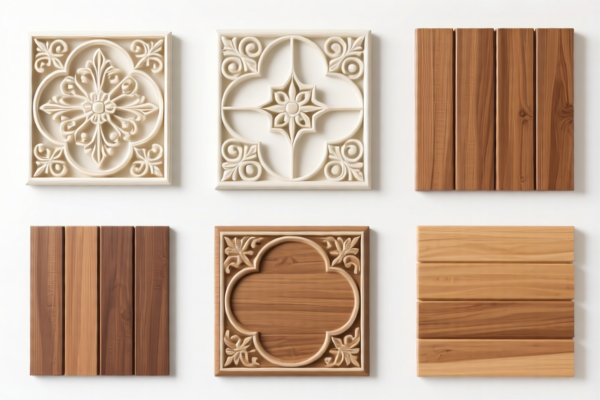

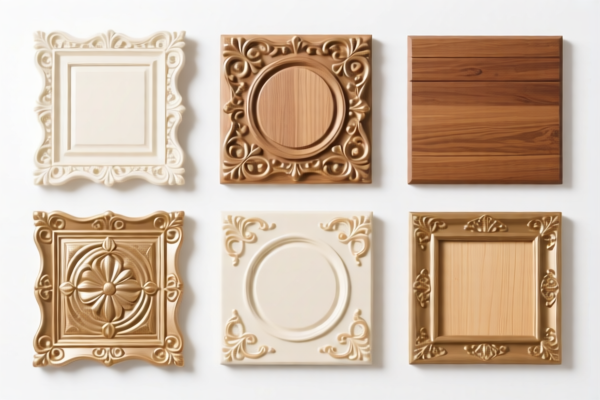
AI分析
🪵 Decorative Composite Boards: The Ultimate HS Code & Tariff Breakdown (2026 Edition)
🌐 HS Code Reference & Customs Clearance Guide | 2026 Latest Tariff Analysis | Professional Compliance Strategy
📌 I. Product Definition & Classification: Do You Really Know "Decorative Composite Boards"?
Decorative Composite Boards are versatile surface materials widely used in interior design, furniture manufacturing, and construction. In international trade, they are not a single entity but a category defined by material composition and structural form.
They are generally classified into two main branches: * Plastic-Based Composites: Made from synthetic polymers (PVC, PE, PP, etc.), often layered or laminated for durability and moisture resistance. * Paper/Fiber-Based Composites: Made from paper, cardboard, or wood fibers impregnated with resins (like melamine or phenolic resins), commonly seen in laminated panels (e.g., high-pressure laminate/HPL).
⚠️ Key Distinction Point:
- If the core material is plastic (polymers) and it is in the form of plates, sheets, or films → Chapter 39 (Plastics)
- If the core material is paper/fiber and it is in the form of plates/sheets → Chapter 48 (Paper & Paperboard)
📦 II. HS Code Classification Details (2026 Latest Tariff Authority Comparison)
Based on the specific material composition and structural characteristics provided in the dataset, here are the precise classifications:
| HS Code | Product Description | Application Scenario | Material Nature |
|---|---|---|---|
3920.99.20.00 |
Plastic composite board, plastic material, laminated/combined form | High-pressure plastic laminates, industrial plastic boards | ✅ Plastic (Layered/Combined) |
3921.90.50.50 |
Plastic composite board, plastic material, plate form | General plastic plates, sheets, films, foils, strips | ✅ Plastic (Plate/Sheet) |
3921.90.40.90 |
Plastic composite board, plastic material, reasonable match under "Other" | Generic plastic composite plates not specified elsewhere | ✅ Plastic (General) |
3921.90.50.10 |
Custom composite board, reinforced or plastic-containing material | Customized plastic-enhanced composite panels | ✅ Plastic (Custom/Reinforced) |
4823.90.20.00 |
Custom composite board, paper/cardboard/fiber-based material | Decorative paper-faced panels, laminated wood/paper boards | ✅ Paper/Fiber |
🔍 Critical Reminder:
- Plastic-based boards fall under 3920 or 3921. The distinction often lies in whether it is a "plate/sheet" (3921) or a "laminated/combined material" (3920). However, in many customs databases, 3921 is the primary catch-all for plastic plates/sheets. - Paper-based decorative boards (like those used for laminate flooring surfaces) fall under 4823. - Misclassification between Chapter 39 and Chapter 48 is a high-risk area for audits. Ensure the material safety data sheet (MSDS) or bill of materials confirms the primary composition.
💰 III. 2026 Latest Tariff Rate Breakdown (Including Surcharges & Policy Add-ons)
✅ Applicable Country: United States (US)
✅ Country of Origin: China (CN)
✅ Effective Date: Post-2025 (Including Section 301 and IEEPA measures)
The dataset indicates a consistent pattern of high tariffs for Chinese-origin decorative composite boards. Below is the detailed breakdown for each HS Code.
🎯 1. Plastic-Based Composites (3920.99.20.00, 3921.90.50.50, 3921.90.40.90, 3921.90.50.10)
These codes are subject to three layers of taxation:
| Item | Detail |
|---|---|
| Basic Tariff | 4.2% - 4.8% (ad valorem) (Varies slightly by specific sub-heading) |
| Section 301 Surcharge | +25.0% (Retaliatory tariff under US Trade Act Section 301) |
| Section 122 / IEEPA Surcharge | +10.0% (Additional tariff under International Emergency Economic Powers Act or specific trade actions) |
| Total Effective Tax Rate | 39.2% (for 3920.99.20.00 & 3921.90.40.90) 39.8% (for 3921.90.50.50 & 3921.90.50.10) |
| Tax Calculation | CIF Value × Total Tax Rate |
| De Minimis Exemption | ❌ Not Applicable (Deny de minimis) |
| Legal Basis Path | USITC:3920/3921 → Section 301 Footnote → IEEPA/Section 122 Authority |
📌 Explanation:
- Base Rate: The standard Most Favored Nation (MFN) duty for plastic products. - 25% Surcharge: This is the critical Section 301 tariff that significantly increases the cost of Chinese plastic imports. - 10% Surcharge: Refers to additional penalties or specific trade restrictions (often labeled as "122条款" in Chinese contexts, referring to specific administrative trade measures or IEEPA provisions). - Total Impact: With a ~40% total tariff, these products face extremely high entry barriers into the US market. Cost optimization or supply chain diversification is highly recommended.
🎯 2. Paper/Fiber-Based Composite (4823.90.20.00)
Paper-based decorative boards have a slightly lower base tariff but are not exempt from surcharges.
| Item | Detail |
|---|---|
| Basic Tariff | 0.0% (ad valorem) (Paper products often have lower base duties) |
| Section 301 Surcharge | +25.0% |
| Section 122 / IEEPA Surcharge | +10.0% |
| Total Effective Tax Rate | 35.0% |
| Tax Calculation | CIF Value × 35.0% |
| De Minimis Exemption | ❌ Not Applicable |
| Legal Basis Path | USITC:4823 → Section 301 Footnote → IEEPA/Section 122 Authority |
📌 Note:
- Although the base tariff is 0%, the addition of 25% + 10% results in a 35% total tariff. - This is still a very high cost, making it competitive only if the base product price is significantly lower than plastic alternatives. - Do not assume "0% base rate" means low total tax. The surcharges dominate the cost structure.
🛠️ IV. Customs Clearance Practical Advice (Battle-Tested Pitfall Avoidance)
✅ 1. Documentation Checklist (Non-Negotiable)
| Document | Required? | Purpose |
|---|---|---|
| ✅ Product Specification Sheet | ✔️ | Must detail material composition (e.g., "PVC Core with Melamine Overlay"). |
| ✅ Material Safety Data Sheet (MSDS) | ✔️ | Crucial for verifying plastic vs. paper content and hazardous substances. |
| ✅ Product Photos (Label & Structure) | ✔️ | Clear view of the layers to prove "composite" nature. |
| ✅ Commercial Invoice | ✔️ | Must explicitly state "Decorative Composite Board, Plastic/Paper Base". |
| ✅ Certificate of Origin (CO) | ✔️ | Confirms China origin, triggering the correct surcharges. |
| ✅ Packing List | ✔️ | Shows net/gross weight, vital for calculating ad valorem duties. |
✅ 2. Declaration Strategy (Key Mantra)
🔥 "Material First, Structure Second, Name Specific, Tax Predictable!"
| Scenario | Correct Declaration | Wrong Practice | Consequence |
|---|---|---|---|
| Plastic Board | HS 3921.90.50.50 "Plastic Plate" |
Vague: "Decorative Board" | Customs may reclassify → Penalty + Delay |
| Paper-Faced Board | HS 4823.90.20.00 "Paper Composite" |
Vague: "Wood Composite" | If wood-based, may go to Ch 44 (Different Rules) |
| Mixed Material | Clarify Primary Component | Omit material details | Risk of being classified under highest duty category |
| OEM Custom Board | Provide Client Drawing | "Generic Panel" | Ambiguity leads to audit triggers |
✅ 3. Special Cases & Handling
| Situation | Handling Advice |
|---|---|
| Plastic + Paper Lamination | If plastic is the essential character (e.g., plastic film faced), use Chapter 39. If paper is essential, use Chapter 48. Document the % by weight/value. |
| Sample Shipments | Even small samples are subject to the same 35-40% tariff. De minimis (Section 321) does not apply to Chinese goods under Section 301. |
| Transshipment via Third Country | Changing routing to Vietnam/Malaysia without substantial transformation is illegal (circumvention) and carries heavy fines. |
| Customs Inquiry | If asked about "122 Clause," explain it as the additional administrative surcharge imposed on specific Chinese imports. Be transparent. |
🌍 V. Global Market Comparison (2026 Update)
| Country/Region | Recommended HS Code | Total Tariff (China Origin) | Certification | Notes |
|---|---|---|---|---|
| 🇺🇸 USA | 3921.90.50.50 / 4823.90.20.00 |
39.2% - 39.8% (Plastic) 35.0% (Paper) |
None specific | Highest barrier. Surcharges are non-negotiable. |
| 🇨🇳 China | 3921.90 / 4823.90 |
0% - 4.8% (Import) | CCC (if applicable) | Low domestic import duty, but high export competition. |
| 🇪🇺 EU | 3921.90 / 4823.90 |
4.0% - 6.5% | CE / REACH | No Section 301 equivalent. More favorable. |
| 🇨🇦 Canada | 3921.90 / 4823.90 |
5.0% - 6.5% | CSA | Similar to EU, no major surcharges. |
| 🇦🇺 Australia | 3921.90 / 4823.90 |
5.0% | RCM | Low duty, high compliance standards. |
📌 Conclusion:
- The US market is uniquely punitive for Chinese decorative composite boards due to the 25% + 10% layering. - Competitors in EU, Canada, and Australia can offer significantly lower landed costs. - Strategy: Consider exporting to non-US markets or restructuring supply chains to avoid Chinese origin designation.
📌 VI. Common Errors & Pitfalls (Blood & Tears Lessons)
❌ Error 1: Claiming "0% Base Tariff" means "Free Entry"
👉 Result: The 35-40% surcharges hit the importer immediately. Cash flow crisis!
❌ Error 2: Declaring "Plastic Board" when it is "Paper-Faced"
👉 Result: Overpayment of duty (39.8% vs 35.0%), or under-declaration penalties if caught.
❌ Error 3: Ignoring the "122 Clause"
👉 Result: Confusion during customs examination. Be prepared to explain the additional 10% administrative fee.
❌ Error 4: Using "Decorative Board" as the Only Description
👉 Result: Customs will guess the HS code. If they guess a higher-duty code, you pay the difference + interest.
✅ Correct Action:
"Plastic Decorative Composite Board, PVC Core, Melamine Overlay, 3mm Thickness, Model XYZ, HS 3921.90.50.50"
🎯 VII. Conclusion: Precision is Profit
🎯 Remember the Mantra:
🔹 "Plastic Base? 39.8%."
🔹 "Paper Base? 35.0%."
🔹 "No De Minimis. No Exemptions."
🔹 "Be Specific or Pay the Penalty!"
📌 Pro Tip:
If you are exporting to the US, apply for an Advance Ruling (Ruling Letter) from CBP before shipment. This locks in the HS code and tariff liability, preventing surprise audits.
📣 Immediate Action:
📞 Verify material composition with your manufacturer.
📄 Prepare MSDS and Specification Sheets.
🚀 Calculate landed cost with 40% tariff included.
💼 Don't let tariff surprises eat your margins!
✨ Professional Compliance Starts with Precise Classification!
💼 Every Percent Counts in the Age of Trade Wars!
用户评价
关于 HS 编码归类
协调制度(HS)是由世界海关组织(WCO)制定的国际贸易商品分类标准。全球 200 多个国家采用 HS 系统作为海关关税、贸易统计和进出口监管的基础。
每个 HS 编码遵循以下层级结构:
- 章(2 位)——商品大类(例如:第 84 章:机器和机械设备)
- 品目(4 位)——章内的更具体分类
- 子目(6 位)——国际通用细分,所有 WCO 成员国统一使用
- 本国细分(8-10 位)——各国自行扩展的细分编码,如美国 HTSUS 10 位编码
正确的 HS 编码归类对于顺利通关、准确缴纳关税和遵守贸易法规至关重要。错误归类可能导致海关延误、多缴关税或罚款。
从CN进口到US时,适用的关税税率可能包括:
- 最惠国(MFN)税率——适用于 WTO 成员国的标准关税税率
- 普通税率——适用于无贸易协定国家
- 贸易救济关税——附加关税,如 301 条款(反倾销)、232 条款(国家安全)或反补贴税
本页内容仅供参考。如需正式归类,请咨询当地海关或持牌报关代理。