Decorative Composite Boards
CN → US| HS Code | Tariff Rate | Origin | Destination | Doc |
|---|---|---|---|---|
| 3920992000 | 39.2% | CN | US | Official Doc |
| 3921905050 | 39.8% | CN | US | Official Doc |
| 3921904090 | 39.2% | CN | US | Official Doc |
| 3921905010 | 39.8% | CN | US | Official Doc |
| 4823902000 | 35.0% | CN | US | Official Doc |
Product Images

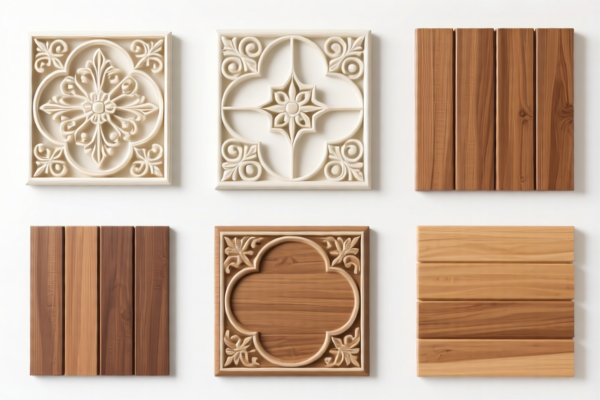

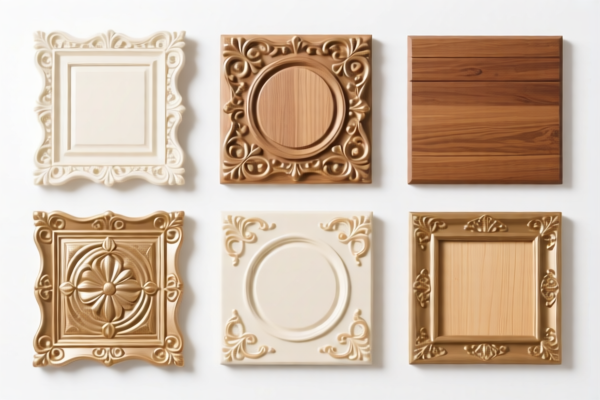
AI Analysis
🪵 Decorative Composite Boards: The Ultimate HS Code & Tariff Breakdown (2026 Edition)
🌐 HS Code Reference & Customs Clearance Guide | 2026 Latest Tariff Analysis | Professional Compliance Strategy
📌 I. Product Definition & Classification: Do You Really Know "Decorative Composite Boards"?
Decorative Composite Boards are versatile surface materials widely used in interior design, furniture manufacturing, and construction. In international trade, they are not a single entity but a category defined by material composition and structural form.
They are generally classified into two main branches: * Plastic-Based Composites: Made from synthetic polymers (PVC, PE, PP, etc.), often layered or laminated for durability and moisture resistance. * Paper/Fiber-Based Composites: Made from paper, cardboard, or wood fibers impregnated with resins (like melamine or phenolic resins), commonly seen in laminated panels (e.g., high-pressure laminate/HPL).
⚠️ Key Distinction Point:
- If the core material is plastic (polymers) and it is in the form of plates, sheets, or films → Chapter 39 (Plastics)
- If the core material is paper/fiber and it is in the form of plates/sheets → Chapter 48 (Paper & Paperboard)
📦 II. HS Code Classification Details (2026 Latest Tariff Authority Comparison)
Based on the specific material composition and structural characteristics provided in the dataset, here are the precise classifications:
| HS Code | Product Description | Application Scenario | Material Nature |
|---|---|---|---|
3920.99.20.00 |
Plastic composite board, plastic material, laminated/combined form | High-pressure plastic laminates, industrial plastic boards | ✅ Plastic (Layered/Combined) |
3921.90.50.50 |
Plastic composite board, plastic material, plate form | General plastic plates, sheets, films, foils, strips | ✅ Plastic (Plate/Sheet) |
3921.90.40.90 |
Plastic composite board, plastic material, reasonable match under "Other" | Generic plastic composite plates not specified elsewhere | ✅ Plastic (General) |
3921.90.50.10 |
Custom composite board, reinforced or plastic-containing material | Customized plastic-enhanced composite panels | ✅ Plastic (Custom/Reinforced) |
4823.90.20.00 |
Custom composite board, paper/cardboard/fiber-based material | Decorative paper-faced panels, laminated wood/paper boards | ✅ Paper/Fiber |
🔍 Critical Reminder:
- Plastic-based boards fall under 3920 or 3921. The distinction often lies in whether it is a "plate/sheet" (3921) or a "laminated/combined material" (3920). However, in many customs databases, 3921 is the primary catch-all for plastic plates/sheets. - Paper-based decorative boards (like those used for laminate flooring surfaces) fall under 4823. - Misclassification between Chapter 39 and Chapter 48 is a high-risk area for audits. Ensure the material safety data sheet (MSDS) or bill of materials confirms the primary composition.
💰 III. 2026 Latest Tariff Rate Breakdown (Including Surcharges & Policy Add-ons)
✅ Applicable Country: United States (US)
✅ Country of Origin: China (CN)
✅ Effective Date: Post-2025 (Including Section 301 and IEEPA measures)
The dataset indicates a consistent pattern of high tariffs for Chinese-origin decorative composite boards. Below is the detailed breakdown for each HS Code.
🎯 1. Plastic-Based Composites (3920.99.20.00, 3921.90.50.50, 3921.90.40.90, 3921.90.50.10)
These codes are subject to three layers of taxation:
| Item | Detail |
|---|---|
| Basic Tariff | 4.2% - 4.8% (ad valorem) (Varies slightly by specific sub-heading) |
| Section 301 Surcharge | +25.0% (Retaliatory tariff under US Trade Act Section 301) |
| Section 122 / IEEPA Surcharge | +10.0% (Additional tariff under International Emergency Economic Powers Act or specific trade actions) |
| Total Effective Tax Rate | 39.2% (for 3920.99.20.00 & 3921.90.40.90) 39.8% (for 3921.90.50.50 & 3921.90.50.10) |
| Tax Calculation | CIF Value × Total Tax Rate |
| De Minimis Exemption | ❌ Not Applicable (Deny de minimis) |
| Legal Basis Path | USITC:3920/3921 → Section 301 Footnote → IEEPA/Section 122 Authority |
📌 Explanation:
- Base Rate: The standard Most Favored Nation (MFN) duty for plastic products. - 25% Surcharge: This is the critical Section 301 tariff that significantly increases the cost of Chinese plastic imports. - 10% Surcharge: Refers to additional penalties or specific trade restrictions (often labeled as "122条款" in Chinese contexts, referring to specific administrative trade measures or IEEPA provisions). - Total Impact: With a ~40% total tariff, these products face extremely high entry barriers into the US market. Cost optimization or supply chain diversification is highly recommended.
🎯 2. Paper/Fiber-Based Composite (4823.90.20.00)
Paper-based decorative boards have a slightly lower base tariff but are not exempt from surcharges.
| Item | Detail |
|---|---|
| Basic Tariff | 0.0% (ad valorem) (Paper products often have lower base duties) |
| Section 301 Surcharge | +25.0% |
| Section 122 / IEEPA Surcharge | +10.0% |
| Total Effective Tax Rate | 35.0% |
| Tax Calculation | CIF Value × 35.0% |
| De Minimis Exemption | ❌ Not Applicable |
| Legal Basis Path | USITC:4823 → Section 301 Footnote → IEEPA/Section 122 Authority |
📌 Note:
- Although the base tariff is 0%, the addition of 25% + 10% results in a 35% total tariff. - This is still a very high cost, making it competitive only if the base product price is significantly lower than plastic alternatives. - Do not assume "0% base rate" means low total tax. The surcharges dominate the cost structure.
🛠️ IV. Customs Clearance Practical Advice (Battle-Tested Pitfall Avoidance)
✅ 1. Documentation Checklist (Non-Negotiable)
| Document | Required? | Purpose |
|---|---|---|
| ✅ Product Specification Sheet | ✔️ | Must detail material composition (e.g., "PVC Core with Melamine Overlay"). |
| ✅ Material Safety Data Sheet (MSDS) | ✔️ | Crucial for verifying plastic vs. paper content and hazardous substances. |
| ✅ Product Photos (Label & Structure) | ✔️ | Clear view of the layers to prove "composite" nature. |
| ✅ Commercial Invoice | ✔️ | Must explicitly state "Decorative Composite Board, Plastic/Paper Base". |
| ✅ Certificate of Origin (CO) | ✔️ | Confirms China origin, triggering the correct surcharges. |
| ✅ Packing List | ✔️ | Shows net/gross weight, vital for calculating ad valorem duties. |
✅ 2. Declaration Strategy (Key Mantra)
🔥 "Material First, Structure Second, Name Specific, Tax Predictable!"
| Scenario | Correct Declaration | Wrong Practice | Consequence |
|---|---|---|---|
| Plastic Board | HS 3921.90.50.50 "Plastic Plate" |
Vague: "Decorative Board" | Customs may reclassify → Penalty + Delay |
| Paper-Faced Board | HS 4823.90.20.00 "Paper Composite" |
Vague: "Wood Composite" | If wood-based, may go to Ch 44 (Different Rules) |
| Mixed Material | Clarify Primary Component | Omit material details | Risk of being classified under highest duty category |
| OEM Custom Board | Provide Client Drawing | "Generic Panel" | Ambiguity leads to audit triggers |
✅ 3. Special Cases & Handling
| Situation | Handling Advice |
|---|---|
| Plastic + Paper Lamination | If plastic is the essential character (e.g., plastic film faced), use Chapter 39. If paper is essential, use Chapter 48. Document the % by weight/value. |
| Sample Shipments | Even small samples are subject to the same 35-40% tariff. De minimis (Section 321) does not apply to Chinese goods under Section 301. |
| Transshipment via Third Country | Changing routing to Vietnam/Malaysia without substantial transformation is illegal (circumvention) and carries heavy fines. |
| Customs Inquiry | If asked about "122 Clause," explain it as the additional administrative surcharge imposed on specific Chinese imports. Be transparent. |
🌍 V. Global Market Comparison (2026 Update)
| Country/Region | Recommended HS Code | Total Tariff (China Origin) | Certification | Notes |
|---|---|---|---|---|
| 🇺🇸 USA | 3921.90.50.50 / 4823.90.20.00 |
39.2% - 39.8% (Plastic) 35.0% (Paper) |
None specific | Highest barrier. Surcharges are non-negotiable. |
| 🇨🇳 China | 3921.90 / 4823.90 |
0% - 4.8% (Import) | CCC (if applicable) | Low domestic import duty, but high export competition. |
| 🇪🇺 EU | 3921.90 / 4823.90 |
4.0% - 6.5% | CE / REACH | No Section 301 equivalent. More favorable. |
| 🇨🇦 Canada | 3921.90 / 4823.90 |
5.0% - 6.5% | CSA | Similar to EU, no major surcharges. |
| 🇦🇺 Australia | 3921.90 / 4823.90 |
5.0% | RCM | Low duty, high compliance standards. |
📌 Conclusion:
- The US market is uniquely punitive for Chinese decorative composite boards due to the 25% + 10% layering. - Competitors in EU, Canada, and Australia can offer significantly lower landed costs. - Strategy: Consider exporting to non-US markets or restructuring supply chains to avoid Chinese origin designation.
📌 VI. Common Errors & Pitfalls (Blood & Tears Lessons)
❌ Error 1: Claiming "0% Base Tariff" means "Free Entry"
👉 Result: The 35-40% surcharges hit the importer immediately. Cash flow crisis!
❌ Error 2: Declaring "Plastic Board" when it is "Paper-Faced"
👉 Result: Overpayment of duty (39.8% vs 35.0%), or under-declaration penalties if caught.
❌ Error 3: Ignoring the "122 Clause"
👉 Result: Confusion during customs examination. Be prepared to explain the additional 10% administrative fee.
❌ Error 4: Using "Decorative Board" as the Only Description
👉 Result: Customs will guess the HS code. If they guess a higher-duty code, you pay the difference + interest.
✅ Correct Action:
"Plastic Decorative Composite Board, PVC Core, Melamine Overlay, 3mm Thickness, Model XYZ, HS 3921.90.50.50"
🎯 VII. Conclusion: Precision is Profit
🎯 Remember the Mantra:
🔹 "Plastic Base? 39.8%."
🔹 "Paper Base? 35.0%."
🔹 "No De Minimis. No Exemptions."
🔹 "Be Specific or Pay the Penalty!"
📌 Pro Tip:
If you are exporting to the US, apply for an Advance Ruling (Ruling Letter) from CBP before shipment. This locks in the HS code and tariff liability, preventing surprise audits.
📣 Immediate Action:
📞 Verify material composition with your manufacturer.
📄 Prepare MSDS and Specification Sheets.
🚀 Calculate landed cost with 40% tariff included.
💼 Don't let tariff surprises eat your margins!
✨ Professional Compliance Starts with Precise Classification!
💼 Every Percent Counts in the Age of Trade Wars!
Customer Reviews
About HS Code Classification
The Harmonized System (HS) is an internationally standardized nomenclature developed by the World Customs Organization (WCO) to classify traded products. Over 200 countries use the HS system as the basis for customs tariffs, trade statistics, and import/export regulations.
Each HS code follows a hierarchical structure:
- Chapter (2 digits) — Broad category of goods (e.g., Chapter 84: Machinery and Mechanical Appliances)
- Heading (4 digits) — More specific grouping within the chapter
- Subheading (6 digits) — Internationally standardized breakdown, used by all WCO member countries
- National subdivisions (8-10 digits) — Country-specific extensions for further classification, such as US HTSUS 10-digit codes
Correct HS code classification is essential for smooth customs clearance, accurate duty payment, and compliance with trade regulations. Misclassification can lead to customs delays, overpayment of duties, or penalties.
When importing from CN to US, the applicable tariff rates may include:
- Most-Favored-Nation (MFN) rate — The standard duty rate applied to WTO members
- General rate — Applied to countries without trade agreements
- Trade remedy duties — Additional tariffs such as Section 301 (anti-dumping), Section 232 (national security), or countervailing duties
The information provided on this page is for reference purposes only. For official classification, please consult with your local customs authority or a licensed customs broker.